Hinds County gets hit a lot
370 severe weather events hit Hinds County between 2015 and 2024, most of it damaging wind. Hail and tornadoes came through too. That is a lot of chances for an outdoor unit to take a hard knock.
Takes about a minute. No obligation.
370 severe weather events hit Hinds County between 2015 and 2024, most of it damaging wind. Hail and tornadoes came through too. That is a lot of chances for an outdoor unit to take a hard knock.
Wind and hail can bend fins or crack a cabinet without stopping your furnace from running right away. Almost a third of Mississippi households lost power for 24 hours or more in 2024. If your furnace sat through a storm or an outage, it is worth a look even if nothing seems wrong yet.
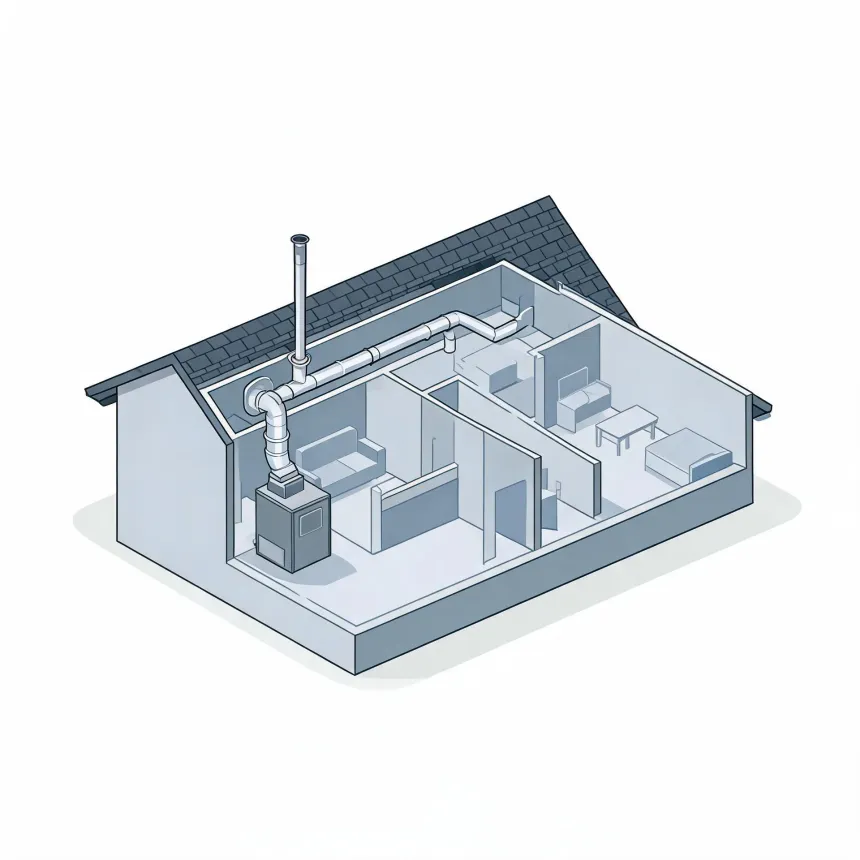
NOAA nClimDiv, 1991–2020 normals
Furnace season starts in November here.
Get a furnace checked in October, before it has to carry the first cold snap.



Half the homes in Hinds County were built in 1974 or earlier, half in 1974 or later. That split doesn't point to any one furnace problem. An older house might have its original ductwork or a furnace that's been swapped out since. A newer one isn't exempt either. What usually takes a furnace down mid-season is the same handful of things no matter when the house was built. A cracked heat exchanger. A bad igniter. A flame sensor that needs cleaning. A blower motor on its way out. If your furnace is acting up, the age of the house isn't the clue to go by. The age of the furnace, and whether it's the one that came with the place, is worth checking first.
If your furnace sat through wind, hail or a power cut this year, have it looked at before cold weather sets in. Storm damage to the cabinet or outdoor parts does not always show up right away, and the first cold snap is a bad time to find out.
Find a contractor
38°F is the average overnight low through December, January and February. That's not a furnace fighting hard all winter, it's one cycling on and off to hold a room steady. So if yours is acting up now, the light workload probably isn't why. Check the furnace's age and whether it's the original one before you assume anything else. A furnace that's had it easy can still fail from age or from sitting unchecked, and either way it's worth having someone look before the next cold snap.
Check the thermostat is set to heat and the setting is above room temperature. Look at the filter and swap it if it is gray or clogged. Check the switch on the furnace itself, it looks like a light switch, and make sure nothing bumped it off. If you have a gas furnace, check that the gas valve is turned to on. Check the breaker for the furnace hasn't tripped. None of this takes tools or know-how, and it rules out the simple stuff before anyone comes out.
Don't open the burner compartment or go near the heat exchanger. Don't try to relight a pilot light if you smell gas, get out and call the gas company first. A furnace that clicks repeatedly without lighting, or that trips its breaker more than once, needs a tech, not another attempt. If the furnace smells like burning dust for a few minutes after the first run of the season, that's normal and clears on its own. If the smell doesn't clear, or it smells like something else, shut it off and get it looked at.
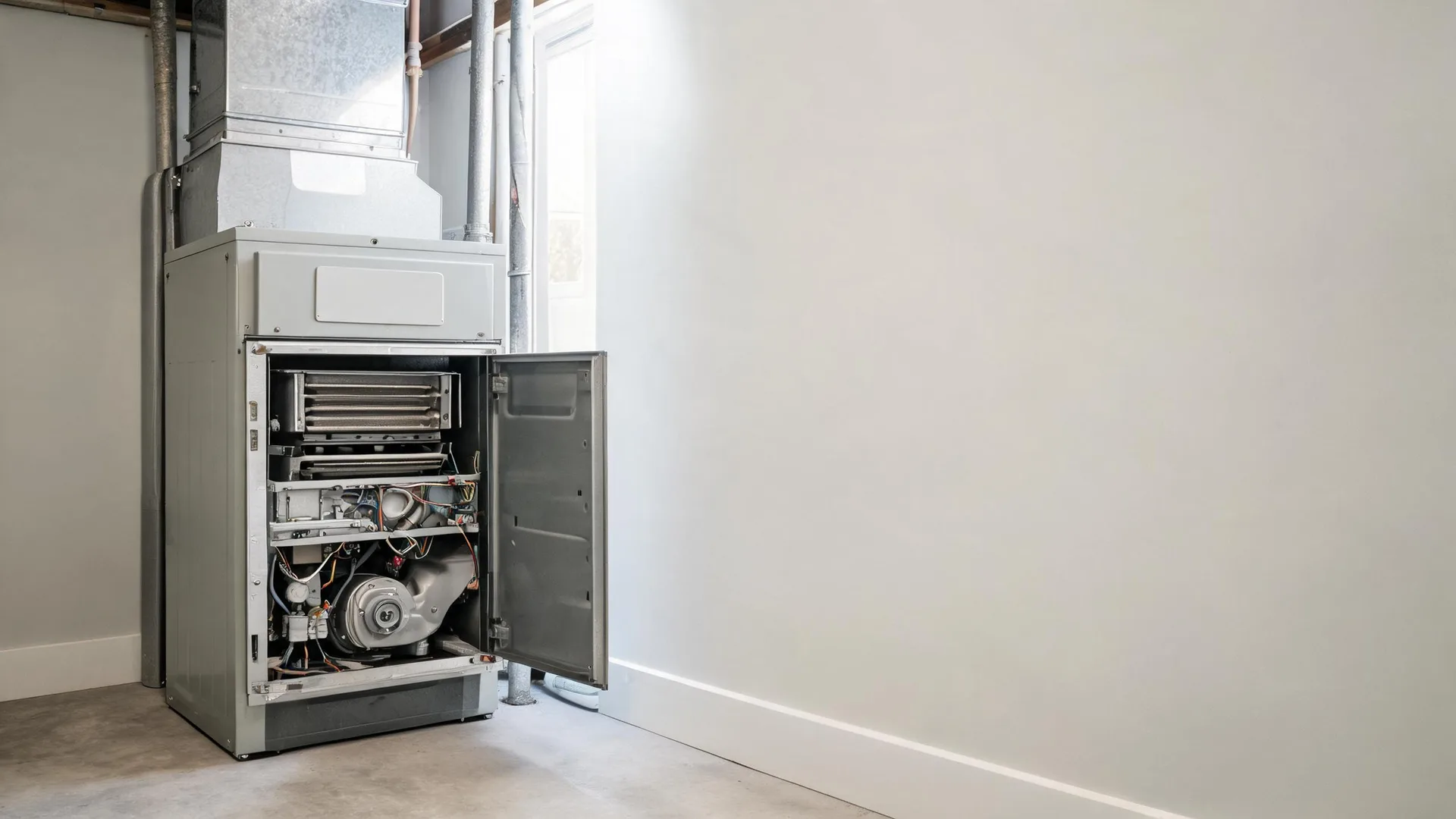
Most furnace failures come down to a short list of parts, not bad luck. The igniter is a common one. It's a thin strip that glows hot enough to light the gas, and that cycle of heating and cooling eventually wears it out until it just stops glowing. The flame sensor causes almost as much trouble, but usually it only needs cleaning, not replacing. It builds up a film from normal combustion, and once it can't sense the flame it shuts the gas off as a safety measure even though nothing is really wrong. A blower motor going bad shows up as weak airflow or a burning smell, since the bearings wear down after years of running. The one that matters most is a cracked heat exchanger. It happens from metal fatigue after years of heating and cooling cycles, and it's a safety issue, not just a performance one, since it can let combustion gas into the air the furnace is supposed to be heating.
A tech starts by asking what happened first. A smell, a sound, short cycling, no heat at all. That one answer usually points toward a system before the cabinet even opens. From there it's a process of elimination. Power to the control board. Then the igniter. Then whether the gas valve is actually opening when it's told to. A flame sensor gets pulled and checked before it gets replaced, since cleaning it solves most no-heat calls that look like a bad igniter. If the furnace lights but shuts off early, that points toward airflow or the heat exchanger, and a tech checks both before deciding which one it is. The point of the visit is to find the one part causing the trouble, not to start swapping parts and see what helps.