Heat pump vs furnace in Hinds County, Mississippi

Get an Installer's Quote

Heat pump or furnace, one form

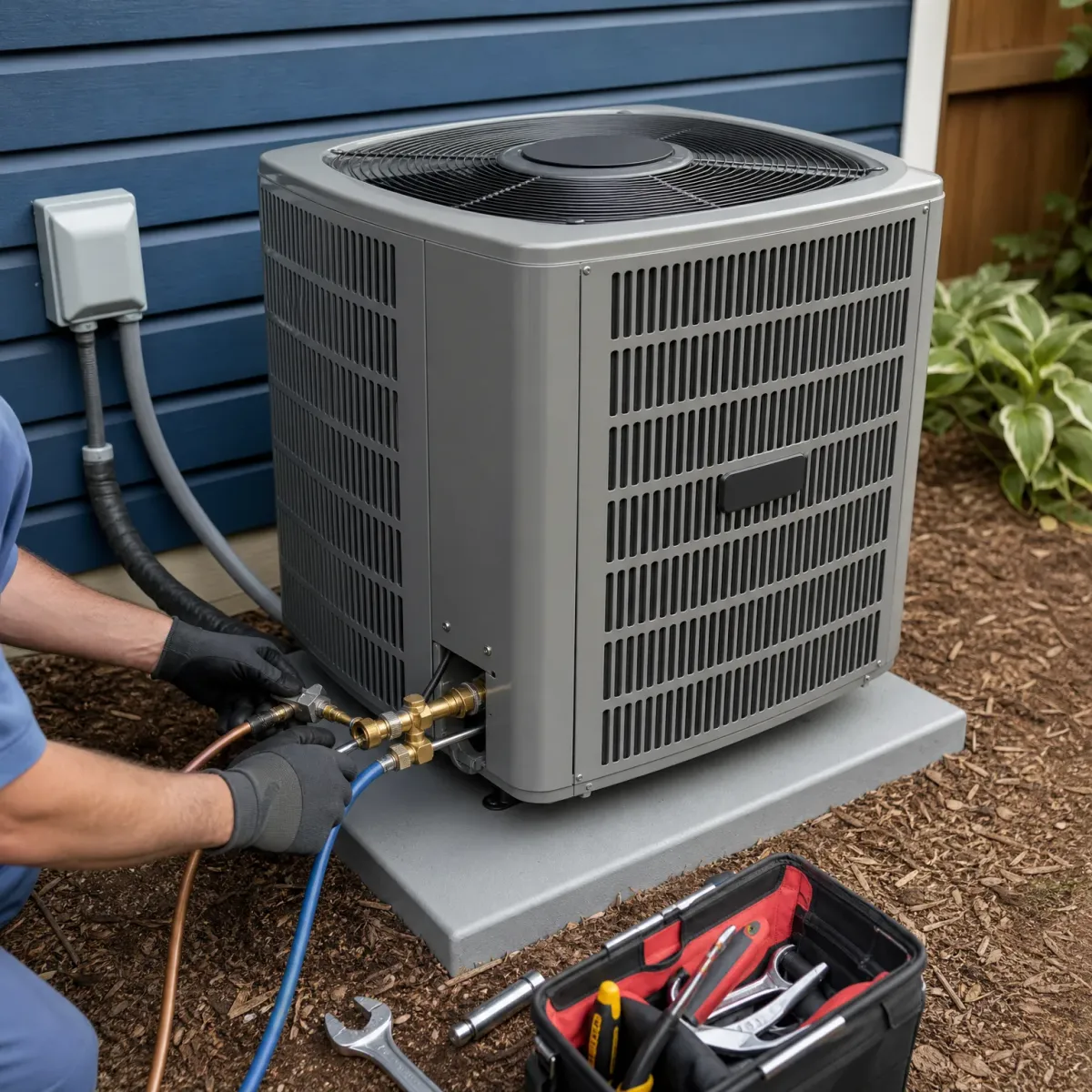
A person in gloves kneels beside a gray outdoor air conditioning condenser on a concrete pad next to blue lap siding, connecting hoses to brass service valves, with an open tool bag on the mulch nearby.

Tell us about the job

Takes about a minute. No obligation.

New system or replacementHinds County, MS
Step 1 of 3

What kind of equipment?

Which costs less to run in Hinds County?

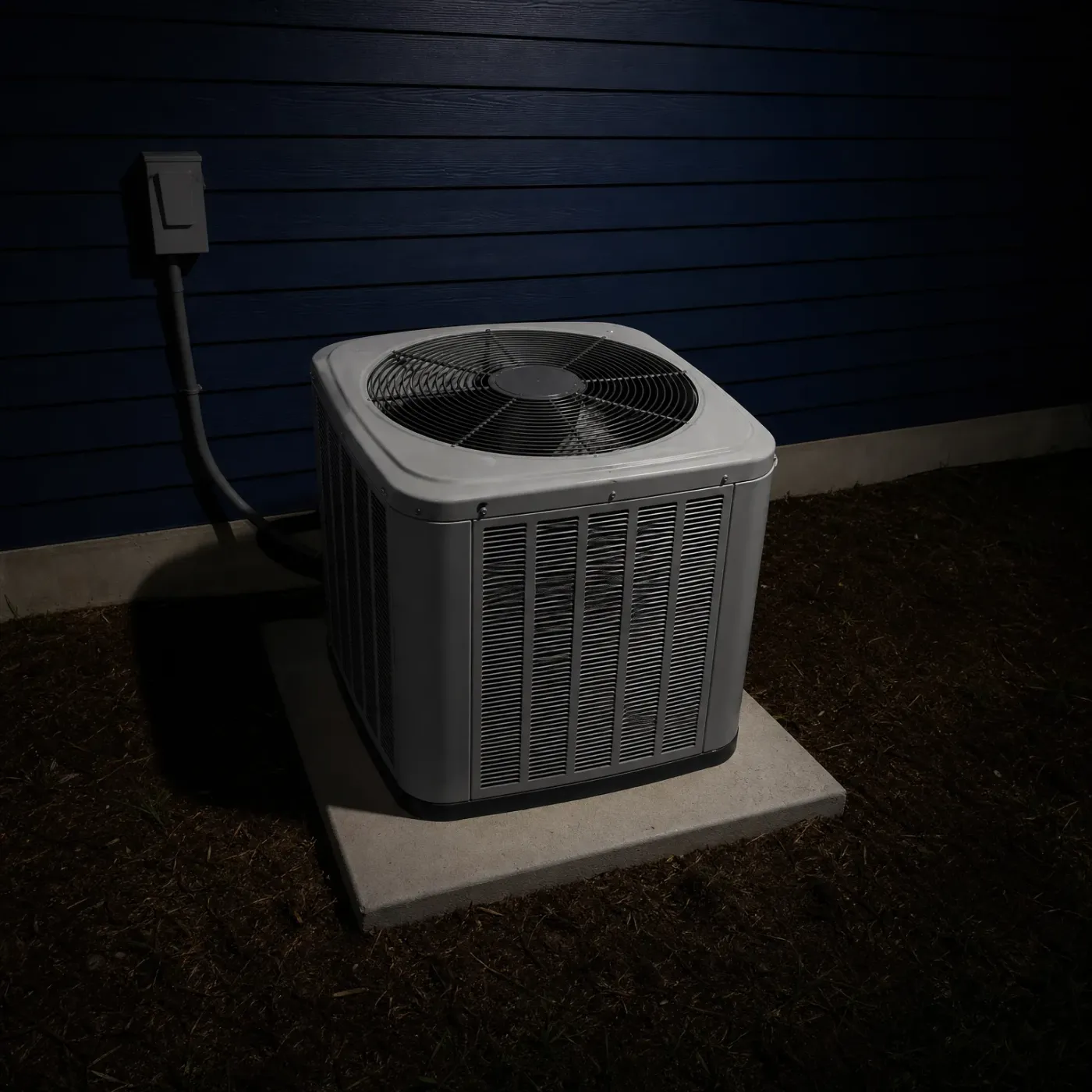
An outdoor air conditioner condenser unit on a concrete pad beside a dark blue horizontal-lap sided wall, with a disconnect box and conduit on the wall, surrounded by bare soil at night.

Heat pump

To heat your home here$1.79per 100,000 Btu

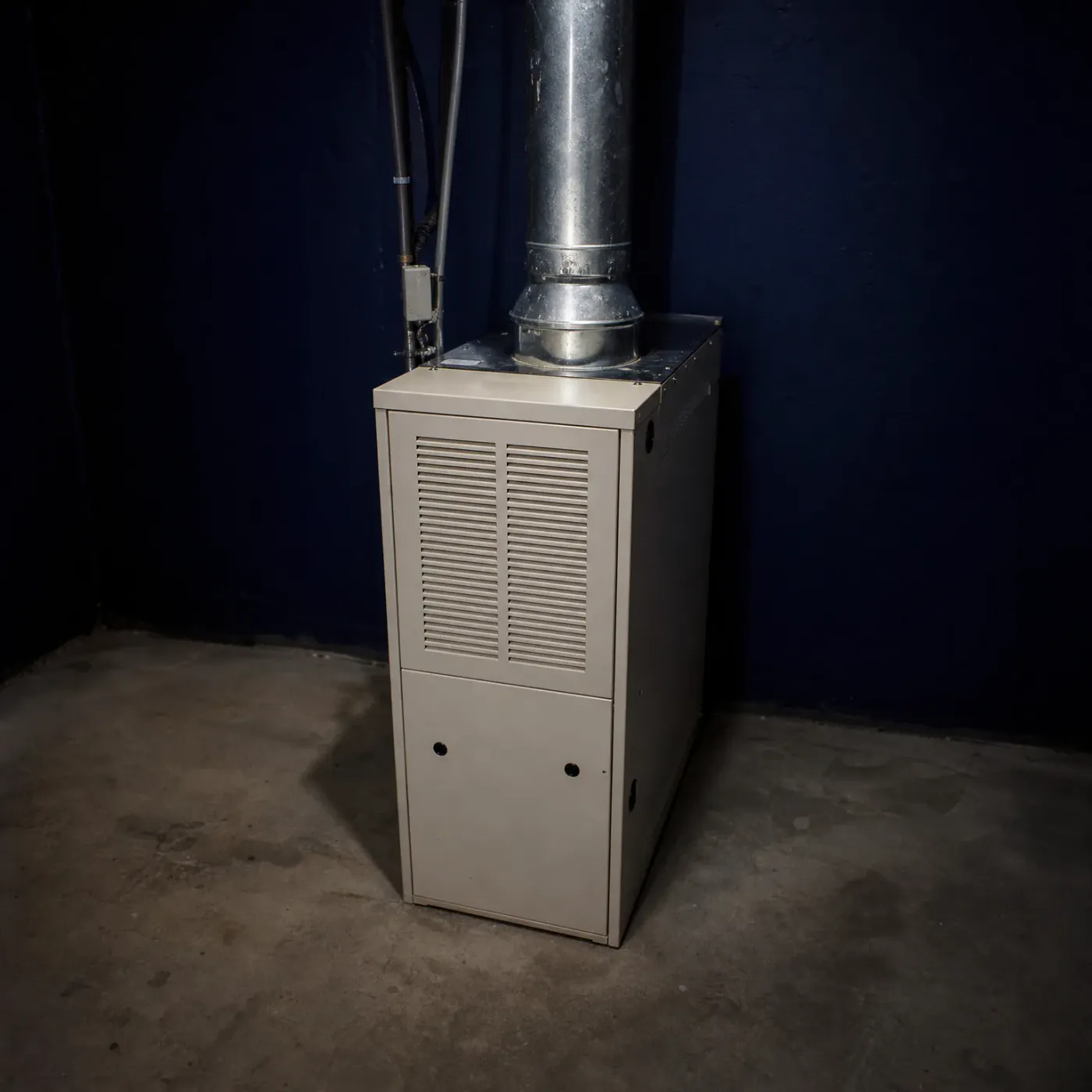
A beige residential furnace with a louvered front panel stands on a concrete floor in a basement corner with dark blue walls, connected to a galvanized metal flue pipe rising to the ceiling.

Furnace

To heat your home here$1.88per 100,000 Btu

At Mississippi's gas and electricity prices, a heat pump and a gas furnace cost about the same to run here.

Btu stands for British thermal unit, the standard measure of heat energy.

Where does a heat pump shine?

  • Made for mild winters

    Winter nights in Hinds County average 38°F, and that's mild work for a heat pump. It can keep pulling heat from outside air all season without straining against real cold.

    A navy-blue clapboard house with a covered porch, light blue front door and columns, white railings, a black rocking chair with a plaid blanket, wooden steps leading to a stone path, and frost on the surrounding lawn and shrubs.
  • Covers a long cooling season

    Cooling runs May through October in Hinds County, most of the year. A heat pump is built to handle that long stretch and still keeps the house warm in the colder months, all from the same unit.

    Covered porch with wicker chairs, cushions and a throw blanket, a dark round table holding a glass of iced tea and a stone planter of greenery, with a ceiling fan above and a seated person on a patio beyond.
  • No gas line, nothing burning in the house

    A heat pump runs on electricity alone. Nothing burns inside the house.

    A kitchen with navy blue cabinets, white subway tile backsplash and a light countertop island holding a pale blue stovetop kettle on a black induction cooktop, with a potted plant, salt and pepper mills on a tray, and a window with a blue shade in the background.

Where does a furnace shine?

  • Fast, strong heat on demand

    Turn the heat up and the furnace answers right away. There's no long wait for the house to catch up.

    Entryway with a dark blue door and window showing snowy trees, sheer curtain lifting above a floor vent, snow-dusted boots on a woven rug, and a wooden bench with a blue mug, folded blanket and basket.
  • Pairs with any central AC

    The ductwork that delivers heat in winter delivers cool air in summer once an AC coil is added.

    A dark metal floor register set into a wood plank floor near a white baseboard and window, with a sheer white curtain, a navy door, and a blue and white rug nearby in sunlight.
  • Proven, simple, easy to get serviced

    Parts are easy to find and most repairs are routine. Getting one fixed rarely means waiting on a specialist.

    A gloved hand holds a white pleated air filter in a basement utility area with a furnace, ductwork, and shelving holding storage bins and towels.

What this winter actually asks of a heat pump

Winters here are mild. The overnight low averages 38°F through December, January and February, and it only drops to freezing or below on about 35 nights a year. Spread across a five month heating season of roughly 150 nights, that is under a quarter of them. A heat pump does its best work above freezing, and that describes most nights in Hinds County.

A heat pump also costs a little less to run than a gas furnace at today's prices, $1.79 against $1.88 per 100,000 Btu of heat. That is close enough that it should not be the reason you choose. What should decide it is the other seven months of the year. A furnace only heats. Once March ends it has nothing to do until November. A heat pump runs your air conditioning too, and cooling is the longer season here, about six months against five for heat. Buy a heat pump and one machine covers both jobs.

There is a real tradeoff on the coldest nights. On those 35 nights a heat pump works harder and leans on backup heat to keep up, where a furnace just burns gas and does not notice the difference. The running cost above does not include that backup heat, so the coldest nights cost more than the $1.79 figure suggests. For most of this county's winter that does not matter. For the handful of hard freezes, it does.
A covered front porch with white columns and railing, a black wooden porch swing with patterned pillows, hanging ferns, a dark navy front door, and wide painted steps leading to a brick walkway.

What the furnace question comes down to

A furnace makes sense if your house is already set up to burn gas. Utility gas heats 42.3% of homes in Hinds County, a little over two in five, which is well above the 29.3% share for Mississippi as a whole. If your house already has a gas line run to it, that is a real asset, and a furnace is a reasonable way to use it.

If you are starting without a gas line, the case is weaker. Electricity heats about half the homes here, 51.5%, more than gas does, and the running cost no longer favors gas once you account for the furnace's slight edge against the heat pump's lower number in a mild winter. A furnace also commits you to a second system for cooling. A heat pump does not.

Half the homes in this county were built in 1974 or earlier, so a lot of houses here are on their second or third heating system already. If yours is due for replacement, check what it has now before you decide. Matching what is already in the walls costs less than changing it.

Sources: NOAA nClimDiv · NOAA 1991–2020 seasonal normals · Census ACS 2020–2024 · EIA SEDS 2024 · 10 CFR 430.32

A light blue single-story house with white columns, a covered front porch, dark blue shutters and door, and a dormer, flanked by pink-flowering crape myrtle trees and trimmed hedges along a sidewalk.

Common questions about heat pumps and furnaces

  • Will a heat pump keep my house cool enough here?

    Yes. A heat pump is a central air conditioner in the summer months, cooling your house the same way a standard AC does, just run in reverse. With about 85 days a year here reaching 90°F or above, it's doing that job for six months, May through October, same as any central AC would.

  • Can I keep my furnace and add a heat pump?

    Yes, and in Hinds County that pairing covers both ends of the year well. The heat pump handles the long, mild stretch, and the furnace is there for the roughly 35 nights a year that drop to freezing or below. Most central systems are built to run one or the other at a time, so the two don't fight each other, they just split the work.

  • What if my house doesn't have a gas line?

    Without a gas line, the choice is a heat pump, electric resistance heat, or a furnace running on propane or oil instead of utility gas. A heat pump heats the same house for less than electric resistance heat does, since it moves heat rather than generating it directly from electricity. Propane and oil furnaces work, but they depend on deliveries and a tank rather than a line into the house.

  • Is a heat pump cheaper to run than a furnace in Hinds County?

    Yes, slightly. At Mississippi's average prices, a heat pump runs $1.79 per 100,000 Btu of heat against $1.88 for a gas furnace. That gap holds for a furnace built to the federal minimum and a heat pump built to the federal minimum, so a higher-efficiency unit on either side would shift the number.