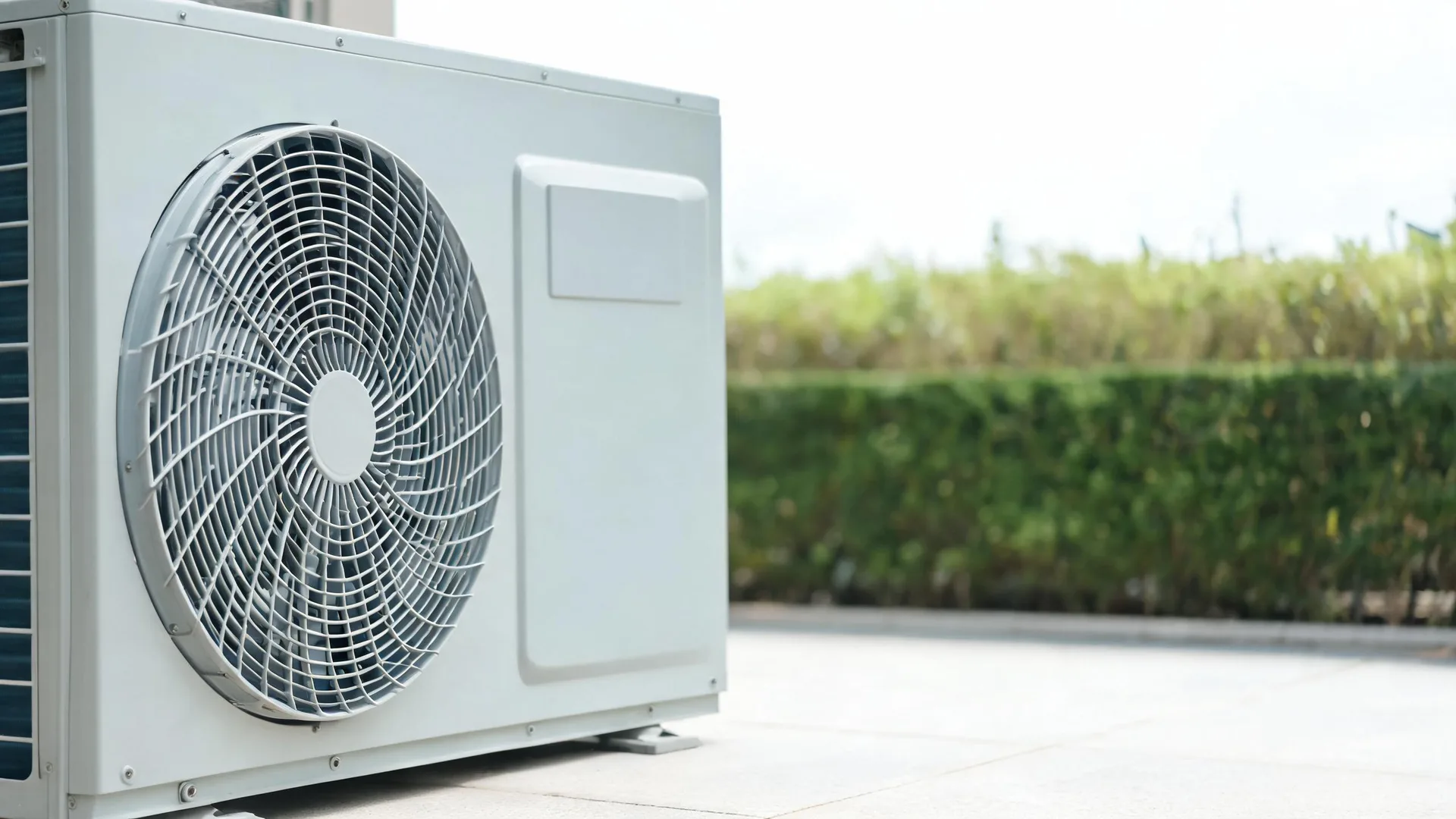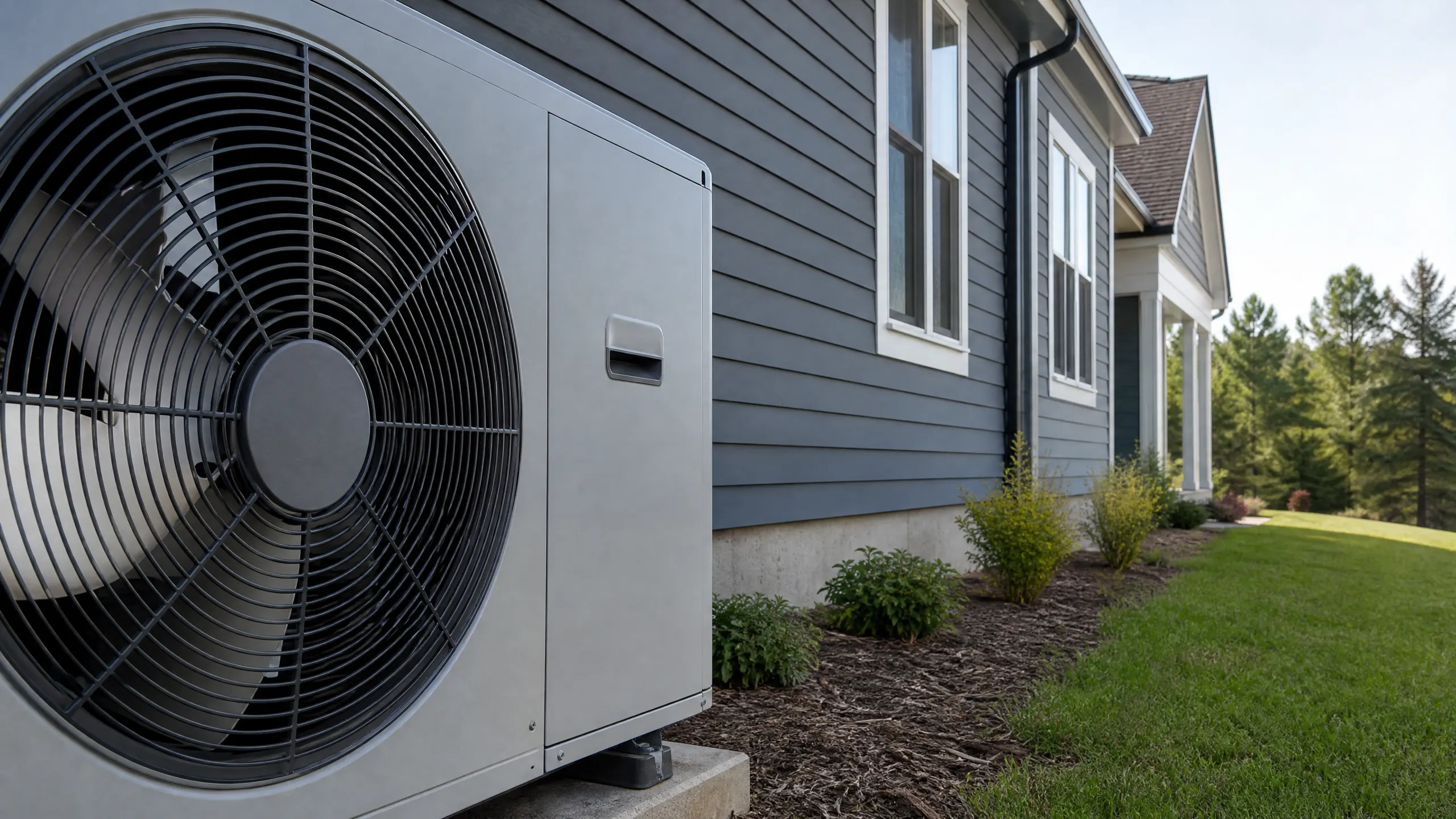
A heat pump outdoor unit mounted on a concrete pad next to the gray-sided exterior wall of a residential house.

Heat Pump Installation in Jackson, MS

Tell us about the job

Takes about a minute. No obligation.

New system or replacementHeat PumpHinds County, MS
Step 1 of 2

What ZIP code is the job in?

The minimum is higher here

A split-system heat pump installed in Jackson has to hit at least 14.3 SEER2 and 7.5 HSPF2. Central air paired with a furnace needs 14.3 SEER2 too, under 45,000 Btu/h. That's the regional floor for the Southeast, not the national one.

It narrows what a contractor can offer you

Any heat pump quoted for your house has to clear that number before it's even an option. That's less about picking a brand and more about which equipment is legal to install here in the first place.

5 months
November through March, your system heats
6 months
May through October, it cools
38°F
the average winter night it heats against
91°F
the average summer afternoon it cools against
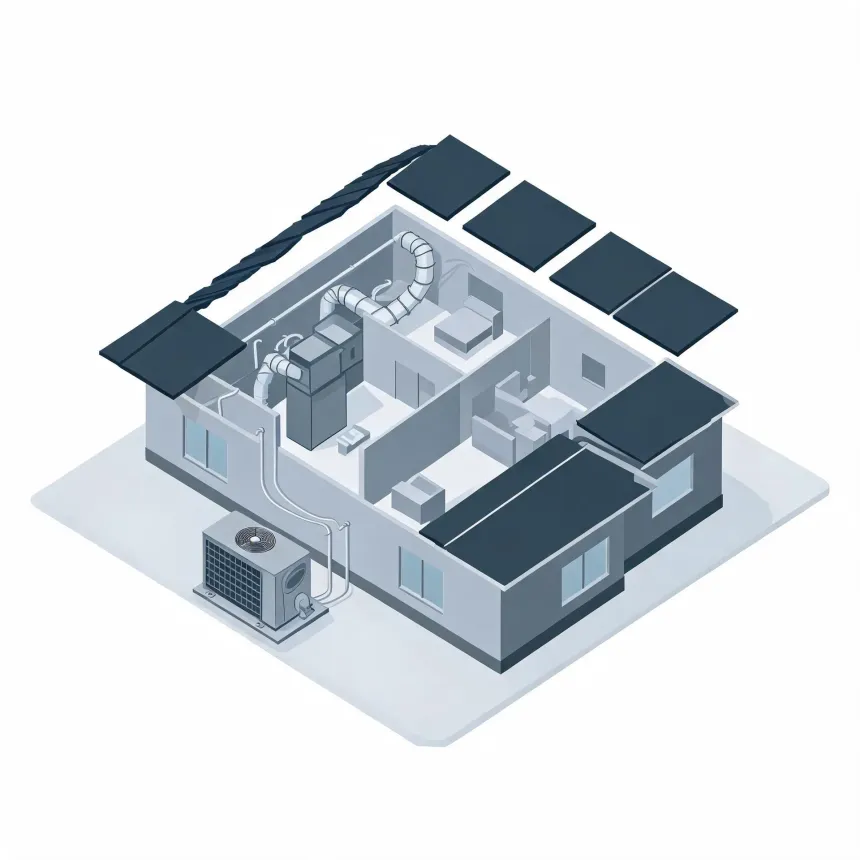
Isometric grayscale illustration of a cutaway single-story house showing interior rooms, ductwork and an air handler, an exterior condenser unit connected by lines, and dark solar panels on the roof.
Your system heats November through March and cools May through October.

NOAA nClimDiv, 1991–2020 normals

Half the homes in Hinds County were built in 1974 or earlier, half in 1974 or later.

A standard heat pump size works for either one.

Electricity runs 13.39 cents a kWh here, cheaper than most of the country, so the payback on the priciest high-efficiency model stretches out longer

Power costs 13.39 cents a kWh statewide
270 damaging wind events from 2015 to 2024
Climate zone 3A

Electricity heats 51.5% of homes in Hinds County, more than gas and propane combined. A heat pump fits that pattern because it runs on electricity already, so installing one doesn't mean adding a new fuel line or rethinking how the house gets its power. Gas still heats 42.3% of homes here, and for those houses a heat pump means a bigger change, since it replaces the furnace rather than swapping in alongside the same hookup. For the electric majority, it's a straight replacement of one electric system for another.

Install before November, not after the first cold snap

Heat runs here from November through March. October is the month before that starts, and it's the month to get a new heat pump in the ground. Wait past that and you're choosing a system in the middle of a cold week instead of on your own schedule.

Find a contractor
A man in a gray T-shirt and tan work pants, seen from behind, carries a worn canvas tool bag up concrete steps toward a blue front door of a house with gray siding and a potted shrub.
A gray air-source heat pump mounted on a concrete pad next to a house with gray vinyl siding, surrounded by gravel and flanked by green shrubs and white hydrangea flowers.

This runs through more weather than most systems ever see

Hinds County took damaging wind 270 times between 2015 and 2024, close to one event a month. A heat pump sits outside through all of that, not just the heat and cold. Every storm that comes through is a load on the cabinet, the fan blades, the coil fins. That's on top of running most of the year already, since it's doing both your heating and your cooling. A unit sized smaller than it should be has less room to take that kind of wear and still hit its rated output.

Sizing drives most of the cost

A heat pump has to be sized to the house, not picked off a shelf. That takes a load calculation, checking the square footage, the windows, the insulation, the ductwork. Go bigger than the house needs and the unit cycles on and off without running long enough to dehumidify right. Go smaller and it runs constantly and still can't keep up on the coldest days. The equipment itself is only part of the bill. The labor to size it, set the refrigerant charge, and balance the airflow is what makes one installation cost more than another.

What's already there changes the job

If the ductwork, the electrical panel, and the line set are already in place and sized right, a contractor is swapping one system for another. If the panel needs more capacity for the new unit, or the ducts were built for a furnace and don't move enough air for a heat pump, that work gets added before the new equipment ever gets set. Houses with the same heat pump on paper can end up with very different installs depending on what's already behind the walls.

Sizing a heat pump starts with a load calculation, not a guess off the square footage or whatever was in there before. A contractor works out how fast the house loses heat in winter and gains it in summer, then matches that to a unit that can keep up without constantly cycling on and off. Too big, and the system satisfies the thermostat fast but never runs long enough to pull moisture out of the air, so the house feels clammy even when it's cool. Too small, and it runs nonstop on the coldest and hottest days and still can't hold the temperature you set. Either way, the compressor wears faster than it should, because it's working outside the range it was built for. The calculation is what tells you the size, whatever the house's age or layout turns out to be.

Install day starts with setting the outdoor unit on its pad and mounting the indoor coil, then running the line set between them. If old equipment is coming out, that comes first, and the condition of the existing line set decides whether it gets reused or replaced. Before any refrigerant goes in, a contractor pulls a vacuum on the line set, because trapped air and moisture left inside will wear down a compressor fast. Once the system is charged, it gets tested in heating and in cooling, not just whichever mode fits the weather that day. The thermostat gets wired and set up last, after the airflow at the vents is balanced. None of that sequence changes based on how the old system failed or what's replacing it.