









Heat pump tune-up in Meridian, MS

Get a heat pump pro

Your heat pump works in both directions here. It runs the long muggy stretch from spring through fall, then switches over for the mild winters around Meridian, and it rarely gets a break. A tune-up means someone checks the refrigerant charge, the coils, the electrical connections, and the reversing valve that lets the system heat as well as cool. Finding the right contractor for that usually means searching around, calling a few companies, explaining your system and your schedule to each one, then sorting through quotes that don't quite match up. Submit your information here and skip that part. You get matched with a contractor who handles heat pumps in Lauderdale County, and they will reach out to you directly. No calling around, no repeating yourself to three different offices, no guessing which quote is the fair one.

A heat pump tune-up is a scheduled check of the system that keeps your home cool and warm, done before the weather asks too much of it. Around Meridian that means before the long muggy run from spring through fall, since the unit works almost year round and rarely sits idle long enough for a problem to announce itself on its own. A technician checks refrigerant charge, cleans the coils, tests the electrical connections, and confirms the reversing valve switches cleanly between cooling and heat. A heat pump low on charge or caked with dirt on the coil works harder to move the same heat, and that shows up as a higher power bill before it shows up as a breakdown. Since most homes in Lauderdale County heat with electricity, the same unit carries you through winter too, so a problem caught in fall doesn't wait until January to surface. Catching it during a tune-up means it gets fixed on your schedule, not during a cold snap.

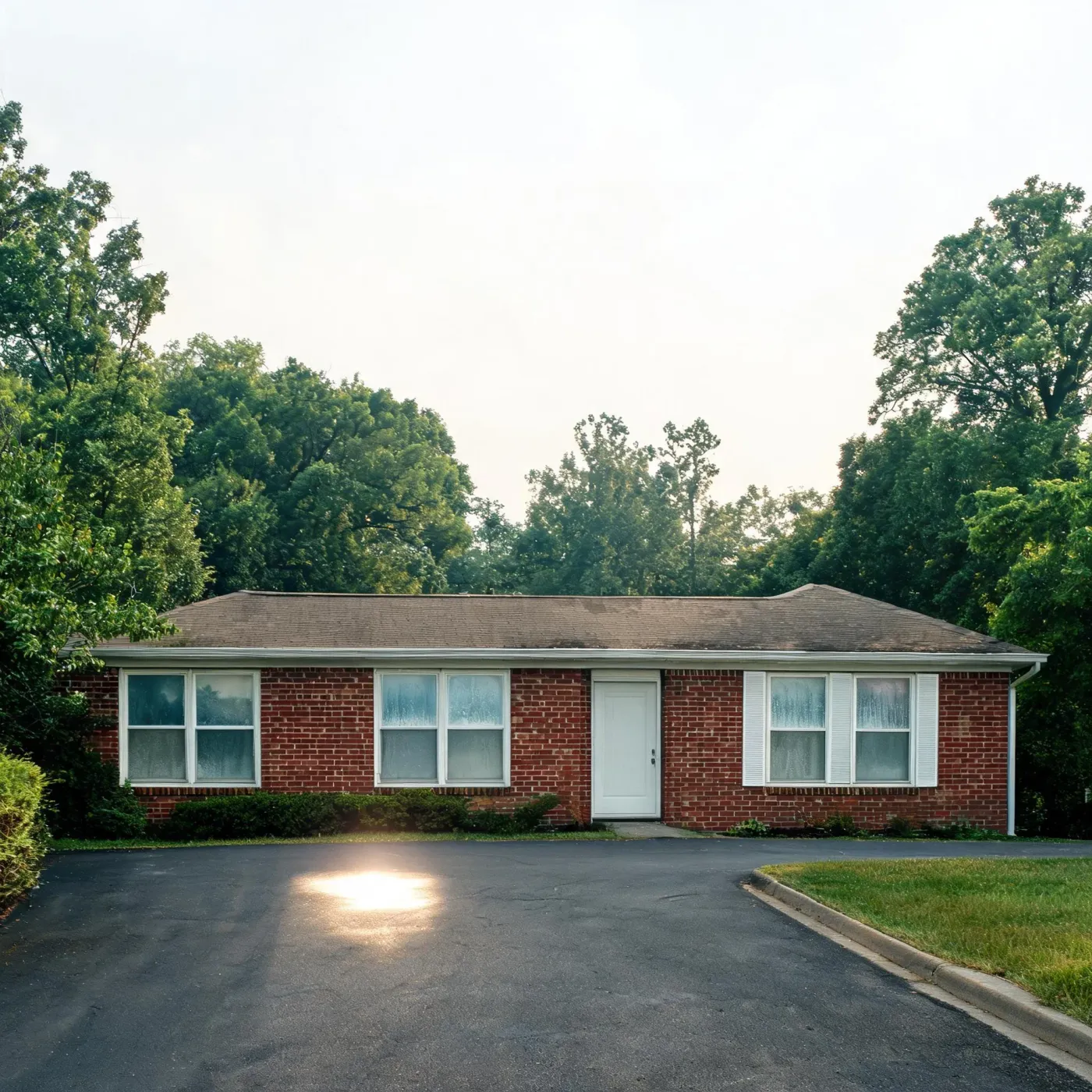
A single-story red brick ranch house with a white door, white-trimmed windows and a shingled hip roof, fronted by a wide asphalt driveway with sunlight glare, surrounded by green deciduous trees under a pale sky.

That muggy air in Lauderdale County carries a dew point that averages 70°F across June, July and August, according to NOAA data. At that level the air feels heavy even when the temperature itself isn't extreme, and your heat pump has to pull a lot of moisture out along with the heat to make the house feel right. That's steady work on the coil and the refrigerant charge, stretched across months, not days. A system low on charge or running a dirty coil falls behind on that job, and you'll notice it as a house that feels cool on the thermostat but still damp.

NASA POWER T2MDEW

Tune-Up or Take Your Chances

With a tune-up

  • A contractor checks the refrigerant charge, and a system low on charge works harder to move the same heat in July or January.
  • The outdoor coil gets cleaned, so it can shed heat properly during the stretch from spring through fall when it runs almost nonstop.
  • Electrical connections get checked, which matters since a heat pump cycles on and off far more often than a furnace that only runs part of the year.
  • The reversing valve gets tested, since that's the part that switches the system between cooling your home and warming it for Meridian's mild winters.
  • Airflow across the indoor coil gets confirmed, so the system isn't straining to push air through a restriction nobody's noticed yet.

Without one

  • A refrigerant leak or low charge can go unnoticed for months, since the system will still run, just less efficiently.
  • Dirt and debris build up on the outdoor coil over a muggy summer, and nothing flags that until the system struggles to keep up.
  • A failing capacitor or worn contactor usually gives no warning before it leaves you without cooling or heat on the day you need it.
  • Because the unit runs almost year round here, small problems get more cycles to turn into bigger ones compared to equipment that rests half the year.
  • Whatever's wrong gets found the hard way, during a breakdown, instead of ahead of the next stretch of heat or cold.
A woman in a cream sweater with her hair in a bun laughs while seated at a stone counter holding a glass of red wine, in a dimly lit interior with a sofa, houseplants and a large window at night.
A woman with long dark hair in a cream knit sweater laughs while looking off to the side, seated in front of a dimly lit kitchen with an island, stools, open shelving and a potted plant, with a glass of red wine in the foreground.
A smiling woman with long dark wavy hair in a light knit sweater sits at a marble counter with a glass of red wine, with a dimly lit living room and kitchen in the background.
A smiling woman with long wavy brown hair in a beige sweater sits at a white marble counter with a glass of red wine, with a living room, dining table and kitchen cabinets behind her.
A gray outdoor condenser unit on a concrete pad beside a light green lap-sided house, with a wall-mounted electrical disconnect box, mulch bed with shrubs, river rock, and a paved walkway in the foreground.
Kept clean, the coil sheds heat the way it's supposed to, which is most of the work a heat pump does all year.
An outdoor air conditioner condenser unit on a concrete pad beside a house with horizontal lap siding, with refrigerant lines entering the wall and a shrub on bare soil to the left.
Debris packed into the coil makes the unit push harder for the same result, straining the compressor behind that wall.

How the switchover actually works

  • A reversing valve switches the refrigerant flow so the same unit cools in July and heats in January.
  • During a defrost cycle the system briefly runs in reverse to melt frost off the outdoor coil before switching back.
  • A stuck or worn reversing valve can leave the system blowing cold air when it should be heating, or the reverse.
  • Technicians check refrigerant subcooling and superheat numbers, since either one off points to a charge problem a gauge can catch early.
  • The defrost control board and its sensor get tested, since a bad sensor lets frost build up on the outdoor coil unchecked.
  • Electrical connections and contactors get checked for pitting or looseness, since a heat pump cycles on and off more often than a straight AC unit.

A heat pump does not have a separate heater and air conditioner inside it. One refrigerant loop does both jobs, and a reversing valve decides which direction the refrigerant flows. Flip it one way and the outdoor coil gives up heat while the indoor coil absorbs it, which is cooling. Flip it the other way and the indoor coil releases heat into your home, pulled from outside air even when that air is cold. In winter, frost builds up on the outdoor coil as it pulls heat from the air, and the system handles this by running a defrost cycle, briefly reversing again to warm that coil and melt the frost before switching back to heating. A sensor and a control board decide when defrost starts and stops. If that sensor fails, frost can build past what the coil was designed to handle, and the unit loses its ability to pull heat from the air at all. A tune-up checks the reversing valve for a stuck or worn position, since that is what causes a heat pump to blow cold air in January or warm air in July. It also means checking subcooling and superheat, two refrigerant measurements that tell a contractor whether the charge is right, because a heat pump off on either number works harder in both directions, not just one. Because a heat pump cycles on and off more than a straight air conditioner does, the contacts and connections that carry its electrical load get checked for pitting and looseness too.

How cold do winter nights really get around Meridian?

  • Winter nights average 37°F

    Nights average 37°F in December, January and February, cold enough that your heat pump leans on its backup heat strips more than once.

  • Heat runs November through March

    Heat runs November through March, five months where the system has to switch to warming instead of cooling and work the other direction.

  • Cooling runs May through September

    Cooling runs May through September, so for most of the year your heat pump is pulling double duty between the two seasons with barely a break.

NOAA nClimDiv 1991-2020

An outdoor air conditioner condenser unit on a concrete pad beside a house with horizontal lap siding, with refrigerant lines and a gray electrical disconnect box on the wall, surrounded by bare dirt.
Before you get your heat pump maintenance
A gray outdoor condenser unit on a concrete pad beside a house with horizontal lap siding, connected by conduit and lines to a wall-mounted disconnect box, with a shrub and gravel bed to the left.
After you get your heat pump maintenance

Get matched with a heat pump pro in Lauderdale County

Your heat pump doesn't get a season off around Meridian, and finding someone to look at it shouldn't take up what little downtime you have either. Most people end up calling two or three contractors, explaining the same thing about the unit each time, then sitting with quotes that are hard to compare because nobody checked the same things. That's the part worth skipping. A reversing valve stuck halfway, a coil packed with cottonwood and pollen, refrigerant a pound low, any of these will run up your power bill through the muggy months or leave you short on heat on a 37 degree night, and none of them show up until someone's hands are actually on the unit. You already know the system runs hard here, spring through fall and then again all winter. The only question left is who gets a look at it before the next stretch starts, not whether it needs one.

A gray outdoor condenser unit on a concrete pad beside a light-colored lap-sided house, with a wall-mounted disconnect box, refrigerant lines, mulch bed and shrubs, and a concrete walkway in the foreground.

A unit holding up

This condenser sits clean on its pad, lines running straight to the disconnect box. Nothing rusted, nothing caked with dirt around the base. A unit kept like this had its coil cleaned and its charge checked on schedule, so it isn't working harder than it has to through a Meridian summer.


An outdoor air conditioner condenser unit with rust spots on its top grille sits on a concrete pad beside a house with light horizontal siding, with conduit lines and an electrical box on the wall and a mulch bed to the right.

A unit showing wear

Rust has set into the top fan grille, and dirt has built up around the base where airflow matters most. That grille age shows after seasons without a cleaning, and a coil buried under this much debris forces the compressor behind that wall to work harder for the same cooling or heat.

What does a tech actually check during a heat pump tune-up?

You want to know what you're paying for before the contractor shows up, not just a vague line about "maintenance." A heat pump has more going on than a furnace or a standard AC since it runs both directions, so the checklist covers things that matter in July and things that matter in January.

A tech checks the refrigerant charge, both coils, and the reversing valve

A tech checks the refrigerant charge first, since too much or too little makes the compressor work harder in both directions. Both coils get inspected and cleaned, the outdoor one and the indoor one, because either can lose its ability to transfer heat when it's coated in dirt or dust. The reversing valve gets tested, since that's the part switching the system between cooling and heating. Electrical connections get checked for looseness or corrosion, the condensate drain gets cleared, and the defrost control gets tested so the outdoor unit isn't icing over on cold nights without recovering. Airflow gets measured at the vents too, since a heat pump moving less air than it should loses efficiency in both seasons.

A white outdoor heat pump unit on rubber feet atop a concrete pad beside a light stucco wall, with gray siding and a small shrub at the left edge.

What you'd notice first

A heat pump running low on charge or working through a dirty coil doesn't shut off and tell you. It just runs longer to hold the same temperature, cycling more through the night in July and again on the cold mornings in January. The thermostat might show 72 and the house still feels off. Rooms farther from the unit stay warmer in summer and cooler in winter, and you notice the system is on almost every time you walk past the hallway return.

A gray outdoor heat pump unit with a large circular fan grille sits on a concrete pad beside a house with horizontal siding, surrounded by gravel and grass, with a conduit and junction box on the wall.

What it costs you over time

A heat pump that runs harder to make up for a low charge or a dirty coil pulls more power doing it, and since most homes around Meridian heat with electricity, that shows up on the bill every month, not just once. Left alone, the extra strain lands on the compressor, which costs far more to replace than any other part of the system. A tune-up catches the small problems while they're still small and cheap to fix.

A woman stands in the open front doorway of a single-story house with stone and wood siding while a man in a dark polo shirt and cap walks toward it along a concrete path.

A heat pump that works all year deserves a check twice a year

A tune-up is a scheduled check of the charge, the coils, and the reversing valve, done before your heat pump has to carry you through another muggy stretch or another run of cold nights. In Lauderdale County that system doesn't get a season off, and skipping the check just means finding out about a problem the hard way, usually on the day you need the system most.

You don't have to be the one who finds a contractor, calls another, and repeats the same explanation about your unit a third time. Once you're matched with someone who works on heat pumps in the Meridian area, they reach out to you, and that search is off your plate. What they find when they look at your system, and what they recommend, is between you and them.

A large weathered ceramic vase and a shallow wooden bowl sit on a rustic wooden table beside a window with linen curtains, with a blurred sofa with cushions and a hanging fabric panel in the background.
An outdoor air conditioning or heat pump condenser unit sits on a concrete pad surrounded by gravel beside a dark horizontal-sided house, with grass and shrubs nearby.

A local pro for your heat pump maintenance

Fill out one form instead of calling around for a heat pump tune-up.

Tune-up, service, or cleaningHeat PumpLauderdale County, MS
Step 1 of 2

What ZIP code is the job in?



