Furnace tune-up before winter in Pascagoula, MS

Send the form and the furnace tune-up stops being something to remember.

Hand it off

Should I get my furnace tuned up before winter in Pascagoula?

Winters in Pascagoula don't ask much of a furnace, so it's easy to figure the thing can just be switched on when the first cold snap hits. But most homes here heat with electricity, and an electric furnace that sat idle since last winter can have a problem you won't see until you need it most, usually on a cold night when it matters.

Yes, a tune-up before winter is worth it

A furnace that only runs a few months a year is more likely to have something go wrong than one running every day, because the parts sit unused the rest of the time. Heating elements, the blower motor and the electrical connections can all fail quietly over a long Mississippi summer, and you won't know until the furnace is asked to work. A tune-up before winter catches that early, while there's still time to fix it before you need the heat. Since most homes in Jackson County heat with electricity, the furnace itself is usually the whole heating system, no separate parts to check. One visit covers it.

A man in a navy sweater reclines in a leather armchair with his eyes closed and a slight smile, beside a side table with a mug and folded newspaper, in a room with a bookshelf and a sunlit window.
A bearded man in a navy robe over a gray shirt reclines with closed eyes in a brown leather armchair, with a houseplant, folded newspaper on a wooden table, and a bookshelf behind him.
A bearded man in a navy sweater reclines with closed eyes in a leather armchair beside a table holding a folded newspaper and a green mug, with a dresser, potted plants, a lamp and framed artwork behind him.
A man in a dark green sweatshirt reclines with his eyes closed and a slight smile in a brown leather armchair, with a window, table lamp, mug and newspaper beside him.

What a tune-up actually checks

An electric furnace doesn't have a pilot light or burners, but it still has parts that wear. The heating elements draw a heavy load every time they cycle on, and the connections feeding them loosen a little over years of that. A loose or corroded connection runs hotter than it should, and that heat has nowhere to go but into the wire insulation and the terminal itself. A tune-up has a contractor check those connections, test the sequencer or relays that bring the elements on in stages, and look at the blower motor and its capacitor, since a weak capacitor makes the blower work harder to move the same air.

Why this matters more in winter

A furnace that sits idle most of the year, the way furnaces do around Pascagoula, doesn't get the slow warning signs a furnace running daily would. The first real test of those elements and connections often comes on the first cold night of the year, right when you need the heat to work. A contractor who services electric furnaces across Jackson County knows which elements fail first and which connections tend to loosen on this kind of unit, because it's the same equipment in most homes here. Catching a loose connection in the fall means it gets fixed on a mild afternoon instead of discovered on a cold night.

A gray-haired man in a blue sweater over a checked collared shirt sits in an armchair with his eyes closed and head tilted back near a bright window, with a houseplant and lamp nearby.
A woman in a cream knit sweater sits with closed eyes in an armchair beside a window showing orange autumn foliage, with a framed picture, plants, and a white mug on a wooden table nearby.

What a tune-up checks, in order

  • A tech checks amp draw on each heating element, since one running hot or weak changes the whole cycle time.
  • The sequencer or control board gets tested to confirm elements switch on in stages instead of all at once.
  • Blower motor bearings and the squirrel cage wheel get checked for wobble, since a dragging motor pulls more current over time.
  • Every electrical connection at the furnace gets tightened, since loose lugs arc and burn before they ever trip a breaker.
  • The return air filter gets pulled and checked, since a clogged one starves the blower and overheats the elements.
  • Supply and return plenum temperatures get measured to confirm the furnace is actually lifting air to where it should be.

A tech starts at the breaker and works inward. Each heating element gets its own amp reading, because a furnace with three or four elements is only as even as its weakest one. If one draws low, it is likely cracked or partly burned out, and it will run longer to make the same heat, which shows up on your bill before it shows up as a breaker trip. From there the sequencer or control board gets tested, since that is what tells the elements to step in one at a time instead of slamming the panel all at once. A board that is failing will sometimes bring on every element together, and that is a load the wiring was not sized for. The blower gets pulled next. Bearings that have started to wear let the squirrel cage wheel wobble slightly as it spins, and a motor working against that drag pulls more current than it should, month after month. Every connection at the furnace, from the main lugs to the element leads, gets checked for tightness, since a loose connection is where heat builds and wire insulation eventually fails. The filter comes out and gets checked, because restricted airflow is what causes elements to run hotter than they were built to. Last, plenum temperatures get measured on both sides, supply and return, to confirm the furnace is actually moving the heat it is making into your ducts and not just generating it in place.


A gray sheet-metal furnace with flue pipe and adjacent ductwork stands against a stone basement wall on a concrete floor, with white PVC and metal pipes running nearby.
Before you get your furnace maintenance
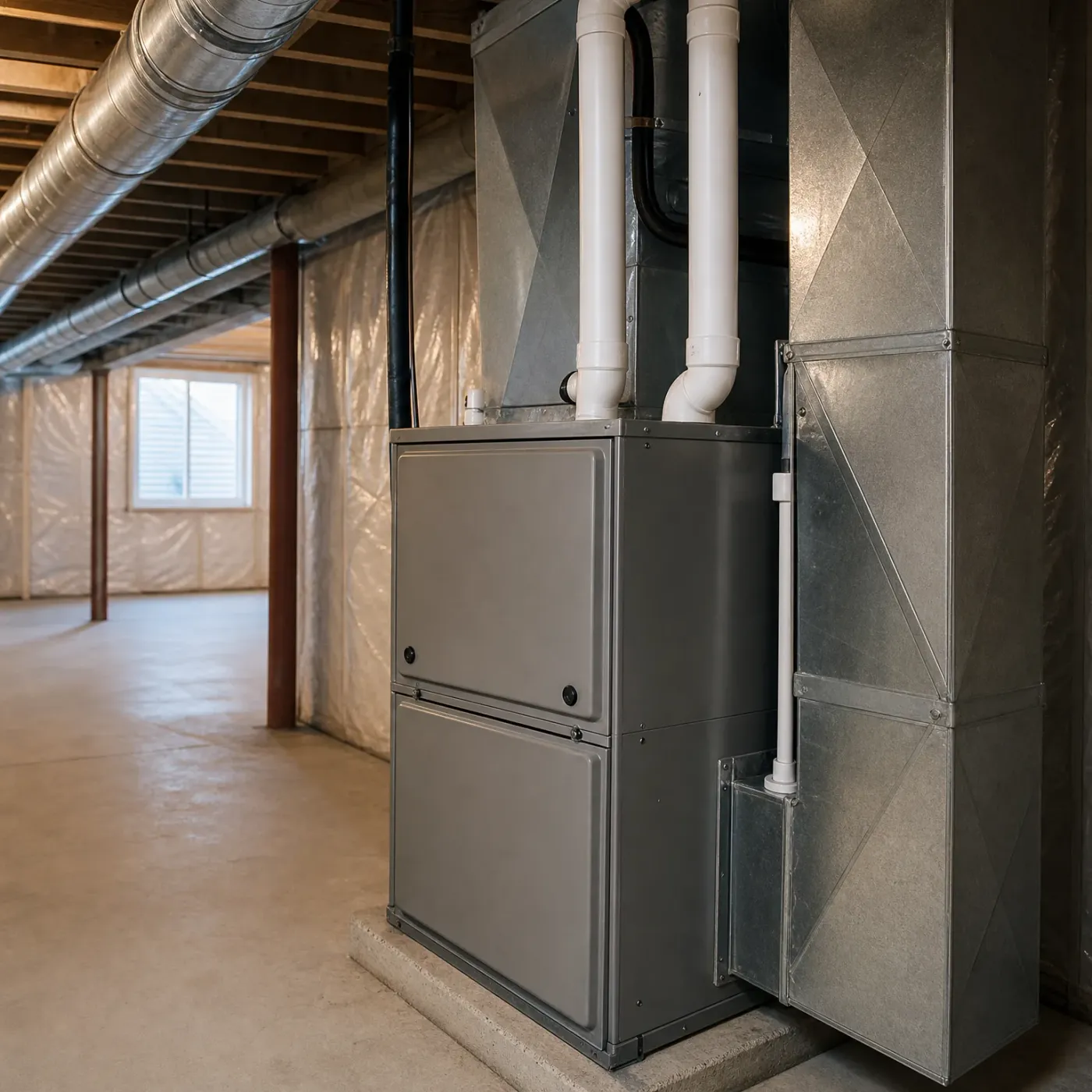
A gray high-efficiency furnace with white PVC vent pipes stands against a concrete basement wall beside sheet-metal ductwork, a small condensate pump on the floor, and exposed wood framing at left.
After you get your furnace maintenance
A gray high-efficiency furnace on a concrete pad in an unfinished basement, with white PVC vent pipes, galvanized sheet-metal ductwork, insulated walls and a small window in the background.

One request and it's handed off

A licensed local pro takes the request for your furnace tune-up.

One request and finding someone for the tune-up is handled.

Reach a local pro

There's no charge for the request.

Tune-Up Now or Wait and See

Skip the tune-up

  • A weak heating element can run hotter than it should for weeks before it trips the limit switch and shuts the furnace down.
  • Loose wire connections at the elements loosen further with each heating cycle, and nobody catches it until the furnace stops producing heat.
  • Dust built up on the blower wheel makes the motor work harder to push the same air, and that shows up on the power bill all winter.
  • If the sequencer is failing, elements can start firing out of order or all at once, which trips breakers on a cold morning.
  • Small problems get found by whoever shows up after the furnace already failed, usually on the day you need heat the most.

Get the tune-up

  • Amp draw gets checked on each element while the furnace is still working, so a weak one gets caught before it fails outright.
  • A local tech who services this kind of furnace every fall knows which parts in these homes tend to go first.
  • The blower motor and wheel get cleaned and checked for wear, which keeps the system moving air the way it was built to.
  • Loose connections get tightened before a cold snap puts real load on them.
  • One contractor handles the visit, so you're dealing with a single licensed, local company instead of fielding calls from several.
A gray gas furnace stands on a concrete basement floor, connected to sheet-metal ductwork, white PVC vent pipes, and a yellow gas line, with plastic sheeting covering the walls.

A furnace running the way it should

The ductwork is tight, the gas line and venting are clean, and everything behind the panel looks the way it did on install day. A furnace kept like this starts every cycle the same way, with no surprises when the temperature drops.

A metal furnace with louvered panels stands against a concrete basement wall, connected to sheet-metal ductwork and a round flue pipe, with wooden framing posts and a pipe nearby.

A furnace nobody has looked at in years

Dust has built up around the burners and the cabinet, and the piping shows its age. Nothing here has failed yet, but a furnace left alone this long is the one that quits on the coldest morning of the year.

Winter nights average 42°F

A 42°F night doesn't sound like much, and for an electric furnace it isn't. But that's still enough to put the elements through a full cycle most nights from December through February. Three months of nightly cycling adds up to real wear on connections a tune-up can catch before they fail.

NOAA nClimDiv 1991-2020

A furnace that never gets looked at still runs fine for a while. Then one morning in January it doesn't, and you're the one standing in a cold house figuring out who to call.

A tune-up moves that morning to a scheduled one instead, on a tech's bench instead of your kitchen floor, before the cold snap, not during it.

How cold does it actually get here, and how often does the furnace run?

  • Winter nights average 42°F

    Winter nights here average 42°F, not freezing, but cold enough that an electric furnace cycles on most nights from December through February.

  • Heat runs November through March

    Five months of use a year isn't nothing. Elements and connections that sit idle all summer get asked to work again every November.

  • 81.3% of homes heat with electricity

    Most homes in Jackson County heat with electricity, which means the parts a tune-up checks, the elements, the sequencer, the blower, are the same parts keeping your house warm.

NOAA nClimDiv 1991-2020 · ACS 2020-2024

A tune-up before winter comes down to this: an electric furnace that gets checked in the fall starts every cold night the same way, and one that doesn't gets found out eventually, usually on the coldest morning of the year. Jackson County winters are mild enough that it's tempting to skip the step, but five months of nightly cycling still wears on elements and connections whether anyone's watching or not. A local tech who works on these furnaces every fall knows which elements tend to run hot, which connections loosen first, and what to check before it becomes a problem instead of a line item. Send the request and it goes to one licensed contractor in the area, not a handful of companies competing for the callback. You'll know who's handling it and what they found. That's the whole point of doing this in October instead of January: nothing left to guess at when the first real cold snap hits.

A single-story stone-clad house with low-voltage path lights along a gravel bed and lawn at dusk, with a tree line and orange sky on the horizon.

Furnace Maintenance

Done looking for a furnace pro

Tune-up, service, or cleaningFurnace or heatingJackson County, MS
Step 1 of 2

What ZIP code is the job in?

  • A multi-pane white window looking out on snow-covered evergreen and bare trees, with a ceramic mug, pine cones, a book, a knit blanket and a burlap cushion in the foreground.
    • Your furnace tune-up request goes to a pro who covers Jackson County.
    • Get matched with a pro who does furnace tune-ups in Jackson County.
  • A cream knit throw and striped pillow on a light upholstered sofa beside a window, with a woven basket of split firewood in the foreground.
    • After this form, you can stop searching for a furnace pro.
    • One request and the search for a pro is handled.
  • A weathered wooden bench with a beige cushion and a fringed brown throw sits on a wood-plank porch beside a large planter with a thin-branched shrub, against a light-colored house wall with a dark-framed window.
    • Skip calling around to set up a furnace tune-up.
    • One form instead of hunting for a pro who does furnace tune-ups.
  • Exterior of a dark shingle-sided house with a white-trimmed divided-light window, a yellow-leaved tree, trimmed shrubs, and two small pumpkins on a stone pillar cap.
    • Your request stays with one local pro.
    • Your request goes to one pro, not a list of companies.