What a furnace tune-up covers before a Mississippi winter

One request and finding someone for the tune-up is handled.

Send my request

What does a furnace tune-up include before winter in Mississippi?

Winter here doesn't last long, but when a cold snap comes through, you want the furnace to just work. If it's been sitting unused since last spring, you're probably wondering what actually gets checked before you rely on it again. You're not looking to overhaul anything, just make sure it's ready and safe to run.

It covers the parts that fail from sitting idle, and the ones that affect safety

A technician checks the igniter or pilot assembly, tests the flame sensor, and inspects the heat exchanger for cracks, since that's the part that can let exhaust mix with the air in your home. They'll check the blower motor, clean the burners, and test the thermostat's connection to the system. Since most homes here heat with electricity, part of the visit is making sure the electric heating elements and the fan are drawing power correctly and cycling the way they should. Filters get checked too. Most of this equipment sits unused for months at a time with Mississippi winters being short, and that idle stretch is exactly when a loose connection or a stuck part gets found, before it fails on the one cold night you need heat.

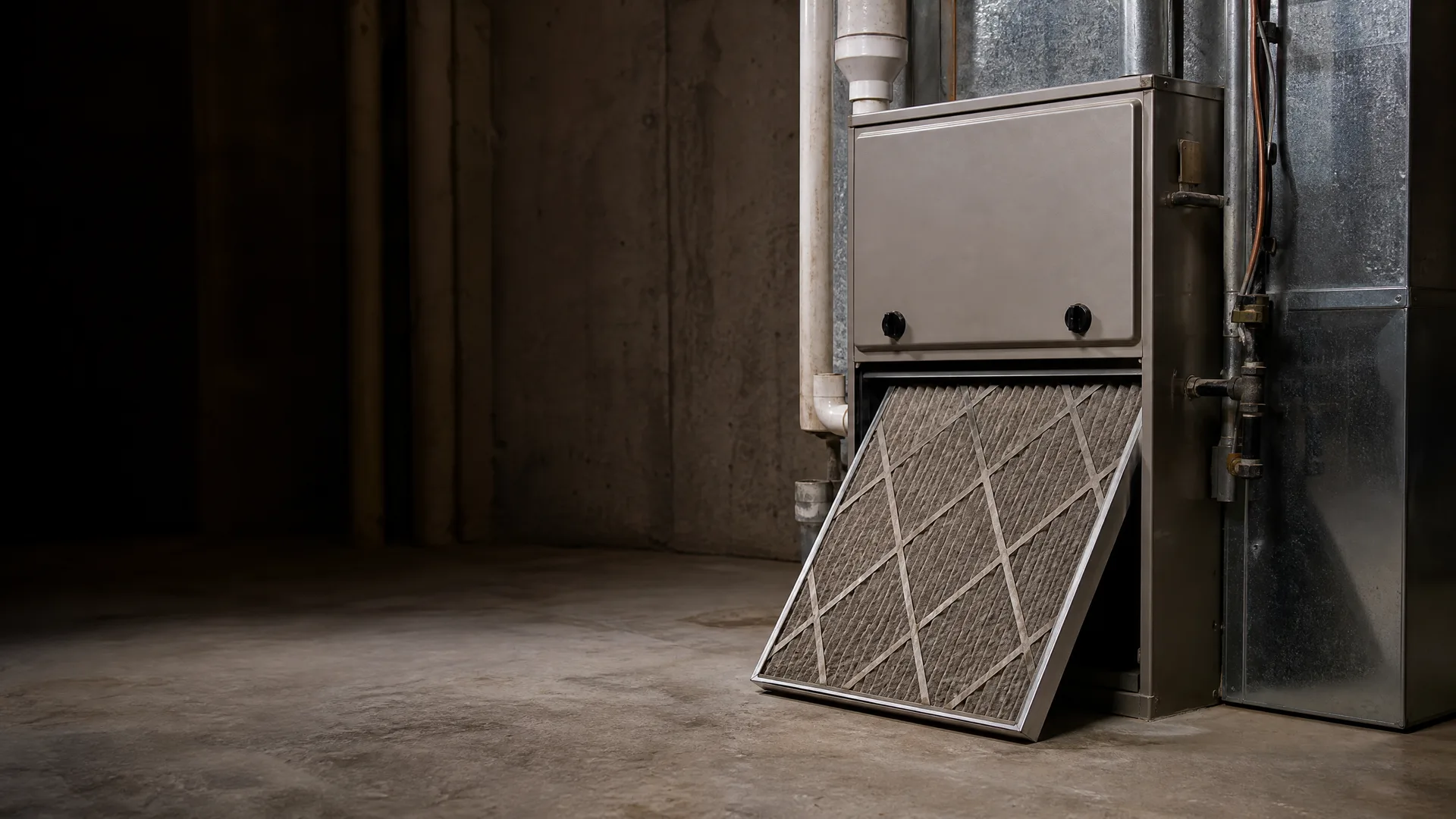
A dirty pleated air filter leans against a furnace with metal ductwork in a dim concrete basement.

You pull the filter out and hold it up to the light from the stairs. Gray, matted, heavier than it should be. It's October, and this is the first time you've touched the furnace since you shut off the AC somewhere back in May. The basement smells like dust and cold concrete. You'd meant to check this back when the mornings first turned cool, and then you didn't. Outside it's still mild, the kind of afternoon where you don't need a jacket yet, but you know how fast that changes here once a front comes through. You turn the filter over once, looking for the airflow arrow, then set it on top of the furnace and just stand there for a second, deciding what to do next.


Tune It Up or Wait and See

Tune-up now

  • A contractor pulls the burners and clears out the dust and spider webs that settled in over the summer, so they light clean and even.
  • The heat exchanger gets checked for cracks, which matters because a cracked one can let exhaust mix into the air your furnace blows through the house.
  • The igniter gets tested under power, since a weak one will strand you on the one morning it drops into the 30s.
  • Electrical connections get tightened, because a loose wire is the kind of thing that shows up as a furnace that won't start at all.
  • The thermostat gets checked against the furnace itself, confirming the two are actually talking to each other before you need them to.
  • Airflow gets measured at the return, which catches a dirty filter or a blocked duct before it makes the furnace work harder than it should.

Skip it

  • The furnace may start fine the first time you flip it on, since most problems with an unused furnace don't announce themselves right away.
  • A cracked heat exchanger gives no warning on its own. It can run for weeks before anyone notices anything is wrong.
  • A furnace that short-cycles or won't hold a flame usually gets found out on the coldest night of the year, not before it.
  • Mississippi winters don't run long, so a furnace that fails might only need to get through a handful of cold snaps before spring. Some homeowners are willing to take that chance.
  • Since most homes here heat with electricity, a furnace that struggles doesn't always show up on the power bill the way a failing AC does in summer.
  • Whatever is wrong gets found when it fails, not before, which means the fix happens on the contractor's timeline instead of yours.
A man in a blue sweatshirt reclines with closed eyes in a brown leather armchair in a living room with a bookshelf, houseplant, sofa, window, and a side table holding newspapers and a dark mug.
A bearded man in a gray pullover reclines with closed eyes on a brown leather sofa in a sunlit room with a window, framed picture, potted plant, and a wooden cabinet holding papers and a dark mug.
A man in a gray sweater leans back with closed eyes in a brown leather armchair beside a wooden side table holding a dark mug and a folded newspaper, with bookshelves and a window seat behind him.
A man in a green sweater reclines in an armchair with his eyes closed and a slight smile, beside a window with plants, a small table holding a mug and folded newspaper, and bookshelves behind him.
A gray high-efficiency furnace in a basement with PVC vent pipes, sheet-metal ductwork, copper and insulated pipes, a water heater at left, and an unfinished wood-stud wall at right.
A furnace that's been checked runs clean, with steady heat moving through the ducts and nothing to think about on a cold morning.
An older beige furnace with louvered front panels stands on a concrete basement floor beside galvanized ductwork, metal and plastic pipes, exposed wood framing, and a cylindrical water heater at right.
A furnace left alone since spring can surprise you with a short cycle, a burner that won't light even, or a smell you notice right away.

Why does the furnace smell like burning dust?

That smell shows up the first time the furnace kicks on after sitting idle since spring. It's dust burning off the heat exchanger and it usually clears in a few minutes. If it lingers past that first cycle, or comes back every time the furnace runs, something's sitting too close to a hot surface or the burners aren't firing the way they should. Listen too for a bang when it first lights, or a burner flame that looks uneven instead of a steady blue. A furnace that short cycles, turning on and off every few minutes instead of running a full heating cycle, is working harder than it needs to and wearing itself out faster doing it.

  1. Contractor checks the thermostat calls for heat and the furnace responds

  2. Burners get pulled and cleaned of dust and spider webs from summer

  3. Flame is watched for even color and steady shape across each burner

  4. Heat exchanger is inspected for cracks that could leak exhaust into the air

A gray-haired man with a beard in a blue button-placket shirt reclines on a couch with his eyes closed, beside a sunlit window with a green plant.
A woman in a cream knit sweater sits in an armchair with her eyes closed near a window showing yellow autumn foliage, with a mug on a round wooden side table beside her.

Stop chasing a furnace pro

Most houses in Mississippi heat with electricity, and a furnace that sat untouched since May will tell you about it on the first cold morning, not before. A tune-up now means someone pulls the burners, checks the flame, and looks over the heat exchanger while it's still mild out, so you're not finding out about a problem the same week you need the heat. Send the request through and it goes to one local contractor, not five companies competing for your callback. That contractor works on furnaces in homes like yours all season, so they know what tends to go wrong after a summer of sitting idle and what to check first. You don't have to track down who's available or sort through quotes. The form takes the search off your plate. With winter here short but real when it hits, getting this looked at before that first cold snap is the difference between a furnace that just works and one that makes you find out the hard way.

A gray high-efficiency furnace with two access panels stands in a bare basement corner, connected to sheet-metal ductwork, white PVC vent pipes, and flexible gas and electrical lines.

The igniter does the work now

Older furnaces held a standing pilot that stayed lit all year. Most furnaces in Mississippi homes now use an electric igniter instead, which only draws power when the thermostat calls for heat. After sitting idle since spring, that igniter has to glow hot enough to catch the gas on the first try. A weak one will click and fail a few times before it either catches late or doesn't catch at all.

A gas furnace with metal ductwork, copper and yellow gas piping stands against a wall in an empty room with a bare concrete floor.

Airflow depends on a clean filter

The furnace doesn't heat the air directly where you feel it. It warms air that the blower pushes through the ducts and out the vents into each room. A filter clogged with a summer's worth of dust slows that air down, so the burners run while less heat actually reaches you. It also makes the blower work harder to push air through, which is the opposite of what you want on a cold morning.

Winter nights average 38°F statewide

38°F isn't hard freezing, but it's cold enough that the furnace has to carry the house through the night, not just take the edge off. A short tune-up now means it can hold that overnight low without a hiccup on the first try.

NOAA nClimDiv 1991-2020 county normals weighted by homes

A gray high-efficiency furnace with white PVC venting pipes stands on blocks in a basement next to sheet-metal ductwork, with exposed wood framing on the left and a concrete wall and floor.

Checked and running clean

This is what a serviced furnace looks like: burners firing even, condensate line clear, nothing sitting around that shouldn't be there. A contractor who's been through it before the cold hits has already seen whatever was going to go wrong and dealt with it on their schedule, not yours.

An older gas furnace with two white PVC vent pipes stands on a concrete basement floor beside galvanized sheet-metal ductwork, flexible conduit, and piping along a wall.

Left alone since spring

This is the same kind of furnace after six months of silence, nobody checking the burners or the flue since the AC took over in May. It might start up fine. It might also short cycle or give you that burning dust smell past the first few minutes, and you won't know which until that first cold night.

A furnace that sat quiet since May just needs someone to look it over before that first cold morning asks too much of it. That's the whole job. A local contractor who services this equipment every fall has seen what usually goes wrong after a long summer off, the dusty burners, the igniter that's gone weak, the flame that won't sit even, and knows where to look first. You're matched with one contractor, not a handful calling at once, someone licensed to do the work and familiar with furnaces like yours in homes like yours. Send the request and the search is off your plate. Mississippi winters don't ask much of a furnace, but they ask something, and a furnace that's been checked over is ready for it. One that hasn't will let you know, probably on the coldest night so far.

An empty basement with bare concrete walls and floor, exposed wooden joists and pipes overhead, and a dark furnace with sheet-metal ductwork and vent pipes in the right corner.

Send one request and you're done looking

Your request goes to one pro, not a list of companies.

Tune-up, service, or cleaningFurnace or heatingMississippi
Step 1 of 2

What ZIP code is the job in?