What to do when the heat goes out in Southaven, MS

Your request goes to a DeSoto County pro who takes furnace jobs.

Connect with a pro

First check the thermostat is set to heat and the temperature is set above room temperature, then check the breaker box for a tripped breaker, since a furnace that won't start at all is often just that. If the furnace runs but blows cold air, or if it starts and shuts off again, that points to the igniter, the flame sensor, or a safety switch that's stopped it from running. Most homes in and around Southaven heat with gas, and a gas furnace that won't light is not something to force or keep resetting. Winters here get cold enough that a dead furnace is more than an inconvenience, especially overnight. If the breaker is fine and the thermostat is set right and you still have no heat, the furnace needs a technician to find out which part failed.

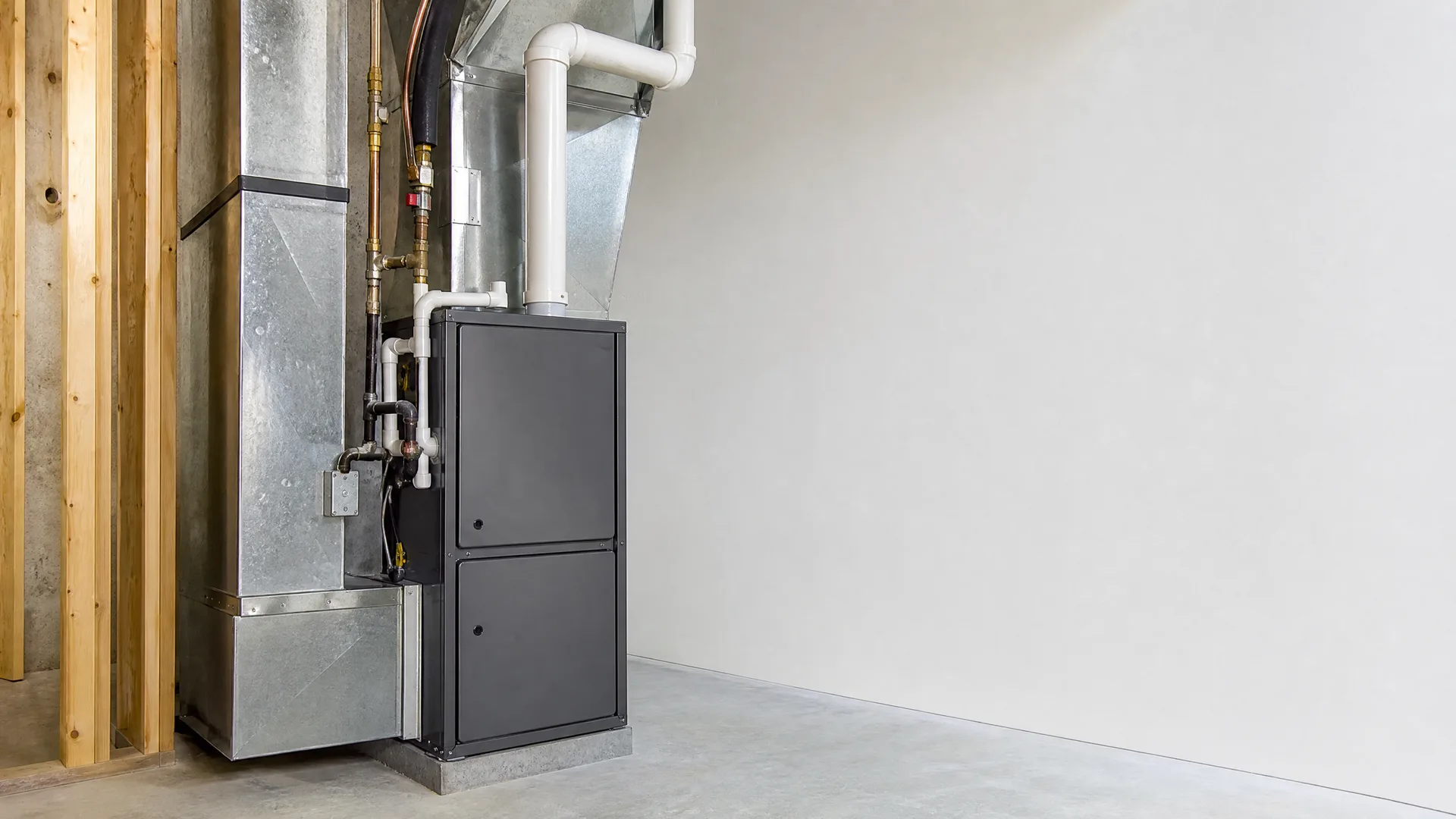
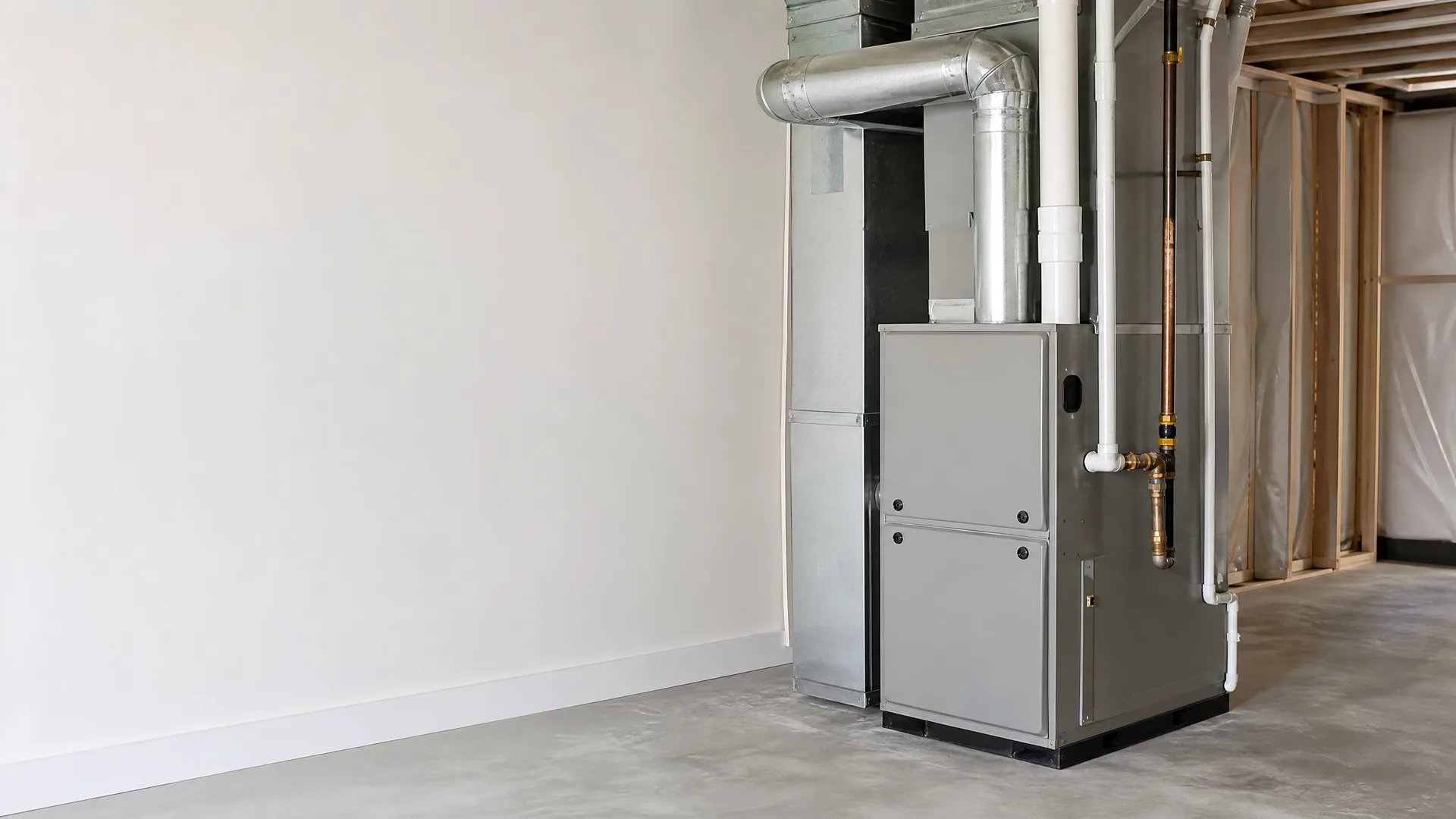
A dark gray furnace connected to galvanized sheet-metal ductwork, white PVC vent pipes and copper piping, standing against a plain light wall in a room with a bare concrete floor and exposed wood framing at left.

Why the igniter fails first

Most gas furnaces here use a hot surface igniter instead of a pilot light. It's a thin strip that glows to light the burners, and it takes that heat cycle after cycle all winter. Eventually it cracks. A furnace that clicks, tries to start, and shuts off again is usually telling you the igniter is weak or the flame sensor can't see a flame to confirm it lit. Either part is a straightforward swap for someone who works on these every season.

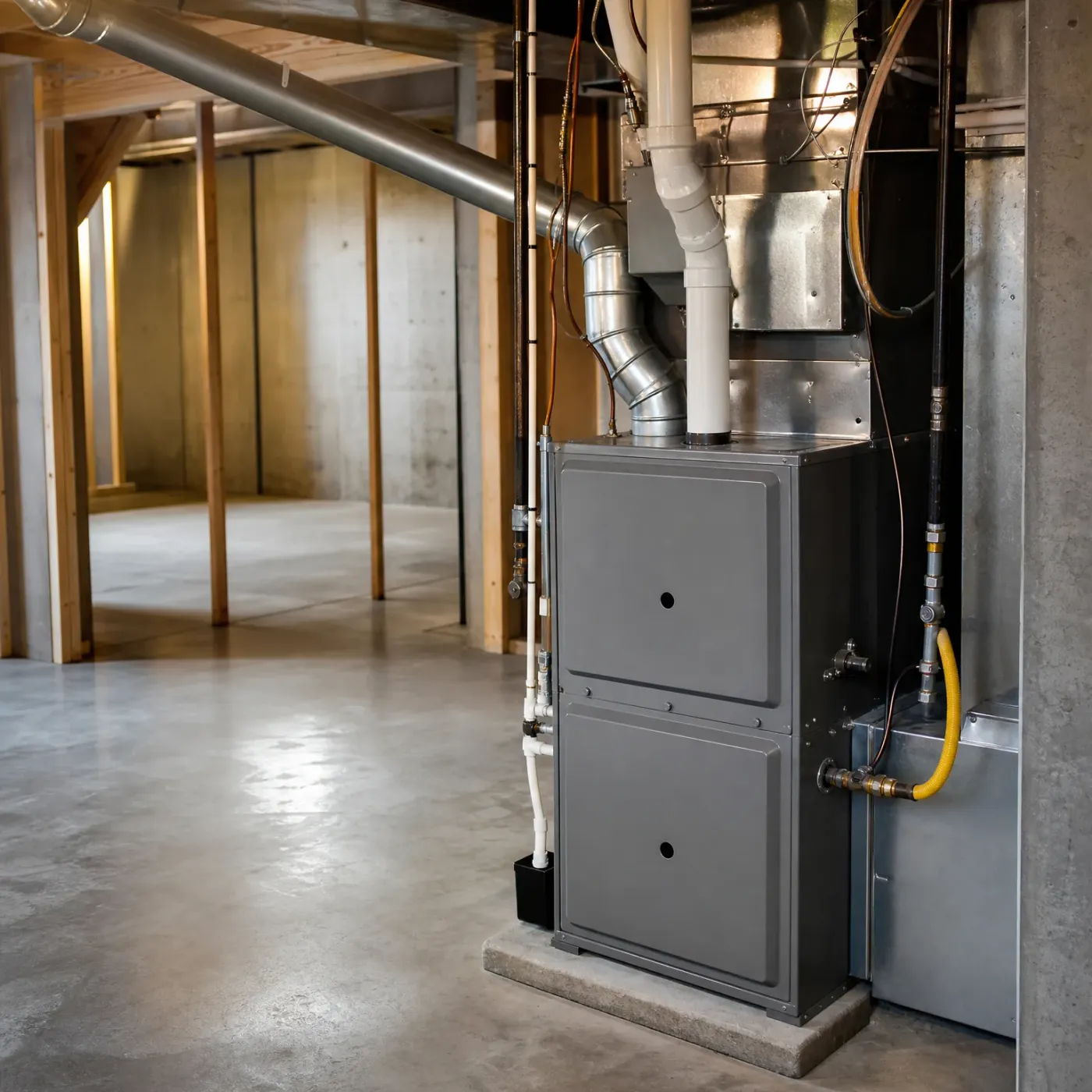
A gray high-efficiency furnace with sheet-metal ductwork, white PVC vent pipes and copper piping stands against a wall in an unfinished basement with a concrete floor and insulated wood stud framing at right.

What the vents and filter do

The blower pushes air through the ducts and the filter cleans it on the way past. Neither one makes the heat. If the filter is packed with dust, the furnace has to work harder to push air through it, and some models will shut themselves down rather than overheat. A closed vent or a vent blocked by furniture does the same thing to the air on its way out. Checking both is quick and costs nothing before anyone comes out to look at the burners or the igniter.

Why does a furnace failure matter so much here

  • Winter nights average 34°F

    Overnight lows average 34°F through December, January and February, so a house without heat gets cold fast once the sun goes down.

  • Heat runs November through March

    Furnaces in DeSoto County run about five months a year, November through March, so a breakdown has a long stretch of winter to happen in.

  • 55.3% of homes heat with gas

    Gas heats 55.3% of homes here, more than any other fuel, so most furnace trouble traces back to the burners, the igniter or the gas valve.

NOAA nClimDiv 1991-2020 · ACS 2020-2024

Furnace is old or has failed before

A furnace that's already needed repairs, or one that came with the house years back, is more likely to leave you without heat at the worst time. If it's gone out before, or if a contractor has already pointed out a cracked heat exchanger or a worn blower motor, a repair now may just buy a short stretch before the next breakdown. Weigh what another repair costs against what's left of the furnace's life. Someone who works on these units every winter can tell you honestly whether yours still has enough life in it to make the repair worth it.


Furnace is newer and otherwise reliable

If your furnace is recent, or this is the first time it's given you trouble, a repair is the straightforward move. One failed part, like an igniter or a flame sensor, doesn't mean the rest of the furnace is wearing out too. Getting it fixed gets the heat back on without the cost of replacing a unit that still has years ahead of it. A local contractor who sees these furnaces all winter can look at what actually failed and confirm there's nothing else working against you.

A woman with dark hair in a bun wearing a cream knit sweater sits on a gray sofa in a bright living room, looking off to the side.
A woman wrapped in a knit blanket sits on a gray sofa in a living room, looking toward a bright window with houseplants and an armchair in the background.
A woman in a gray cowl-neck sweater sits on a light sofa with cushions, smiling and looking to the side, with a kitchen and window visible behind her.
A woman with dark hair in a bun, wearing a light linen shirt, sits on a sofa and looks to the side, with a window, houseplants and a kitchen with pendant lights blurred behind her.
A gray gas furnace on a concrete pad in an unfinished basement, connected to sheet-metal ductwork, white PVC venting, and a yellow gas line, with concrete walls and wood framing in the background.

Get the right pro for your furnace

A licensed pro who repairs furnaces in DeSoto County gets your request.

Get matched with someone who does this kind of work in DeSoto County.

Find a pro near me

Sending the form costs nothing.

Why does your house feel colder than it should

You might notice the air coming from the vents feels barely warm, or not warm at all. Some rooms heat fine while others stay cold, especially ones farthest from the furnace. The furnace might run longer than it used to, cycling on and off more often, or you hear it try to start and shut back off. A burning smell the first time it kicks on for the season is normal and should fade in an hour. One that lingers, or a smell like rotten eggs, is not. Left alone, a furnace that's struggling tends to fail outright on the coldest night, not a mild one, since cold is what makes it work hardest.

A gray high-efficiency furnace in a basement with white PVC vent pipes, sheet-metal ductwork, copper and black piping, a condensate pump, and insulated walls above a concrete floor.

Running the way it should

Warm air moves through the ductwork, the condensate line drains to the pump without pooling, and the burners cycle on and off without a fight. A furnace in this shape should get you through to March without a call.

A beige residential furnace stands on a concrete basement floor beside galvanized sheet-metal ductwork, a round flue pipe, copper gas piping, and a PVC condensate line, with a wood-paneled wall at right.

Worn down after years of winters

Grime on the cabinet, a flue pipe that's aged, panels that don't seat the way they used to. None of that stops a furnace outright, but it's usually what a contractor finds once one finally does.

Repair Now or Replace Soon

Call for Repair

  • The furnace has worked fine until now and this is the first time it's acted up this winter.
  • You can hear or see what's wrong, like a clicking igniter or a burner that won't catch, rather than total silence.
  • The furnace is under 15 years old and hasn't needed a repair like this before.
  • A contractor has not already told you the heat exchanger is cracked or the blower motor is failing.
  • Parts are still available for the unit, which matters more the older the furnace gets.
  • You want heat back this week, not a new system installed before the cold breaks.

Plan for Replacement

  • The furnace has already been repaired more than once in the past couple of winters.
  • It came with the house and nobody can say how old it actually is.
  • A contractor has flagged a cracked heat exchanger, which is a safety issue and not something to patch.
  • The repair cost is close to what a new furnace would run, which a contractor can tell you once they've looked at it.
  • Rooms stay cold no matter how long the furnace runs, which can mean the unit is undersized or wearing out, not just malfunctioning.
  • You'd rather handle it now, in Southaven's mild stretch, than wait for the next cold snap in December or January to force the issue.
  1. Thermostat calls for heat and signals the control board

  2. Inducer motor starts and pulls air through the heat exchanger

  3. Hot surface igniter glows to light the gas burners

  4. Burners ignite and flame sensor confirms they're lit

A gray furnace with two access panels stands on a concrete basement floor beside sheet-metal ductwork, with pipes, flexible conduit and an electrical box on the concrete wall to the left.
Before you get your furnace repair
A gray high-efficiency furnace stands on a concrete basement floor beside galvanized sheet-metal ductwork, white PVC vent pipes, copper and black piping, and unfinished wood stud framing.
After you get your furnace repair

You wait it out, hoping the furnace starts working again on its own, while the house gets colder and the people in it feel it most at night when temperatures outside have dropped into the 30s.

You get a local contractor out to look at it, find the actual part that's failed, and have heat back before the next cold night sets in rather than after several more have passed.

Winter nights average 34°F

At 34°F, a house with no heat doesn't coast till morning. Pipes and people both feel it within a couple of hours, well before you'd wake up to check on things. That's the number a furnace here has to beat every night, December through February.

NOAA nClimDiv 1991-2020

A gray high-efficiency furnace with white PVC vent pipes stands beside sheet-metal ductwork and a water heater in an unfinished basement with concrete walls and wood framing.

Properly matched system

This is what a furnace should look like after years of use: clean ductwork connections, a dry flue, and nothing improvised. A system like this was likely sized and installed correctly from the start, and a contractor who services it regularly tends to catch small problems before they become no-heat calls.

A beige gas furnace with a metal flue pipe stands in a basement against concrete block walls, beside sheet-metal ductwork, copper and white plastic pipes, and a water heater at right.

Aging and overdue

Galvanized ductwork and older piping like this often mean the furnace has been in place a long time, maybe since the house was built. Older units like this are more likely to have a cracked heat exchanger or a worn-out igniter, and once one part starts failing, others tend to follow.

A smiling older woman with gray hair in a loose bun wearing a ribbed beige sweater stands in a dimly lit kitchen beside a window showing darkness outside, with a loaf of crusty bread on a wooden board in the foreground.
A woman and a child wrapped together in a thick knitted beige blanket on a sofa, both with eyes closed, beside a lit table lamp in a dim room.
A woman in a long cream cardigan and jeans stands at an open wooden front door of a gray shingled house with stone-based porch columns, with a second person visible inside, and potted flowers and shrubs beside the entry.

When the furnace goes out, get it looked at before the next cold night

A furnace that won't light, or runs but doesn't keep up, has a cause. Sometimes it's the igniter. Sometimes it's a flame sensor that's stopped reading the burners right. A contractor who works on these units all winter in DeSoto County has seen most of what can go wrong and knows where to look first.

Getting matched means one local contractor reaches out to you, not a handful of companies competing for the callback. Someone who already knows what tends to fail on furnaces around here, and can get to yours before the next night in the 30s.

Interior corner with sheer white curtains at a window, a brown upholstered sofa in the foreground, and a wooden multi-drawer cabinet holding a round ceramic vase with leafy branches.
A dark gray high-efficiency furnace with two white vent pipes and connected sheet-metal ductwork stands in an unfinished basement with concrete walls, a support pole, and a small window.

A pro who works on furnaces

RepairFurnace or heatingDeSoto County, MS
Step 1 of 2

What ZIP code is the job in?