
Furnace won't turn on in Tupelo, MS

RepairFurnace or heatingLee County, MS
Step 1 of 2

What ZIP code is the job in?

Why won't my furnace turn on?

Cold weather in Lee County puts a furnace to work fast, so when it won't start at all, you want to know whether it's something simple or something that needs a contractor. A few common causes stop a furnace cold, and most of them show themselves pretty clearly once you know what to check.

Usually a thermostat setting, a tripped breaker or a bad igniter

Start with the thermostat. If it's set to cool or off, or the batteries are dead, the furnace has no reason to run. Next check the breaker panel. A tripped breaker cuts power to the furnace even though the rest of the house looks fine. If those check out, the problem is usually inside the furnace itself, often a failed igniter, which is the most common reason a furnace won't light even when it's getting power. Most homes in Lee County heat with electricity, and an electric furnace that won't start can also mean a bad heating element or a blown fuse on the control board. None of these are things to guess at once the easy checks are done.

A gray high-efficiency furnace with white PVC vent pipes stands in an unfinished basement beside sheet-metal ductwork, gas piping, and insulated stud walls on a concrete floor.

Furnace running normally

Air moves steady out of every vent and the room warms up within a few minutes of the thermostat call. The burner lights on the first try, no clicking or delay, and it stays lit until the room hits temperature. No burning smell, no short cycling.


A beige sheet-metal furnace with a louvered upper panel stands on a concrete basement floor, connected to galvanized ductwork, white PVC vent pipes, and a metal gas line with an electrical box.

Furnace that won't start

The thermostat calls for heat but nothing happens, not even a click from the unit. Or it clicks and tries, then goes quiet. Vents stay cold, the room temperature doesn't move, and the furnace sits dead no matter how many times you adjust the thermostat.

A woman with wavy blonde hair wearing a grey knit cardigan over a green top sits on a sofa in a living room, looking off to the side.
A woman with long brown hair in a cream knit sweater sits on a light sofa in a living room, looking toward a window with sunlight on her face.
A woman in a gray sweater sits in a chair in a living room with a dark sofa, wooden coffee table with a potted plant, and a staircase behind her, looking toward a window.
A smiling woman with dark hair in an updo, wearing a gray ribbed turtleneck sweater, sits on a light sofa in a living room and looks off to the side.

Where the problem usually starts

  • Most furnaces here are electric, so a tripped breaker in the panel is one of the first things worth checking.
  • The thermostat sends a call for heat to the control board before anything else happens, so dead batteries stop the whole process.
  • A furnace that hums but never starts the blower may have a failed blower motor or a stuck relay on the control board.
  • Some systems have a high limit switch that shuts the furnace down if airflow is blocked, often by a dirty filter.
  • A door panel left loose or off its latch can trip a safety switch that keeps the furnace from running at all.
  • If the furnace ran fine last winter and sat unused since spring, a part can fail from sitting idle as easily as from use.

Start with the panel. Most furnaces around Tupelo run on electricity, and a tripped breaker will stop one cold without any other sign something is wrong. If the breaker is fine, check the thermostat. It has to send a call for heat to the control board before the furnace does anything at all, and weak or dead batteries break that signal just as surely as a power outage would. If the furnace hums but the blower never comes on, the motor itself may have failed, or a relay on the control board could be stuck and not passing the signal through. Airflow matters too. A high limit switch is built into most furnaces to shut things down if air can't move through properly, and a dirty filter is the most common reason that switch trips. Even the door panel plays a part. Furnaces have a safety switch behind that panel, and if it's left loose or not latched all the way, the furnace won't fire, no matter how fine everything else is. And if the furnace sat idle all spring and summer and worked fine last winter, that time off isn't nothing. A part can fail from months of sitting still just as easily as it fails from a winter of running hard.

A gray high-efficiency furnace with white PVC vent pipes stands beside galvanized sheet-metal ductwork in a basement with a concrete floor, with a wooden staircase and railing at left.
The burner lights within seconds of the thermostat call and keeps running until the room reaches temperature, with steady air from every vent.
An older gas furnace with louvered panels sits on a concrete pad in a basement, connected to sheet-metal ductwork and PVC and metal pipes, with a water heater and wooden stair framing in the background.
The furnace sits dark and silent at the thermostat call, no burner sound and no air at the vents, no matter how many times you try it.
  1. Thermostat calls for heat and sends power to the control board

  2. Control board checks the limit switch and safety circuits before acting

  3. Inducer motor starts to pull air through the heat exchanger and vent

  4. Pressure switch confirms draft before the board allows ignition

What are you noticing right now in your house

The thermostat screen is lit but nothing happens when it calls for heat. No air at the vents, no burner sound, no warm air coming up anywhere in the house. Rooms are holding steady at whatever temperature they were at when the furnace quit, and on a cold night in Lee County that drop shows up fast, especially in rooms furthest from the thermostat. You might hear a faint click from the furnace closet or attic and then silence, or you might hear nothing at all. If this has been going on for more than a few hours, check on anyone in the house who's more sensitive to cold, young kids or older family members, since the house will keep losing warmth the longer the furnace stays off.

A gray furnace with sheet-metal ductwork, PVC vent pipes and a yellow gas line stands on a concrete basement floor beside wooden stair framing.

Furnace running the way it should

The flue pipe, gas line and ductwork all tie into the furnace cleanly, each one doing its job. Air moves through the ducts as soon as the burner lights, and the furnace keeps running until the thermostat is satisfied.

An older gas furnace with a louvered front panel stands on a concrete basement floor beside galvanized sheet-metal ductwork, a metal flue pipe, gas piping and a flexible conduit along a concrete wall.

Furnace that won't start

The gas pipes and flex conduit are still connected, but the furnace itself sits quiet. No burner sound, no air moving through the ductwork above it, nothing happening when the thermostat calls for heat.

How cold does it actually get when your furnace won't start

  • Winter nights average 34°F

    Overnight lows average 34°F through December, January and February, so a furnace that won't start is a problem the same night, not something to put off.

  • Heat runs November through March

    Heat runs here from November through March, about five months, which is a long stretch to be without a working furnace if something goes wrong early.

  • 51.6% of homes heat with electricity

    More than half of homes in Lee County, 51.6%, heat with electricity, so an electric furnace that won't fire often points back to the breaker panel first.

NOAA nClimDiv 1991-2020 · ACS 2020-2024

A beige furnace with a louvered front panel and metal ductwork stands on a concrete basement floor beside pipes and a white cylindrical water heater.
Before you get your furnace repair
A gray high-efficiency furnace in a basement with PVC venting pipes, a yellow gas line, metal ductwork, concrete walls and floor, and a wood-framed stairway at left.
After you get your furnace repair

Find a furnace repair pro in Lee County

A dead furnace in Lee County on a 34 degree night is not something to sit with while you call around to find out who can even look at it. Most homes here run on electric heat, which narrows down what's wrong but doesn't fix it, and a breaker or a board you can't safely test is still a dark house until someone qualified gets to it. The usual run is finding a few contractors, calling each one, explaining the same dead-on-arrival furnace story over and over, then waiting to see who actually calls back and comparing whatever quotes show up. That's hours you don't have when the house is already cooling off. Handing this off means you tell it once, to one contractor who takes it from there, instead of running that same loop yourself while the rooms keep losing ground. The furnace still needs a look. What changes is whether you're the one chasing that down tonight.

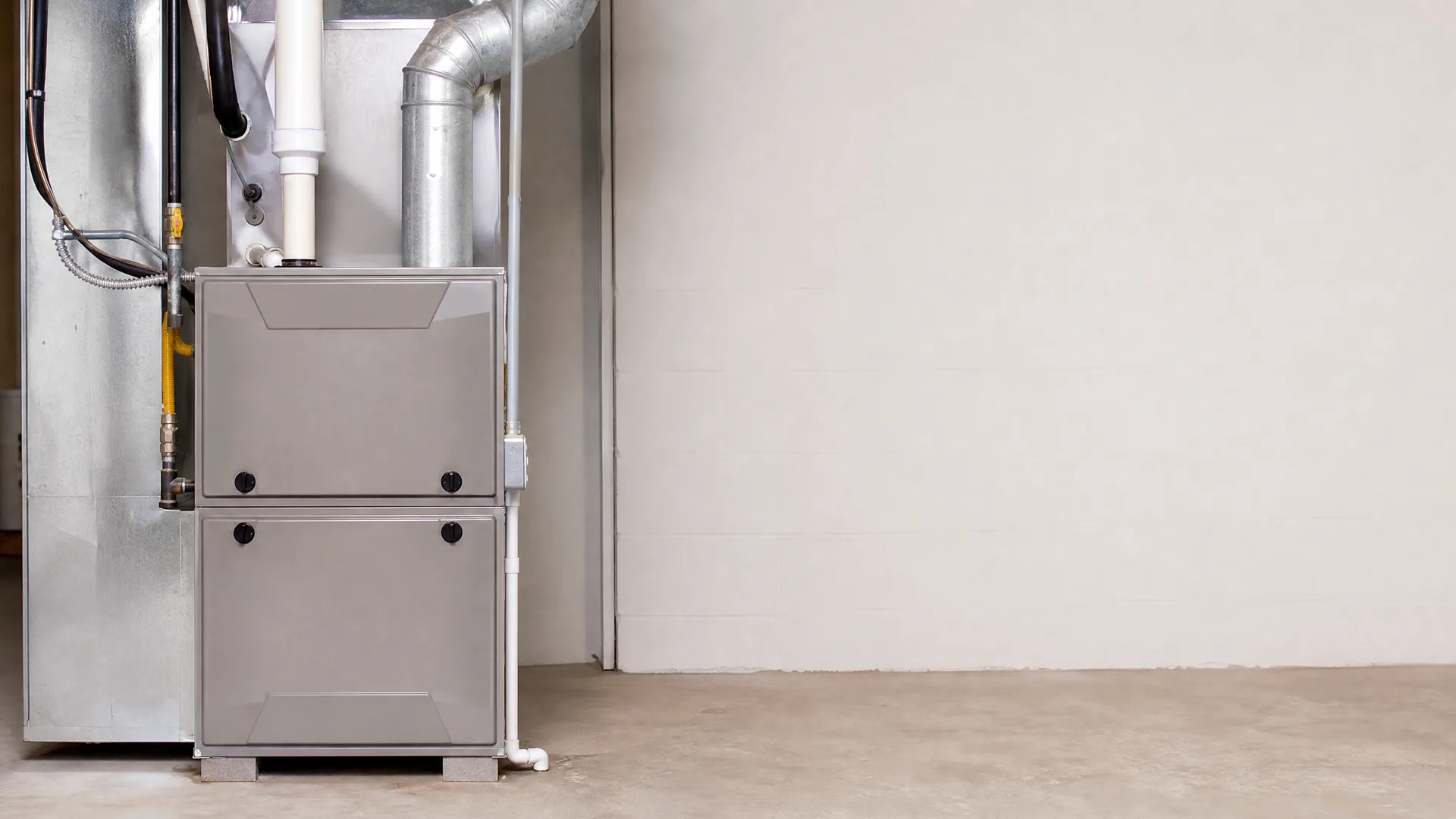
A gray gas furnace with ductwork, PVC venting and gas piping stands against a light-colored wall on a concrete floor, with empty wall space to the right.

Most homes here run on electric heat

An electric furnace pulls a heavy current through a panel of resistance coils, and each coil has its own limit switch and sometimes its own breaker inside the furnace cabinet. If one coil fails open, the furnace can still try to start on the rest, but if the sequencer that brings the coils on one at a time fails, the board may never get the signal that it's safe to run the blower at all.

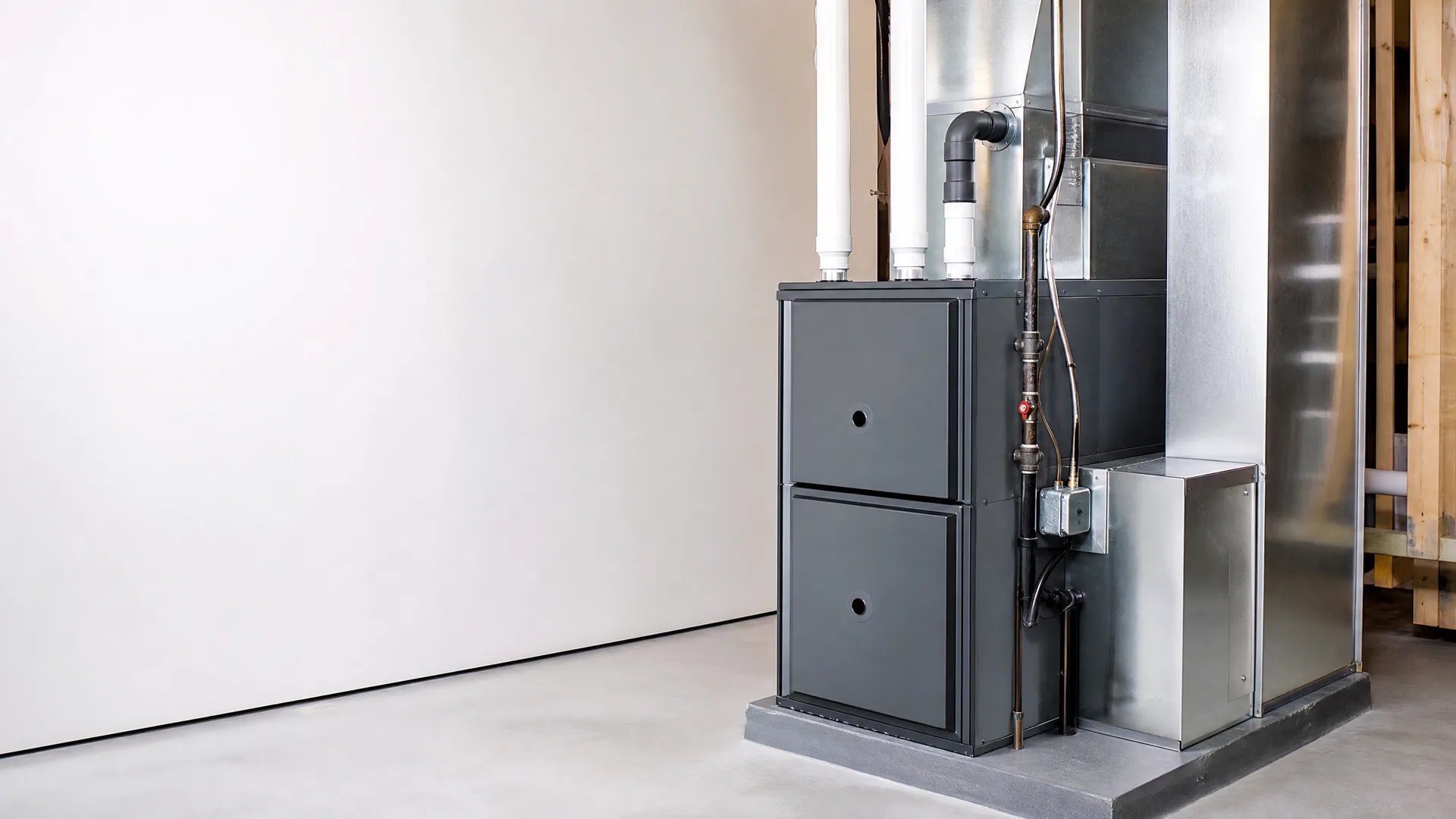
A dark gray furnace with two access panels sits on a concrete pad beside sheet-metal ductwork, white PVC vent pipes, copper gas piping and an electrical junction box against a plain light wall.

Why the inducer matters first

Before any heat is made, the inducer motor has to spin up and prove it's pulling air through the vent pipe. A pressure switch checks that draft and holds the rest of the furnace off until it sees it. If the inducer is seized or the vent pipe is blocked, that switch never closes, the board stops right there, and nothing downstream gets a chance to run, no matter what shape the coils are in.

A man in a dark jacket and khaki pants walks through an open gate in a stone wall toward a woman standing in the open front doorway of a single-story white house with a dark shingled roof and river-rock accents.

What a dead furnace means for your house tonight

With the furnace dark, your house starts losing ground as soon as the sun does. A home in Lee County doesn't hold heat long once the furnace stops pulling its weight, and by morning the rooms where people sleep are the ones that feel it first. If there are kids or older people in the house, that drop matters more than the thermostat number does.

A space heater in one room buys you a few hours, not a fix. If the problem is a failed limit switch or a coil that's gone open, it stays broken until someone with the right tools gets into the cabinet. Rather than working the phone to find a contractor who can come out on short notice, you can get matched with one here and let them reach you.

Interior corner of a living room with a beige upholstered armchair holding a textured pillow and throw, a eucalyptus arrangement in a ceramic vase on a wooden table in the foreground, a blurred glass-front cabinet behind, and a potted plant on a sunlit window sill.
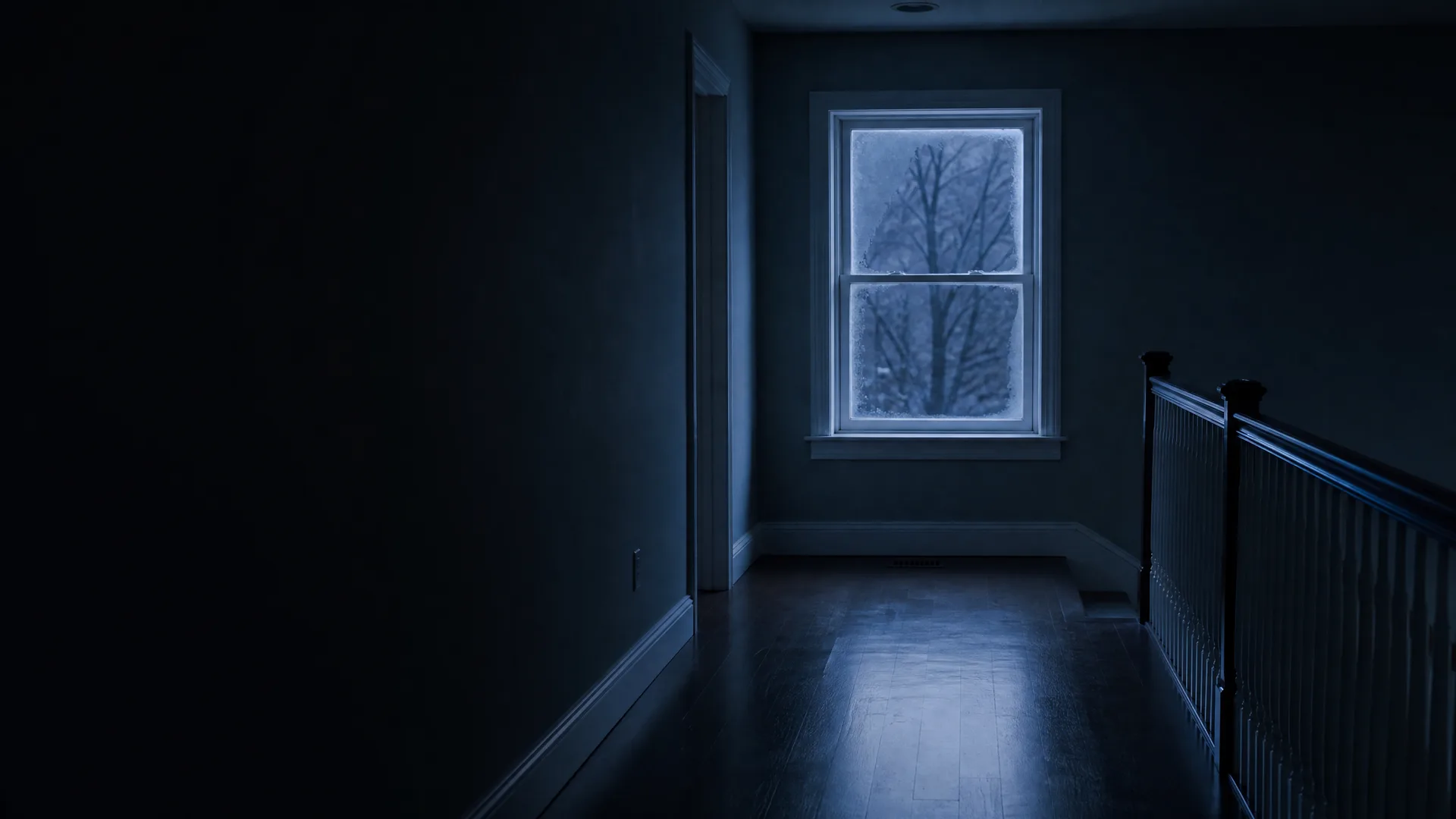
A dark interior hallway with a dark wood floor, a floor vent, a doorway on the left, and a stair railing on the right, lit only by a tall double-hung window showing bare tree branches outside.

It's 2 a.m. and you're awake for no reason you can name, until you notice the quiet. The vents aren't ticking the way they do when air's moving through them. You get up and walk the hallway upstairs, and the floor is cold under your feet in a way it shouldn't be. Frost has crept along the edges of the window at the end of the hall, a thin white line catching the streetlight. The thermostat screen glows but nothing answers it. Thirty-four degrees outside, maybe less by now, and the house is already starting to match it.

Winter nights average 34°F

A 34°F night doesn't give a dead furnace any room to wait. That's the average low, so plenty of nights run colder, and a house here loses heat fast once the furnace stops pulling its weight.

NOAA nClimDiv 1991-2020

A furnace that won't start is almost always a breaker, a board, a switch, or a coil that failed open, and which one it is decides whether you're looking at a quick fix or a repair that takes real tools and time. You don't have to figure out which by yourself. Instead of pulling the panel cover, searching for furnace repair companies near Tupelo, calling a few, and explaining the same cold house twice or three times before anyone shows up, you can get matched with a contractor who works on electric furnaces in Lee County and have them reach out to you directly. The house is still cold right now and the thermostat still isn't getting an answer from the furnace. That part hasn't changed. What changes is you're not the one tracking down who can come look at it.

Sunlight falls across a beige upholstered sofa with a textured woven cushion and a chunky knit throw, beside a dark wood cabinet holding a ceramic vase with green leafy branches, near a white-framed window.
A sunlit corner of a room with a wooden side table holding a ceramic vase of green foliage and a wooden bowl, beside a light upholstered sofa with a knit throw and rust-colored pillow, with window shadows cast on a beige wall.
A sunlit room corner with beige walls, a white-framed window with sheer cream curtain, wood floor with a light rug, and a woven basket holding a knit blanket.
A beige ceramic vase holding a leafy green branch sits on a wooden cabinet in a corner, with sunlight through a sheer curtain casting leaf shadows on the wall.
A grey upholstered sofa with a rust-orange velvet cushion and a textured throw sits beside a window with linen curtains, next to a wooden side table holding a pale ceramic vase of olive branches.

The right pro for this job

One form replaces the calls you'd make to find a furnace pro.

Skip calling around

It costs nothing to send, and you don't have to hire anyone.