





How long a heat pump lasts in Meridian, MS

I'm done searching

A heat pump in Lauderdale County works most of the year. Summers here run long and muggy, and with most homes heating with electricity, that same unit carries the load straight through the mild winters too. That kind of use adds up, and sooner or later the question stops being how long it lasts and starts being what to do when it doesn't keep up anymore. If you're weighing a replacement, you don't have to start calling around Meridian, explaining the same situation to one company after another, and sorting through quotes that are hard to compare. Send the form here and that part is off your plate. You'll be matched with a licensed contractor who installs heat pumps in this area and knows what a system here is up against. No more tracking down names or repeating yourself. Just a straight path to someone who can look at your home and tell you what it actually needs.

How long does a heat pump last in Meridian, MS?

You've had the same heat pump running for a while now, and with it working through both the long summers and the mild winters here, you're wondering how much life is really left in it before you're stuck without cooling or heat.

Most heat pumps last 10 to 15 years in Lauderdale County

A heat pump elsewhere might coast through a short cooling season and rest the rest of the year. Yours doesn't get that break. Because most homes here run on electric heat, the same unit that cools your house in July is also warming it in January, so it logs more hours over a year than one that only runs in summer. That extra runtime wears on the compressor and the outdoor coil faster, which is why 10 to 15 years is a more realistic range here than the 15 to 20 you might see quoted elsewhere. A unit on the older end of that range, especially one that's needed more than one repair in the past year or two, is worth having looked at before it fails on the coldest or hottest day of the year.

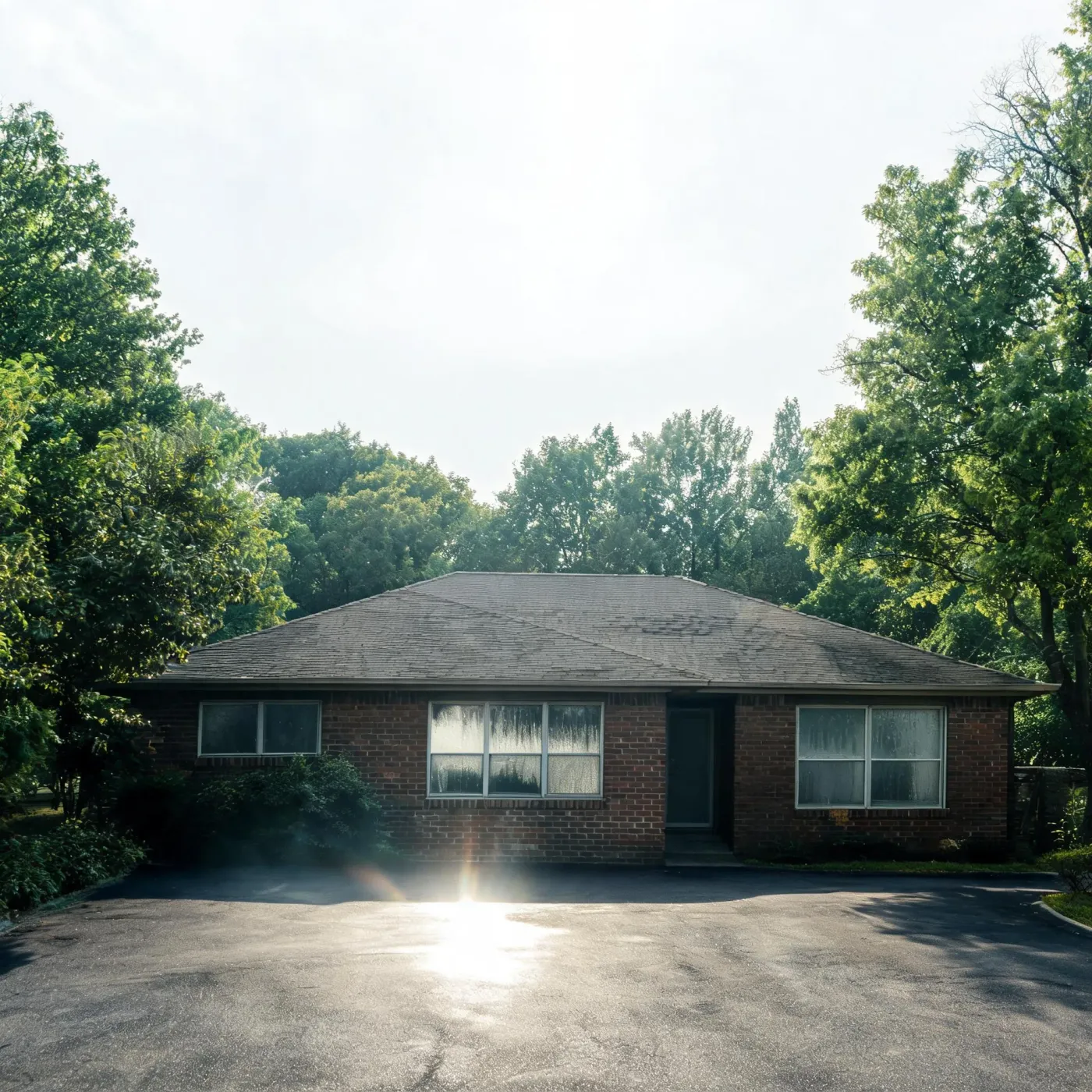
A single-story brick house with a hipped shingle roof, large front windows and a central door, fronted by a wide paved driveway with sun flare, surrounded by green deciduous trees.

The National Weather Service puts the summer dew point here at 70°F, which is the sticky end of the scale, and it's what makes your heat pump's job harder than the temperature alone suggests. Humid air carries more moisture for the system to pull out before it can actually cool the house, so the unit runs longer to get the same result. That extra runtime shows up as a system that never seems to fully cycle off on the worst days, coils that stay wetter longer between cycles, and more hours logged than a dry-climate heat pump would ever see in a year.

NASA POWER T2MDEW

A gray outdoor condenser unit on a concrete pad beside a beige vinyl-sided house, with a wall-mounted disconnect box, flexible conduit, mulch bed, shrubs and a concrete walkway in front.
A clean unit on a solid pad, lines running straight to the disconnect, nothing blocking the airflow around it.
An outdoor air conditioning condenser unit on a concrete pad beside a house with horizontal siding above a brick foundation, with a flexible conduit running to a wall-mounted disconnect box.
Years of grime built up on the cabinet, a sign the system's been working harder than it should to keep up.

Why does mild winter weather still wear on a heat pump?

  • Winter nights average 37°F

    Nights averaging 37°F mean the outdoor coil is pulling heat from cold air for hours at a time, every night, all winter.

  • Heat runs November through March

    Five months of heating means the system cycles on through November, December, January, February and March without a long break to rest.

  • Cooling runs May through September

    Five months of cooling on top of that means the same unit runs nearly all year, with only short stretches of mild weather in between.

NOAA nClimDiv 1991-2020

Why a Heat Pump Wears Twice as Fast

  • The reversing valve is what lets a heat pump switch between heating and cooling, and a stuck valve is one of the most common reasons a unit gets replaced early.
  • Every defrost cycle sends the system briefly into cooling mode to melt ice off the outdoor coil, then switches back, adding wear that an AC-only condenser never sees.
  • The outdoor fan motor and compressor both run through more on-off cycles over a year than they would in a system that only runs in summer.
  • A heat pump's compressor works to compress refrigerant on both sides of the switch, heating and cooling, so it logs roughly twice the run hours of an AC compressor in the same year.
  • Low refrigerant charge shows up faster in a heat pump because the same charge has to work in both directions, and a shortage weakens whichever mode is running.
  • The auxiliary heat strips kick in when the outdoor coil can't pull enough heat from the air, and a unit that leans on them often has a reversing valve or airflow problem underneath.

A heat pump does the work of two machines in one cabinet. It cools your house all summer the same way a straight AC does, then come winter it runs the whole cycle backward and pulls heat out of the outside air to warm the house. That switch happens inside the reversing valve, and that valve is one of the first things to fail on a unit that's been running for years. Every time frost builds up on the outdoor coil in winter, the system flips into cooling mode for a few minutes to melt it off, then flips back. An AC-only condenser never does this. It just runs one direction, one season, and sits idle the rest of the year.

The compressor feels this the most. It's compressing refrigerant whether the house is being heated or cooled, so over twelve months it logs close to double the hours a summer-only compressor would. The outdoor fan motor cycles on and off more often for the same reason. If the refrigerant charge drops even a little, both modes suffer, not just one, because the same charge has to carry the load in either direction. And when the outdoor coil can't draw enough heat from cold air on its own, the auxiliary strips kick in to cover the gap. A unit that depends on those strips more than it should is usually telling you something else, often the reversing valve or the airflow, is already struggling.

A gray outdoor air conditioning condenser unit on a concrete pad beside a house with light vinyl siding, with a gray electrical disconnect box and conduit on the wall to the right.
Before you get your heat pump installation
A gray outdoor condenser unit on a concrete pad beside a house with horizontal lap siding, a conduit and disconnect box on the wall, a shrub with white flowers at right and evergreen foliage at left.
After you get your heat pump installation
A beige outdoor condenser unit on a gray pad beside a house with gray horizontal siding, with refrigerant lines and an electrical disconnect box on the wall, bordered by dark mulch, a stone retaining wall with shrubs, and a paver walkway.

Done looking for a heat pump pro

Skip collecting and comparing quotes for the new heat pump.

One request ends the search for a heat pump installer.

Hand it over

Sending the form costs nothing.

Keep Repairing or Replace Now

Keep running it

  • Repairs on a reversing valve or a defrost control board usually cost less upfront than a new system, at least the first time.
  • You know the quirks of the unit you have, which short cycle or odd noise is normal and which one isn't.
  • Parts for an older heat pump can take longer to source, especially if the model's been phased out.
  • Every summer and winter it keeps working, you're betting the next repair bill is smaller than a replacement.
  • A unit nursed along on patch repairs tends to run less efficiently, so the power bill creeps up even when nothing's visibly wrong.
  • If it fails in July or in January, you're without heating or cooling while you sort out what's next.

Replace it now

  • A new heat pump comes with a warranty that covers the compressor and parts most repairs on an old unit don't touch.
  • You avoid the gamble of a breakdown landing on the hottest week of August or a cold snap in January.
  • Newer units handle Lauderdale County's humidity more efficiently, pulling moisture out without running as hard.
  • Installation is a bigger cost upfront than a repair, with nothing to offset it unless the old unit is failing anyway.
  • You stop paying to keep an aging system limping through five months of heating and the long muggy summer.
  • Once it's in, you're not back to guessing whether the next odd sound means another service call.
A beige outdoor air conditioning condenser unit on a concrete pad beside a house with horizontal vinyl siding, with refrigerant lines and a disconnect box on the wall, surrounded by dark mulch and a green shrub at left.

Running the way it should

The pad is clean, the line to the disconnect runs straight, and nothing crowds the cabinet. Air moves freely around the coil, which is what lets the unit pull heat out of the air in summer and pull it back in come winter without strain.


An outdoor air conditioner condenser unit on a concrete pad beside a house with beige horizontal siding, with conduit running from an electrical box on the wall.

Working harder than it should

Grime has built up on the cabinet and the unit still runs, but it's pulling more power to do the same job. A heat pump in this shape through another Meridian summer is one that's closer to its last season than its first.

A man in a gray sweater reclines in a brown leather armchair with his eyes closed, beside a wooden side table holding a mug, a folded newspaper and a potted plant, with a bookshelf and sunlit window behind him.
A man with greying hair and a dark sweater leans back on an armchair with his eyes closed and a slight smile, in a living room with a bookshelf, plant, folded newspaper and mug on a wooden table.
A man in a gray fleece jacket sits reclined in a leather chair with his eyes closed, in a room with bookshelves, a table lamp, a window, and a desk holding a folded newspaper and a dark mug.
A bearded man in a gray fleece pullover sits with eyes closed in a brown leather armchair in a living room, with a floor lamp, bookshelf, potted plants, a side table holding newspapers and a dark mug, and a bright window behind him.

A heat pump nearing the end of its life shows up in your house before it shows up on paper. Rooms that used to even out in twenty minutes take an hour. The unit runs through the night in January and the house still feels a few degrees short of where you set it. Your power bill climbs in July and again in December, because a worn compressor pulls more current to move the same amount of heat. You might hear it short cycle, shutting off a few minutes after it starts, then kicking back on. If the reversing valve starts to stick, you could get a system blowing cold air on a 30°F morning, which in a house heating with electricity means the backup heat strip carries the load and the bill shows it. None of that means the unit quits outright. It means it costs more to run every month it keeps going, on equipment that's earned the right to be replaced rather than nursed along.

A gray-haired man in a blue quarter-zip sweater sits in an armchair with his eyes closed, beside a large window with bare trees outside and a potted plant and lamp nearby.
A woman in a cream knit sweater sits in an armchair with her eyes closed and head tilted back, beside a window showing orange autumn foliage and a wooden side table with a mug.
An outdoor condenser unit on a concrete pad beside a gray lap-sided house, with an electrical disconnect box and conduit on the wall and shrubs with mulch to the right.

Working the way it should

The pad is clean and the lines run straight to the disconnect box without anything crowding the cabinet. Mulch and trimmed shrubs sit a few feet back, so air moves freely around the coil. A unit kept clear like this isn't fighting itself to do its job.

An outdoor air conditioner condenser unit on a concrete pad beside a house with horizontal vinyl siding, with refrigerant lines and an electrical disconnect box on the wall and dry leaves on the ground.

Fighting to keep up

Dirty coil fins and dead leaves piled against the base mean the unit has to work harder to move the same amount of air. Weathered cabinets like this one are usually older, and years of buildup on the coil is often a sign a system is closer to the end than the middle.

A wooden table in the foreground holds a closed laptop and a ceramic mug of coffee, with a spindle-back wooden chair behind it, a beige wall with paneled wainscoting, a window at left, and a kitchen counter with a cutting board, bowl of fruit and greenery at right.

How long your heat pump lasts comes down to how hard it works

A heat pump in Lauderdale County earns its keep year round, and the wear it takes now is what decides how many years you get out of it. The reversing valve, the defrost cycle, the long nights pulling heat from cold air, all of it adds up the same way for every unit running this hard. Some get fifteen years. Some give out sooner because of what they've been through.

Once you know where your unit stands, the next question is who handles it. Instead of searching through contractors, calling around for quotes, and explaining the same problem to every one of them, you send one form and the search is done. Someone qualified gets in touch, and from there the unit is in hands that know what to look for.

Interior corner of a living room with a beige upholstered sofa and dark cushion in the foreground, a ceramic vase of leafy branches on a dark side table by a curtained window, a framed picture on the wall, and a wood-surround fireplace at right.
A single-story stucco house at dusk with a lit paver walkway lined by low path lights, desert plants and boulders in front, and distant mountains under an orange and blue sky.

Heat Pump Installation

It's off your list after this

New system or replacementHeat PumpLauderdale County, MS
Step 1 of 2

What ZIP code is the job in?

  • A brown leather and wood armchair with a cream knit throw sits in a corner beside a woven basket holding a dark cushion, under a framed mountain photograph, with a wood-trimmed window showing yellow and green foliage.
    • Get matched with a pro who works on heat pumps in Lauderdale County.
    • Your request goes to a Lauderdale County pro who takes heat pump jobs.
  • A dark wood dresser against a pale wall holds a ceramic vase of eucalyptus branches, a stack of books with a wooden bowl, and a woven basket, with a framed landscape painting above and a woven basket holding a knit blanket on the floor beside a window.
    • After you send the request, you're done searching.
    • Send the form and the search for an installer is over.
  • A window seat with beige linen and brown textured cushions, a chunky knit blanket, and an open book, beside a window showing blurred yellow autumn foliage.
    • Describe the project once instead of to every installer.
    • Explain the job once and skip repeating it on every call.
  • A cream upholstered armchair with a rust-colored pillow and knit fringed throw sits beside a window with a ceramic vase of orange-leafed branches on the sill, overlooking autumn trees and leaf-covered ground.
    • A licensed installer who works in Lauderdale County gets your project.
    • One installer gets your project, so there's no bidding war over it.













