
A gray outdoor heat pump unit with a circular fan grille sits on a concrete pad beside a dark wood-clad house, next to a gravel bed with ornamental grasses and a stepping-stone path.

The right pro for this job

Heat pump not heating in Sumrall, MS

Mild as winters get around Sumrall, a heat pump that won't heat still leaves you cold, and it usually comes down to a handful of things: the reversing valve, a frozen outdoor unit, or a thermostat stuck in the wrong mode. This page covers what to check first and when it's time to get a local contractor on it.

Find my pro

A heat pump that blows cold or won't come on usually means one of a few things. The reversing valve, which switches the system between heating and cooling, can stick in the cooling position, so the unit keeps blowing cold air no matter what the thermostat says. The outdoor unit can ice over, and if the defrost cycle isn't clearing it, the coil stays blocked and the system can't pull in heat. Sometimes it's simpler: the thermostat is set to cool, or the mode switch got bumped. Winters around Sumrall don't put heavy strain on a heat pump the way a hard freeze elsewhere would, so when one stops heating, it's more often a stuck part or a setting than the system being overworked. Either way, it's worth having someone look at the outdoor unit and the thermostat settings before assuming the worst.

A gray outdoor condenser unit sits on a concrete pad against a house wall with horizontal siding above a stone veneer base, with an electrical disconnect box and conduit on the wall and a leafy shrub in mulch to the left.
Clean coil fins, clear airflow around the unit, and the outdoor unit runs the way it should, pulling in enough air to heat your home.
An outdoor air conditioner condenser unit on a concrete pad beside a house with beige vinyl siding, with a gray electrical disconnect box and insulated refrigerant lines on the wall and river rock to the right.
Coil fins packed with dirt and debris choke airflow, and the system struggles to pull enough heat from the air to warm your house.
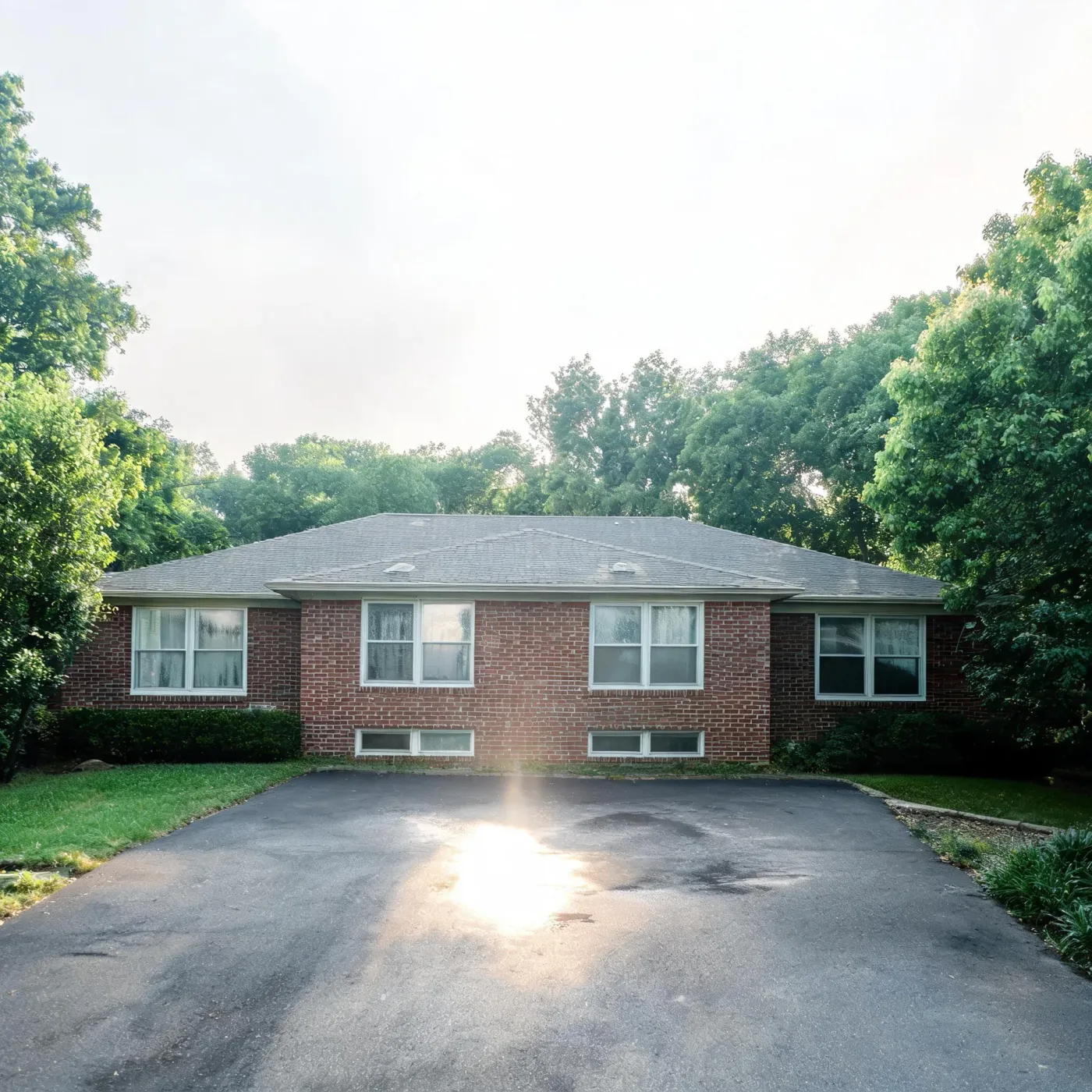
A single-story brick ranch house with a gray shingled hip roof, white-framed windows and basement windows, fronted by a wide asphalt driveway with sun glare, surrounded by green lawn and leafy trees under a bright hazy sky.

Summer air in Lamar County sits at a dew point around 71°F, according to NOAA climate data, which is the kind of heavy, wet air that makes a heat pump's outdoor coil work harder all season. That same unit still has to shed heat through those coil fins to run your AC in July, and whatever dirt or grime built up during those muggy months doesn't go away on its own come fall and winter. A coil that struggled to breathe all summer is a coil that struggles to pull heat from the outdoor air once the temperature drops, which is exactly when you need it to work right.

NASA POWER T2MDEW

Is cold air blowing out of your vents right now

Walk up to a vent and feel what's coming out. If it's cold air, or just room-temperature air with no real warmth to it, that's the first sign something's wrong. You might hear the outdoor unit running outside while the house stays cool, or notice the system short cycling, kicking on and off every few minutes instead of running a steady stretch. Some homes will show frost or ice built up on the outdoor unit itself. None of this is dangerous on its own, but with mild nights still dropping into the 30s and 40s around Sumrall, a heat pump that won't heat can leave a house cold for hours before anyone catches it, especially overnight or while you're out.

A gray outdoor condenser unit sits on a concrete pad beside a house with horizontal lap siding, with a wall-mounted disconnect box and refrigerant lines, mulched beds and a shrub nearby, and a concrete walkway in the foreground.

Running the way it should

A heat pump like this should look almost boring from the outside. Clear mulch beds, nothing blocking the sides, and the disconnect box wired clean to the unit. Air moves through the fins freely, so the system can pull in what it needs to heat your home.


An outdoor air conditioner condenser unit on a concrete pad beside a light gray vinyl-sided house, with an electrical disconnect box and conduit on the wall and bare soil in the foreground.

Signs of a unit in trouble

Same kind of unit, same setup against the house, but something's off inside it. Refrigerant lines run to the disconnect like normal, yet if the reversing valve has stuck or the outdoor coil has iced over, the unit runs without putting out any heat. From outside, it can look just like the one next to it.

Try This First, or Call Now

Call for repair now

  • If the outdoor unit is iced over and it's not actively defrosting, that's a stuck defrost control or a bad reversing valve, not something that clears on its own.
  • If you smell anything burning near the indoor or outdoor unit, shut the system off at the thermostat and get it looked at before running it again.
  • If the thermostat is set to heat and the outdoor fan isn't turning at all, the unit may have lost power or tripped a safety switch.
  • If you've already checked the air filter and the outdoor unit is clear of leaves and debris and it's still blowing cold, the problem is inside the system.
  • A reversing valve stuck in cooling mode won't fix itself, and running the system this way for days doesn't make the valve any more likely to shift back.

A few things to try first

  • Check the thermostat is actually set to heat and not to auto, since auto can sometimes pick cooling if the schedule is set wrong.
  • Replace the air filter if it hasn't been changed in a while; a clogged filter chokes the airflow the system needs to heat your home.
  • Walk around the outdoor unit and clear away leaves, pine straw or mulch that may have piled up against the fins.
  • Look at the outdoor unit for a layer of ice or frost; a thin coat that clears during a normal defrost cycle isn't a problem, but a solid block is.
  • Check the breaker for the outdoor unit hasn't tripped, especially after a storm or a power blink.
A gray outdoor heat pump unit on a concrete pad beside a house with gray horizontal siding, with conduit and an electrical box on the wall and a shrub at left.

What the defrost cycle does

On cold mornings, frost builds on the outdoor unit's coil. The system is built to notice this and switch into defrost for a few minutes, running backward to melt the ice before it goes back to heating your home. During that short stretch, the outdoor fan stops and the unit may look like it's not doing anything. That's normal. A unit stuck in defrost, or one that never comes out of it, is a different problem, usually the defrost control board or a sensor that's failed.

An outdoor air-source heat pump unit with a dark grille stands on a concrete pad beside a white wall and wood-clad facade, surrounded by gravel.

Why the thermostat setting matters

A heat pump thermostat has an emergency heat setting separate from normal heat. Emergency heat skips the outdoor unit entirely and runs backup electric resistance heat instead, which costs more to run and means the outdoor unit sitting idle isn't a malfunction. If your thermostat is set to emergency heat and you didn't put it there, something tripped it, often a problem with the outdoor unit that the system detected on its own.

Power here costs 15.38 cents per kilowatt-hour

At 15.38 cents per kilowatt-hour, a heat pump that's actually running backward or cycling on its backup heat strips to try to catch up will show up fast on your bill. A unit that's working the way it should stays the cheaper way to heat your home here.

EIA-861 2025

A woman with long wavy brown hair in a grey ribbed sweater sits on a couch indoors, looking toward a window, with a potted palm-like plant and fireplace behind her.
A woman with long brown hair wearing a green V-neck top and beige cardigan sits on a light sofa, looking off to the side, with a dining table, lamp and framed picture in the background.
A woman with long dark hair in a cream knit sweater sits on a beige sofa indoors, looking toward a bright window with a houseplant and framed picture in the background.
A woman with long dark hair in a green knit sweater sits on a couch indoors, smiling and looking toward a window with a blurred room behind her.

Matched to your heat pump job

The pro who gets in touch is licensed in Mississippi and works in Lamar County.

Asking costs nothing, and the choice to hire stays yours.

Waiting to see if it clears

If the outdoor unit iced over this morning and the air coming from your vents is just cool rather than cold, it might be partway through a normal defrost cycle. That can make sense to ride out for a short while, especially on a cold morning after a hard freeze overnight. Check back in half an hour. If the ice is gone and warm air is back, the system did what it was supposed to do. If the outdoor fan isn't turning or the unit looks the same as before, waiting longer won't change anything.

Getting a contractor out today

If backup heat strips are the only thing keeping the house warm, or the thermostat is stuck on cool no matter what you set it to, that's not something that resolves by itself. Those strips cost more to run than the heat pump itself, and a reversing valve that's failed stays failed until someone replaces it. A local contractor who works on these systems through the mild winters here knows which of these failures shows up most and can get the unit back on heat instead of backup strips before the bill reflects it.

How much work does your heat pump have to do here

  • Winter nights average 40°F

    Winter nights average 40°F. That's mild enough that a heat pump shouldn't be straining to keep up, even on the coldest mornings.

  • Heat runs November through March

    Heat runs November through March. Five months a year the system has to switch into heating mode and stay there without faltering.

  • Cooling runs May through October

    Cooling runs May through October. The reversing valve spends most of the year in one position, so a stuck valve after a cold snap is often the first time anyone notices.

NOAA nClimDiv 1991-2020

  1. Thermostat calls for heat and sends power to the unit

  2. Reversing valve shifts to send warm refrigerant inside

  3. Outdoor unit pulls heat from the outside air

  4. Indoor coil releases that heat into air moving through your ducts

Why does my heat pump blow warm air, then cold air, then warm again?

Why does my heat pump blow warm air, then cold air, then warm again?

It's cycling into defrost and back, or the reversing valve is starting to fail

That pattern usually means the system is going into defrost, melting ice off the outdoor coil, then switching back to heating. That's normal if it only lasts a few minutes and happens on a cold morning when the outdoor unit had frost on it. But if it keeps repeating all day, or the cold air lasts longer than a few minutes each time, the reversing valve may be sticking partway between modes instead of holding its position. A valve like that doesn't fully commit to heating or cooling, so the system flips back and forth on its own. That part doesn't fix itself and tends to get worse, not better, as it keeps cycling.

A gray outdoor condenser unit on a concrete pad beside a light-colored horizontal-siding house, with a disconnect box and refrigerant line on the wall, ornamental grasses and a shrub in mulch nearby, and a concrete patio in the foreground.

Clear lines, steady pad

The lines running from this unit to the disconnect box sit clean against the wall, and the bed around it is mulched and open. Nothing here blocks airflow, so the outdoor coil can pull in what it needs to heat your home.

An outdoor condenser unit sits on a concrete pad beside a house with horizontal vinyl siding, with a gray electrical disconnect box and conduit on the wall and a shrub at left.

Same setup, different outcome

Same pad, same disconnect box, same black lines along the wall. But if the coil behind those fins is clogged or the unit out here is icing over and staying iced, this is where the heating problem is sitting, not inside the house.

A woman stands in the open black front door of a white-sided house with a dark shingled roof while a man in a navy jacket approaches along the walkway, with lantern wall lights, a potted shrub, and flowering garden beds nearby.

A heat pump that won't heat has a reason behind it

Most of the time it's one of three things. A reversing valve stuck in cooling, ice on the outdoor unit that isn't clearing on its own, or a thermostat set wrong. You've already walked through how to tell those apart, and what each one means for your house tonight.

What you need next is someone who already knows this equipment and can tell you which of those three it is without guessing twice. A contractor local to Lamar County who works on heat pumps all winter has seen this exact complaint before, and seen what's actually wrong when the outdoor unit is iced over past 8am or the air keeps swinging cold to warm. Ask to be matched with one, and that single contractor reaches out to you directly. Not several companies competing for the job, just the one who takes it on.

A speckled beige ceramic vase holding thin dried branches sits on a round wooden table near a window with sheer curtains, with a dark upholstered chair and draped blanket blurred in the background.
A smiling older woman with gray shoulder-length hair in a cream cable-knit turtleneck sweater stands behind a wooden board holding a round loaf of bread, in a warmly lit kitchen with a dark window and shelves behind her.
A woman with her hair in a bun holds a sleeping boy against her shoulder, both wrapped in a thick cream knit blanket on a couch in a dim room with a lit lamp, potted plants and a shelf behind them.

Heat Pump Repair

A heat pump pro near you

A licensed pro who works in Lamar County gets your request.

A black smartphone standing upright against a plain light gray background, its screen filled with solid green.
RepairHeat PumpLamar County, MS
Step 1 of 2

What ZIP code is the job in?