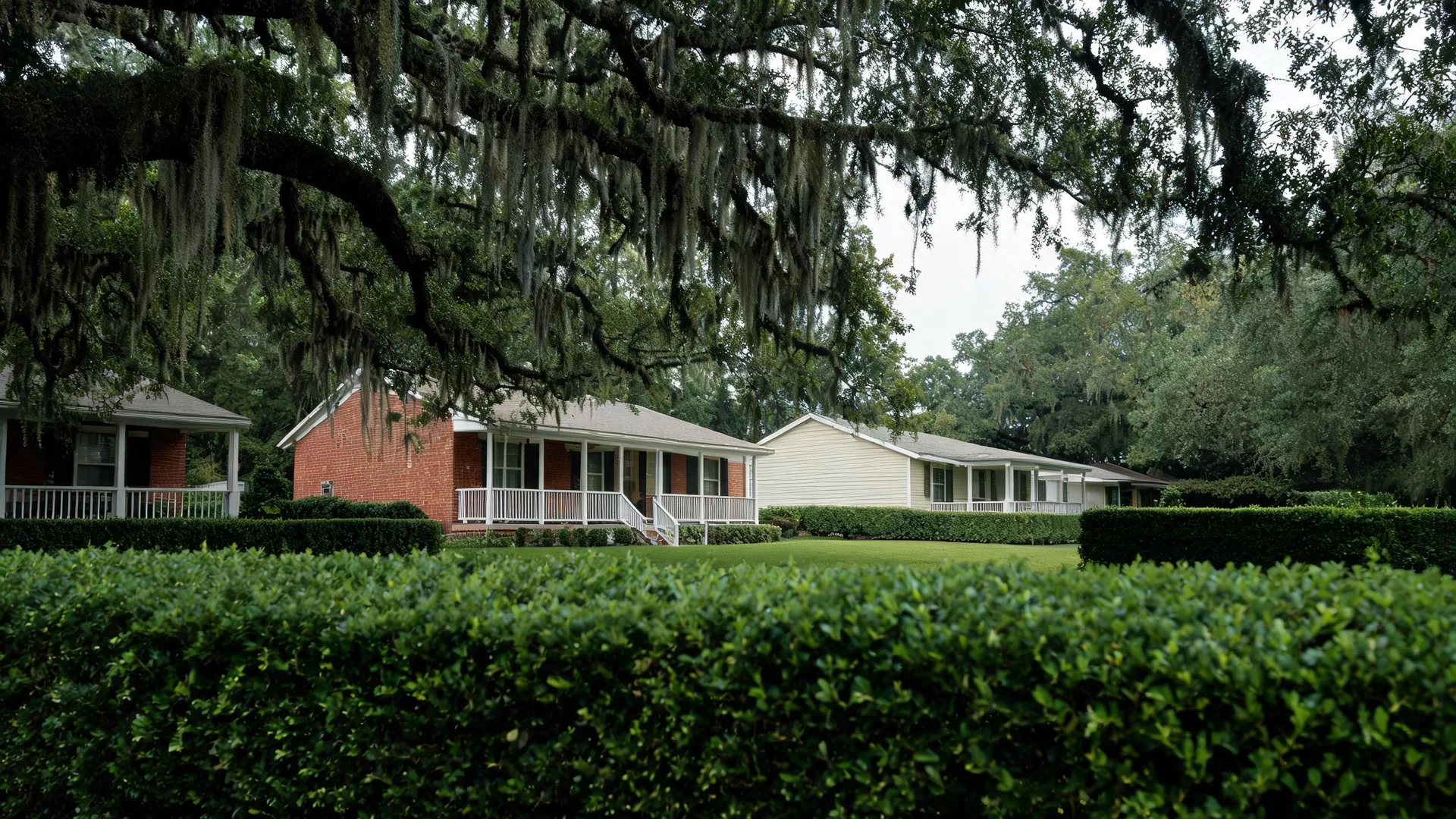






Single-story brick and white-sided buildings with covered porches behind a trimmed hedge and lawn, framed by overhanging oak branches draped with Spanish moss.

Furnace Installation in Jackson, MS

Tell us about the job

Takes about a minute. No obligation.

New system or replacementFurnace or heatingHinds County, MS
Step 1 of 2

What ZIP code is the job in?

Jackson sits in climate zone 3A, which counts as warm with a short, mild winter. Any new gas furnace installed here still has to meet the federal minimum of 80 percent AFUE. That rule holds until December 2028, when the bar rises to 95 percent AFUE for new units. A furnace installed before that date keeps running at whatever efficiency it was rated for, so this is worth asking about if you're comparing models now. A high-efficiency furnace above the current minimum may also qualify for a federal tax credit.

5 months
November through March, your furnace is on duty
38°F
the average winter night it heats against
80% AFUE
the federal minimum any new unit must meet
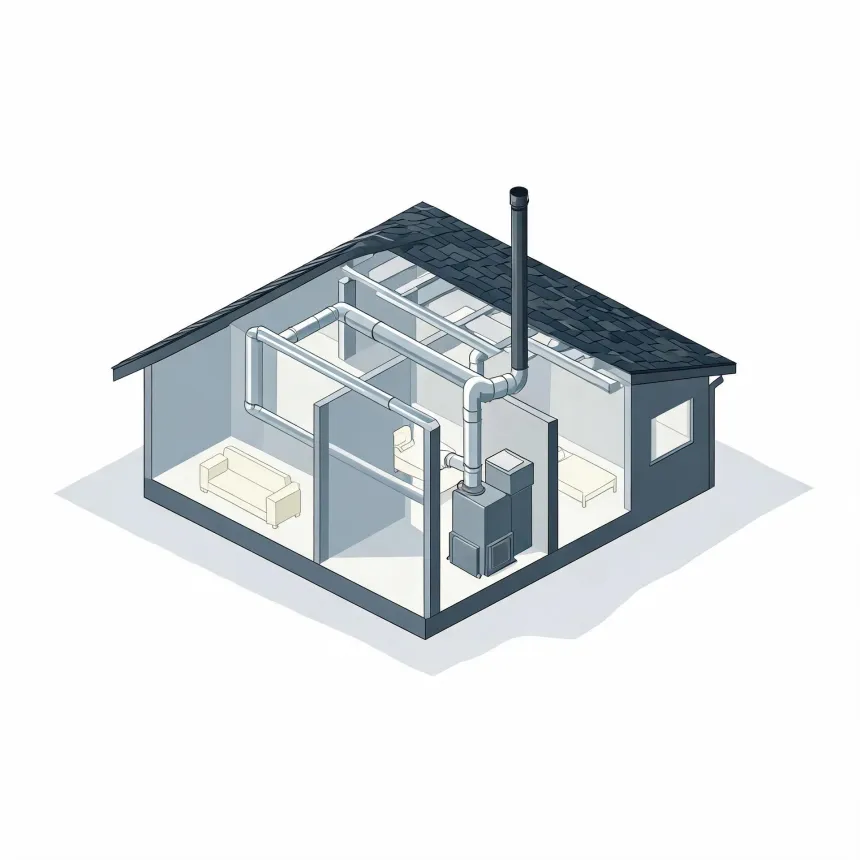
Isometric cutaway illustration of a small single-story house showing a furnace with a flue pipe through the roof and ducting running to rooms containing a sofa, chair and bed.
Your furnace works hardest from November through February.

NOAA nClimDiv, 1991–2020 normals

Heat goes on in November here and runs through March.

Get a furnace installed in October and it's broken in before the cold asks anything of it.

Most homes in Hinds County heat with electricity, so an electric furnace is the straightforward replacement

51.5% of homes heat with electricity
Heat runs November through March
Winter nights average 38°F
Five months of work a yearFurnace here runs five months a year, with overnight lows averaging 38°F in December, January and February.

Electricity in Mississippi runs cheaper than in most of the country. That changes how to weigh a furnace purchase. A high-efficiency model still uses less power than a standard one, but at this price the gap in your bill closes slowly, so efficiency alone won't carry the decision. What matters more is whether the furnace is sized right for your house and holds up through the winters here. A unit that starts reliably and keeps running when the weather turns bad is worth more than a few extra points of efficiency on paper.

Go with the standard fit

A standard size and efficiency fit fine here. There's no local reason to go bigger or pricier.

Find a contractor
A man in a dark long-sleeve shirt and tan pants climbs porch steps toward a blue front door, carrying a worn canvas tool bag with tools in its side pockets, beside a potted shrub in a blue planter.
A gray residential gas furnace installed in an unfinished basement, surrounded by ductwork, a metal flue pipe, and a gas supply line.

What the old furnace shows on its way out

The furnace coming out has usually been heating this house for a long time, and most of what wears a furnace out happens in the first few minutes of every cycle, not the hours in between. Metal heats up, expands, cools back down, over and over, for as many winters as it's been in service. Eventually the heat exchanger cracks along a seam, or the igniter stops lighting reliably, or the blower motor bearings wear loose enough to make noise. None of that is a defect. It's just what happens to a metal box that heats up and cools down every night for years on end. A contractor pulling the old unit can usually tell from the exchanger and the burner assembly how it was actually running toward the end, whether it was short cycling, overheating, or struggling to keep up. That's useful information even for a furnace that's already being replaced, because it points to whether the old one was ever sized right in the first place.

AFUE measures fuel, not comfort

The AFUE number on the label tells you how much of the gas becomes heat in your house instead of going out the flue. A higher number wastes less fuel. It says nothing about airflow, how evenly the heat spreads through the house, or how long the furnace lasts. Furnaces with the same rating can still feel different to live with.
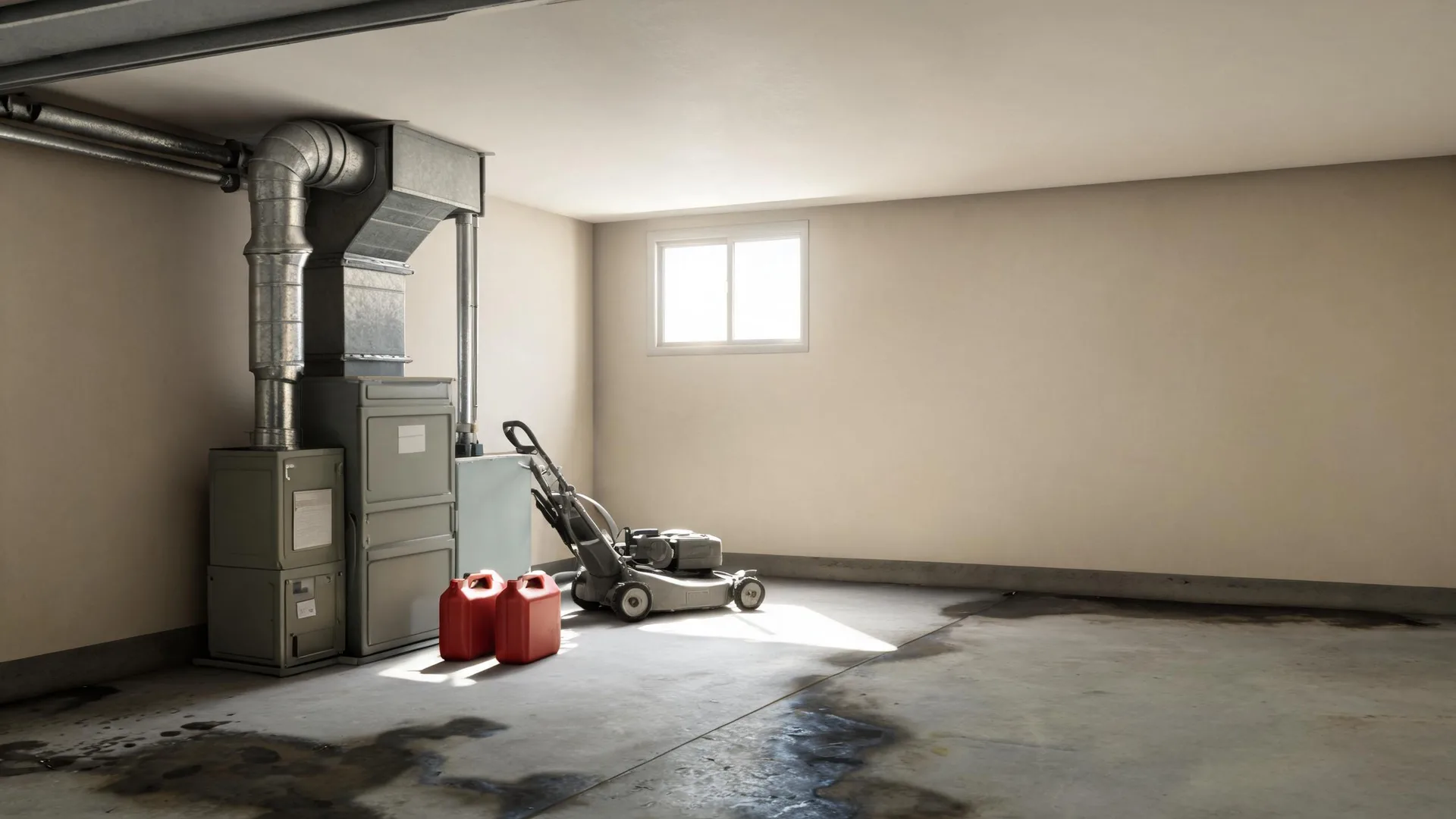
The rating only holds if the install backs it up

A furnace only burns as clean and steady as the venting and ductwork let it. A high rating on paper doesn't make up for a furnace that's too big, too small, or poorly matched to the ducts already in place. Get the sizing and install right and the furnace runs the way the label says. Get it wrong and the rating stops meaning much.

Sizing a furnace comes down to a heat loss calculation on your house, not a guess based on square footage or what the last furnace happened to be. A contractor works out how fast your house loses heat on a cold night, counting the walls, the windows, the insulation and how much air leaks out, then picks a furnace that can replace that heat at the rate it's lost. Too big and the furnace short cycles, blasting hot air and shutting off before it ever heats the house evenly, which wears out the heat exchanger faster and leaves cold spots anyway. Too small and it runs flat out all night during a cold snap and still can't keep up. Neither mistake shows up on the showroom floor. It shows up the first time the temperature drops and the furnace either can't keep the house warm or won't stop cycling trying to.

Install day starts with the old furnace coming out, and that's when a lot gets confirmed that nobody could check beforehand. The contractor opens up the supply and return runs to see what they're actually tying into, checks the vent connection, and looks at the gas line sizing before the new unit ever comes off the dolly. Setting the furnace means getting it level, securing it to the plenum, and sealing every duct joint by hand, since a loose seam lets conditioned air leak into a crawlspace or attic where nobody will ever see it happen. The gas line gets connected and checked for leaks, the vent gets tied in and confirmed to pitch correctly so exhaust doesn't drift back inside, and the wiring gets run to the control board. Once it's buttoned up, the furnace gets fired and run through a full cycle, checking the flame, the temperature rise across the heat exchanger, and the airflow at the registers before anyone calls it done. None of that shows up on a spec sheet, but it's the difference between a furnace that runs quietly for years and one that gives trouble the first cold night.