




A tall red brick wall with a row of shrubs runs along the left side of a mown lawn, with a single-story light-colored house and tall pine trees in the background under an overcast sky.

Heat Pump Repair in Jackson, MS

Tell us about the job

Takes about a minute. No obligation.

RepairHeat PumpHinds County, MS
Step 1 of 2

What ZIP code is the job in?

Hinds County logged 370 severe weather events between 2015 and 2024, and damaging wind caused most of them. Your heat pump's outdoor unit sits through all of it, exposed to whatever blows through. Hail hits it too, bending fins or cracking the panel. None of that always stops the unit from running, so it can take a hit and still cycle on like nothing happened. If yours has been through a storm, running fine is not the same as undamaged.

5 months
November through March, your system heats
6 months
May through October, it cools
38°F
the average winter night it heats against
91°F
the average summer afternoon it cools against
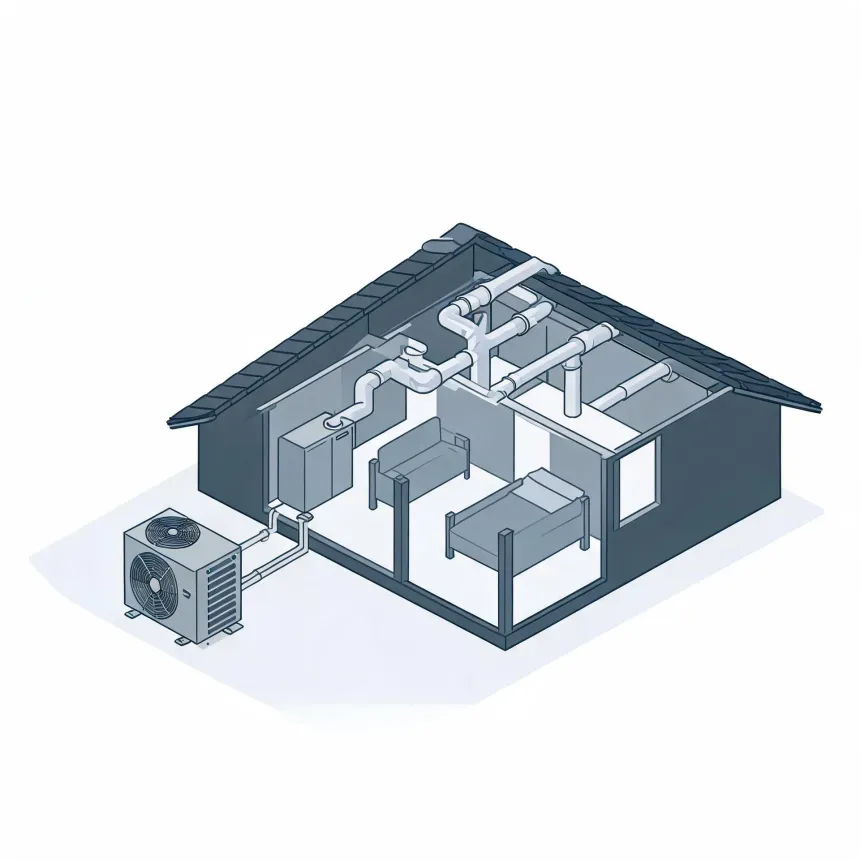
Isometric cutaway illustration of a house showing interior ductwork, an indoor air handler, and beds, with an outdoor condenser unit connected by lines outside the wall.
Your system heats November through March and cools May through October.

NOAA nClimDiv, 1991–2020 normals

A heat pump leans on its reversing valve to switch between heat and cool, and that valve wears with every switch.

When it sticks, the system blows the wrong temperature air or gets stuck in one mode, and that is a repair call, not a reset.

Half the homes here were built by 1974, and that doesn't change what's wrong with your heat pump

Half the homes here were built by 1974
270 damaging wind events from 2015 to 2024
Power costs 13.39 cents a kWh statewide
October is when a weak heat pump gets caughtHeat starts in November here, and the switch from cooling is when a worn part finally gives out.

After a storm, look at the outdoor unit before you decide it's fine. Bent fins cut down airflow across the coil, and a cracked panel lets water sit where it shouldn't. A tech can check the coil, the fan blade and the refrigerant charge in one visit and tell you what the hail actually did. That's worth doing even if the unit is heating and cooling right now, since a hit that bent the cabinet can still throw the fan out of balance months later. Mississippi's count of long outages matters here too. A heat pump that's already stressed from storm damage is the one that fails when the power comes back on hard.

Get it checked after a storm

Storms hit hard here. If the outdoor unit took hail or debris, have it checked even if it still runs.

Find a contractor
A dark gray heat pump unit mounted on a concrete pad next to a house with gray siding and a stone veneer wall.

Running isn't the same as running fine

A heat pump that's struggling still moves heat, so nothing tells you to shut it off. That's what makes this different from a part that fails outright. A compressor working against a low charge keeps running anyway. It just runs hotter, and heat is what wears a compressor down. A fan motor with a bad bearing keeps turning until it doesn't. Every hour on a loud bearing is an hour closer to seizing. Ice on the outdoor coil works the same way. A little ice cuts airflow, cut airflow grows more ice, and the unit keeps cycling through it. What started as a simple fix ends up a compressor replacement.

Short cycling wears out what starts it

A heat pump that shuts off soon after starting is cutting its own compressor life short. The compressor takes the hardest hit on startup, and a unit that fires up again and again instead of running a long steady stretch is putting that strain on over and over. A dirty filter, a low charge or a bad sensor can all cause it, and none of them get better left alone.
Listen for what changed, not just what's loud

Every heat pump has a sound it normally makes. A new rattle means something's loose. A hiss can mean refrigerant escaping somewhere it shouldn't. A click that repeats without the unit actually starting means a failed start capacitor or relay. You don't need to know which part it is to know it's worth a call. You just need to notice it's new.

Before you call anyone, there are a few things worth checking yourself. Start with the filter. A clogged filter starves the system of airflow and makes it work harder in both directions, heating or cooling. Next, walk outside and look at the unit itself. Leaves, grass clippings or a fence line grown in too close will choke it the same way a dirty filter does, and clearing that space is free. Check the thermostat batteries if it's got a screen that looks dim or unresponsive. Inside, make sure no vents are closed or blocked by furniture, since that throws off airflow the same as it does for outdoor debris. None of this fixes a bad reversing valve or a low charge, but it rules out the simple stuff first, and it tells the tech more when they do come out.

A heat pump that needs a repair isn't automatically near the end of its life, and age alone shouldn't decide this. What matters more is what's actually failing. A capacitor, a contactor, a fan motor, these are wear parts, and swapping one brings the whole unit back to normal. A compressor is different. It's the most expensive part in the system, and when it's failing, you're often weighing that one repair against a new unit anyway. Frequency matters too. A unit that's needed a repair every year is telling you something a single breakdown doesn't. It's also worth asking the tech if parts are still easy to get for a unit this old, because that answer alone can settle the decision.