



A grey heat pump outdoor unit mounted on a concrete pad against the exterior wall of a house with grey siding and stone veneer.

Heat Pump Maintenance in Jackson, MS

Tell us about the job

Takes about a minute. No obligation.

Tune-up, service, or cleaningHeat PumpHinds County, MS
Step 1 of 2

What ZIP code is the job in?

Between visits, keep the outdoor unit clear. Leaves, grass clippings and dead vines can block the coil and cut down on airflow, so walk around it now and then and pull anything growing against it. Check the air filter and swap it when it looks gray or clogged, since a dirty filter forces the system to work harder on both heating and cooling. Look at the outdoor unit after it runs and make sure it isn't caked in ice during cold weather. A little frost is normal, but a thick coat usually means the defrost cycle isn't keeping up. Inside, keep furniture and curtains away from the vents and return grille so air can move freely. None of this replaces a real inspection, but it keeps the system from working against itself until a tech gets eyes on it.

Heat pumps here switch over and start working through November's first cold snaps.

Have it checked in October, before it has to carry the house through winter.

Older homes, same yearly checkHalf the homes in Hinds County were built in 1974 or earlier.

A quick visit means someone glances at the unit, checks the pressure and leaves. A thorough one means the coil gets washed, not just looked at, since dirt on the coil holds heat back on the warm side and cold back on the cool side. The reversing valve should get tested in both directions, not just whichever mode the system happens to be in that day. Electrical connections get tightened, because a loose connection heats up over time and that heat wears out the part it's feeding. The condensate drain gets flushed too, not just eyeballed, since algae and dirt build up where you can't see them. A tech who only sets the thermostat down and listens for the compressor to kick on isn't checking the things that actually fail first.

The weather here doesn't let up, so the checkups shouldn't either

Hinds County saw damaging wind 270 times between 2015 and 2024, and the outdoor unit takes that on top of running through every switch between heat and cold. That kind of wear shows up first in the parts, the reversing valve, the connections, the coil. A check before the cold snaps hit catches it early.

Find a contractor
A man in a cap, dark long-sleeved shirt and brown work pants carries a canvas tool bag up porch steps toward a blue front door, with a shrub in a blue planter beside it.
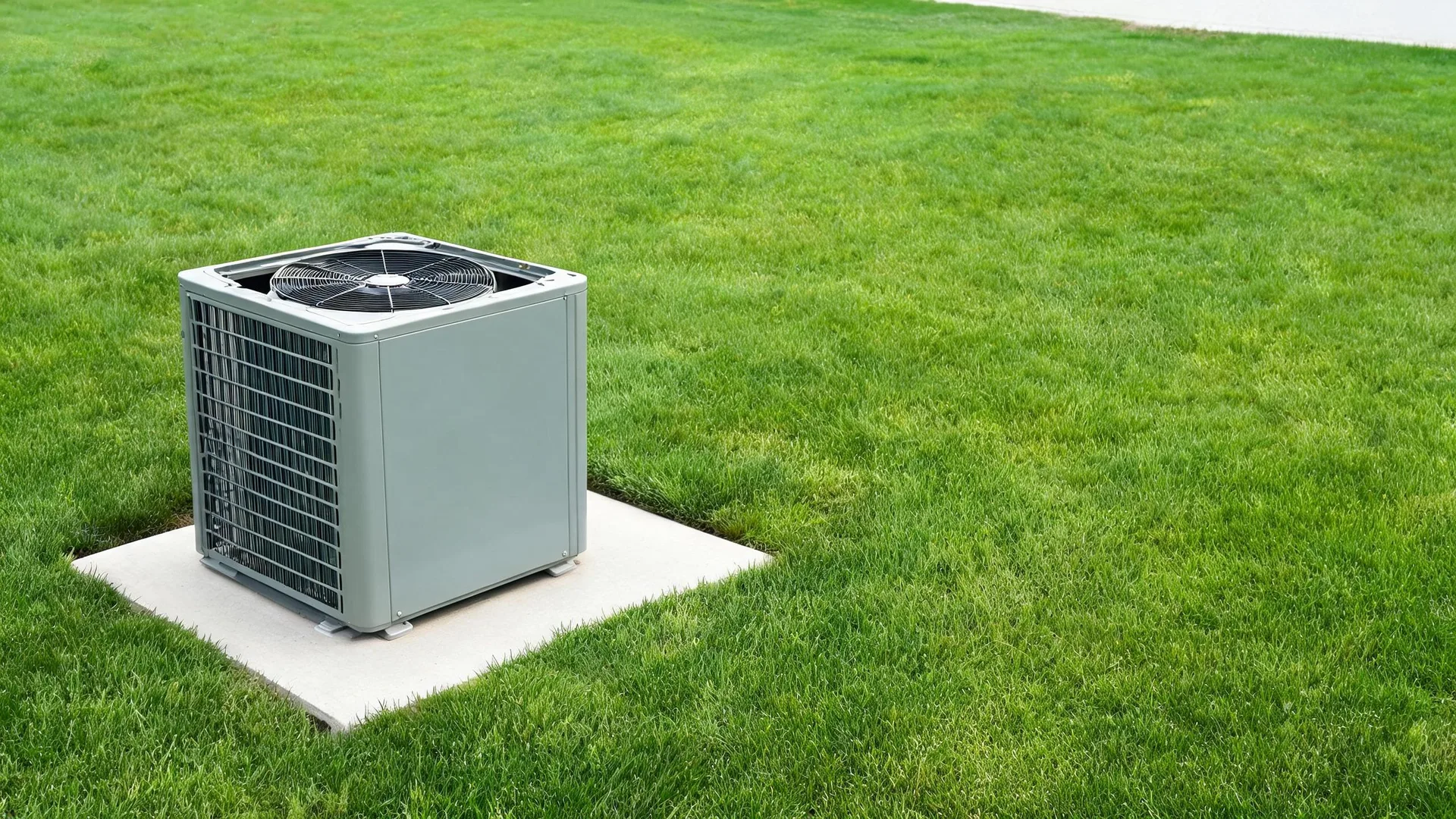
A gray heat pump outdoor unit mounted on a concrete pad next to a residential house with lap siding and stone accents.

It runs year-round, so the wear never stops to let you catch up

A heat pump never gets an off season to coast through. It switches modes instead of shutting down, so the parts that wear are always under some kind of load. Listen for what changes. A clicking at startup that wasn't there before. A hiss when the reversing valve switches over. A rattle that only shows up once the unit's been running a while. Short cycling, where it kicks on and off in quick bursts instead of running a steady stretch, is worth paying attention to as well. None of these mean something's broken yet. They mean something's starting to wear, and a check now catches it while it's still a small problem.

The refrigerant charge drifts low and nobody notices

A heat pump doesn't lose refrigerant in a dramatic way. It seeps out slowly at a fitting or a joint, and the system keeps running on less than it needs. Heating and cooling both get weaker, the compressor works harder to make up for it, and that extra strain is what eventually takes the compressor out. A gauge check during a real inspection catches a low charge months before you'd ever feel it indoors.
Skipped visits don't skip one problem, they skip the warning

Most of what fails in a heat pump fails slowly. The coil loses efficiency a little at a time. A connection heats and loosens a little more each season. Without someone checking those things on a schedule, the first sign of trouble is often the system itself quitting on a cold morning, not a part wearing out. Maintenance is what lets you find the small version of a problem instead of the finished one.

A tune-up finds what the compressor sounds like under a full load, not just at startup. It finds the amp draw on the motor, which climbs months before the motor actually fails and tells a tech it's wearing out while it still runs fine. It finds whether the refrigerant charge matches what the system was built to run on, since a few pounds low won't change how the house feels but it does change how hard the compressor has to work. It finds corrosion starting on an electrical connection before that connection gets hot enough to fail outright. None of that shows up by looking at the unit or listening to it kick on. It shows up on a gauge, a meter, or a tech's hands on the part itself.

A tune-up also covers what happens at the air handler, not just the outdoor unit. The blower wheel gets checked for dust buildup, since a caked wheel moves less air even when the motor runs fine. The indoor coil gets looked at for dirt or mold, because a dirty coil blocks heat transfer the same way the outdoor coil does. A tech checks the auxiliary or backup heat strips too, since those only kick in during the coldest stretches and a bad one can sit unnoticed until the heat pump alone can't keep up. Thermostat calibration gets checked as well, because a thermostat reading a few degrees off makes the whole system run longer than it needs to. These are the parts a homeowner never sees and never hears, which is exactly why they only get caught on a real inspection.