

Heat pump vs furnace in Tate County, Mississippi

Find a Pro Near You

Get a price before you decide

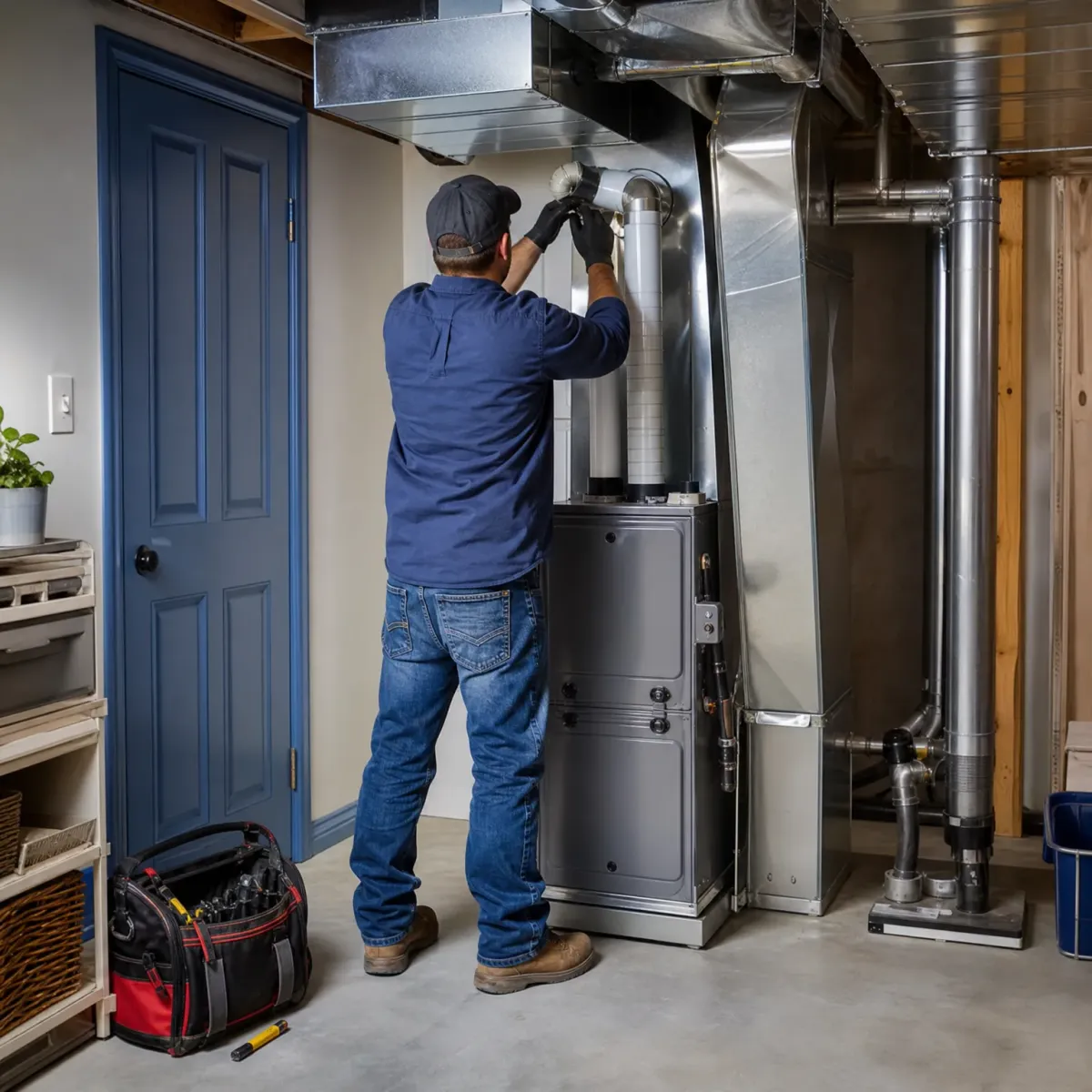
A man in a navy shirt, jeans and cap works with gloved hands on vent piping above a furnace in a basement utility area, with sheet-metal ductwork overhead, a blue door and shelving at left, and a tool bag on the floor.

Tell us about the job

Takes about a minute. No obligation.

New system or replacementTate County, MS
Step 1 of 3

What kind of equipment?

Which costs less to run in Tate County?

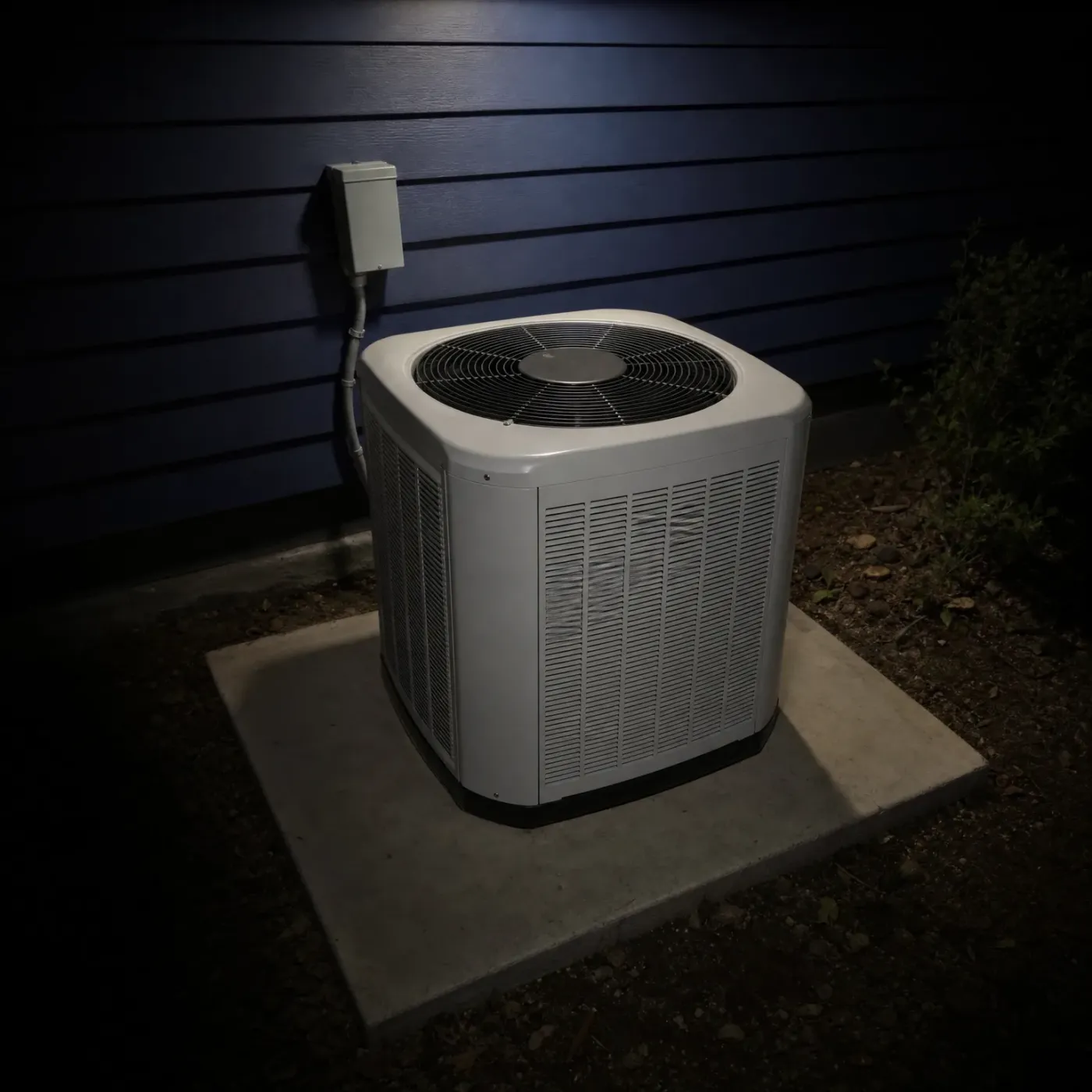
An outdoor air conditioner condenser unit on a concrete pad beside a dark blue horizontal-siding wall at night, with an electrical disconnect box and conduit on the wall above it.

Heat pump

To heat your home here$1.79per 100,000 Btu

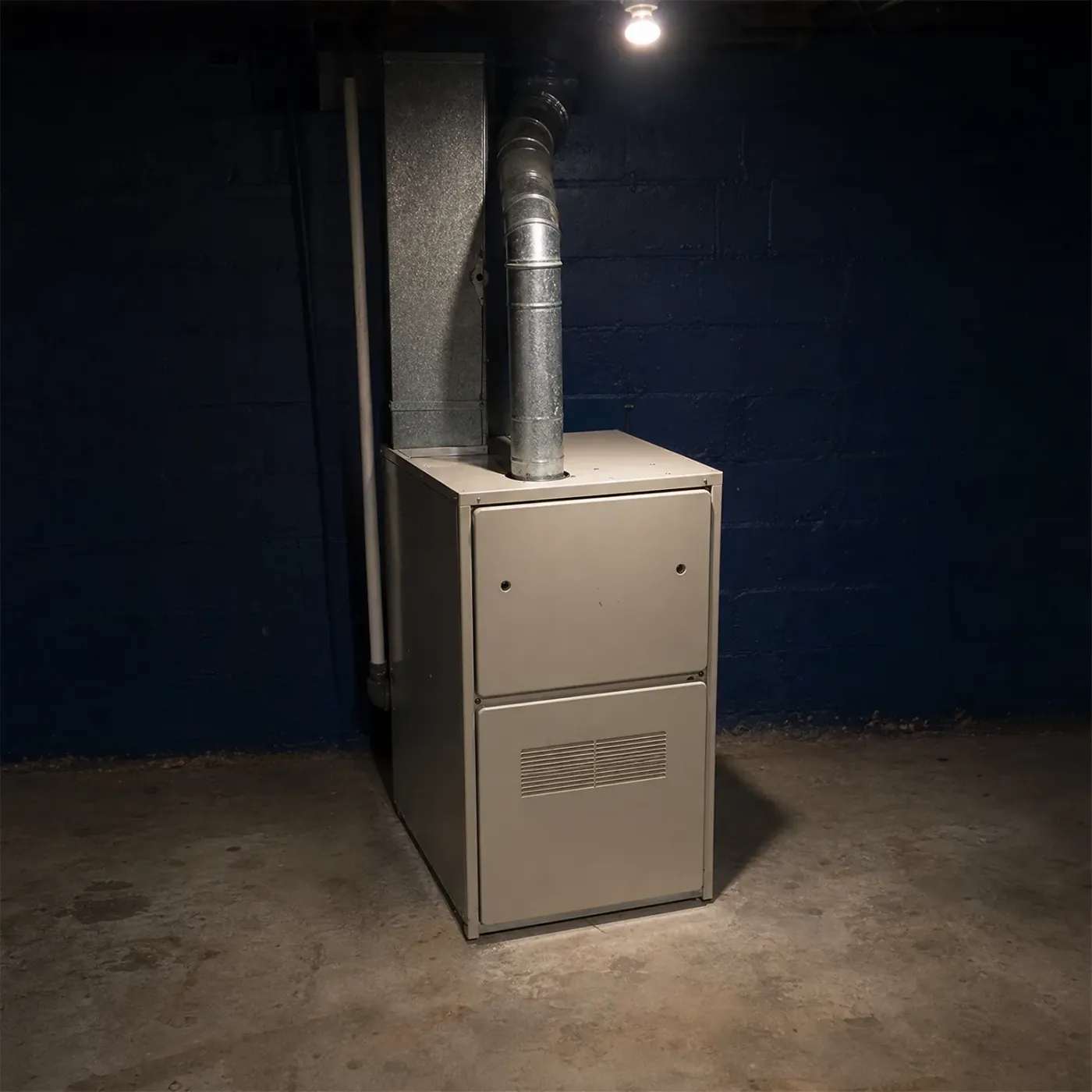
A beige gas furnace with a metal flue pipe and sheet-metal plenum stands against a blue-painted concrete block wall in a basement with a bare ceiling light.

Furnace

To heat your home here$1.88per 100,000 Btu

At Mississippi's gas and electricity prices, a heat pump and a gas furnace cost about the same to run here.

Btu stands for British thermal unit, the standard measure of heat energy.

Where does a heat pump shine?

  • Covers a long cooling season

    May through September, your AC is doing most of the work here. A heat pump handles that cooling load the same way a straight air conditioner would, so you're not giving anything up for those five months.

    A covered porch with blue lap siding, wicker sofas with cushions, a navy slatted table holding a glass of iced tea and a woven basket planter, and a person seated at a bistro table in the background surrounded by green trees.
  • Heats and cools in one system

    Winter and summer are covered by the same outdoor unit. That's one machine to service instead of two.

    A living room with a cream sectional sofa holding navy and light blue cushions and a blue fringed throw, a wooden coffee table with books, a mug and a vase of green and white flowers, a navy armchair, a dark built-in bookshelf with a lamp, and an open doorway looking onto a lawn and flowering garden.
  • Steady, even comfort

    A heat pump runs long and low instead of blasting on and off. Rooms hold an even temperature all day.

    A dimly lit living room with dark blue built-in bookshelves, a navy armchair with a gray throw blanket and open book, a lit table lamp and mug on a wooden side table, a window seat with a blue cushion, and a golden-colored dog sleeping on a patterned rug.

Where does a furnace shine?

  • Pairs with any central AC

    A furnace's blower and ducts carry cooled air too. Adding central AC uses the same system.

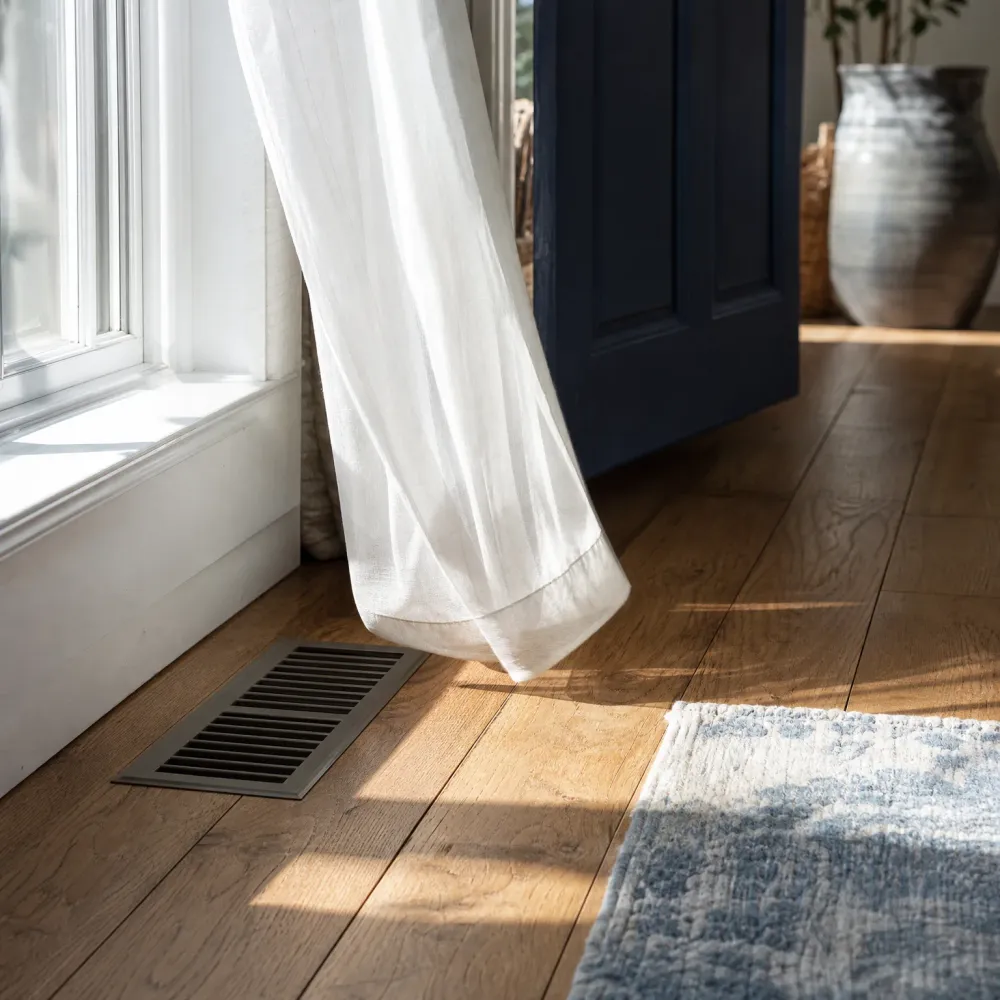
    A dark metal floor register set into a wood plank floor near a white baseboard and window, with a sheer white curtain, a navy door, and a blue and white rug nearby in sunlight.
  • Fast, strong heat on demand

    Turn the heat up and the furnace answers right away. There's no long wait for the house to catch up.

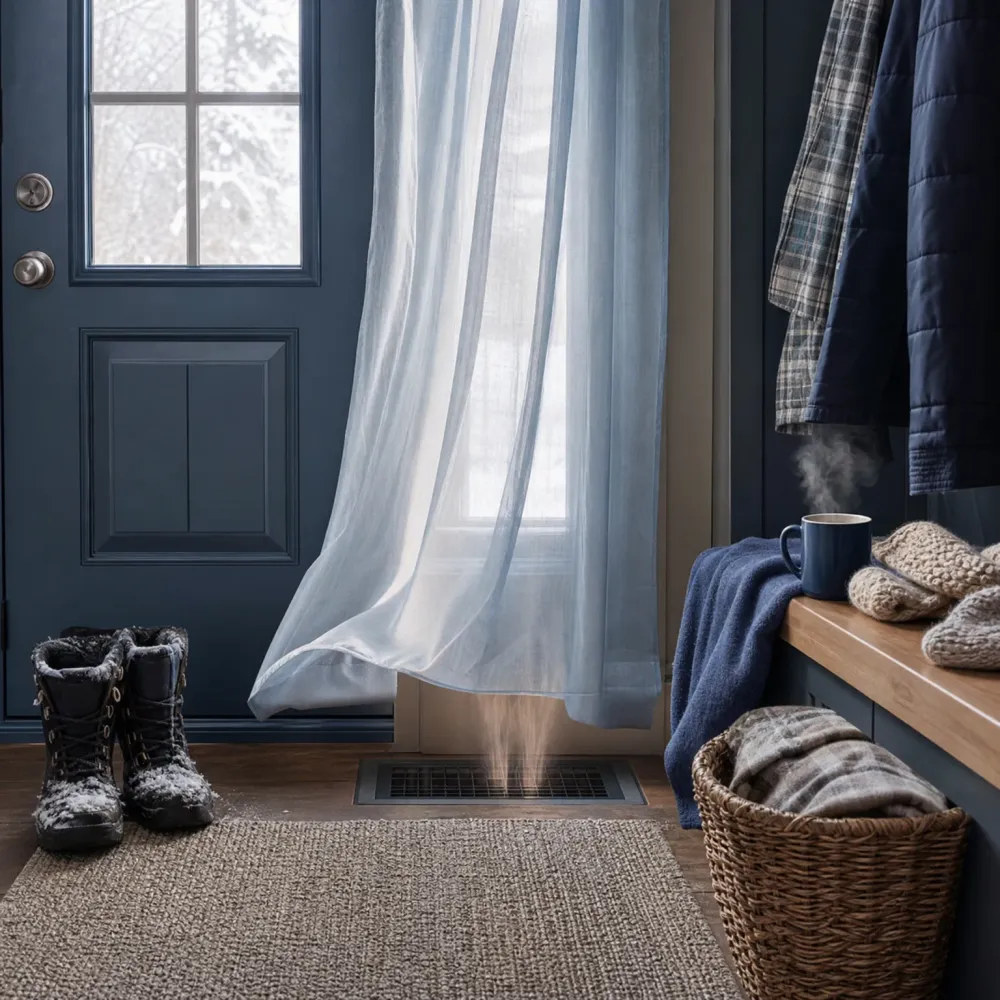
    Entryway with a dark blue door and window showing snowy trees, sheer curtain lifting above a floor vent, snow-dusted boots on a woven rug, and a wooden bench with a blue mug, folded blanket and basket.
  • Proven, simple, easy to get serviced

    The design is simple and well understood. That keeps service calls short.

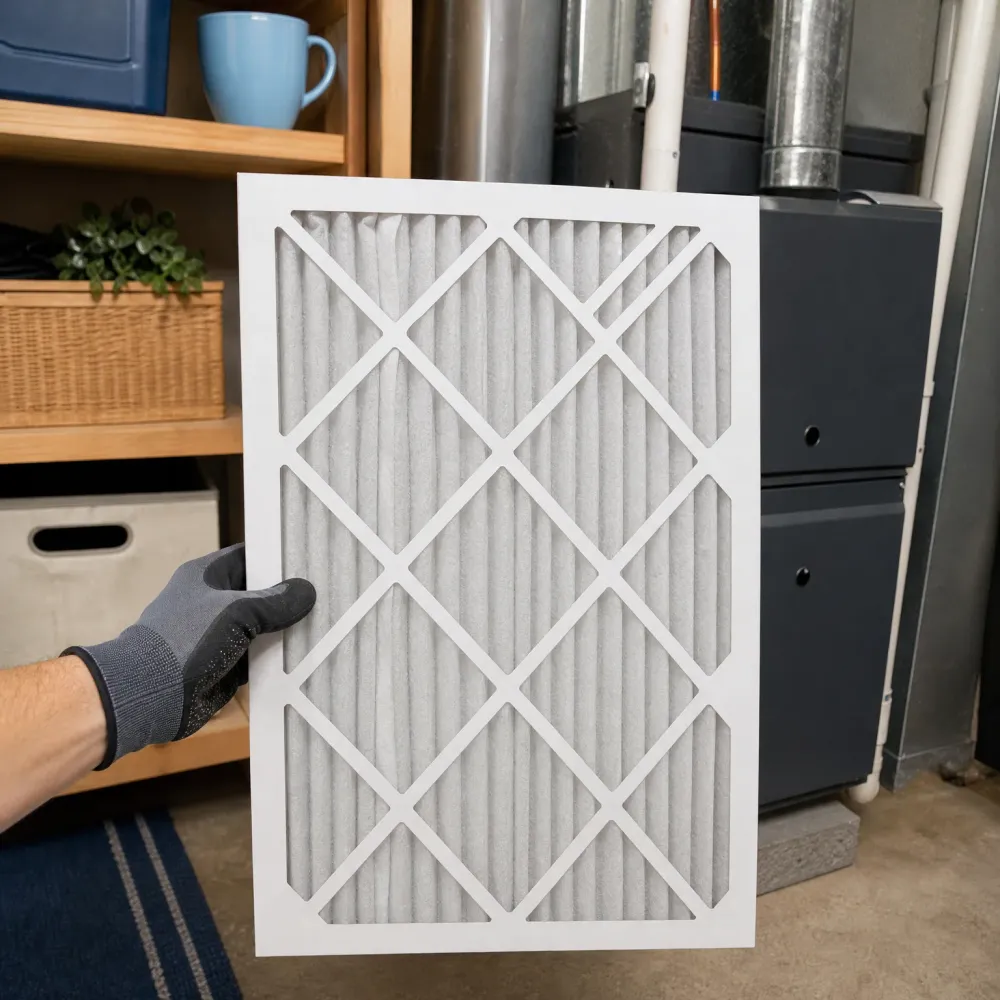
    A gloved hand holds a white pleated air filter in front of a furnace and wooden shelving holding baskets, bins, a mug and a plant.

What winter here actually asks of a heat pump

A heat pump has to work hardest exactly when it struggles most, and Tate County's winter sits right in that stretch. The overnight low here averages 34°F across December, January and February. That is already below the point where a standard heat pump starts losing ground. Below 40°F a conventional heat pump puts out less than its rated capacity, and below about 35°F it often needs backup heat to make up the difference. At 34°F, you are past both marks on an average winter night.

This happens often, not just on the odd cold snap. The overnight low falls to freezing or below about 65 nights a year here, close to half the roughly 150 nights that make up the five-month heating season. On most of those nights a standard heat pump is drawing on backup heat to keep up. What this county does not have is real extreme cold. Nights at 0°F or below happen fewer than once a year, so the backup heat a heat pump needs here is working against mild chill, not deep cold. A cold-climate heat pump, the kind rated to hold most of its capacity down to 5°F, has far less to make up in a winter like this one than it would further north.

None of this touches summer, and summer here is not short. Cooling runs about five months, May through September, with afternoons hitting 90°F or higher on about 70 days a year. A heat pump is doing that job too, since it is also the air conditioner. A furnace never touches those five months. It heats, and for the other seven months of the year here it sits idle while a separate AC system carries the load.
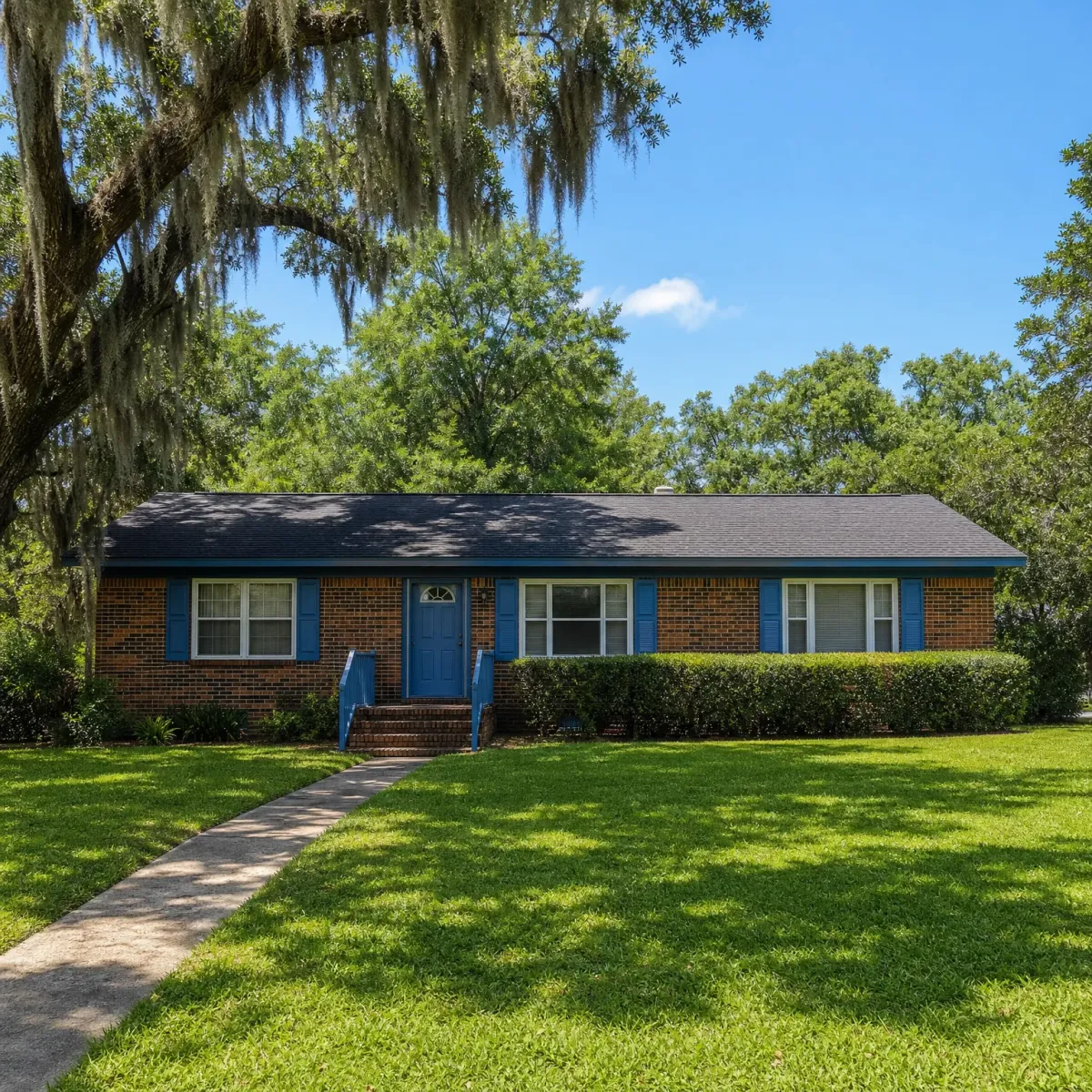
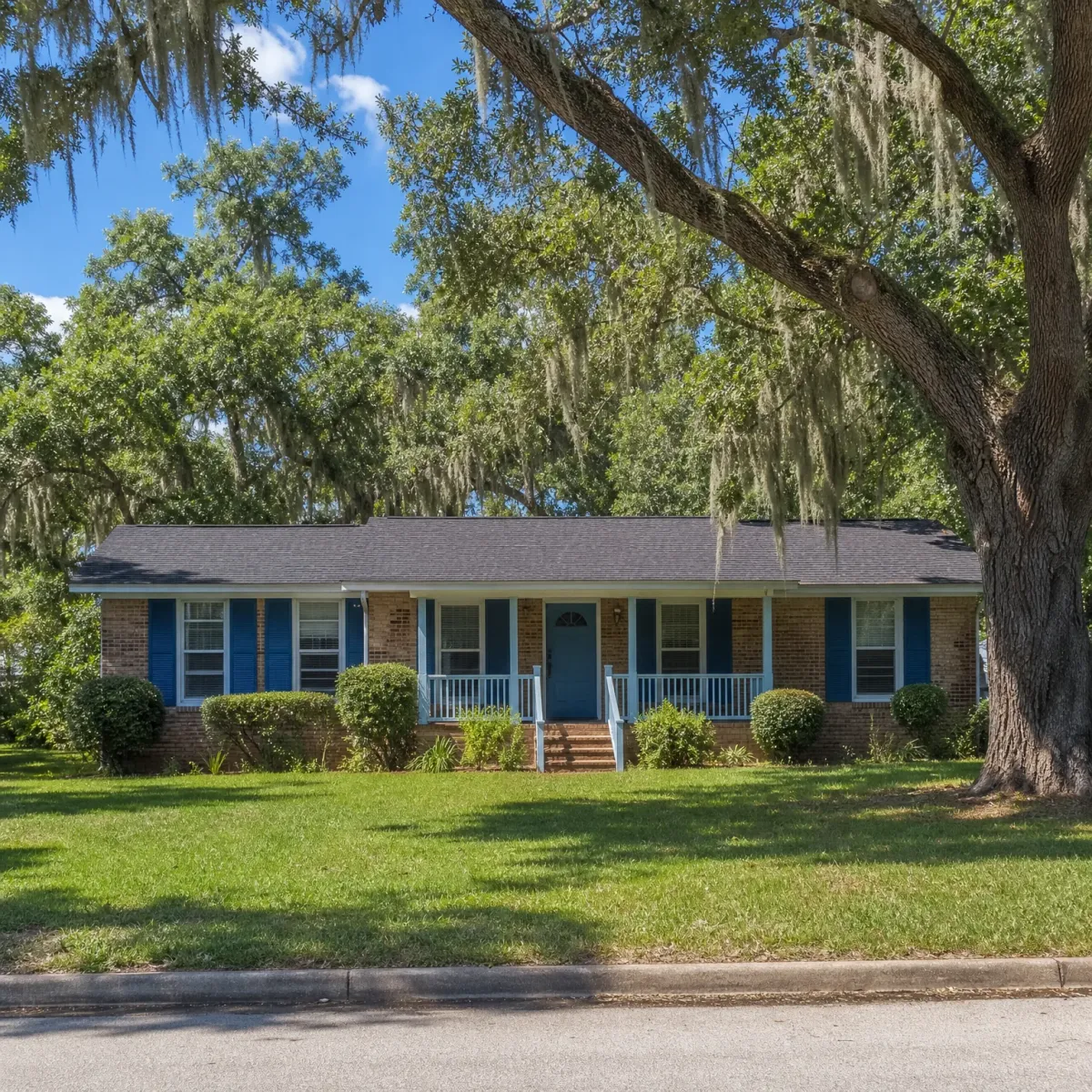
Single-story brick ranch house with blue shutters and front door, dark shingled roof, trimmed hedges, a concrete walkway crossing a mown lawn, and large moss-draped trees overhead under a blue sky.

What it costs to run, and what the house is already set up for

At Mississippi's average fuel prices, the two machines cost about the same to run here: $1.79 per 100,000 Btu for a heat pump against $1.88 for a gas furnace. That heat pump figure is its federal minimum rating with nothing added for backup heat, so on the roughly 65 nights a year it needs that backup, the real cost runs a bit higher than $1.79. The furnace number holds steady no matter how cold it gets outside. Neither fuel has a cost advantage large enough to decide this on its own.

So the decision comes down to what is already feeding the house. Electricity heats 56.6% of homes in Tate County, close to three in five. Propane heats another 26.4%, about one in four, and utility gas heats 14.1%, a little over one in ten. A furnace needs gas or propane piped or delivered to the house; a heat pump needs only the electric line every home already has. If your house runs on propane now, a heat pump means dropping a fuel delivery entirely. If it is already wired for electric heat, a heat pump is the straightforward next step. A furnace makes the most sense where gas or propane service is already in place and the house is paired with central AC that still has life left in it, since a furnace only ever handles the heating half of that pairing.

Sources: NOAA nClimDiv · NOAA 1991–2020 seasonal normals · PNNL Building America guide · PNNL-37127 field study · ENERGY STAR product criteria · EIA SEDS 2024 · 10 CFR 430.32 · Census ACS 2020–2024

A single-story brick house with blue shutters, a blue front door and a small covered porch, set behind a mown lawn and shaded by large oak trees draped with Spanish moss, viewed from across a street.

Common questions about heat pumps and furnaces

  • Will a heat pump keep my house cool enough here?

    Yes. A heat pump is a central air conditioner in the summer, same compressor and refrigerant cycle, running the same roughly five months, May through September, that any AC here would. Tate County sees afternoons of 90°F or hotter about 70 days a year, well within what a central system built for this climate is sized to handle.

  • What if my house doesn't have a gas line?

    You're not stuck with electric resistance heat. A heat pump moves heat instead of making it from scratch, so it costs less to run than straight electric baseboard or furnace-style electric heat, and in Tate County it costs a bit less to run than a gas furnace too. For a house with no gas line already in the ground, that's usually the simpler path than bringing propane or oil into the picture.

  • What if my house heats with oil or propane?

    A heat pump is worth pricing against both. Propane ran $29.42 per million Btu in Mississippi last year, well above the $15.03 for utility gas, and a heat pump built to the federal minimum works out to $1.79 per 100,000 Btu of heat here against $1.88 for a gas furnace. Oil and propane furnaces also need a tank filled and tracked, where a heat pump just runs on the electric service already at the house.

  • Is a heat pump cheaper to run than a furnace in Tate County?

    Yes, a little. At Mississippi's average prices a heat pump works out to $1.79 per 100,000 Btu of heat here against $1.88 for a gas furnace, both figures for a machine built to the federal minimum. The gap is small enough that it won't be the deciding factor on its own, especially since the heat pump's number doesn't include what backup heat adds on the coldest nights.