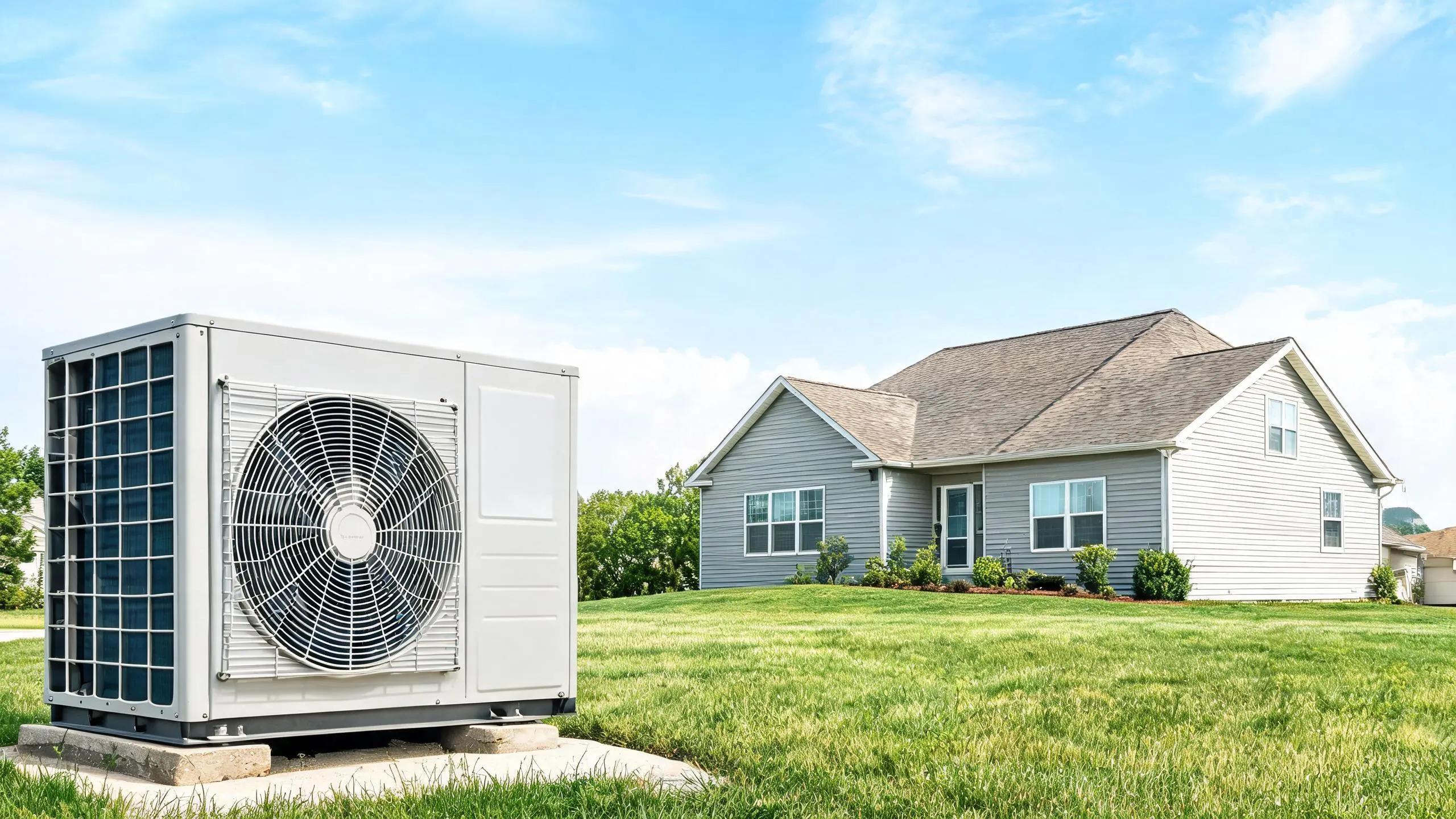







An outdoor HVAC condenser unit on a concrete pad in front of a single-story house with gray siding and a shingle roof.

Heat Pump Installation in Senatobia, MS

Tell us about the job

Takes about a minute. No obligation.

New system or replacementHeat PumpTate County, MS
Step 1 of 2

What ZIP code is the job in?

Electricity heats 56.6% of homes in Tate County, more than any other fuel, and a heat pump fits right into that setup. Another 26.4% run on bottled or LP gas, which usually means no gas line to the house at all. For those homes a heat pump does both jobs, heating and cooling, off the same electric service the house already has. Swapping in a heat pump instead of a straight electric furnace or window units is the simplest path when the house is already wired for electric heat.

5 months
November through March, your system heats
5 months
May through September, it cools
34°F
the average winter night it heats against
90°F
the average summer afternoon it cools against
Isometric cutaway illustration of a single-story house showing interior ductwork, an indoor air handler and furnace unit, and an outdoor condenser connected by a line, on a white background.
Your system heats November through March and cools May through September.

NOAA nClimDiv, 1991–2020 normals

A heat pump in Tate County runs heat from November through March and cooling from May through September.

Put the install in October or April and it's done before the next season needs it.

58 severe weather events in ten years, not a reason to size up

58 severe weather events from 2015 to 2024
30% of homes statewide lost power a day or more in 2024
27 damaging wind events from 2015 to 2024
Electricity here runs 13.39 cents a kilowatt-hourMississippi power costs less than most of the country, so payback on efficiency alone comes slower.

Senatobia sits in zone 3A, warm with humid summers and a long run of air conditioning weather. Any heat pump installed here new has to meet 14.3 SEER2 for cooling. That number is set for the Southeast specifically, higher than what the same equipment has to meet in a cooler state. It reflects how much this region leans on air conditioning. A contractor sizing a system for this house will be working from that floor, not a national one.

Reliability first

Power is cheaper here, so the most efficient model takes longer to pay off. Reliability and fit matter more.

Find a contractor
A man in a cap, navy T-shirt and brown pants carries a waxed canvas tool bag up the steps toward a blue front door of a shingled house, beside a potted shrub.
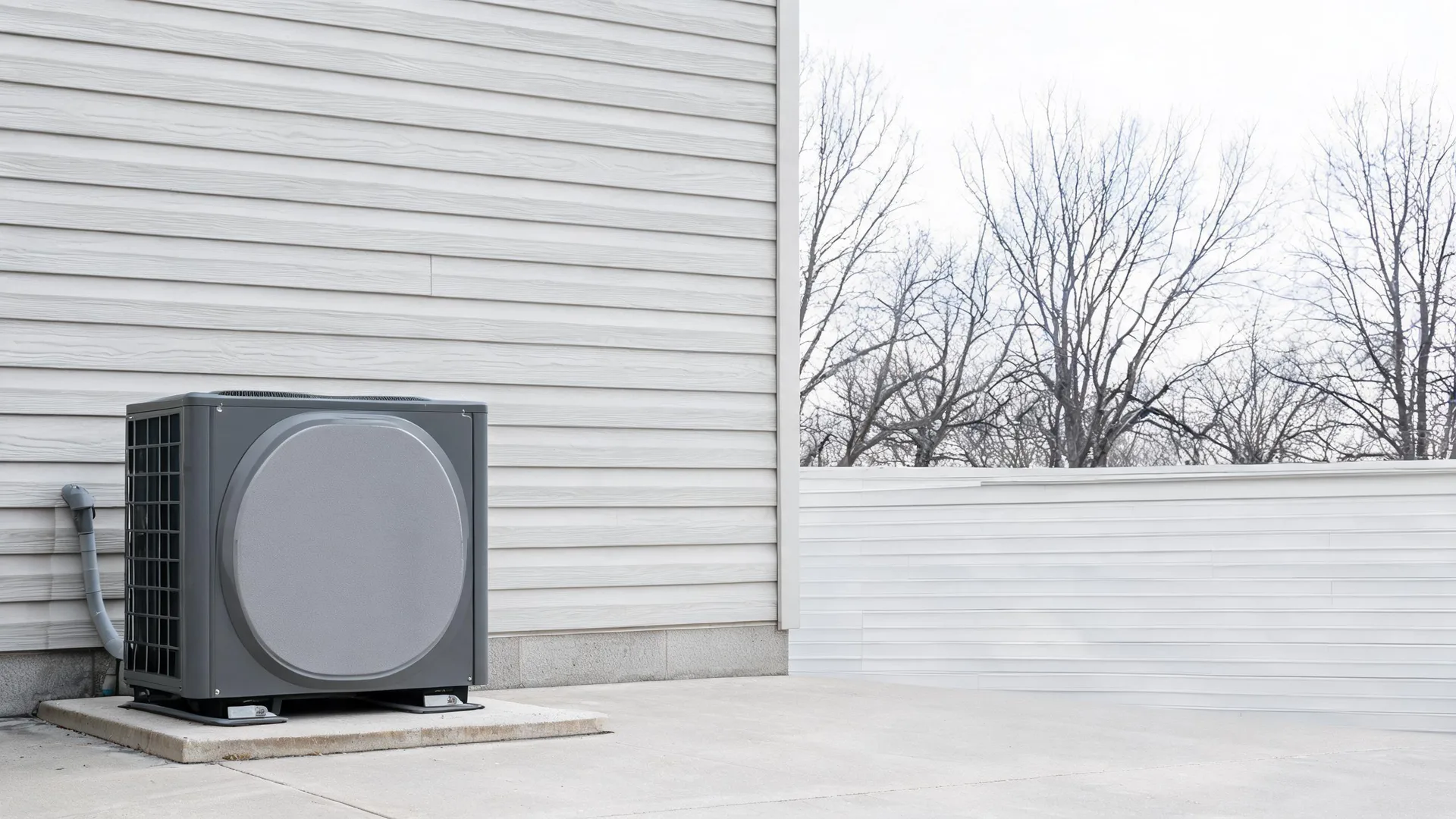
A gray heat pump condenser unit mounted on a concrete pad against the gray lap-siding exterior wall of a house.

What happens to what was there before

The old system usually gets pulled out once the new one is ready to go in, not before. A contractor disconnects the power first, then any refrigerant lines if it was a split system. Refrigerant has to be recovered into a tank, not vented, that part is law. If the old unit ran on electric heat strips or was a straight electric furnace, the wiring to it gets checked too, since a heat pump draws power differently and the old circuit may not fit the new equipment. Ductwork gets a look as well. A blower built for a furnace running a few months a year doesn't always move air the way a heat pump needs to, running on and off most of the year. Whatever hauls away the old equipment should be able to say where it's going, scrap metal recyclers take the cabinets, but anything with refrigerant in it needs documentation that it was recovered properly.

SEER2 is a seasonal average, not a guarantee

The rating on the label gets measured under set lab conditions, cycling on and off the way a system does over a mild stretch. What a heat pump actually draws depends on how long the compressor runs to hold the house at temperature, how well the ducts deliver that air, and how tight the house holds heat and cold. The same rated equipment can land on different running costs from one house to the next.
The cooling number doesn't tell you how it heats

SEER2 covers cooling only. A separate rating, HSPF2, covers the heating side, and that one matters once the compressor has to pull heat out of cold outside air instead of just moving it indoors. A unit with a strong cooling rating can still lean on backup heat strips on the coldest mornings, so ask about the heating number too, not just the one on the cooling sticker.

Sizing a heat pump starts with a load calculation, not the size of the unit it's replacing. A contractor measures the house, the windows, the insulation, and works out how much heat it loses in winter and gains in summer. Too big and the system short cycles, running a few minutes at a time, never long enough to pull moisture out of the air before it shuts off. Too small and it runs constantly on the coldest and hottest days, leaning hard on backup heat strips to make up the difference. Either mistake wears out the compressor faster than running the right size would. The old equipment is a clue to what might fit, not the answer, especially if the ductwork or insulation has changed since it went in.

Install day starts with the outdoor unit and indoor coil going in as a matched set, since that's how the rated efficiency holds up. The refrigerant lines get run, pressure tested, then pulled into a vacuum to clear out moisture and air before any refrigerant goes in. Skip that step and the compressor wears out early, so a contractor doing it right spends real time watching gauges rather than rushing to fill the lines. Electrical is its own piece of work, a heat pump needs a dedicated circuit sized for both the compressor and any backup heat strips, and that sometimes means upgrading the breaker panel, not just running new wire. Once it's charged and wired, the system gets run in both heating and cooling mode before anyone calls it finished, checking the temperature split at the vents and listening for anything that sounds off. A system that's sized right and charged right should run quiet from the first afternoon.