Heat pump vs furnace in Pearl River County, Mississippi

Price a Replacement

Install quotes in Pearl River County

A person in a dark blue long-sleeved shirt reaches toward a small white wall-mounted thermostat with a black screen, with a living room containing a sofa, coffee table and window behind, and an open tool bag with screwdrivers and pliers in the foreground.

Tell us about the job

Takes about a minute. No obligation.

New system or replacementPearl River County, MS
Step 1 of 3

What kind of equipment?

Which costs less to run in Pearl River County?

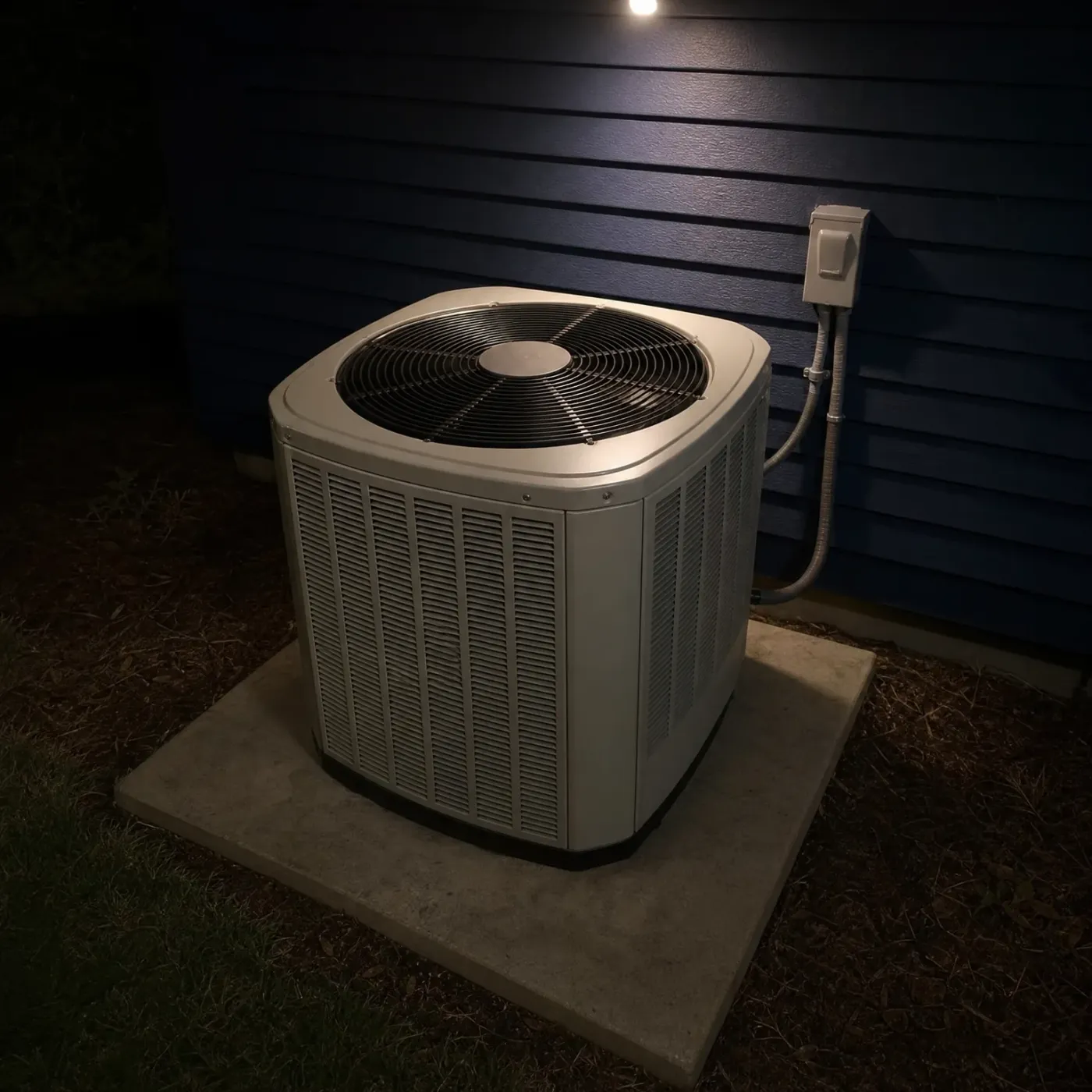
An outdoor air conditioning condenser unit on a concrete pad beside a dark blue horizontal lap siding wall at night, with a wall-mounted disconnect box and flexible conduit.

Heat pump

To heat your home here$1.79per 100,000 Btu

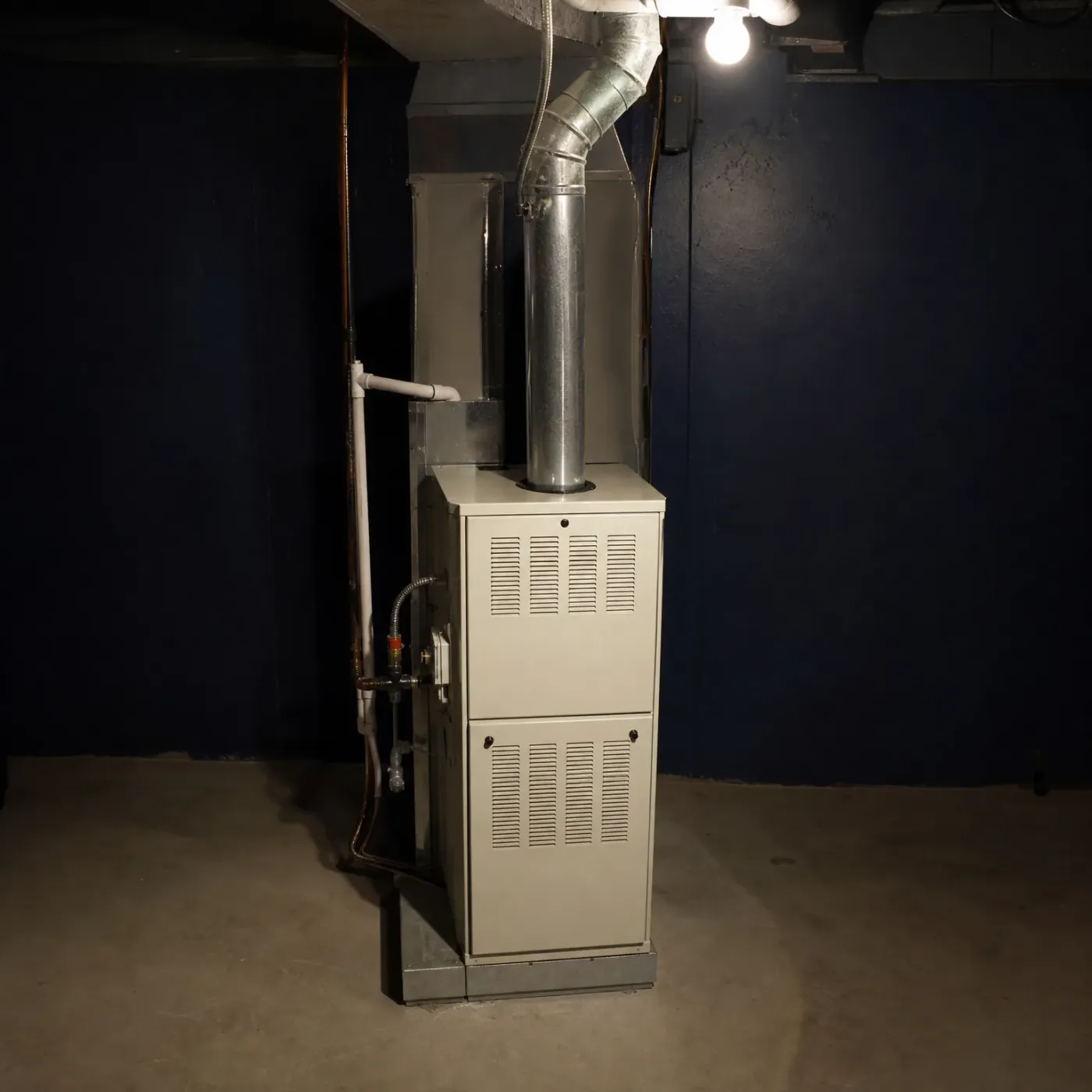
A beige residential furnace with two louvered access panels stands in a basement against a dark blue wall, connected to galvanized metal ductwork and a flue pipe, with copper and PVC pipes nearby and a bare bulb overhead.

Furnace

To heat your home here$1.88per 100,000 Btu

At Mississippi's gas and electricity prices, a heat pump and a gas furnace cost about the same to run here.

Btu stands for British thermal unit, the standard measure of heat energy.

Where does a heat pump shine?

  • Made for mild winters

    Winter nights in Pearl River County average 41°F, well within the range where a heat pump keeps pulling heat from the outside air without much strain. It won't be fighting to work in a deep freeze this area just doesn't get.

    Front porch of a navy-sided house with a light blue door, white columns and railings, concrete steps with a doormat, potted small evergreens, a bench with a blue blanket and brown boots, and frost on the surrounding lawn.
  • Covers a long cooling season

    Cooling runs May through October here. A heat pump handles both sides of that, warm months and the cold snaps in between, with one system doing the work year round.

    A covered porch with blue siding, a ceiling fan, wicker furniture with navy and light blue cushions, and a glass of iced tea beside a small potted plant on a round metal side table.
  • Steady, even comfort

    A heat pump runs long and low instead of blasting on and off. Rooms hold an even temperature all day.

    Living room with a lit fireplace in a dark navy mantel and built-in shelves, a navy armchair with a gray throw and open book, a table lamp, and a yellow Labrador lying on a patterned rug.

Where does a furnace shine?

  • Fast, strong heat on demand

    The air coming from the vents feels genuinely hot. That's welcome on a freezing morning.

    A mudroom entry with a dark blue door showing snowy shrubs through its window, snow-covered boots on a stone floor, a sheer curtain, a floor vent with visible vapor, and a steaming mug on a wooden bench beside a knit blanket and hanging coats.
  • Proven, simple, easy to get serviced

    The design is simple and well understood. That keeps service calls short.

    A gloved hand holds a pleated air filter in front of a furnace and ductwork, next to blue shelving with baskets, a bin, and a small potted plant.
  • Pairs with any central AC

    A furnace's blower and ducts carry cooled air too. Adding central AC uses the same system.

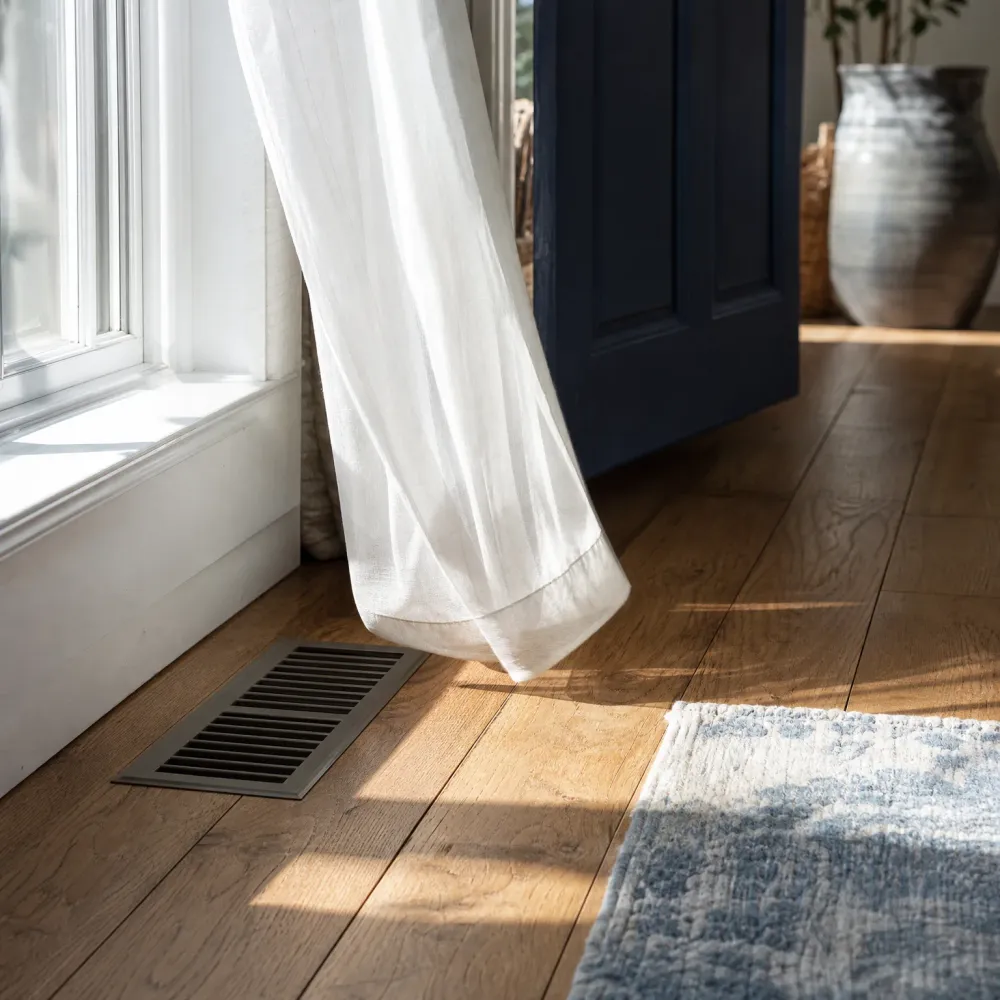
    A dark metal floor register set into a wood plank floor near a white baseboard and window, with a sheer white curtain, a navy door, and a blue and white rug nearby in sunlight.

What the weather here actually asks of a heating system

Winter here is short and mild. Heat runs about five months, November through March, and the overnight low only falls to freezing or below on about 30 nights a year, under a quarter of the nights the heat is even on. That is the case for a heat pump. A heat pump moves heat instead of burning fuel for it, and it struggles most on the coldest nights. Here, there are not many of those.

Cooling runs longer than heating does, six months against five, and the afternoon hits 90°F or better on about 80 days a year. A heat pump is also an air conditioner, the same box doing both jobs. A furnace only heats. It has nothing to do the other seven months of the year, so you are buying a second machine, a separate AC, to get through the summer either way.

Run the two side by side on cost and they land close together: $1.79 per 100,000 Btu for the heat pump, $1.88 for the furnace, both at Mississippi's average fuel prices and both machines built to the federal minimum. That is a cheaper season for the heat pump, but not by enough to decide this on its own. What decides it is that a heat pump covers both seasons here, in a county where winter is the shorter, milder one.
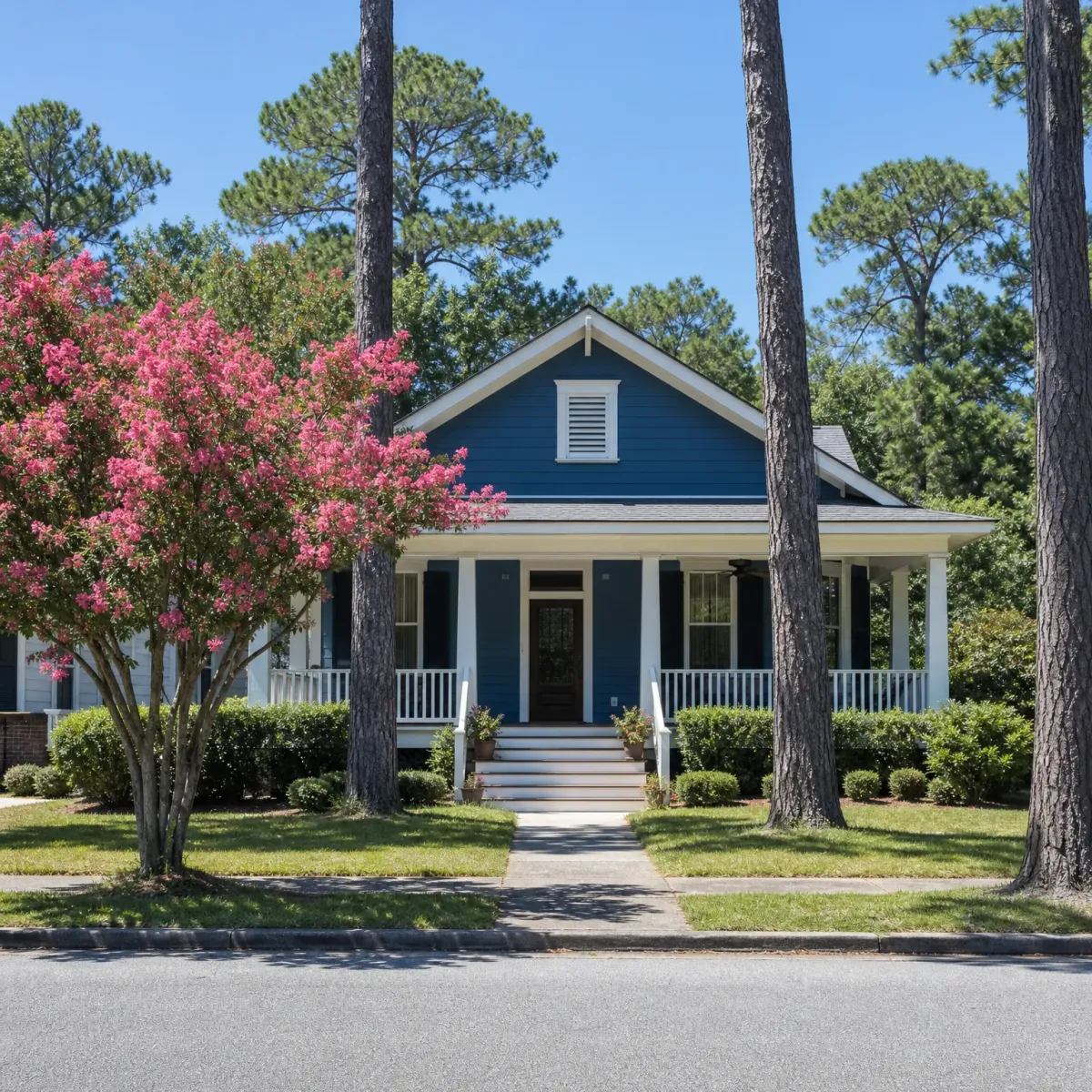
A single-story blue house with white trim, a covered front porch with white columns and railing, and a gabled roof with a louvered vent, set behind a lawn with a pink-flowering crepe myrtle, trimmed hedges, tall pine trees, and a concrete walkway leading to the street.

Where a furnace still makes sense

None of that rules a furnace out. Utility gas only heats about 6% of homes in this county, far behind electric heat at nearly 88%, so a gas furnace is less common here than in Mississippi as a whole, where closer to three in ten homes heat with gas. If your house already has gas run to it, that changes the math less than you'd think, since the running cost per Btu is close either way.

A furnace earns its keep on the coldest nights. It burns gas and holds its output no matter how far the temperature drops, where a heat pump built to the federal minimum leans on backup heat once it gets cold enough, and that backup heat is not included in the $1.79 figure. With only about 30 nights a year at freezing or below, that matters less here than it would further north, but it still matters on those nights.

A furnace also pairs with any central AC, so if you already have a working air conditioner and just need to replace the heat, a furnace lets you leave that system alone. A heat pump replaces both at once. Which one fits depends on what you already have in the house and whether you want one machine for both jobs or two machines, each doing one.

Sources: NOAA nClimDiv · NOAA 1991–2020 seasonal normals · Census ACS 2020–2024 · EIA SEDS 2024 · 10 CFR 430.32

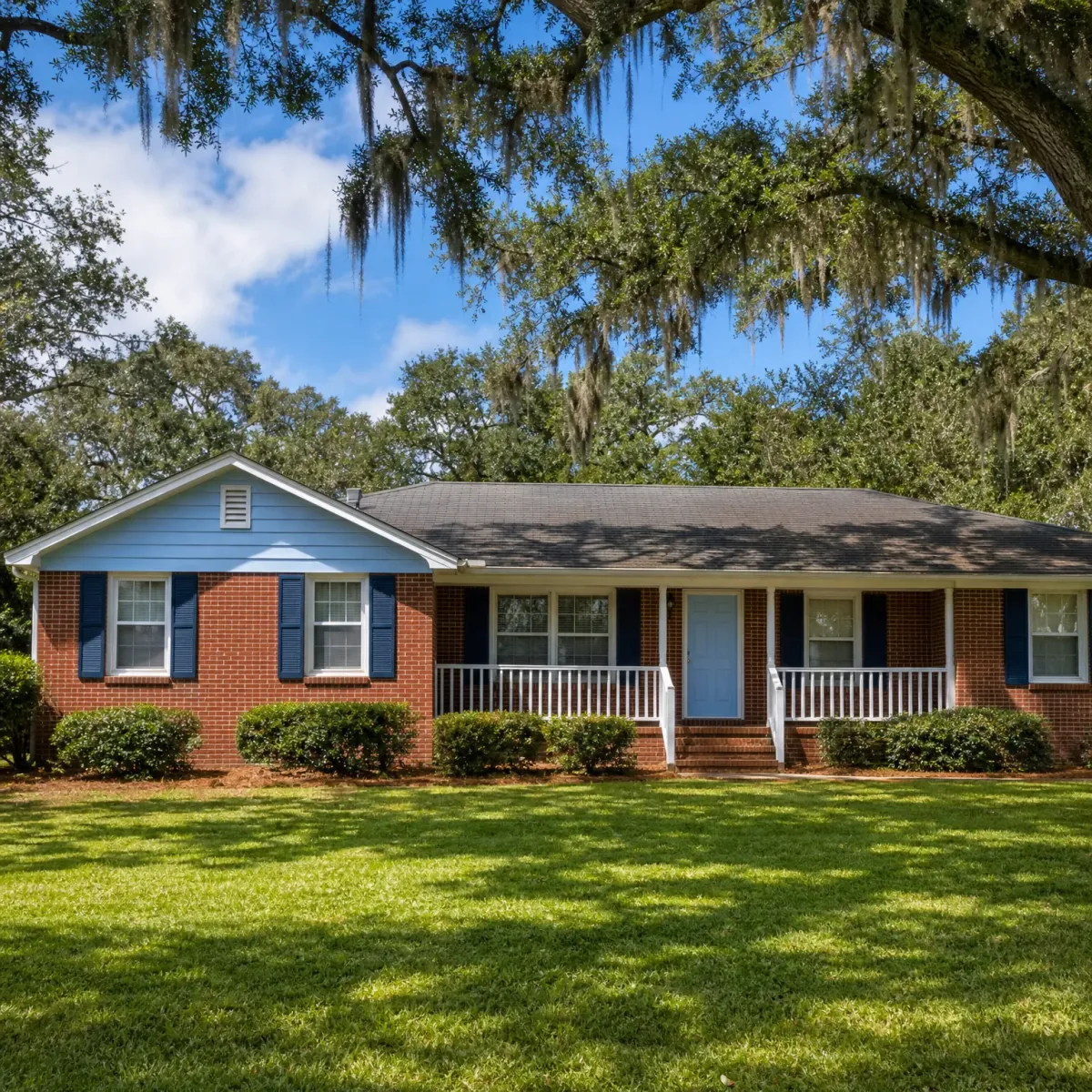
A single-story red brick ranch house with blue shutters, a blue front door, white porch railing, and gable end with blue siding, set behind a mowed lawn and surrounded by large moss-draped oak trees.

Common questions about heat pumps and furnaces

  • Will a heat pump keep my house cool enough here?

    Yes. A heat pump is a central air conditioner in the summer months, same equipment, same airflow, just running in reverse, so it covers your cooling season the same way any AC would. Cooling runs about six months a year here, May through October, longer than the five months heat runs, so the machine spends more of the year in this mode than the other.

  • What if my house doesn't have a gas line?

    A heat pump is the straightforward choice. It runs on electricity, same as propane and oil furnaces do not, and it also covers your cooling, so you are not buying a separate AC on top of it. Propane and oil cost more to haul in and store than the gas a furnace in a piped home would burn, and a heat pump skips that problem entirely.

  • Is a heat pump cheaper to run than a furnace in Pearl River County?

    Yes, a little. A heat pump runs $1.79 per 100,000 Btu of heat here against $1.88 for a gas furnace, both built to the federal minimum. That gap is small enough that the two run at about the same cost in Pearl River County, so the choice comes down to what else each machine gives you, not which one saves you money.