Two illuminated white colonial-style houses with wrap-around porches, flanked by oak trees draped in Spanish moss, photographed at night.

Heat Pump Repair in Picayune, MS

Tell us about the job

Takes about a minute. No obligation.

RepairHeat PumpPearl River County, MS
Step 1 of 2

What ZIP code is the job in?

April is when a weak heat pump shows itself

Cooling starts in May here, and the first hot stretch is when a heat pump that limped through last year finally quits. A capacitor or contactor that was already going tends to fail right when the system has to run longest to catch up.

October matters just as much

Heat comes on in November, and a heat pump that sat idle since spring can struggle the first time it has to switch over and produce heat instead of cooling. Getting it looked at in October catches a weak part before the cold asks more of it.

5 months
November through March, your system heats
6 months
May through October, it cools
41°F
the average winter night it heats against
91°F
the average summer afternoon it cools against
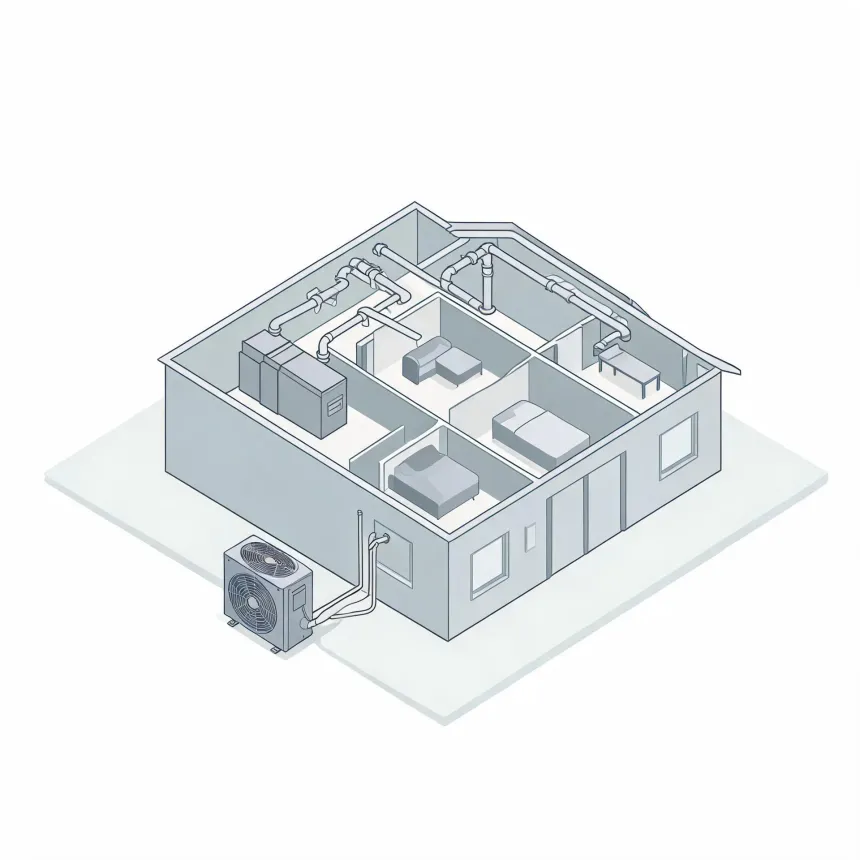
Isometric line illustration of a cutaway single-story house showing interior rooms with beds and furniture, ceiling ductwork connected to an indoor air handler, and an outdoor condenser unit linked by refrigerant lines.
Your system heats November through March and cools May through October.

NOAA nClimDiv, 1991–2020 normals

Pearl River County logged 64 severe weather events between 2015 and 2024, most of them wind and hail rather than hard freezes.

A heat pump repair here is usually a capacitor, a contactor or a coil, not storm damage, so check the common parts first.

Half the homes in Picayune are newer, so the heat pump is often still within its working life

Half the homes here were built by 1990
Power costs 13.39 cents a kWh statewide
Climate zone 2A

If your house was built in 1990 or later, the heat pump is probably still within its working life, and that points toward repair rather than replacement. Ask the contractor whether the part that failed is a normal wear item, the kind that shows up on a unit with plenty of good years left. A capacitor, a contactor or a coil leak is usually just that, a part worn out on schedule, not a sign the whole system is failing. Fixing it is the straightforward move when the unit still has years ahead of it.

Get it looked at early

Problems tend to show up in the first weeks of the season, when the load hits a part that was already weak.

Find a contractor
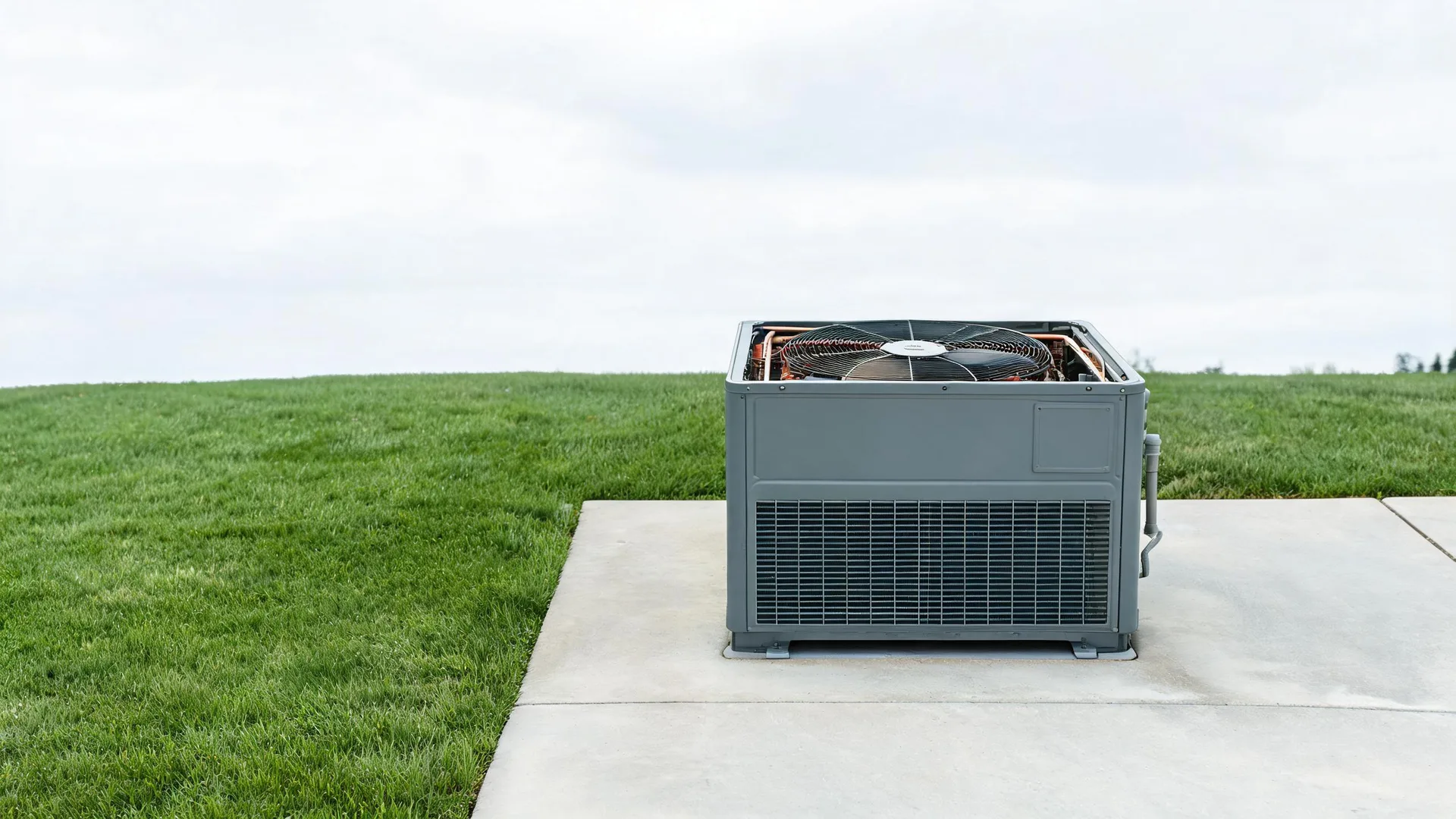
A gray heat pump condenser unit mounted on a concrete pad against the gray lap-siding exterior wall of a house.

It runs in both directions, so the wear parts go first

A heat pump runs in both directions, cooling part of the year and heating the rest, so it cycles on and off more than a furnace or an AC that only works one season. The parts that fail are the ones doing that work every time it starts. The contactor pulls in each time the compressor kicks on. The capacitor gives that compressor the push it needs to get moving. Both wear down a little with every cycle. Usually you hear something before anything actually quits. A clicking relay, a faint hum when the outdoor unit tries to start and doesn't catch, short cycling where it shuts off soon after it comes on. Later signs are weak airflow, ice on the outdoor coil when the weather doesn't call for it, or air coming out that isn't warm or cool enough to matter. None of that means the whole system is failing. It usually means one part finally gave out after doing the same small job over and over.

What you can look at yourself

Check the outdoor unit for leaves, pine straw or anything blocking the sides. Look at the air filter and swap it if it is dirty, since weak airflow across the indoor coil can look like a bigger problem than it is. Check that the thermostat is set to heat or cool as expected and the batteries are not dead. Check the breaker for the outdoor unit if nothing is running at all.

What to leave for a contractor

Do not pull the panel off the outdoor unit or touch the wiring inside it. If the outdoor coil is iced over, do not chip at it. Turn the system off and let a contractor find out why ice formed in the first place. A refrigerant leak, a bad reversing valve or a failing compressor all need gauges and training to diagnose. Trying to force a fix on those can turn a part repair into a bigger job.

A weak capacitor does not stay a small problem if the system keeps cycling on it. Every time the compressor tries to start and struggles, it draws more current than it should, and that heat builds up in the motor windings. Keep running it that way and a part that needed replacing can turn into a compressor that needed replacing instead. Ice on the outdoor coil works the same way. Left alone, it blocks airflow across the coil, and the system starts pulling in liquid refrigerant it was never built to handle. A reversing valve stuck mid-cycle is worse still, since forcing the system to keep running can flood the compressor. The part that fails first is almost never the one you want to be dealing with last.

A heat pump repair is worth it when the part that failed is one part, and everything else around it is still sound. A capacitor, a contactor, a fan motor, a defrost board. These get replaced on their own all the time, and the system runs like nothing happened. The harder call is a compressor. It costs more than the other parts combined, so a contractor has to weigh putting a new one into an old system against putting that money toward a whole new unit instead. Age alone does not decide it. A unit that has been maintained, with clean coils and good airflow over the years, holds up differently than one that has not. Ask what failed and why, not just what it costs to fix it.