

What winter here actually asks of a heat pump
Your winter low averages 32°F, and it drops to that or below on about 90 nights a year, out of roughly 210 nights across the seven months the heat runs. That is under half of them. Almost none of those nights see real cold. Of those 90, only a small part, about one tenth of one, reach 0°F. This is a mild winter with a lot of nights sitting right at freezing, not a winter with long stretches of hard cold.
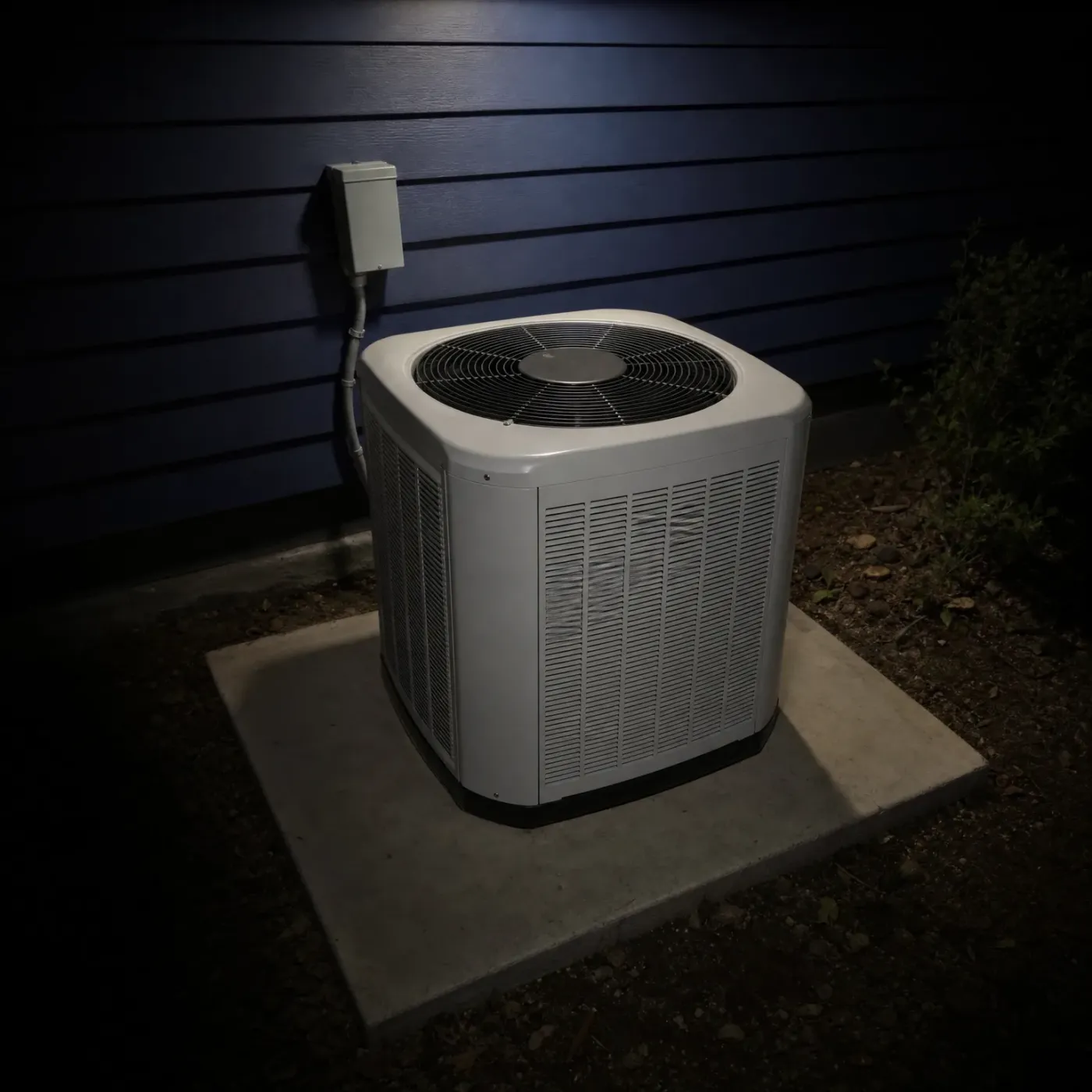
That matters because a standard heat pump has two separate weak points, and 32°F sits past both of them. Below 40°F it puts out less heat than its rating says. Below about 35°F it often needs backup heat to make up the difference. Your average winter night is colder than both marks, and so is every one of those 90 freezing nights. A standard heat pump here will call on backup heat often, not as a rare exception.
That is not the same as saying it will struggle. A cold-climate heat pump, the kind certified to hold at least 70 percent of its rated heat and a 1.75-to-1 efficiency ratio at 5°F, is built for weather far colder than this county sees. In field tests of these units in occupied homes, backup heat carried only a small share of the load between 0°F and 35°F, and running on backup alone was rare even above 0°F. Your cold nights are milder than that test range. A cold-climate model is the steadier choice for the 90 nights a year you're at or under freezing, while a standard model is more likely to be leaning on backup heat on those same nights.