A low-angle view along a red brick wall with shrubs at its base, facing a mown grass lawn with a single-story light-colored house and pine trees under an overcast sky.

Furnace Repair in Iuka, MS

Tell us about the job

Takes about a minute. No obligation.

RepairFurnace or heatingTishomingo County, MS
Step 1 of 2

What ZIP code is the job in?

Short cycling wears out parts fast

A furnace that fires up, runs a few minutes, then shuts off and starts again is fighting something. It could be a dirty flame sensor. It could be a clogged filter. It could be a cracked heat exchanger tripping a safety switch. Each cycle adds wear to the igniter and the blower motor. The longer it short cycles, the more strain those parts take.

A yellow or flickering flame means stop using it

The burner flame should be steady and blue. If it's yellow, orange, or jumping around, the gas isn't burning clean. That can point to a venting problem or a cracked heat exchanger letting combustion gases mix where they shouldn't. This isn't a wait and see sign. Shut the furnace off and get a technician out before running it again.

7 months
October through April, your furnace is on duty
32°F
the average winter night it heats against
8 winter storms
in ten years, the nights a failure hurts most
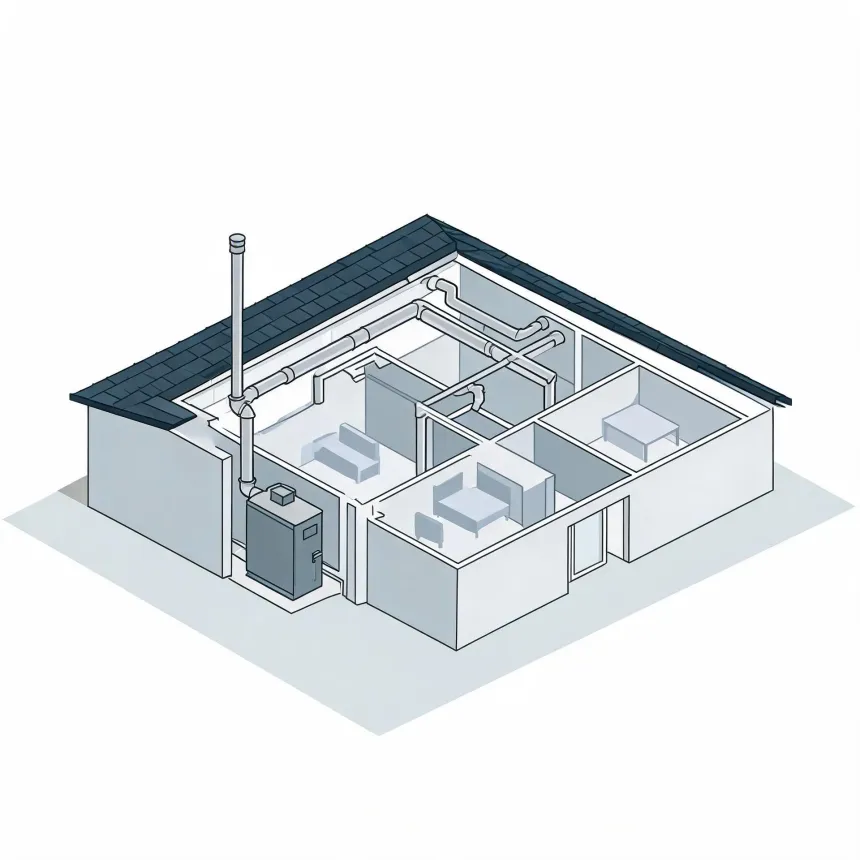
Isometric line illustration of a cutaway single-story house showing interior rooms with furniture, ceiling ductwork, and an exterior furnace unit with a tall flue pipe.
Your furnace works hardest from November through March.

NOAA nClimDiv, 1991–2020 normals

A dirty flame sensor is the most common reason a furnace won't stay lit.

Cleaning it is a quick job, but ignoring it leads to more ignition attempts and a shorter igniter life.

Iuka winters are mild, so the usual furnace problems are the ones worth fixing

Heat runs October through April
Winter nights average 32°F
Climate zone 3A

Winter storms, high wind and hail show up in the record here, but none of that wears on a furnace sitting in a closet or attic. Wind and hail take their toll on the roof and siding, not on a gas valve or a blower motor. The one place weather matters is the power. About 30% of Mississippi households went a full day without power in 2024, and a furnace needs electricity to fire even when the gas and burner are fine. If yours won't start after an outage, check the power to the unit before assuming something inside it broke.

Get it looked at before October asks more of it

Furnaces here start working in October. If a part was already weak, the first cold snap is when it gives out, not in the middle of winter. September is a good time to have a furnace with known trouble looked at, before it has to run.

Find a contractor
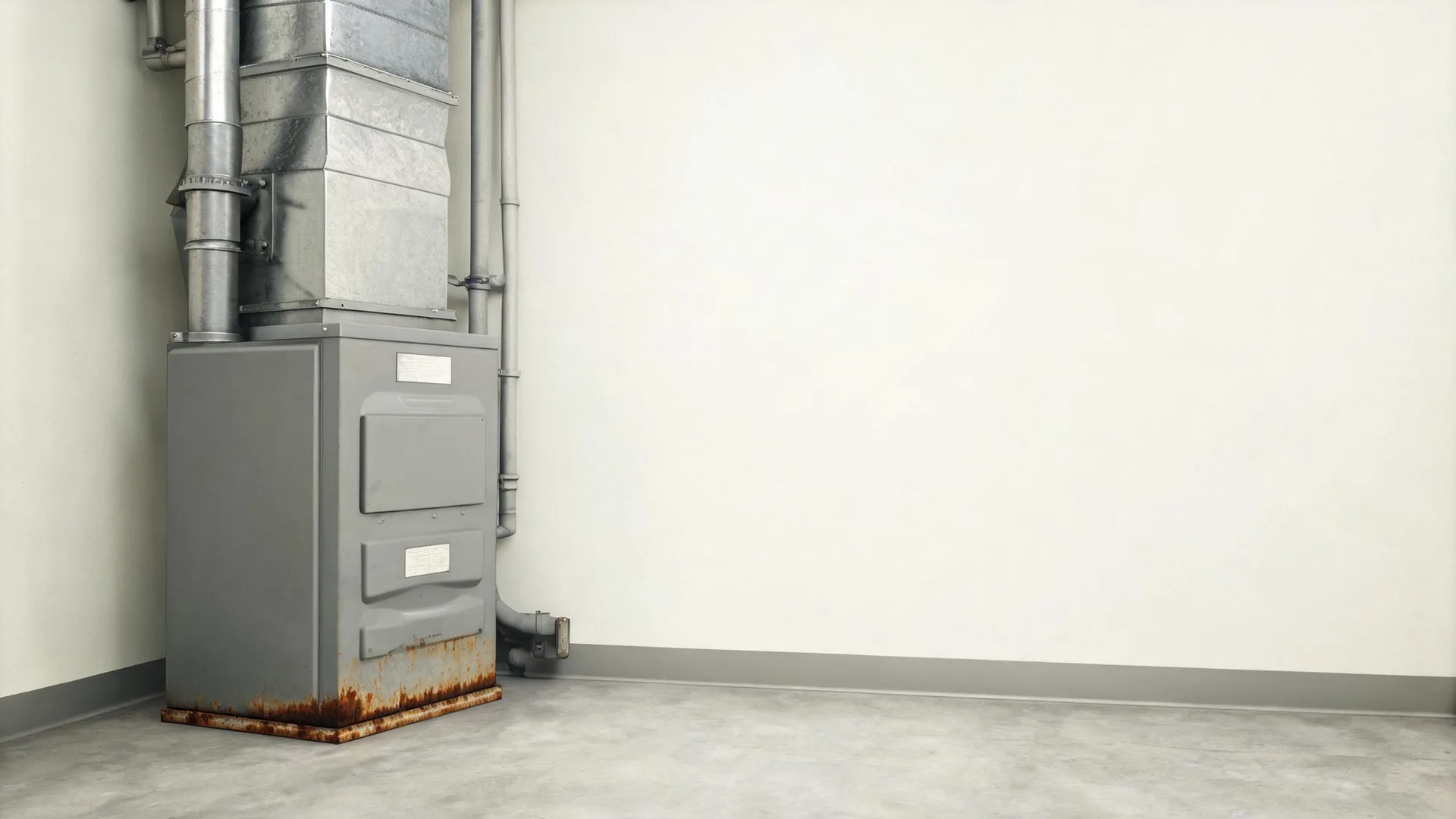
A gas furnace with attached ductwork, gas piping, and condensate lines installed in a concrete-block basement.

Your furnace probably has years left in it

Half the homes in Tishomingo County were built in 1981 or later. If that's your house, the furnace inside it hasn't necessarily been running for decades. Newer systems still break. A flame sensor gets dirty or an igniter wears out no matter how old the house is. But a furnace with years left on it is usually worth fixing rather than replacing. Mobile homes make up a good share of the housing here too. If that's your setup, mention it to the technician before they arrive.

Check the simple things first

Make sure the thermostat is set to heat and the temperature is above room temperature. Check that the furnace switch, the one that looks like a light switch near the unit, is on. Look at the breaker for the furnace in the electrical panel. Check the filter and replace it if it's gray or clogged. These take a few minutes and rule out the easiest causes.

Know when to stop and call

If the furnace is making a banging or grinding noise, if you smell gas, or if the flame looks yellow instead of blue, turn it off at the switch and don't try to run it again. Those point to a problem inside the burner or heat exchanger that needs a technician, not a homeowner fix. Running it in that state risks more damage or worse.

A furnace that's struggling doesn't fix itself by staying on. A weak igniter that's failing takes more attempts to light the burner each time, and every failed attempt is wear it doesn't get back. A blower motor running on a bad bearing heats up further the longer it spins, and that's what turns a noisy motor into a seized one. Airflow problems compound too. A return vent blocked or a filter clogged doesn't just make the furnace work harder, it lets the heat exchanger run hotter than it should, and heat exchangers crack under that kind of stress. None of these get better on their own. The safe move is to shut it off and have someone look at it before the next cycle, not after.

A technician starts by asking questions. When does it happen. On startup, partway through a cycle, only when the blower kicks on. That narrows things down before any panel comes off. Then the cover comes off and they watch the furnace try to run, because one that won't stay lit usually shows the problem in the first minute. They check for spark at the igniter and test the flame sensor. They look at the pressure switch and the limit switch too, since either one will shut the whole system down as a safety measure. They pull the filter and check the blower while they're in there, because restricted airflow causes a lot of calls that look like something else entirely. Only after all that do they say what's wrong and what it takes to fix it.