Most homes here run on electricity
Electricity heats 60.1% of occupied homes in Tishomingo County, more than any other fuel. Gas service reaches a smaller share, with utility gas at 24.9% and LP or bottled gas at 11.4%.
Takes about a minute. No obligation.
Electricity heats 60.1% of occupied homes in Tishomingo County, more than any other fuel. Gas service reaches a smaller share, with utility gas at 24.9% and LP or bottled gas at 11.4%.
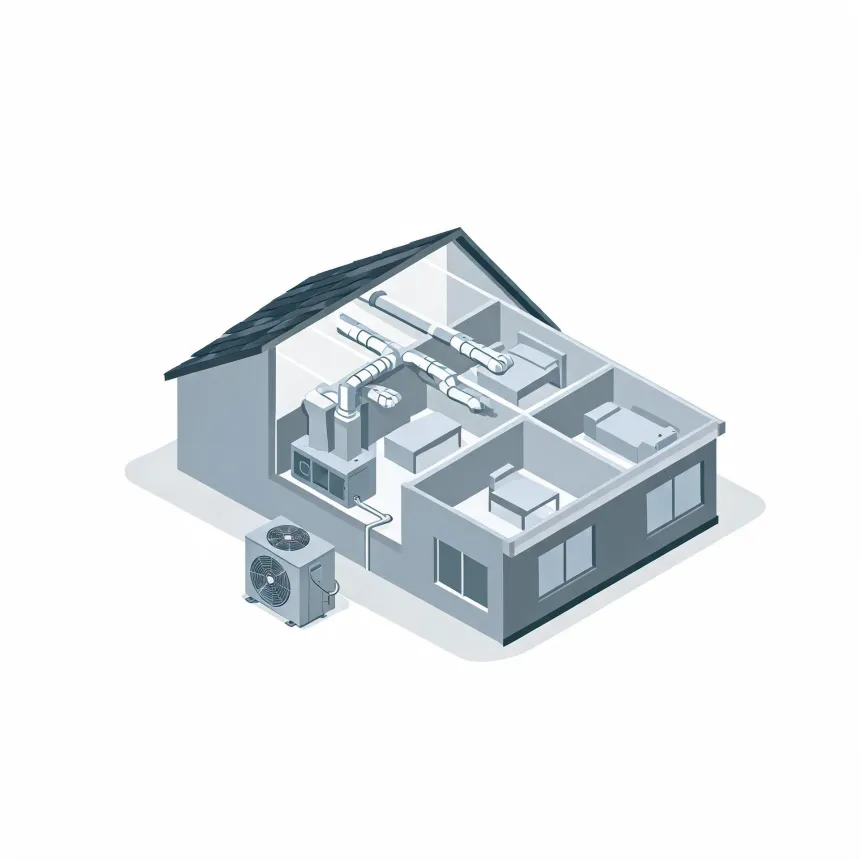
If your house already heats with electricity, a heat pump replaces that system without adding a fuel line or venting a gas furnace needs. The electrical setup an electric furnace or electric baseboard used is the starting point a contractor checks for sizing the new unit.
NOAA nClimDiv, 1991–2020 normals
Mississippi power runs 13.39 cents a kilowatt-hour, below the national average.
A high-efficiency heat pump still costs more up front, and it takes longer here to earn that back in lower bills.



Zone 3A means long cooling months and winters that stay mild, with enough humidity in the air that moisture removal matters as much as temperature. A heat pump sized to the house handles both sides of that job, the summer cooling and the winter heat, without a contractor needing to push past standard equipment to do it. Nothing about Tishomingo County pushes the load higher than what a correctly sized unit is built for. Going bigger doesn't buy anything here. An oversized unit cycles on and off more than it should, and that short cycling leaves the air damper than it would be with the right size unit running steadily.
Iuka sits in zone 3A, and since January 2023 every split-system heat pump sold has to meet 14.3 SEER2 for cooling. Central air systems installed in the Southeast face that same floor, higher than what the rest of the country requires. A federal tax credit is available on qualifying equipment. A contractor can tell you which units meet both.
Find a contractorHeat runs here October through April, seven months. Cooling picks up May through September, five months. There's barely a gap between the two, so a heat pump in this county is doing one job or the other almost all year round. Putting it in before October means it's running and checked out before the first cold morning, instead of going in during an emergency with whatever units a contractor has on hand.
The outdoor unit gets disconnected from its electrical circuit and the refrigerant lines get recovered before anything is unbolted. That refrigerant can't legally be vented to the air, so it's pulled out with a recovery machine and kept for reuse or disposal. Once the lines are clear, the old condenser and the indoor air handler or coil come out, along with the line set if it's not being reused. A furnace being replaced alongside it comes out the same way, disconnected from gas or electric and pulled from the plenum.
Removing the old system is part of the same visit as putting in the new one, not a separate trip. If the new heat pump is going to use the existing ductwork or line set, a contractor checks the condition of both before deciding what stays and what gets replaced. Electrical whip and disconnect boxes sized for the old unit often need to be swapped too, since a heat pump's electrical needs don't always match what the old furnace or air conditioner used.
A heat pump has to be sized to the house, not picked off a chart by tonnage. The method that does this right is a room by room heat loss and heat gain calculation, which looks at wall and ceiling insulation, window area and orientation, and the volume of air in each room, then adds it up to a total load the house actually has. Square footage alone can't tell a contractor that, since houses the same size can need different sized units depending on how much glass faces west or how well the attic is insulated. Undersized equipment runs constantly and still can't keep up on the coldest or hottest days. Oversized equipment is just as much of a problem, since it satisfies the thermostat fast and shuts off before it's pulled the moisture out of the air, leaving the house cold and clammy at the same time. The right size is the one that matches the load calculation, not the one that sounds safer because it's bigger.
Install day starts with the equipment already sized and chosen, so the work on site is mechanical, not a decision made on the fly. The outdoor unit gets set on a pad or bracket and the indoor coil or air handler goes in, then the line set gets connected and the whole system is pressure tested before any refrigerant goes in. A contractor pulls a vacuum on the lines to clear out moisture and air, since either one left behind will cause problems later. Once that vacuum holds, refrigerant gets weighed in to the amount the equipment calls for, not just added until the pressure looks right. The electrical connections get made last, the system gets powered up, and a contractor checks airflow at the registers, the temperature split between return and supply air, and that the thermostat is actually controlling the unit. A system that isn't checked out on install day is one that shows its problems the first cold or hot week it has to run.