





Two illuminated white Southern-style houses with wraparound porches and staircases, framed by a Spanish moss-draped tree on a quiet street at night.

Heat Pump Repair in Iuka, MS

Tell us about the job

Takes about a minute. No obligation.

RepairHeat PumpTishomingo County, MS
Step 1 of 2

What ZIP code is the job in?

Iuka doesn't put any unusual strain on a heat pump. The summers run long here and winters stay mild, with enough humidity that the system runs most months of the year. That's true across this part of Mississippi, not just Iuka. When a heat pump stops heating or cooling right, it's almost always one of the ordinary things. A low charge. A failing capacitor. A dirty coil. A reversing valve stuck in one position. None of that comes from anything particular to this climate. The job is finding which one is yours and fixing that.

7 months
October through April, your system heats
5 months
May through September, it cools
32°F
the average winter night it heats against
89°F
the average summer afternoon it cools against
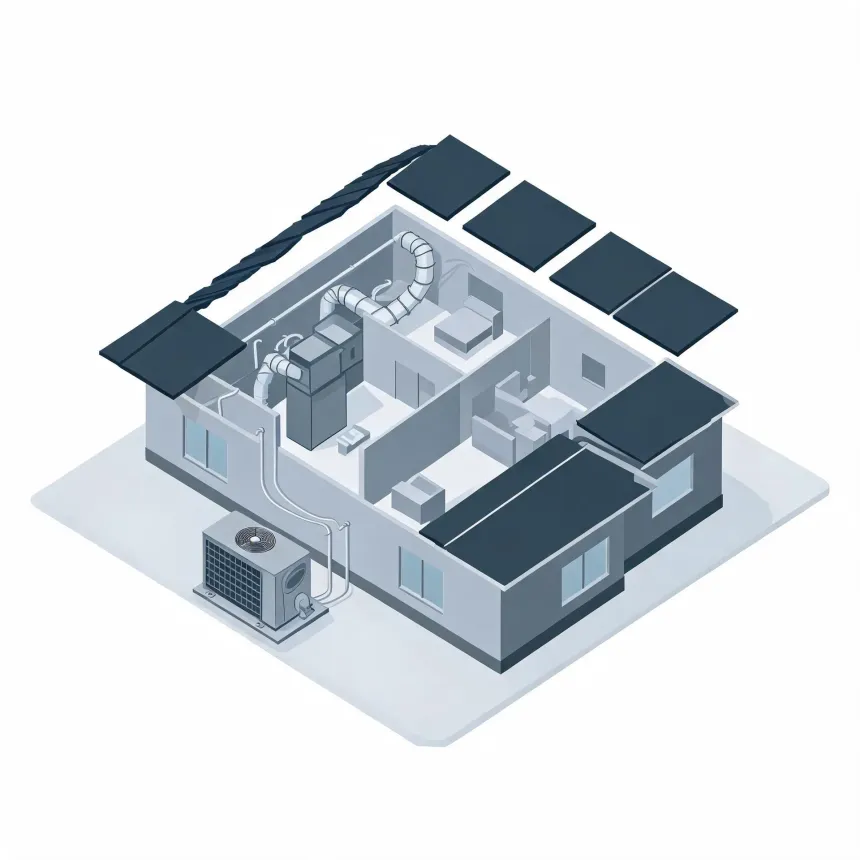
Isometric grayscale illustration of a cutaway single-story house showing interior rooms, ductwork and an air handler, an exterior condenser unit connected by lines, and dark solar panels on the roof.
Your system heats October through April and cools May through September.

NOAA nClimDiv, 1991–2020 normals

Heat pumps here switch from cooling to heating in October.

A weak part that made it through summer often fails the first cold week it has to carry heat instead.

Tishomingo County doesn't put unusual strain on a heat pump

73 severe weather events from 2015 to 2024
30% of homes statewide lost power a day or more in 2024
42 damaging wind events from 2015 to 2024

Half the homes in Tishomingo County were built in 1981 or later. If yours is one of them, your heat pump probably hasn't been through much. A newer system that's acting up usually has one thing wrong with it, not a handful of small failures piling on top of each other. That makes repair the straightforward call most of the time. Mobile homes make up part of the housing here too, and those systems get sized and installed the same way as any other, so the same logic holds.

Worth a repair call before anything else

If your heat pump is acting up, get the actual problem found before anyone talks replacement. A newer system is still worth fixing.

Find a contractor
A man in a dark jacket, cap and tan work pants climbs steps toward a blue front door, carrying a canvas tool bag with tools in its side pockets, beside a shrub in a blue planter.
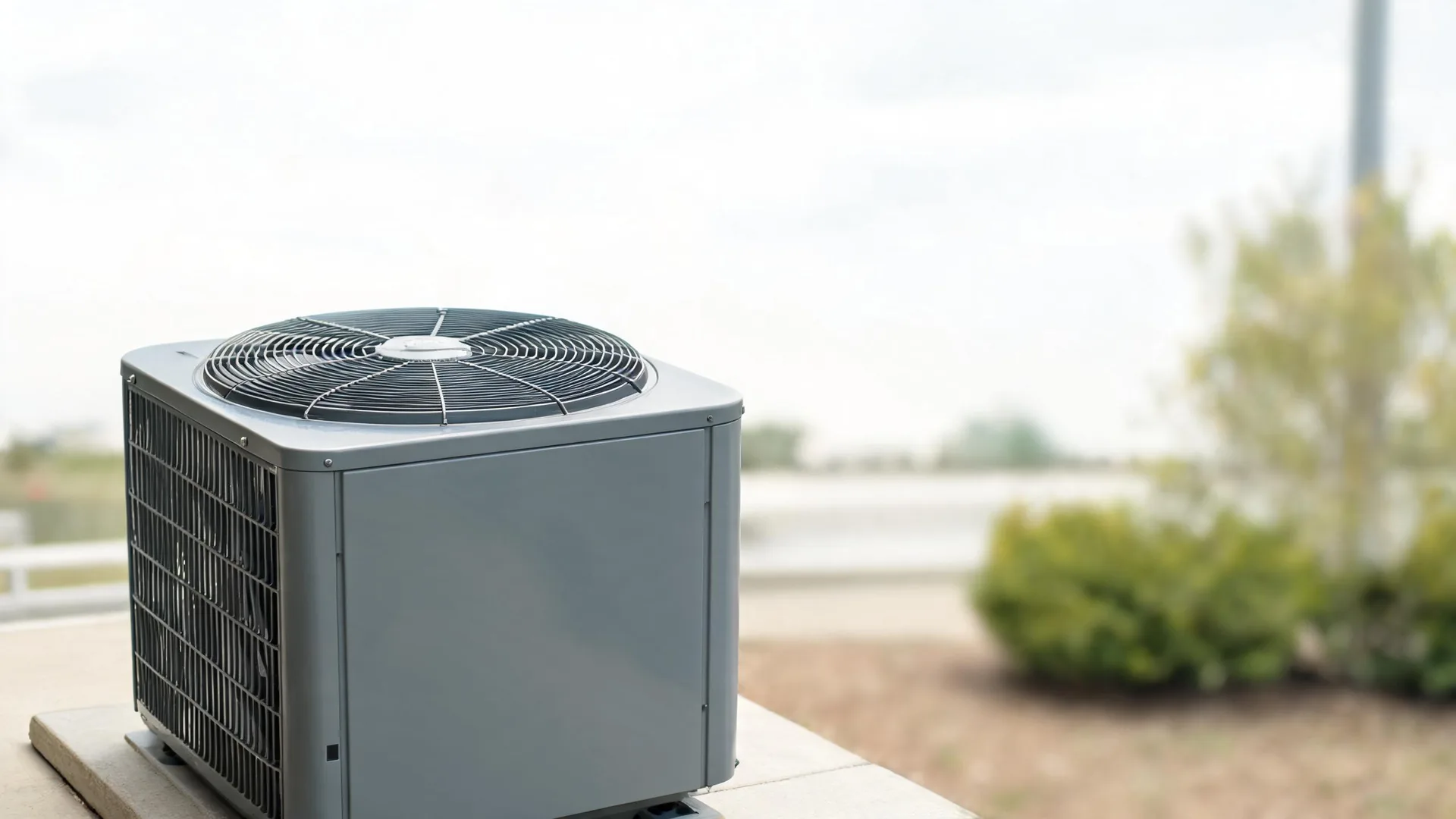
A gray heat pump condenser unit mounted on a concrete pad against the gray lap-siding exterior wall of a house.

What you'll actually notice before it fails

Short cycling is one of the first things people notice, the system turning on and off in quick bursts instead of running a full cycle. That's hard on the compressor every time it happens. Pay attention too if the air from the vents feels wrong for the mode it's in, lukewarm in heat mode or barely cool in summer. Ice on the outdoor coil outside of a defrost cycle is another sign something's off underneath it. A hissing or bubbling sound near the refrigerant lines usually means it's escaping somewhere it shouldn't. Grinding or squealing from the outdoor unit points to a motor bearing wearing out, and that gets louder over time, not quieter. None of these fix themselves sitting there. They mark the start of wear that keeps going until the part that's failing gets replaced.

A low charge keeps pulling the compressor down

A heat pump low on refrigerant doesn't just cool or heat less. The compressor has to run longer to move the same amount of heat, and it runs hotter doing it. Left alone, that heat is what damages the compressor windings. By the time the system can't keep up at all, the compressor is often already partway gone, and that changes the repair from a refrigerant leak fix to a compressor replacement.
A stuck reversing valve can take the compressor with it

When a reversing valve starts sticking, the system may still run, just not switching between heating and cooling the way it should. Running it in that state can send refrigerant the wrong direction through the compressor, which it isn't built to handle for long. A valve that's caught early is its own repair. One that's ignored can turn into a compressor job.

Before anyone comes out, there's a few things worth checking yourself. Look at the thermostat first. Make sure it's set to the mode you want and the temperature is actually past what the room is reading. Check the outdoor unit for anything blocking it, leaves, a cover, ice buildup, anything sitting against the coil. Go to the breaker panel and see if anything's tripped, both the one for the indoor air handler and the one for the outdoor unit. Pull the filter and hold it up to a light. If you can't see light through it, that's your problem or at least part of it. Walk the vents in the house and check that none of them got closed or blocked by furniture. None of this fixes a failing capacitor or a stuck reversing valve, but it rules out the simple stuff before anyone pays for a service call.

A diagnostic visit starts with the thermostat and the readings at the vents, not with tools on the unit. A tech checks what the system is actually doing, heating, cooling, or running without doing either, and compares that to what the thermostat is asking for. From there it's gauges on the refrigerant lines to check the charge, a clamp meter on the compressor and fan motors to see if they're pulling the right amps, and a check of the capacitor since a weak one often reads fine sitting still but fails under load. The reversing valve gets tested directly, since a valve that's sticking can look like other problems entirely from the thermostat's side. Most of this comes down to a handful of readings that either match what they should be or don't. Once the bad part shows itself, the rest of the visit is explaining what failed and what it takes to fix it.