


Heat pump vs furnace in Marshall County, Mississippi

Get a Local Quote

Installers who work on both

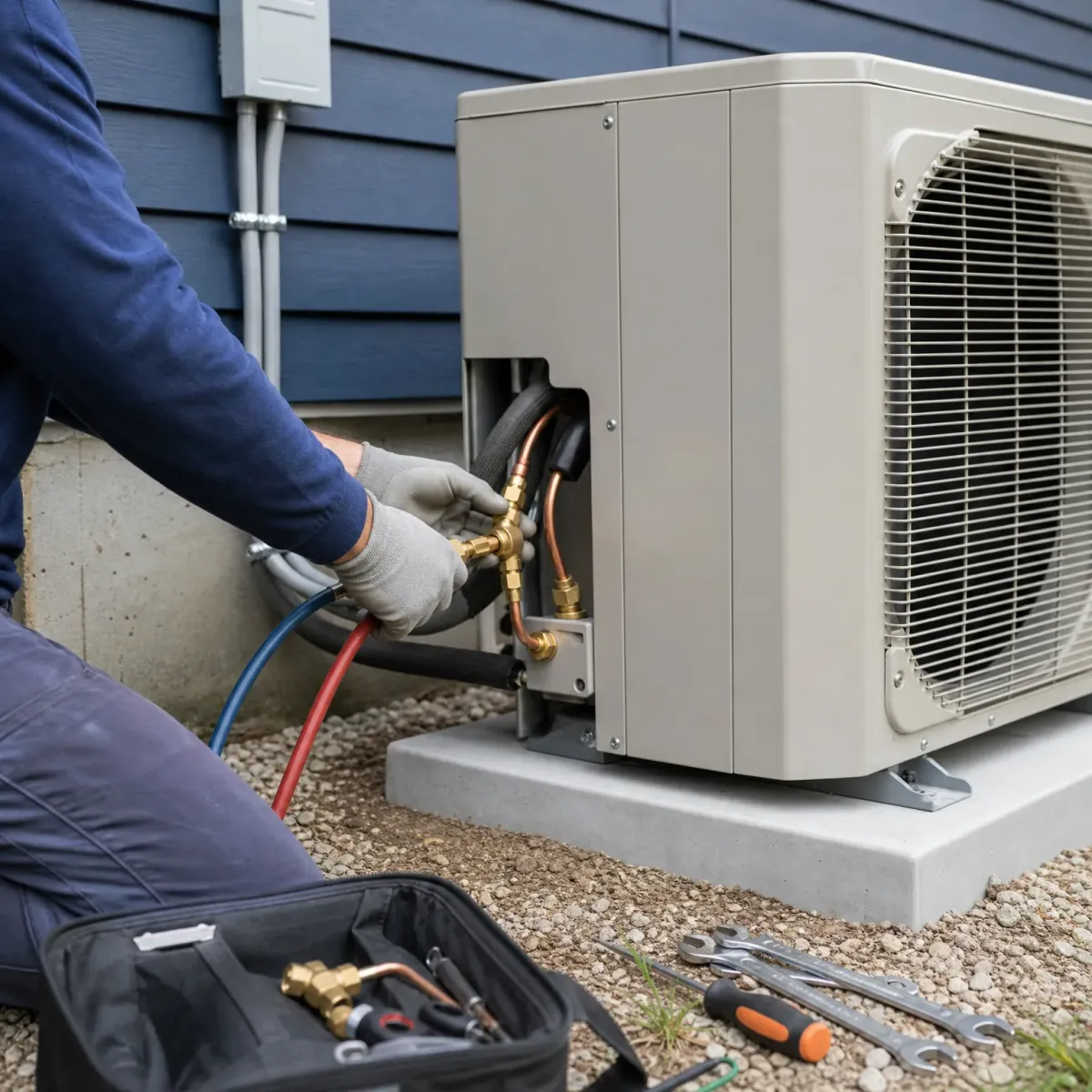
A person in a navy shirt and work gloves connects red and blue gauge hoses to copper refrigerant lines on a beige outdoor condenser unit mounted on a concrete pad, with wrenches, a screwdriver and a tool bag on the gravel in the foreground.

Tell us about the job

Takes about a minute. No obligation.

New system or replacementMarshall County, MS
Step 1 of 3

What kind of equipment?

Which costs less to run in Marshall County?

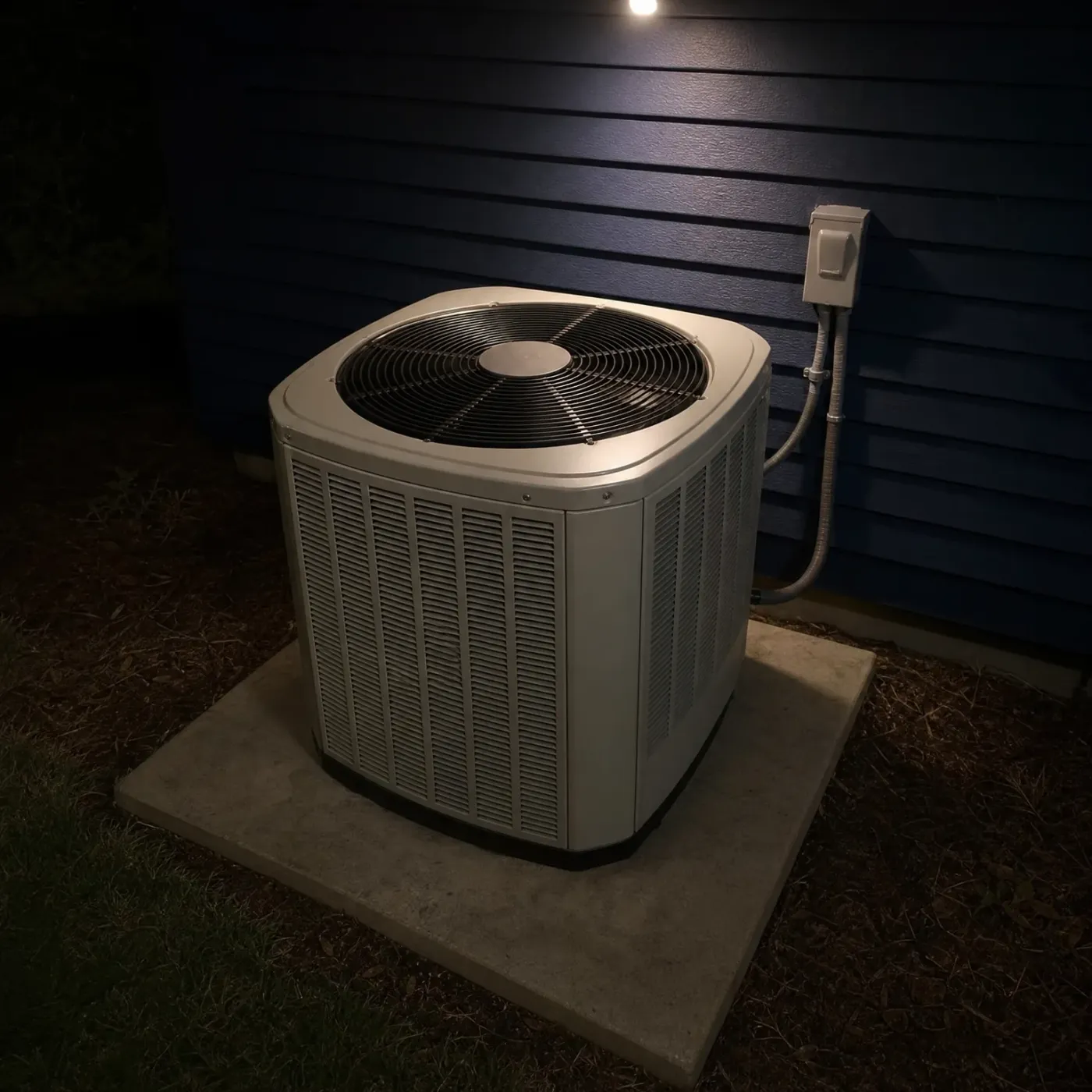
An outdoor air conditioning condenser unit on a concrete pad beside a dark blue horizontal lap siding wall at night, with a wall-mounted disconnect box and flexible conduit.

Heat pump

To heat your home here$1.79per 100,000 Btu

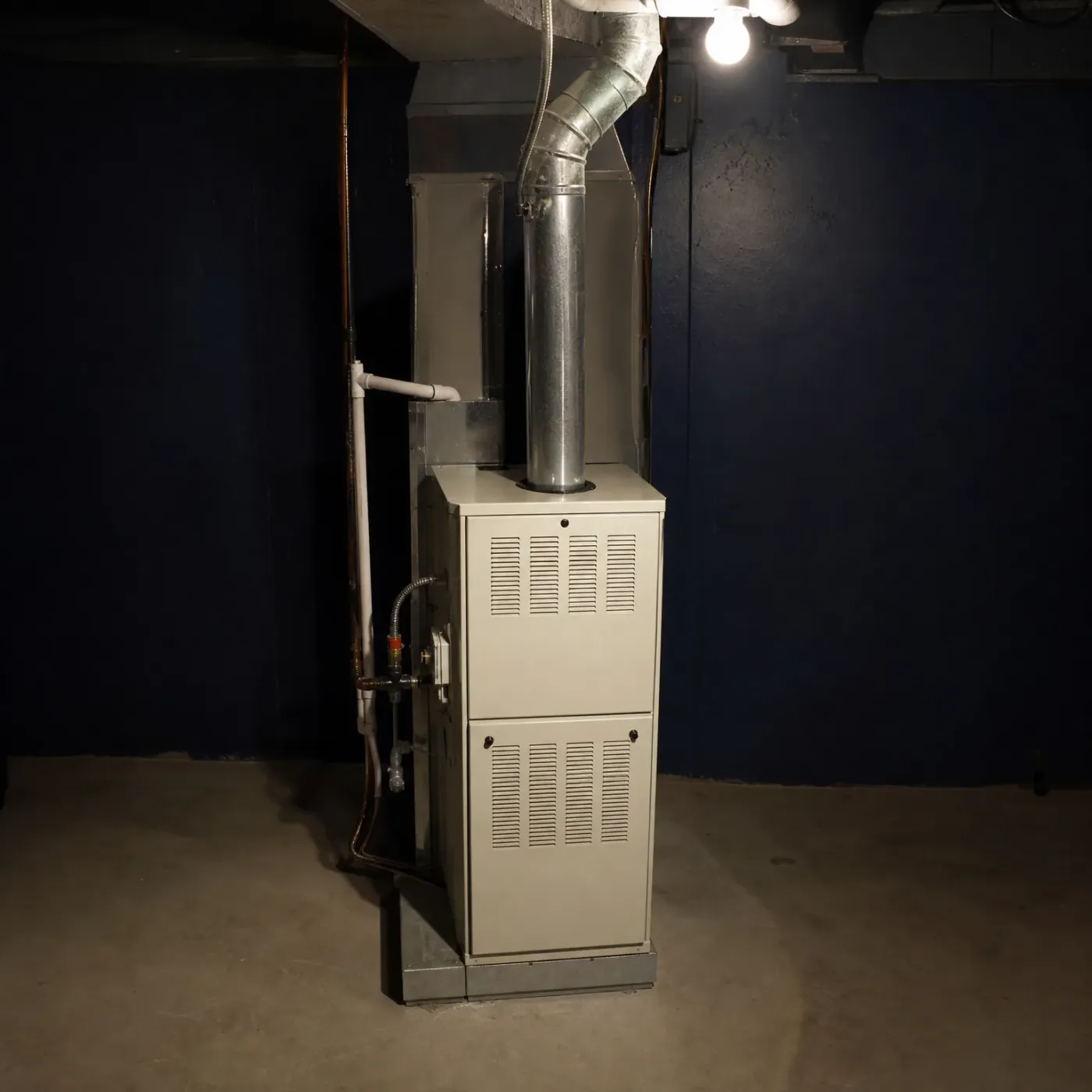
A beige residential furnace with two louvered access panels stands in a basement against a dark blue wall, connected to galvanized metal ductwork and a flue pipe, with copper and PVC pipes nearby and a bare bulb overhead.

Furnace

To heat your home here$1.88per 100,000 Btu

At Mississippi's gas and electricity prices, a heat pump and a gas furnace cost about the same to run here.

Btu stands for British thermal unit, the standard measure of heat energy.

Where does a heat pump shine?

  • Covers a long cooling season

    May through September is five months of cooling, and a heat pump handles that with the same system that handles your winter heat. One unit doing both jobs means one thing to maintain instead of two.

    A covered porch with a ceiling fan, blue cushioned wicker seating and pillows, a glass of iced tea on a table with a fringed blue runner, and a seated person in the background facing a tree-filled yard.
  • Heats and cools in one system

    Winter and summer are covered by the same outdoor unit. That's one machine to service instead of two.

    A living room with a cream sofa, blue pillows and a fringed blue throw beside a large blue-framed window looking onto a green garden, with a stone fireplace, wooden coffee table holding apples, a mug and white hydrangeas, and blue built-in shelves.
  • Steady, even comfort

    It eases up and down with the weather. There are fewer swings between too warm and too cool.

    A dimly lit living room with a navy armchair holding an open book, a lit table lamp, a window with blue curtains, potted plants, a storage console with wicker baskets, and a light-colored dog sleeping on a patterned rug.

Where does a furnace shine?

  • Pairs with any central AC

    Most central air systems are built around a furnace. The two share the blower, the ducts and the thermostat.

    A metal floor vent set into a hardwood floor near a window with a sheer white curtain, with a potted plant in a woven basket, a jute rug, and a blue throw over a wooden-legged stool.
  • Proven, simple, easy to get serviced

    Gas furnaces have heated homes for generations. Almost every HVAC tech knows them inside and out.

    A gloved hand holds a clean pleated air filter in front of a furnace, with shelving holding a mug, basket, and toolbox to the right.
  • Fast, strong heat on demand

    Turn the heat up and the furnace answers right away. There's no long wait for the house to catch up.

    Entryway with a navy door with a window showing snowy trees, snow-dusted winter boots on a wood floor beside a jute rug, a floor vent under a sheer-curtained window, and a navy bench with a wood top holding a steaming mug and a blanket, with coats hanging above.

What winter here actually asks of a heat pump

Your winter is mild, but it is not short. Heat runs seven months here, October through April, longer than cooling runs. That alone makes the heating side of this decision the one to get right.

The nights are the issue, not the days. The overnight low averages 33°F across December, January and February, and it drops to freezing or below on about 80 nights a year. That 33°F average sits right at the two marks that matter for a heat pump: below 40°F it puts out less heat than its rating, and below about 35°F it often needs backup heat to cover the gap. So on most winter nights here, a standard heat pump is working below its rated output and may be leaning on backup heat to make up the difference.

It is not extreme cold. Nights at 0°F or below happen less than once a year here, so this is not a climate that pushes a heat pump to its limit. It is a climate that sits in the range where a standard heat pump runs under-powered most nights without ever being pushed hard. A cold-climate model is built for exactly that range: it is rated to hold at least 70 percent of its warm-weather heating capacity down to 5°F, far past anything Marshall County sees most winters.
A covered front porch of a blue clapboard house with a navy paneled door, white trim, two black rocking chairs, potted ferns, a hanging lantern, and brick steps flanked by white and purple flowers.

What it costs to run, and what that leaves unanswered

Run the numbers at Mississippi's own prices and a heat pump costs $1.79 to make 100,000 Btu of heat, a gas furnace costs $1.88. That is close enough to call it a wash on paper. But that heat pump figure is built on its federal minimum seasonal rating with nothing added for backup heat, and you now know backup heat is likely to kick in on a good number of nights here. A cold-climate heat pump, which leans on backup far less, would close that gap further rather than open it.

The furnace has one job here. It heats the house for seven months and does nothing the other five. A heat pump heats and cools with the same equipment, which matters in a county where cooling runs a real five months of its own, with afternoons at 90°F or hotter on about 55 days a year.

What the furnace has on its side is what is already in the ground here. Utility gas and propane together heat a little over half the homes in this county, so a lot of houses already have the gas line, the venting, and a contractor base built around servicing a furnace. If your house is already set up for gas heat, that counts for something a cost-per-Btu table does not capture. If you are choosing equipment for a house with no gas line to begin with, the heat pump's ability to cover both seasons with one system is the stronger argument.

Sources: NOAA nClimDiv · NOAA 1991–2020 seasonal normals · PNNL Building America guide · PNNL-37127 field study · ENERGY STAR product criteria · EIA SEDS 2024 · 10 CFR 430.32 · Census ACS 2020–2024

A two-story brick house with dark shingled roof, two dormer windows, an arched entry with a blue front door, flanked by blooming pink and white shrubs, a flowering white tree, and a mowed green lawn with a brick walkway.

Common questions about heat pumps and furnaces

  • Can I keep my furnace and add a heat pump?

    Yes, that pairing is called a dual fuel system. The heat pump handles the milder nights, and the furnace takes over when it gets too cold for the heat pump to keep up efficiently. With an average winter low of 33°F here and about 80 nights a year at or below freezing, that furnace would still see real use rather than sitting idle all winter.

  • What if my house doesn't have a gas line?

    Without a gas line you're choosing between a heat pump, electric resistance heat, or a furnace that burns propane or oil, since there's no utility gas to run a gas furnace. Propane heats about one in four homes here already, so it's a common setup. A heat pump still gives you cooling for the five months a year this county runs AC, which a propane or oil furnace doesn't.

  • What if my house heats with oil or propane?

    A heat pump replaces either one and gives you air conditioning too. Oil and propane furnaces only heat, and propane runs $29.42 per million Btu here against $39.26 for electricity, so a heat pump running on electricity isn't automatically the cheaper swap. What it does buy you is one system instead of a furnace plus a separate AC unit.

  • Is a heat pump cheaper to run than a furnace in Marshall County?

    Yes, by a small margin. A heat pump runs $1.79 per 100,000 Btu of heat here against $1.88 for a gas furnace, both figures built on each machine's federal minimum efficiency and Mississippi's average fuel prices. That's close enough that it shouldn't be the only reason you pick one over the other.