



Two single-story houses, one with red brick and one with light siding, behind a trimmed hedge and lawn under large oak trees draped with Spanish moss.

Heat Pump Maintenance in Holly Springs, MS

Tell us about the job

Takes about a minute. No obligation.

Tune-up, service, or cleaningHeat PumpMarshall County, MS
Step 1 of 2

What ZIP code is the job in?

A heat pump here works both sides of the year, cooling from May through September and heat from October through April. That only leaves April and September free, and those two months are exactly when a check does the most good. September matters most, since the unit switches over to heat right after and runs that way for seven straight months. Have it looked at in September, before the switch, not in the middle of a cold snap when something's already gone wrong.

A quick visit checks the filter and the refrigerant pressure and calls it done.

A thorough one pulls the panels, checks the contactor and capacitor, and washes the outdoor coil.

Half the homes here were built since 1992, young enough that most heat pumps are still original

Half the homes here were built by 1992
Power costs 13.39 cents a kWh statewide
Climate zone 3A

Book it before the season

It starts running hard in the first month of the season here. Book the check the month before.

Find a contractor

Keep the filter clean

A dirty filter is the one thing in this whole system a homeowner can actually get to. Check it monthly and swap or wash it when it looks gray or matted. A clogged filter starves the system of airflow, and the compressor strains to push air through it either way, heating or cooling.
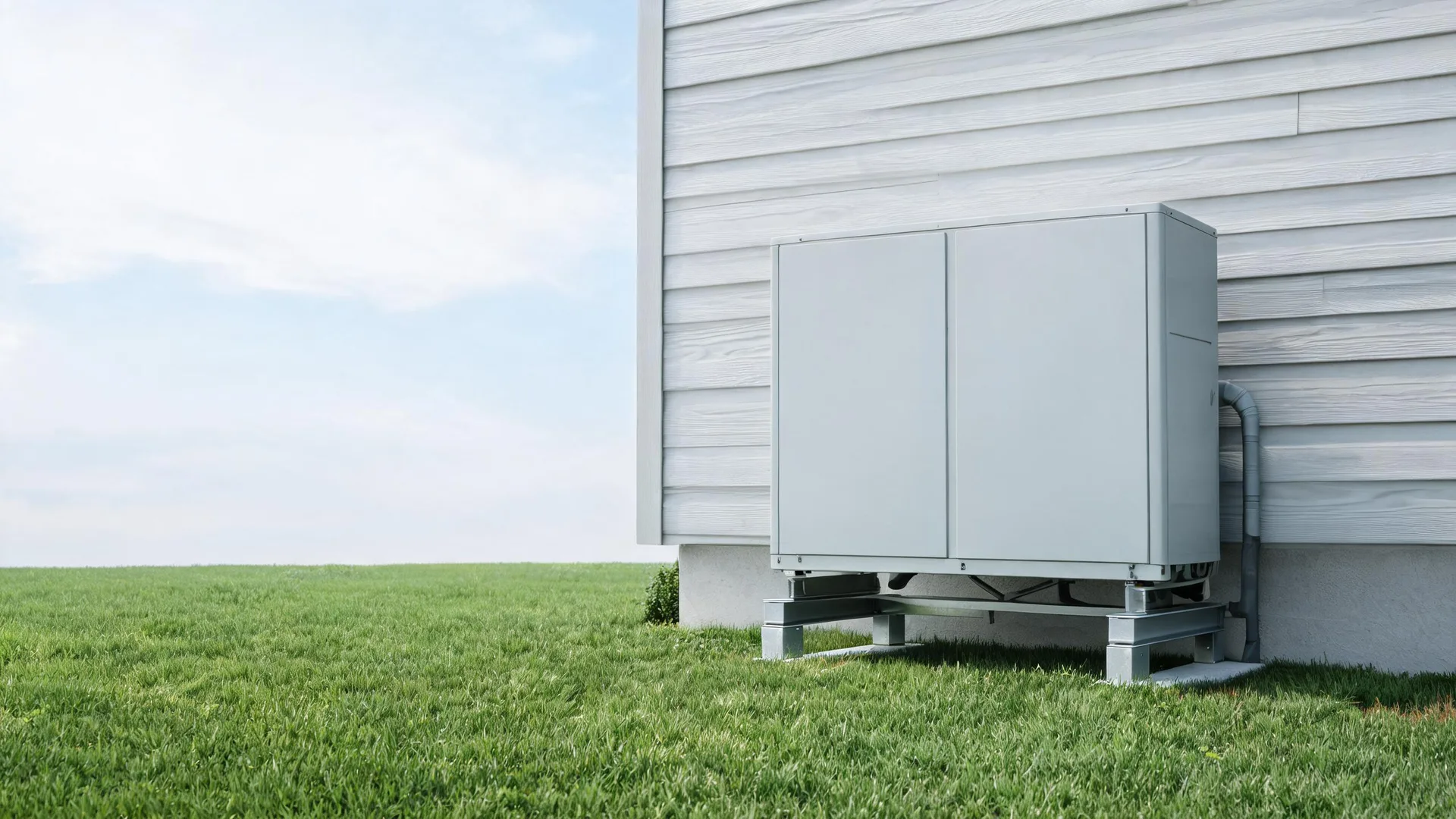
Leave the rest alone

The refrigerant charge, the contactor, the capacitor, the coils, none of that is something to open up between visits. Outside, keep leaves and grass clippings clear of the unit and make sure nothing is stacked against it blocking airflow. That's the extent of it. Anything past that calls for a panel off and a gauge on the system, and that's a job for someone trained to do it safely.

A tune-up gets inside the places a homeowner never opens. The tech pulls the panels and checks refrigerant pressure against what the system is supposed to carry, not just whether it has some. Low charge doesn't always show up as warm air right away, it shows up first as a compressor running longer to do the same job. The contactor gets checked for pitting, since a worn one can stick and leave the compressor running when it shouldn't or chattering on and off. Electrical connections get tightened, since a loose one heats up over time and that heat damages the parts around it. The outdoor coil gets washed clean of anything that's worked into the fins, because a coil that can't shed heat properly makes the whole system work harder to do the same job. None of this shows up from the thermostat. It shows up later, as a system that wears out before its time, long before it shows up as no heat at all.

Skip enough visits and a heat pump doesn't fail all at once. It loses ground slowly, in places a thermostat can't show you. A contactor left unchecked keeps pitting until it sticks or chatters, and either way the compressor takes the damage. A coil left dirty keeps choking airflow a little more each season, so the system reaches further and further to move the same heat. None of that shows up as a problem right away. It shows up as a compressor that runs longer than it should, for longer than it should, until one day the extra strain catches up with it. By the time the unit quits outright, it's usually been working harder than it needed to for a long while before that.