





Single-story brick and white-sided houses behind a trimmed hedge and lawn, framed by overhanging oak branches draped with Spanish moss under an overcast sky.

Heat Pump Installation in Holly Springs, MS

Tell us about the job

Takes about a minute. No obligation.

New system or replacementHeat PumpMarshall County, MS
Step 1 of 2

What ZIP code is the job in?

Electricity heats 43.5% of homes in Marshall County, more than any other fuel. Gas splits the rest, with utility gas and LP gas each heating about a quarter of homes. A heat pump fits naturally where electric heat is already the norm, since it uses the same electrical setup a straight electric furnace or baseboard heat would need. For a home already wired for electric heat, installation is mostly a matter of swapping the equipment, not rerouting how power gets to it. That's not the case in a home built around a gas furnace, where adding a heat pump means deciding whether it replaces the furnace or works alongside it.

7 months
October through April, your system heats
5 months
May through September, it cools
33°F
the average winter night it heats against
90°F
the average summer afternoon it cools against
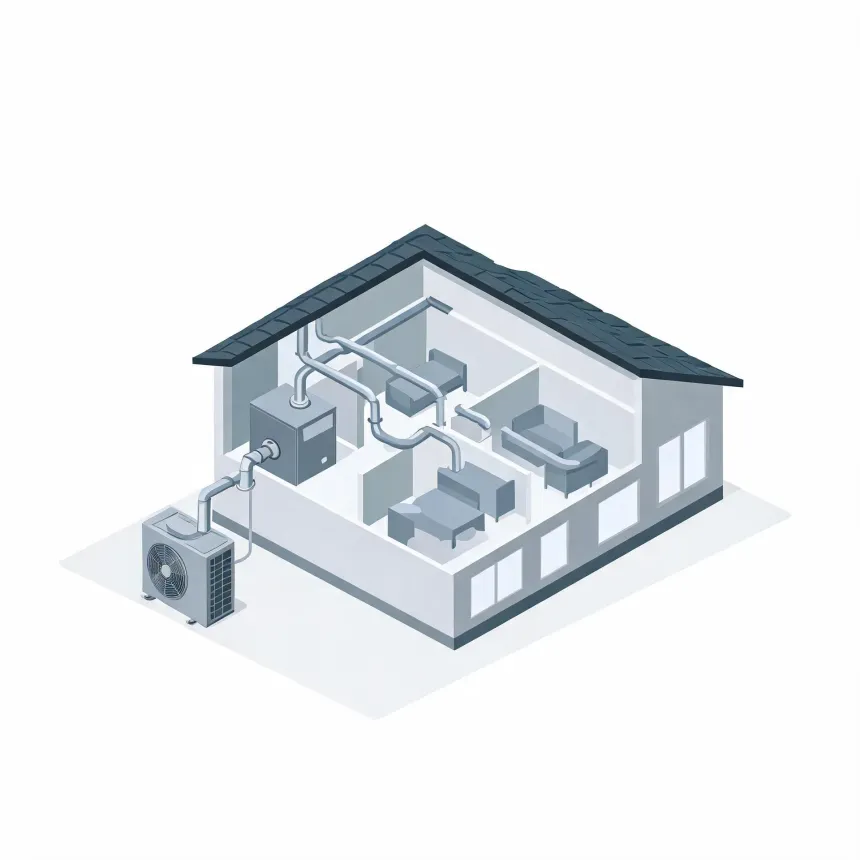
Isometric cutaway illustration of a single-story house showing an indoor air handler, branching ductwork through rooms with furniture, and an outdoor condenser unit connected by a line outside the wall.
Your system heats October through April and cools May through September.

NOAA nClimDiv, 1991–2020 normals

Mississippi electricity ran 13.39 cents per kilowatt-hour in 2024.

At that rate, paying extra for the highest-efficiency heat pump takes longer to earn back, so picking one that fits the house right matters more than chasing a SEER2 number.

Marshall County weather calls for a heat pump that can take a hit, not one built bigger than the job

60 severe weather events from 2015 to 2024
30% of homes statewide lost power a day or more in 2024
29 damaging wind events from 2015 to 2024
Before heat season starts is when to get this doneHeat runs here October through April. Get it installed before September.

A contractor sizes a heat pump with a load calculation, not a tape measure on the old unit. It weighs the square footage against the windows, the insulation, the ceiling height, which walls face the sun. Too big and it short cycles, blasting the house to temperature and shutting off before it finishes pulling out the moisture, so the air feels clammy even when the thermostat says it's satisfied. Too small and it runs flat out on the coldest days and still can't keep up, leaning hard on backup heat strips that eat electricity fast. The right size runs longer, steadier cycles, which is also what keeps the compressor from wearing out early. None of this is guesswork a homeowner can eyeball from the driveway. It's a room by room calculation, and a unit sized to match it, not to match whatever was there before.

Pick the heat pump that fits the house, not the one with the highest rating

A contractor who sizes this job to the house, not to the spec sheet, is worth more than a couple points of SEER2. Get the load calculation done and the right unit picked before heat season starts.

Find a contractor
A man in a cap, long-sleeved shirt and work pants carries a canvas tool bag up porch steps toward a dark blue front door, beside a blue ceramic planter.
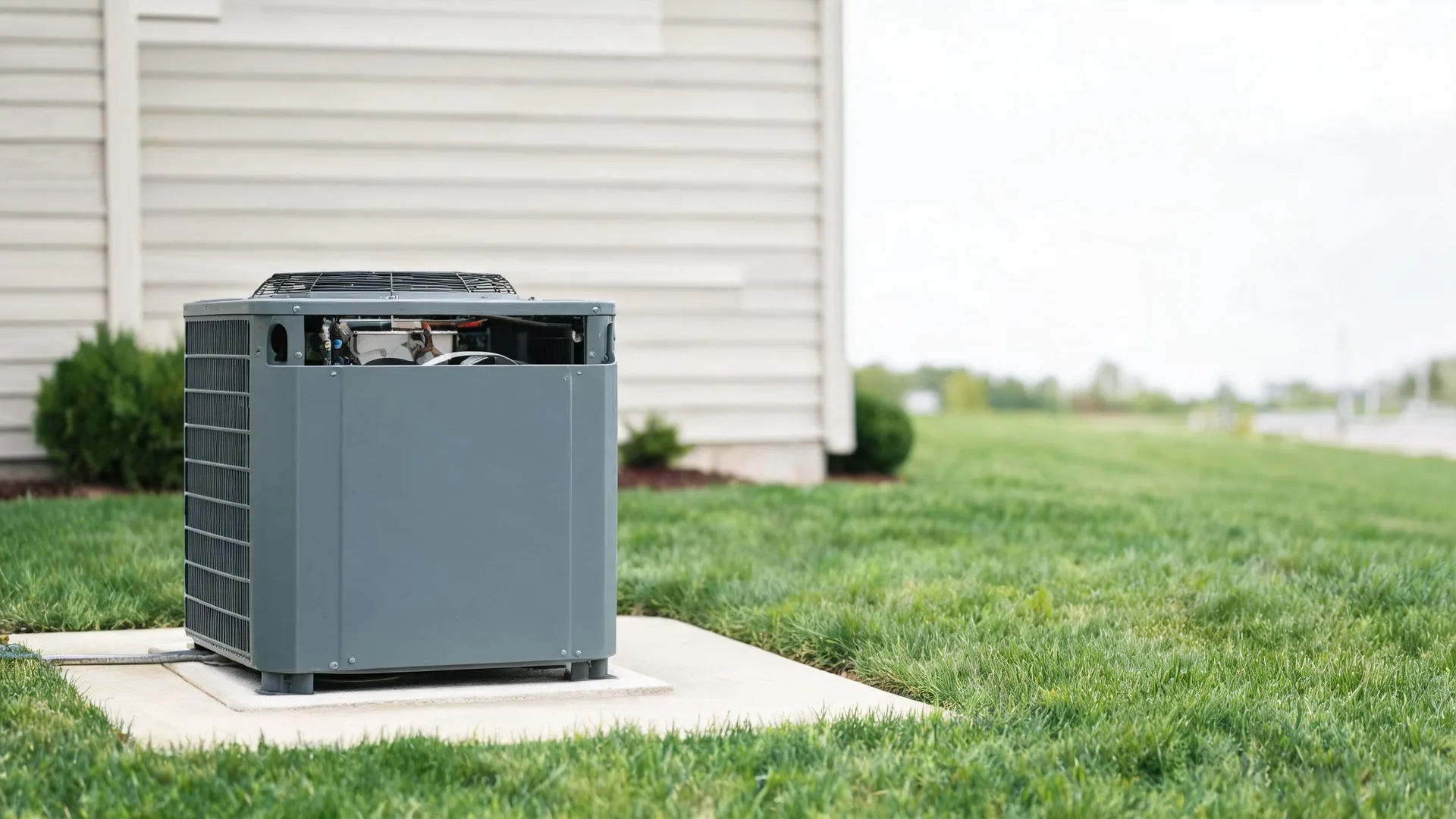
A gray air-source heat pump mounted on a concrete pad next to a house with gray vinyl siding, surrounded by gravel and flanked by green shrubs and white hydrangea flowers.

The old equipment doesn't just get unplugged

Whatever is coming out, a contractor disconnects it from the power and the refrigerant lines before anything new goes in. If the old system is a furnace paired with central air, the furnace gets pulled along with the outdoor condenser, and the ductwork gets checked over since the heat pump will be running air through it far more months of the year than the AC ever did. If the old system is electric baseboard or resistance heat, those get removed room by room, and the wiring gets checked against what the new heat pump draws. A refrigerant line set that's the wrong diameter for the new equipment gets replaced rather than reused, since the wrong size line hurts how the system runs for as long as it's in the wall. None of what comes out gets dumped. Refrigerant has to be recovered into a tank, not vented, and the old equipment gets hauled off and recycled for the metal and parts worth salvaging.

The ductwork decides more than the equipment does

A heat pump only works as well as the air can move through the house. If the ducts are too small, leaky at the joints, or were sized for a furnace that pushed air less often, they get in the way of what the new system is trying to do. Sealing and resizing ductwork costs more than most people expect going in, and skipping it means paying for a good heat pump that never performs like one.
Where the outdoor unit sits changes the install

The condenser needs clearance on all sides to pull air through the coil, and it needs a line set run back to the indoor air handler that isn't fighting a long distance or a bad angle. A straightforward spot near the electrical panel and a short line run keeps the job simple. A unit that has to go on the far side of the house, or up through finished walls, adds labor before the equipment itself is even part of the conversation.

Ask what happens at the lowest temperatures the system will see. Every heat pump loses capacity as the outdoor air gets colder, and the question is how it fills the gap. Some units lean on backup heat strips the moment output drops, which keeps the house warm but costs more to run. Others hold their output further down before backup kicks in at all. Ask where that switchover point sits on the model being quoted, not just what the unit does on a mild day. Ask about the compressor too. A variable speed compressor adjusts its output to match what the house needs, running longer and steadier instead of slamming on and off. A single stage compressor only knows on or off, full blast every time. Both heat and cool a house fine, but they wear differently and they sound different doing it.

Install day starts with a walkthrough, confirming the equipment on site matches what was quoted before anything gets disconnected. The outdoor unit goes in on a pad or mounting brackets, leveled so condensate drains the way it should and the compressor doesn't strain against a tilt. Inside, the air handler or coil gets set, the line set gets run and connected, then the whole system gets pressure tested before any refrigerant goes in, since a joint that leaks slowly is worse than one that fails right away. Once it holds pressure, the system gets evacuated to pull moisture and air out of the lines, then charged to the weight the manufacturer specifies for that exact line length. Electrical hookup and thermostat wiring come next, and the system gets run through a full cycle, heat and cool both, checking the temperature split at the vents and listening for anything that shouldn't be there. A contractor walks the thermostat settings with whoever's home before calling it done.