






An unfinished basement featuring concrete block walls, exposed floor joists, a bare concrete floor, and a forced-air furnace with a large metal exhaust duct in the corner.

Furnace Installation in Holly Springs, MS

Tell us about the job

Takes about a minute. No obligation.

New system or replacementFurnace or heatingMarshall County, MS
Step 1 of 2

What ZIP code is the job in?

Electricity heats 43.5% of homes in Marshall County, more than any other fuel. Gas splits the rest, with utility gas at 26.7% and propane close behind at 26.5%. If your home already runs on electric heat, an electric furnace fits the wiring and setup already in place. Homes on propane or utility gas already have their own line run too, so matching what you have keeps the job simple. Switching fuels means new lines or new venting, work your current setup doesn't need.

7 months
October through April, your furnace is on duty
33°F
the average winter night it heats against
80% AFUE
the federal minimum any new unit must meet
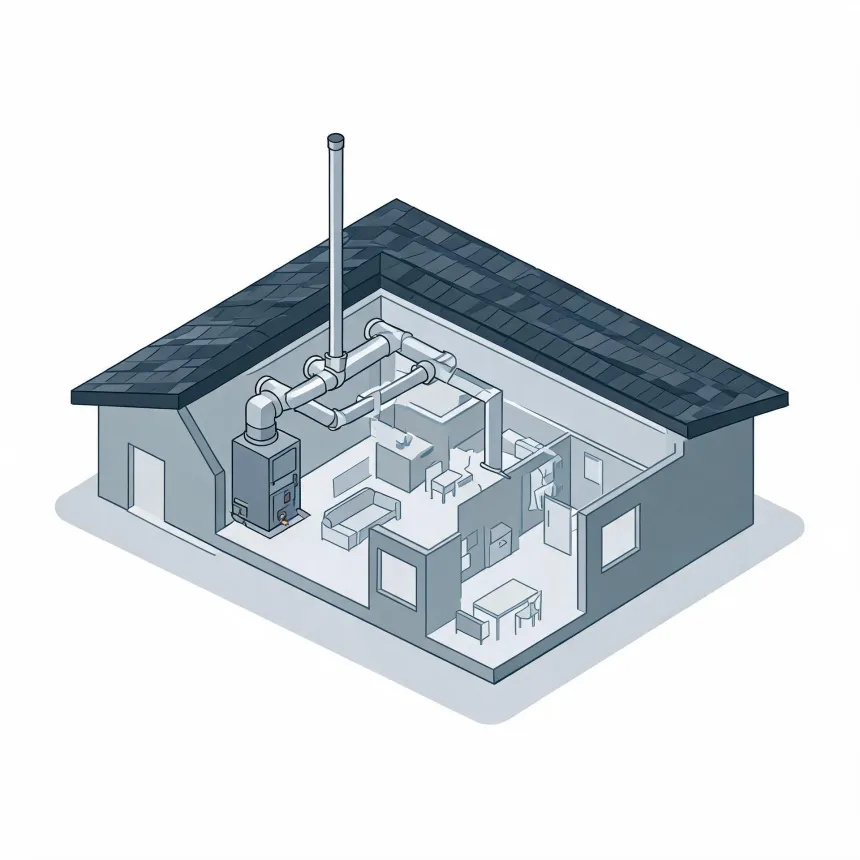
Isometric cutaway illustration of a single-story house showing interior rooms with furniture, a furnace unit with connected ductwork and a tall vertical flue pipe extending above the dark shingled roof.
Your furnace works hardest from November through March.

NOAA nClimDiv, 1991–2020 normals

Marshall County sees its share of severe weather, 60 events logged over the past decade between wind, hail, tornadoes and winter storms.

None of that changes what furnace your home needs. A standard size and efficiency rating heats it fine, matched to the fuel line already running to your house.

Winters here are mild enough that a reliable standard furnace is all this job calls for

Heat runs October through April
Winter nights average 33°F
11 winter storms from 2015 to 2024
A standard furnace does the job hereElectricity runs $39.26 per million Btu in Mississippi, and standard is what this job calls for here.

The efficiency rating on a furnace's label tells you how much of the fuel it burns turns into heat for your home, and how much goes out the vent. A furnace rated higher keeps more of that heat inside instead of losing it. That number matters more in a furnace that runs long hours through a hard winter, because every bit of waste repeats itself over and over. A furnace that only has to take the edge off on the coldest nights doesn't lean on that rating the same way. The label also plays into what venting the furnace needs, since the more efficient ones run cool enough to vent through plastic pipe instead of a metal flue. Ask what rating actually fits how much that furnace will have to work, not just which number sounds best on paper.

Get it installed before October, not after

Heat starts running in October here and stays on through April. Get the new furnace in during September and it's installed and tested before you need it, not diagnosed in a cold house on the first hard night.

Find a contractor
A man in a beanie, dark jacket and tan work pants climbs porch steps toward a blue front door, carrying a canvas tool bag, with a potted shrub in a blue planter beside him.
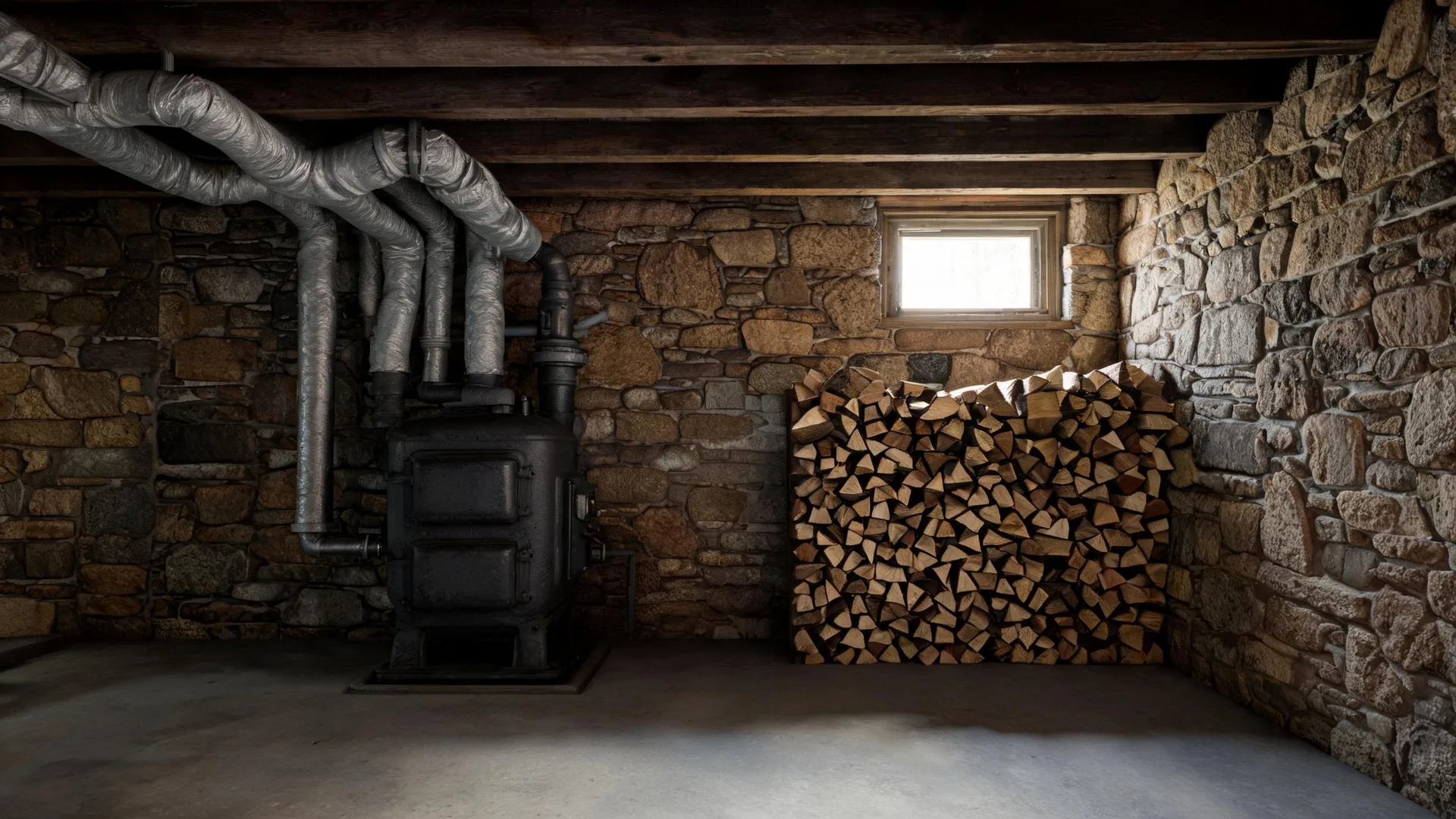
A gray residential gas furnace installed in an unfinished basement, surrounded by ductwork, a metal flue pipe, and a gas supply line.

Seven months of steady, not seven months of hard

Furnace here runs about seven months, October through April, with overnight lows near 33°F in December and January. That's steady work, not hard work. The furnace cycles on through a cold stretch, holds the house, cycles off. It isn't pushing against zero-degree nights for weeks at a time. A standard furnace built for that kind of run holds up fine, as long as it's sized right for the house and gets looked at once a year.

Size is about how long it runs, not just whether it keeps up

A furnace too big for the house heats it fast, shuts off, then starts again a few minutes later. All that stopping and starting wears on the ignition system and the blower, and the house ends up with warm and cold swings instead of steady heat. A furnace too small just runs and runs on the coldest nights and never quite catches up. The right size holds a long, steady cycle instead of either one.
The size comes from the house, not the old furnace

A contractor works out furnace size by looking at the square footage, the windows, the insulation and how the ducts are laid out, not by matching whatever is already installed. A lot of furnaces in service were never sized right to begin with. Replacing the old one with the same size skips that math. Installation is the one time to have it done properly, before the new furnace is set.

Taking out the old furnace is part of the install, not a separate job. A contractor disconnects the gas line or the electric circuit, pulls the flue or vent pipe, and takes the unit out whole or in pieces if it has to come through a tight spot. Anything left in the ductwork, old mounting rails, foam seal, the loose screws, gets cleared before the new furnace goes in, since the new unit needs a clean connection to the plenum. If the old furnace is gas, that line gets capped or reused depending on what the new one needs. The old unit itself is scrapped. None of it gets reused, even the parts that still look fine, because a furnace install is built around the new unit's specs, not the old one's parts.

Once the old furnace is out, the new one gets set in place and leveled before anything is connected. The gas line or electric circuit goes in first, then the venting, sized and routed to match what this furnace needs rather than reusing the old run. Ductwork connects to the plenum with a seal that doesn't leak, since a gap there means paying for heat that never makes it into the house. After that comes startup. The contractor checks gas pressure or electric amp draw, checks the temperature rise across the heat exchanger, and watches a full cycle to see the furnace turn on, hold steady and shut off clean. Nothing gets called finished until it's been run and watched, not just wired up and left.