





White two-story houses with wraparound porches and Spanish moss-draped oak trees photographed along a residential street at night.

Furnace Repair in Holly Springs, MS

Tell us about the job

Takes about a minute. No obligation.

RepairFurnace or heatingMarshall County, MS
Step 1 of 2

What ZIP code is the job in?

Half the homes in Marshall County were built in 1992 or later. If yours is one of them, your furnace is probably not old enough to be the real problem. A furnace that age still has plenty of working life in it, and most of what goes wrong, a bad igniter, a clogged sensor, a failed inducer motor, is a repair, not a reason to replace the whole system. Worth finding out what's actually broken before anyone talks about a new unit.

7 months
October through April, your furnace is on duty
33°F
the average winter night it heats against
11 winter storms
in ten years, the nights a failure hurts most
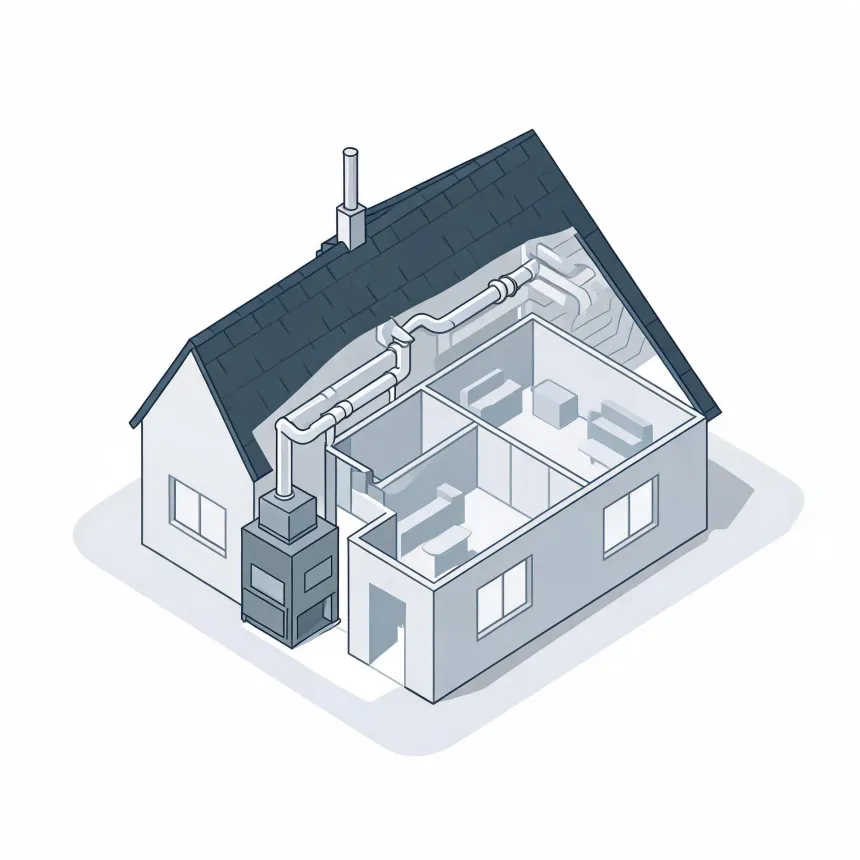
Isometric line illustration of a cutaway single-story house with a dark shingled roof, showing interior rooms and ductwork connected to a gray furnace unit with a flue pipe.
Your furnace works hardest from November through March.

NOAA nClimDiv, 1991–2020 normals

Your furnace only has to run about seven months out of the year here.

Less time working means less wear, so a repair is usually the right call before anyone talks about replacing it.

October is when a weak furnace finally gets tested

Heat runs October through April
Winter nights average 33°F
11 winter storms from 2015 to 2024
Nothing out of the ordinary working against itMarshall County sees its share of storms, but none of that wears on a furnace sitting inside your house

Electricity here runs $39.26 per million Btu, and that's the number that should guide what you fix and how. If your furnace trips on ignition or short cycles, that's a part problem, not a cost problem, and it's worth repairing regardless of what power costs. Where the price matters more is a system that's been patched a few times already. At that point you're paying to run something that was never efficient to begin with, and the math changes. For most furnaces in Holly Springs still within their working life, the repair is the right call either way.

Less wear behind it, worth fixing now

Seven months of light use is exactly why it's worth fixing rather than replacing. A furnace that hasn't been run hard still has the parts left to make a repair the right call. Get it looked at now, before the cold months are the only time anyone notices something's wrong.

Find a contractor
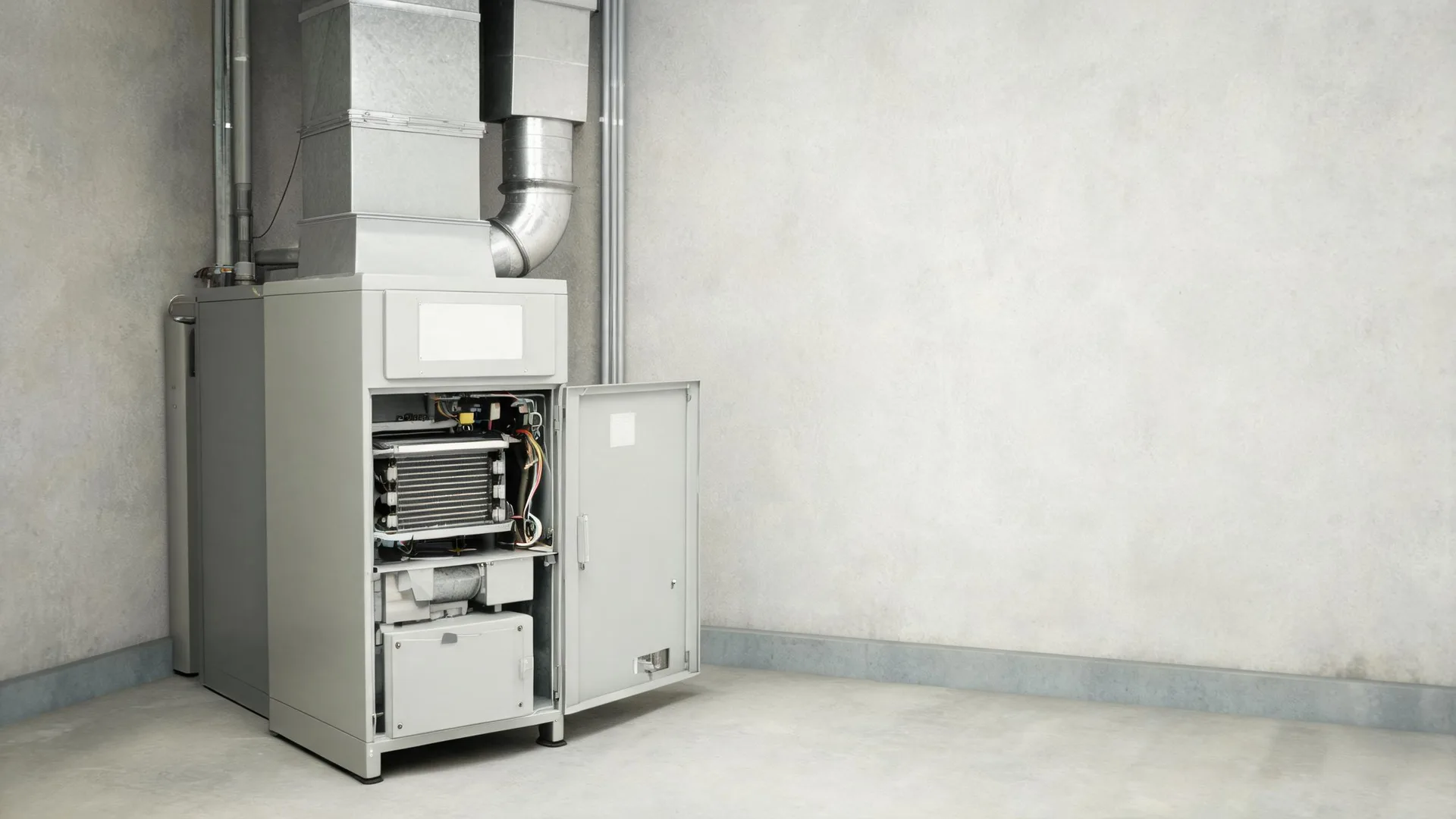
A gray gas furnace with attached ductwork and piping installed in an unfinished concrete basement.

One owner, one house, less wear

Check the age on the panel inside the door or in the paperwork from when the house was built. If the furnace has been there since then, it hasn't been run by a string of owners who let small problems sit. That matters more than the calendar does. A furnace with one owner's worth of wear is usually one worth fixing, not replacing.

What you can check yourself

Look at the thermostat first. Make sure it's set to heat and the setting is above room temperature. Check the furnace switch, the one that looks like a light switch near the unit, and make sure it hasn't been bumped off. Check the breaker. A furnace that won't start at all is often that simple.
What to leave alone

Don't open the burner compartment or touch the gas valve. If you smell gas, leave the house and call the gas company before anyone calls about the furnace. A furnace that starts and then shuts off on its own is telling you a sensor or switch is catching a real problem. That's a call for a technician, not a reason to keep resetting it.

A furnace that's short cycling or tripping its limit switch is already telling you something's wrong, and running it anyway usually makes the repair bigger, not smaller. A cracked heat exchanger gets worse under heat, not better. A flame sensor coated with just a little residue will make the furnace shut down sooner and sooner each time it fires, until it won't stay lit at all. An inducer motor that's starting to fail still pulls exhaust at first, then struggles, then stops pulling it at all, and that's not something you want to find out by waiting. The safety switches in a furnace exist to shut it down before a small problem turns into a cracked part or a burned-out motor. Overriding that by resetting it again and again just means the technician is fixing more when they finally get there.

A good rule is to ask what actually failed. Igniters, flame sensors, inducer motors, pressure switches. These are parts, and parts get swapped out without touching the rest of the furnace. The heat exchanger is different. That one usually isn't repaired, it's replaced, and on some furnaces that job costs close to a new unit. So the age of the furnace matters less than what broke. A technician can usually tell you which kind of problem you have in one visit, often before the cabinet is even all the way open.