
What a heat pump means for your winter here
Your winter low here averages 35°F, and that number matters more than it looks like it should. A standard heat pump starts losing heating capacity below 40°F, and below about 35°F it often leans on backup heat to keep up. That is not a cold snap for Panola County. That is an average night in January.
About 65 nights a year here drop to freezing or below, under half the roughly 150 nights your heat runs across November through March. The rest stay mild enough that a heat pump just does its job, no backup needed. Almost none of those 65 nights reach 0°F. Prototype cold-climate heat pumps tested over two winters in occupied homes leaned on backup heat for only a small share of the hours between 0°F and 35°F, and ran on backup alone only rarely, even above 0°F.
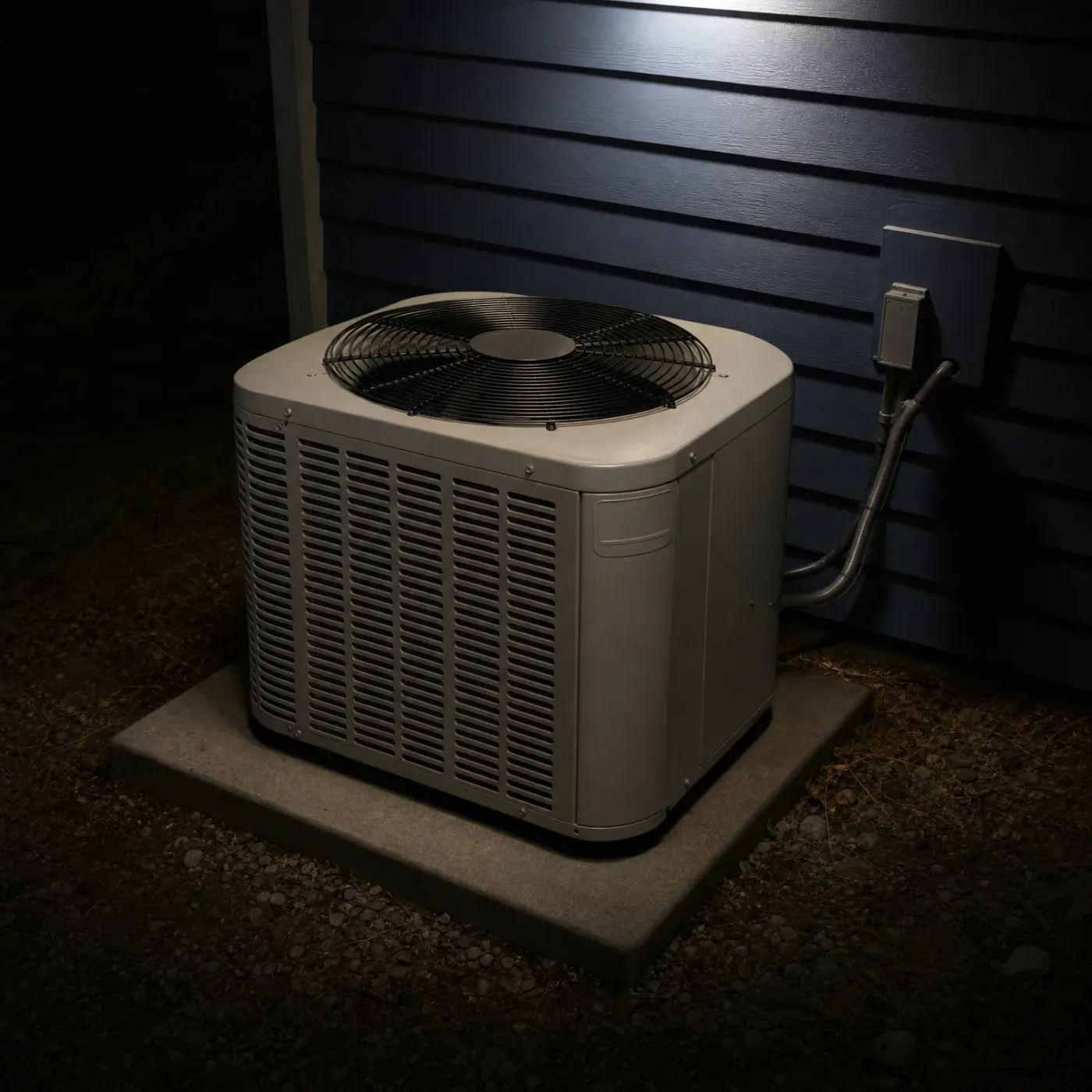
A standard heat pump will still warm your house down to freezing and below, just with less margin and more help from backup heat on those nights. If you buy a cold-climate model, one that holds onto at least 70 percent of its capacity at 5°F, backup heat stops being something you need most nights and becomes something you need on the few hardest ones. The difference between a standard and a cold-climate model here is how often that backup kicks in, not whether the house stays warm.