





Three white clapboard houses with wraparound porches glow with warm interior and landscape lighting beneath Spanish moss-draped oak trees at dusk.

Heat Pump Installation in Batesville, MS

Tell us about the job

Takes about a minute. No obligation.

New system or replacementHeat PumpPanola County, MS
Step 1 of 2

What ZIP code is the job in?

Electricity heats 46.6% of homes in Panola County, more than any other fuel. Bottled or LP gas is next at 31.2%, with utility gas behind that at 20.5%. A heat pump fits naturally where electric heat is already common, since the wiring and setup homeowners expect are already part of how the county heats. If your home currently runs on electric heat, a heat pump works as a straightforward swap rather than a rework of how the house gets power to its heating system.

5 months
November through March, your system heats
5 months
May through September, it cools
35°F
the average winter night it heats against
90°F
the average summer afternoon it cools against
Isometric grayscale illustration of a cutaway two-story house showing interior ductwork, an indoor air handler unit, and an outdoor condenser unit on a pad beside the building.
Your system heats November through March and cools May through September.

NOAA nClimDiv, 1991–2020 normals

Mississippi power runs 13.39 cents per kilowatt-hour, below the national average.

A high-efficiency heat pump still costs more up front, and cheap power here means it takes longer to earn that back.

Panola County gets hit with wind, hail and the occasional tornado, and a standard heat pump install handles all of it

71 severe weather events from 2015 to 2024
30% of homes statewide lost power a day or more in 2024
35 damaging wind events from 2015 to 2024

October is the last easy month before heat season starts here. Homes in Panola County run heat from November through March, so a heat pump put in during October is tested and adjusting before it has to carry a cold night. Wait until November and you're asking a new system to prove itself while you already need the heat on. Scheduling the install for October also means the old system, if it's still limping along, gets to retire on your timeline instead of failing on its own.

Any new heat pump here has to clear 14.3 SEER2 and 7.5 HSPF2

Panola County falls in zone 3A, and since January 2023 every split-system heat pump sold has to hit at least 14.3 SEER2 for cooling and 7.5 HSPF2 for heating. That's the floor, not a sales pitch. A federal tax credit is available on qualifying equipment, which helps offset the higher cost of a unit built to meet it.

Find a contractor
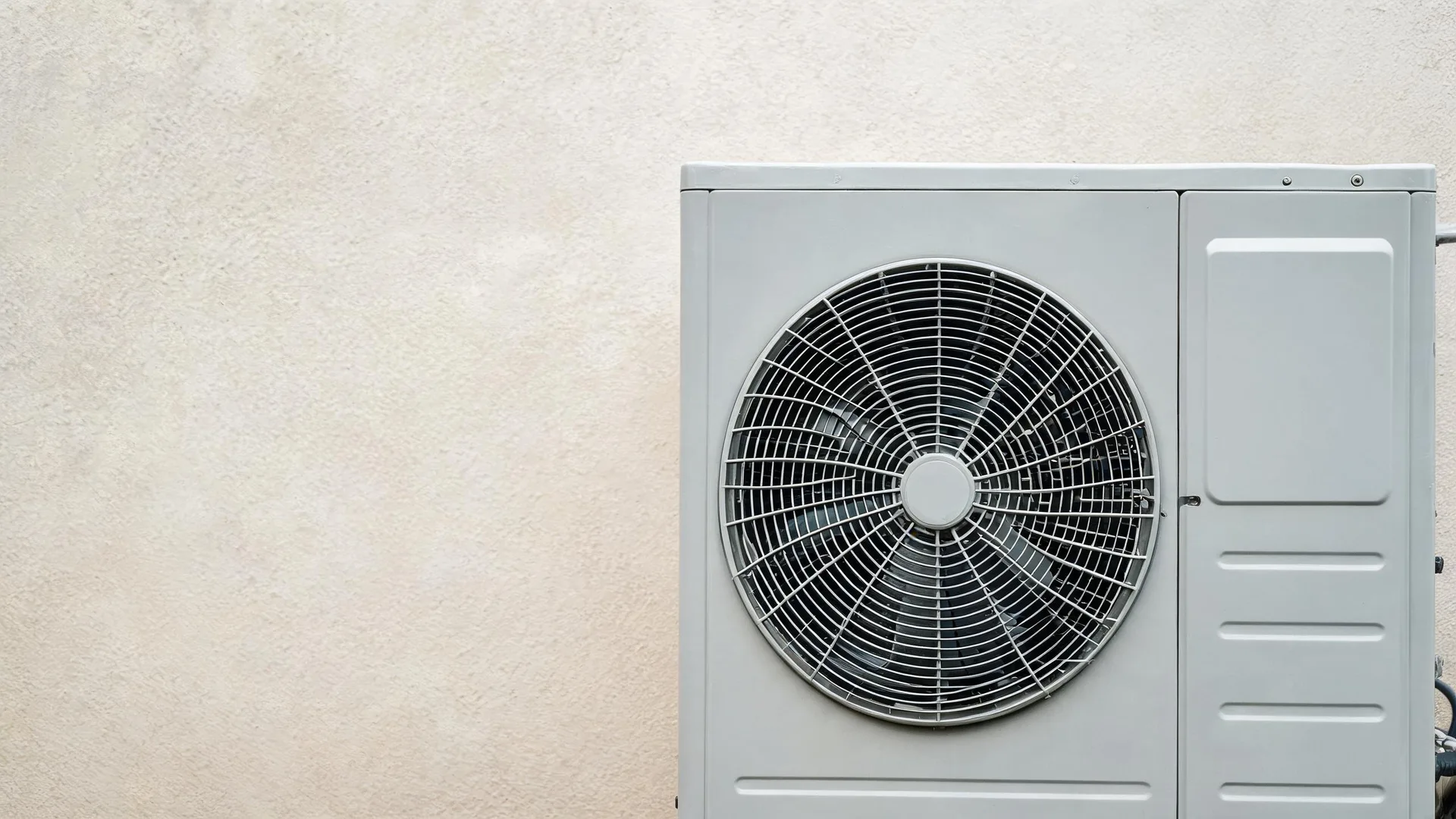
A residential heat pump outdoor unit mounted on a concrete pad next to a house with gray vinyl siding.

What actually sets the price

Equipment size drives most of the cost before anything else gets decided. A heat pump has to match the house it's heating and cooling, and getting that match right takes a load calculation, not a guess based on the old unit's size. Go too big and the system short cycles, wearing out parts faster and leaving the house clammy. Go too small and it runs constantly, straining to keep up on the coldest nights. Beyond the unit itself, what's already in place matters. If the ductwork is sized right and sealed well, installation is mostly swapping equipment. If the ducts are undersized, leaky, or were built for a furnace instead of a heat pump, bringing them up to shape adds labor before the new system ever turns on. Electrical work can factor in too, since a heat pump draws differently than whatever it's replacing, and the panel or disconnect may need attention to handle it safely. None of this is padding. It's the difference between a system that's sized to last and one that's fighting its own house from day one.

Ask how it performs in cold weather, not just mild

A heat pump's rating for cooling doesn't tell you how it handles a hard freeze. Ask the contractor what the unit puts out at the lowest temperatures it will actually face, since output drops as the air outside gets colder. A system that looks strong on paper can still fall behind on the coldest nights if nobody checked that number.
Ask what carries the house when the heat pump can't

Every heat pump reaches a point where it needs backup heat, usually electric strips built into the air handler, to keep up. Ask when that backup turns on and who sets it. A contractor who has the heat pump carry the load as long as possible before backup kicks in is setting up a system that runs cheaper than one that leans on backup too soon.

Sizing starts with a load calculation, a room by room look at how much heat the house loses in winter and gains in summer. It accounts for window area, insulation, ceiling height, which walls face the sun, that kind of thing. The old unit's size tells you nothing, because if it was never sized right to begin with, matching it just repeats the mistake. A heat pump sized correctly runs long, steady cycles that hold the house at an even temperature. One that's oversized blasts the house with air, shuts off fast, and leaves humidity behind since it never runs long enough to pull moisture out. One that's undersized never stops trying, pushing hard on the coldest and hottest days without ever catching up. Both wear out the compressor faster than a unit that's matched to the house.

Install day starts outside, with the old condenser coming off its pad and the new one set and leveled in its place. Indoors, the air handler or coil gets swapped, and that's where the refrigerant lines get cut in, flushed, and brazed to the new equipment. A vacuum pump pulls moisture and air out of those lines before any refrigerant goes in, since trapped air or moisture left behind will wreck a compressor fast. The electrical side gets tied in next, running new wiring or confirming the breaker and disconnect can handle what the heat pump draws. Once it's powered up, the system gets charged to the manufacturer's spec and run through its paces in both heating and cooling, checking airflow at the vents and temperature split across the coil. A thermostat gets set up last, and any contractor worth hiring walks through how it works before they leave.