





White two-story houses with wraparound porches and Spanish moss-draped oak trees photographed along a residential street at night.

Furnace Repair in Vicksburg, MS

Tell us about the job

Takes about a minute. No obligation.

RepairFurnace or heatingWarren County, MS
Step 1 of 2

What ZIP code is the job in?

A few things are worth checking before you call. Go to the thermostat first and make sure it's set to heat, not fan, and that the temperature is actually set above room temperature. If it runs on batteries, swap them out, since a dying thermostat can shut a furnace down without any other warning. Next check the air filter. A filter clogged with dust chokes off airflow and can cause the furnace to shut itself off partway through a cycle. Look at the switch on or near the furnace, the one that looks like a light switch, and make sure nobody bumped it off. If your furnace has a standing pilot, check whether the pilot light is actually lit. None of this fixes a cracked heat exchanger or a failed igniter, but it rules out the simple stuff before someone has to come take a look.

5 months
November through March, your furnace is on duty
39°F
the average winter night it heats against
4 winter storms
in ten years, the nights a failure hurts most
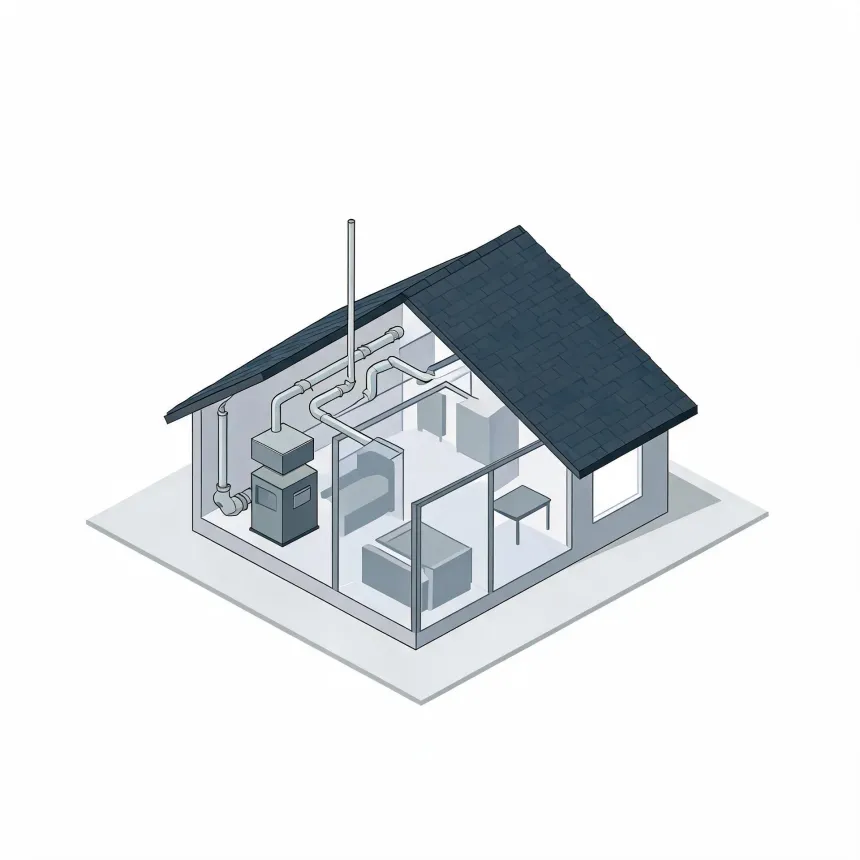
Isometric cutaway illustration of a small house with a dark shingled roof, showing an interior furnace unit, ductwork, and a flue pipe extending through the roof.
Your furnace works hardest from November through February.

NOAA nClimDiv, 1991–2020 normals

The igniter and the flame sensor fail far more often than the heat exchanger does.

A worn igniter or a dirty flame sensor is a straightforward repair, not a sign the furnace is done.

Furnace trouble in Vicksburg shows up fast once November turns the heat on

Heat runs November through March
Winter nights average 39°F
Climate zone 3A

Your furnace only has to carry Warren County from November through March, about five months. The rest of the year it sits idle. Overnight lows average 39 degrees through December, January and February, which is cold enough to run a furnace but nowhere near the strain of a northern winter. A furnace working that short a season usually isn't worn out. If yours is acting up, the cause is more likely a part that failed from age or sitting unused than one run into the ground. That's usually worth fixing rather than replacing.

Get it looked at early

Problems tend to show up in the first weeks of the season, when the load hits a part that was already weak.

Find a contractor
A man in a cap, gray T-shirt and tan work pants climbs porch steps toward a blue front door, carrying a canvas tool bag filled with tools, beside a blue planter with a shrub.
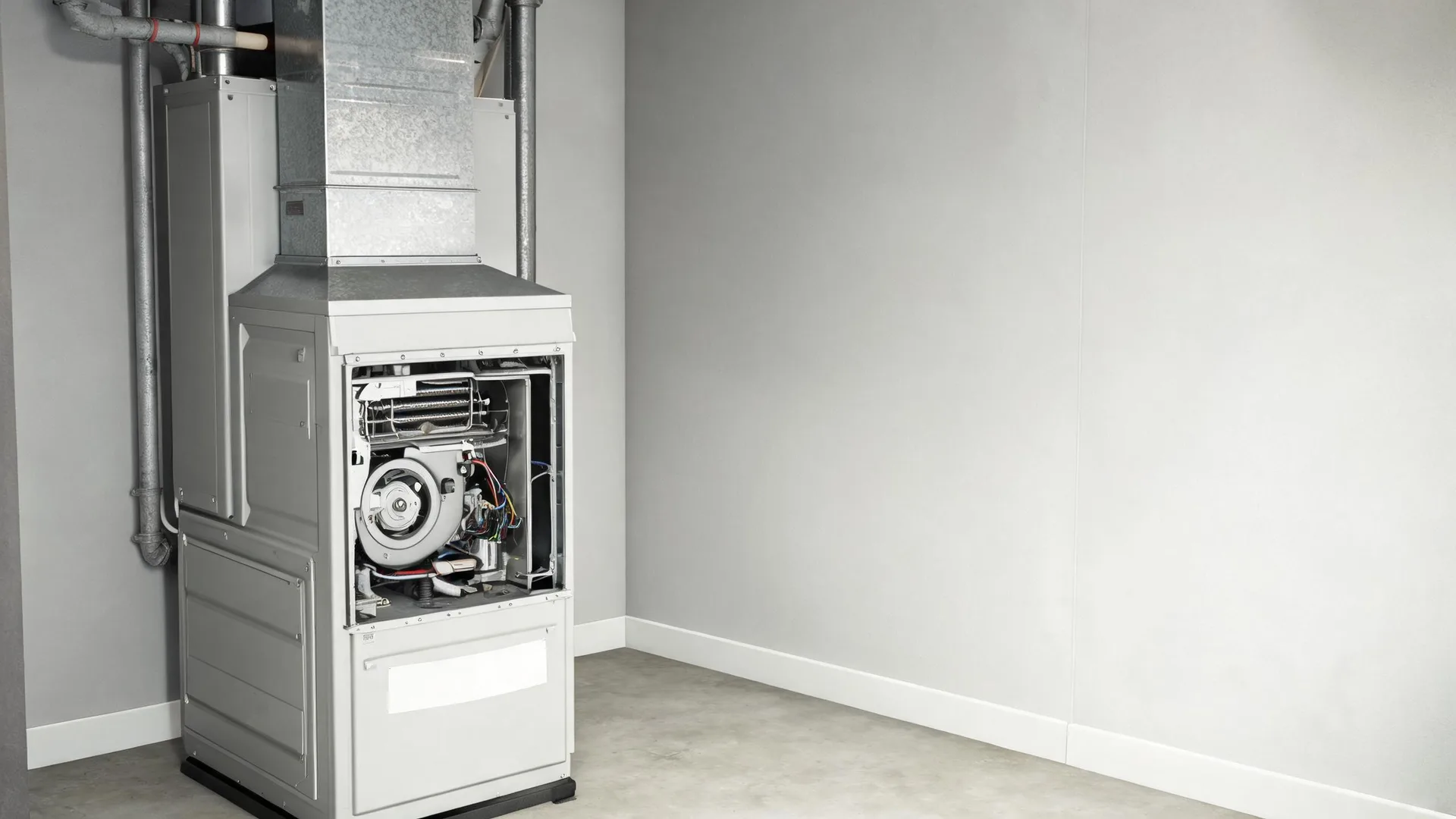
A gray residential gas furnace installed in an unfinished basement, connected to sheet-metal ductwork and PVC pipes.

Five months of work a year leaves most of the furnace alone

Call someone out rather than replacing the unit yourself based on a guess. A furnace that only works five months a year gives a tech more to work with when they get there, since the wear tends to sit in one or two parts instead of being spread through the whole system.

A short cycle wears the parts around it

A furnace that shuts off partway through a cycle and fires back up puts extra stress on the igniter every time it restarts. Each start is harder on that part than running straight through would be. Left alone, a furnace that short cycles tends to wear out its igniter faster, and the repeated starts can stress the heat exchanger too.
A cracked heat exchanger gets worse, not better

A small crack in the heat exchanger will not close up on its own, and running the furnace on it keeps flexing metal that has already failed in one spot. Heating and cooling, cycle after cycle, spreads the crack further. This is the one problem worth shutting the furnace off for and waiting on a tech, since a cracked exchanger can let combustion gas mix into the air moving through the house.

Most furnace trouble announces itself before the furnace quits outright. A burner that used to light with a soft thump now clicks several times first, or lights with a delay you can hear. The flame through the viewing window looks yellow or ragged instead of steady blue. Air coming out of the vents feels lukewarm, like the burners gave up partway through the cycle. You hear a boom at startup instead of a quiet catch, which usually means gas built up a moment before it lit. Some furnaces run loud all of a sudden, a rattle or a squeal that wasn't there last season. Others just get stingy with heat, running longer and longer to hold the same temperature. Any one of these is worth a call. None of them means the furnace is finished, but none of them fix themselves either.

A repair call doesn't always end with a simple yes or no. Age matters, but so does which part failed and what it would take to put right. A cracked heat exchanger is a straightforward call to replace, since that part isn't meant to be swapped out on its own and the crack won't improve with time. An igniter, a flame sensor, a draft inducer motor, these get replaced on their own all the time without touching the rest of the furnace. The question worth asking isn't how old the furnace is but whether this failure is wear on one part or a sign the whole system is reaching the end together. A tech can tell you which one you're looking at once they've had the furnace open.