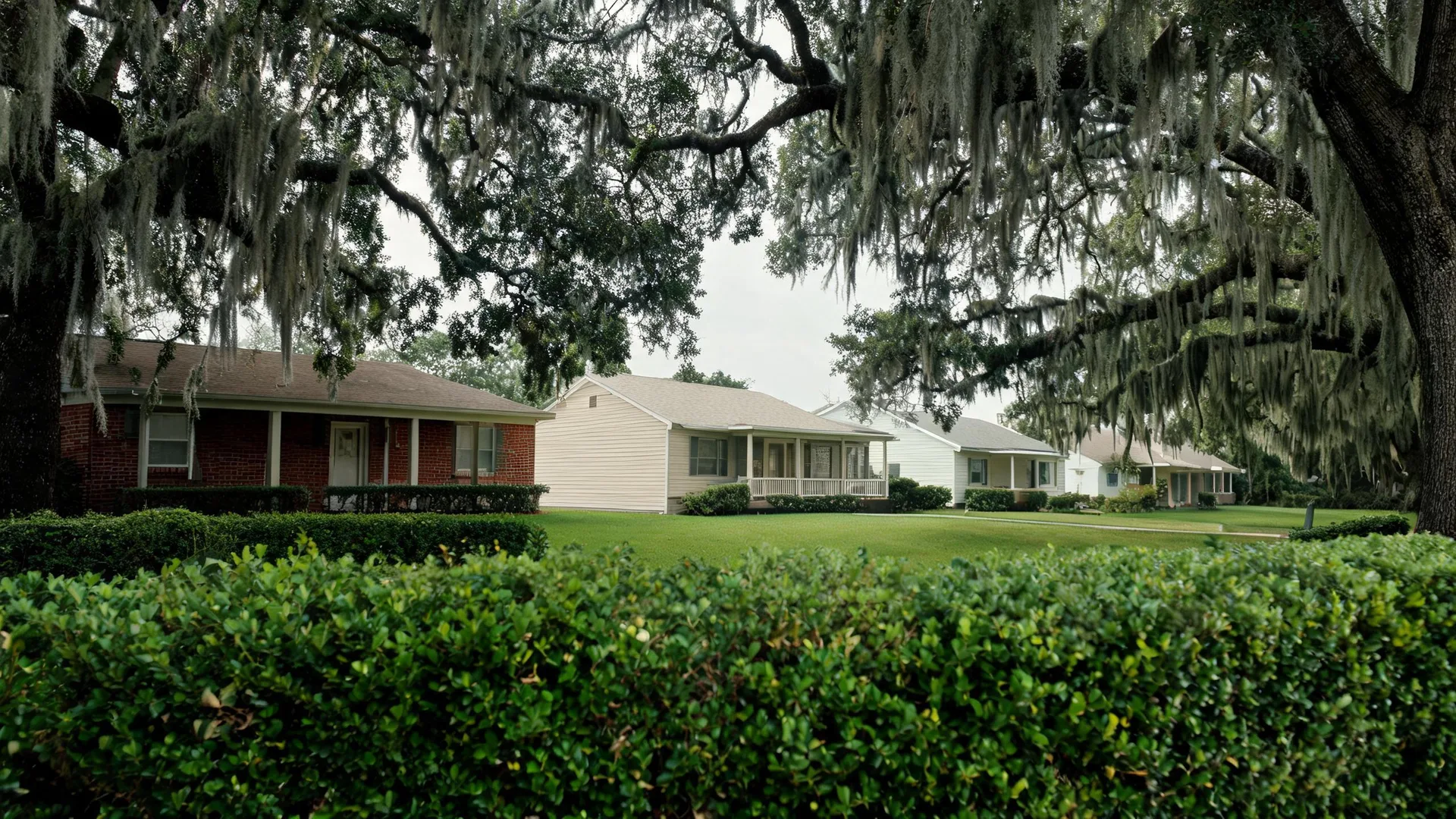






A row of single-story houses, one of red brick and others with pale siding, behind a mowed lawn and a tall trimmed hedge, framed by large oak branches draped with Spanish moss.

Furnace Repair in Pontotoc, MS

Tell us about the job

Takes about a minute. No obligation.

RepairFurnace or heatingPontotoc County, MS
Step 1 of 2

What ZIP code is the job in?

Pontotoc County saw 103 severe weather events between 2015 and 2024, and most of that was wind and hail. Hail bends the thin fins on an outdoor coil, and bent fins cut off airflow even when the fan still spins and the furnace still fires. Wind throws debris too, branches and grit that get into a cabinet without leaving a mark anyone would notice from the ground. None of this means your furnace is damaged. It means a system that still runs after a storm is not the same as a system a tech has actually looked at.

5 months
November through March, your furnace is on duty
34°F
the average winter night it heats against
6 winter storms
in ten years, the nights a failure hurts most
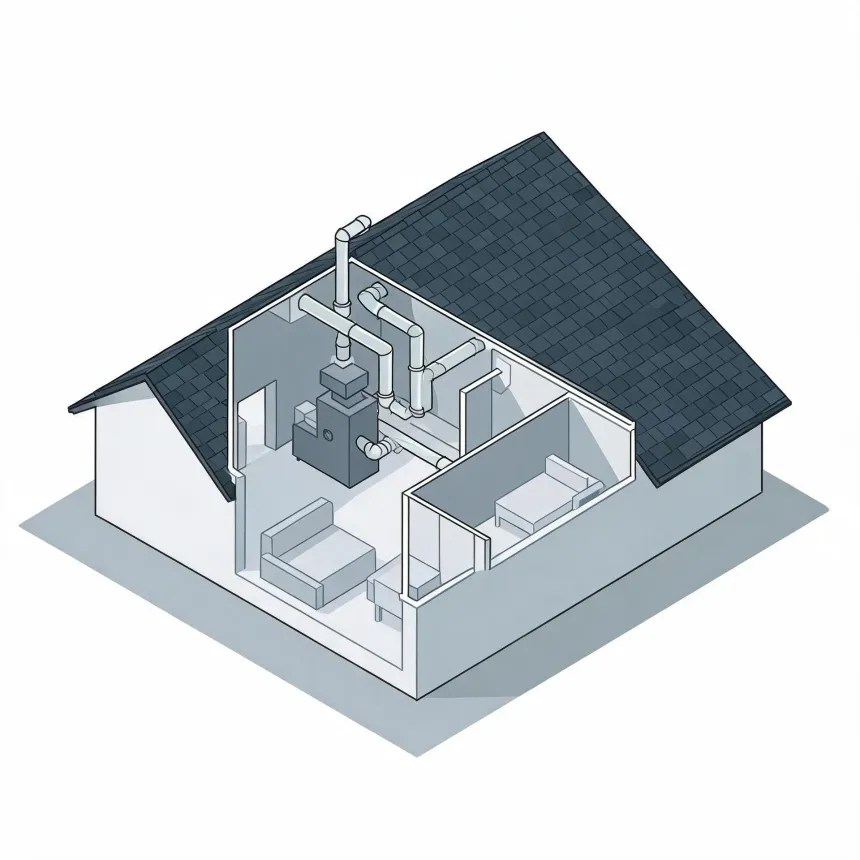
Isometric cutaway illustration of a single-story house with a dark shingled roof, showing interior rooms with furniture and a furnace connected to ductwork.
Your furnace works hardest from November through March.

NOAA nClimDiv, 1991–2020 normals

Furnaces here start running in November.

A furnace that sat idle since March often shows its weak point in the first cold snap, not before.

Pontotoc homes split old and new, but furnaces fail here the same way they do anywhere

Half the homes here were built by 1989
Heat runs November through March
Winter nights average 34°F
An easier job than most furnaces haveFive months of heat a year, and overnight lows averaging 34°F. That's a light load on a furnace.

Most furnace problems in Pontotoc are not storm damage and not anything particular to this county. It is the same handful of things that go wrong with this kind of furnace anywhere. An igniter gets too worn to glow hot enough. A flame sensor picks up a coating of residue until it can't tell the burner is lit. A dirty filter chokes off airflow until the system overheats and shuts itself down. Mississippi households pay $39.26 per million Btu for electricity, so a furnace forcing air through a clogged filter shows up on a power bill before anyone spots the actual cause. None of that needs a theory about this place. It needs a tech checking the part that's actually failing.

Furnace running again after a storm is not the same as checked

If your outdoor unit came through a storm and still runs, that's not the same as it being fine. A tech can check the coil fins and the cabinet for what a quick look from the yard won't show.

Find a contractor
A man in a gray T-shirt and tan work pants, seen from behind, carries a worn canvas tool bag up concrete steps toward a blue front door of a house with gray siding and a potted shrub.
A gray gas furnace with attached ductwork and piping installed in an unfinished concrete basement.

The light load means a worn part, not a worn-out furnace

That light load is a reason to fix what's broken instead of writing the furnace off. A furnace that has only run five months a year, with overnight lows around 34°F, hasn't been worked hard enough to wear out on its own. If one is failing now, the cause is almost always a specific part, the kind named above, not a system worn down from years of hard use. A worn igniter or a dirty flame sensor gets replaced on its own terms. Worth knowing before anyone brings up a full replacement.

Heat exchangers crack from the inside out

A heat exchanger expands every time the burner fires and contracts every time it shuts off. Years of that cycle fatigue the metal until a crack opens. By the time you can hear it rattle or see a stain around the seams, it's already gone too far to patch.
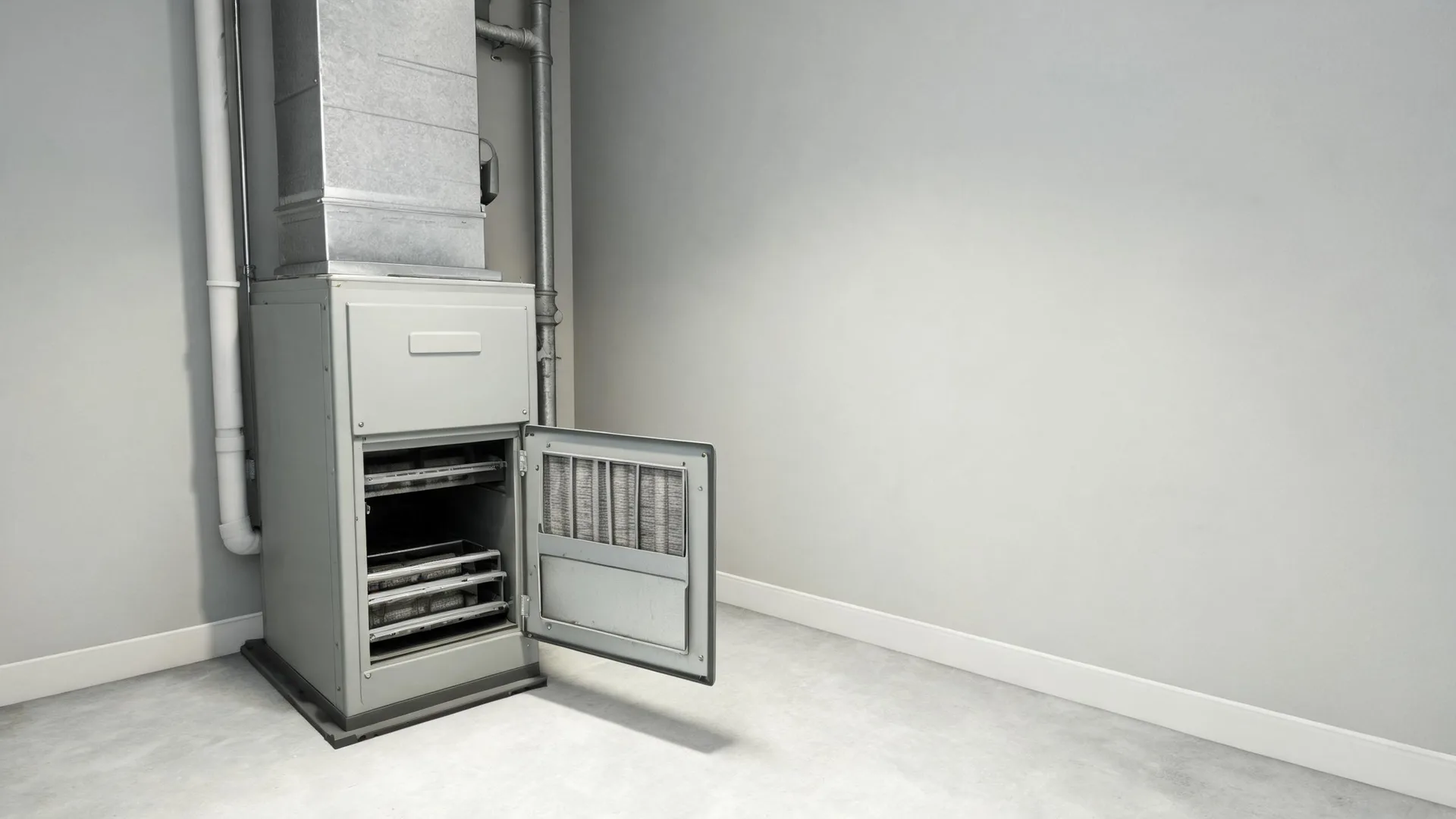
The blower motor is doing more work than anyone notices

The blower moves air through the whole system every single cycle, more than any other part. Bearings wear, the motor runs hotter, and it starts drawing more current to do the same job. A motor on its way out usually gives some warning first, a hum before startup, a squeal, air that feels weaker than it used to.

A furnace that needs attention usually tells you before it quits outright. It fires up, runs a few minutes, shuts off, then starts again, and never settles into a normal run. That's short cycling, and it's one of the clearest signs something's wrong. A burner flame should burn steady and blue. If it's flickering or burning yellow, that's a combustion problem, not something to ignore. Some furnaces click and try to light several times before they catch, or they don't catch at all. Rooms that used to heat evenly now have cold spots, or the air from the vents feels cooler than it should. A burning smell for a few seconds at startup is normal, that's dust burning off. A smell that lingers or comes back every cycle is not normal. Any one of these is worth a call. Several at once means don't wait.

A diagnostic call starts before any panel comes off. A tech asks what the furnace is doing, when it started, whether it happens every cycle or only sometimes. That narrows things down before a single tool comes out. Then comes a visual check of the burner flame, the flue, the filter, the condition inside the cabinet. Most diagnostics come down to testing with a meter. The igniter gets checked for resistance. The flame sensor gets checked for the signal it should send once it detects flame. The inducer motor and blower motor get checked for the current they're drawing. A furnace that won't stay lit usually gets its safety switches checked too, the limit switch and the pressure switch, since either one can shut things down for a reason that has nothing to do with the burner itself. The point of all that testing is to find the one part that's actually failing, not to start swapping parts and see what helps.