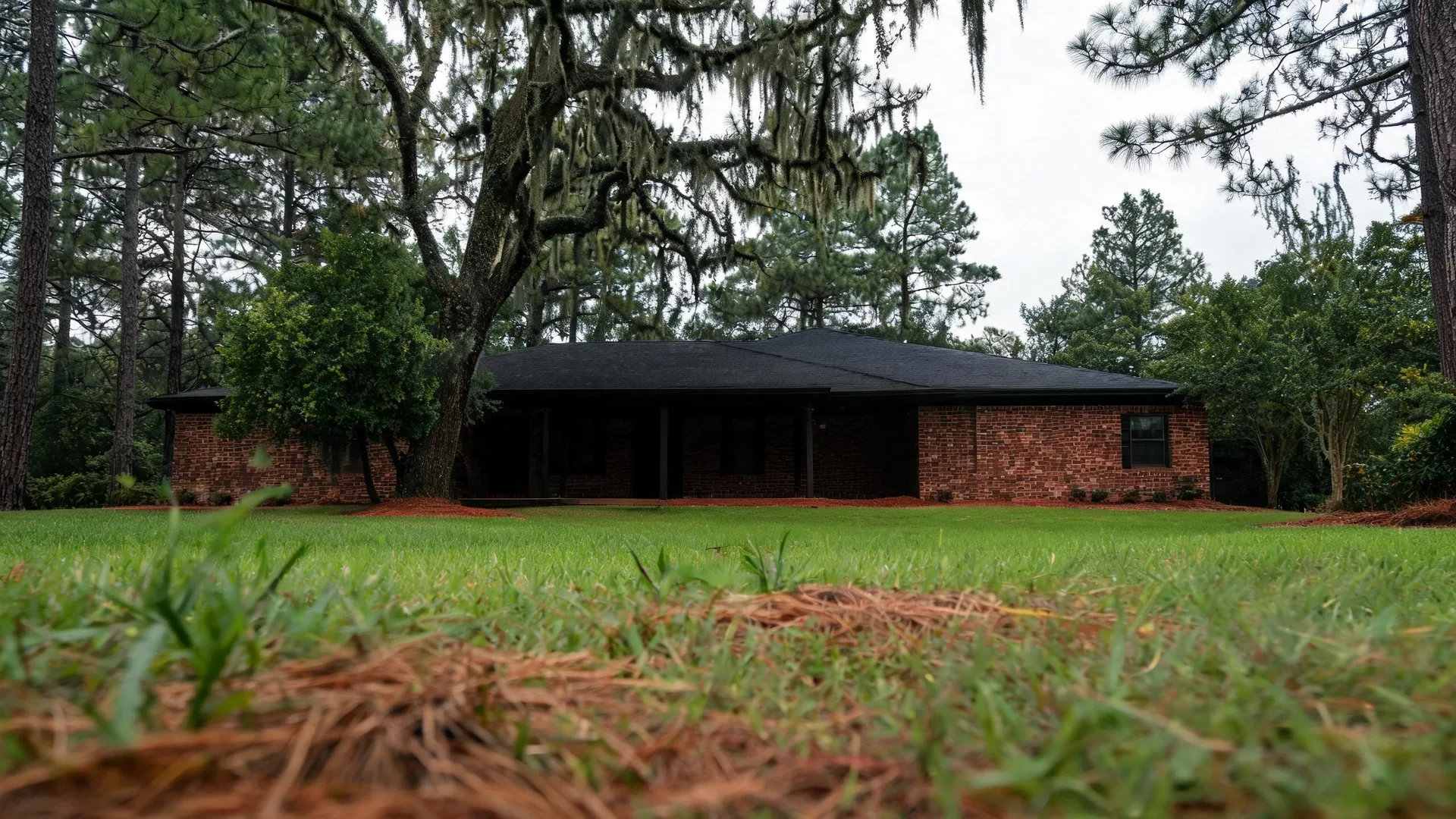





Single-story brick house with a dark shingled roof set behind a lawn and tall pine and moss-draped trees, photographed low to the ground with pine straw in the foreground.

Furnace Repair in Pearl, MS

Tell us about the job

Takes about a minute. No obligation.

RepairFurnace or heatingRankin County, MS
Step 1 of 2

What ZIP code is the job in?

Before you call anyone, check a few things yourself. Look at the thermostat and make sure it's set to heat and the temperature is set above room temperature, not just on. Go to the furnace and check that the switch on or near the unit, the one that looks like a light switch, is flipped on. Check your breaker panel for a tripped breaker. If you have a gas furnace, make sure the gas valve leading to it is open. Last, check your air filter. A filter that's clogged with dust can choke off airflow and cause the furnace to shut itself down before it overheats. None of this takes tools or any real skill, and it rules out the simple stuff before you pay anyone to find it for you.

5 months
November through March, your furnace is on duty
37°F
the average winter night it heats against
4 winter storms
in ten years, the nights a failure hurts most
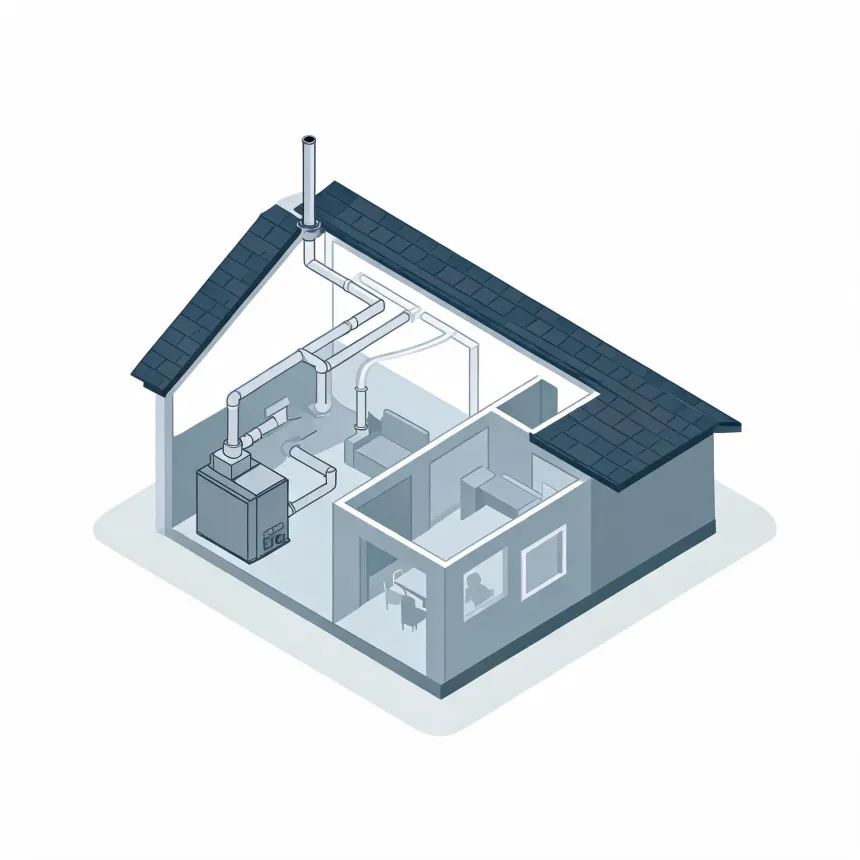
Isometric cutaway illustration of a single-story house showing interior rooms, a furnace unit with connected ductwork, and a flue pipe extending through the dark shingled roof.
Your furnace works hardest from November through February.

NOAA nClimDiv, 1991–2020 normals

Furnaces in Rankin County go back to work in November.

A weak part usually holds through summer and fails the first cold week it has to work.

Five months of work a year is not much to ask of a furnace

Heat runs November through March
Winter nights average 37°F
Climate zone 3A

Half the homes in Rankin County were built in 1995 or later. If your house falls in that half, the furnace in it hasn't seen many winters yet. A furnace that age with a failed igniter or a bad flame sensor is worth fixing. Those are small parts, and replacing one doesn't touch the rest of the system. The cabinet, the heat exchanger, the blower motor, all of that keeps running long after a single part gives out.

Get it looked at early

Problems tend to show up in the first weeks of the season, when the load hits a part that was already weak.

Find a contractor
A man in a cap, dark long-sleeved shirt and brown work pants, seen from behind, carries a worn leather tool bag up porch steps toward a blue front door beside a blue planter with a shrub.
A gray high-efficiency gas furnace installed in an unfinished basement, surrounded by gas lines, a condensate drain, and sheet-metal ductwork.

Light duty, worth fixing

Five months a year, and overnight lows here only average 37°F. That is not a hard season for a furnace to get through. A system working that little tends to have most of its life still ahead of it, so when a part fails, replacing that part is usually the right call rather than replacing the whole unit.

Most parts fail alone

An igniter wears out or a flame sensor gets coated with a film that stops it from sensing the flame, and neither has anything to do with the rest of the furnace. Replacing one doesn't shorten the life of the heat exchanger or the blower motor sitting next to it. A furnace with one failed part is not a furnace in decline.
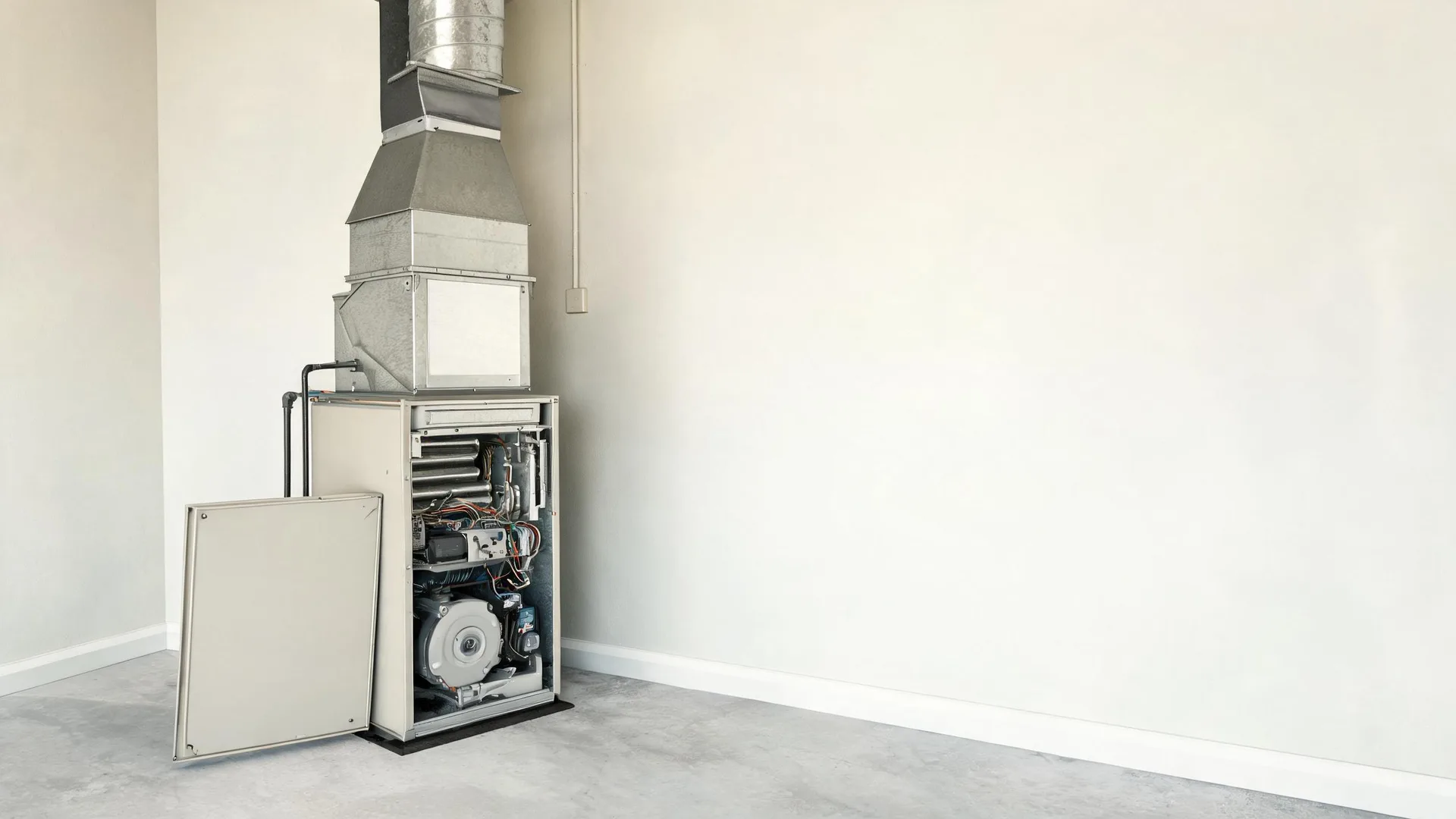
One part changes the math

A cracked heat exchanger is different from a bad sensor or a dead igniter. It can't be swapped on its own, the cost of fixing it gets close to the cost of a new furnace, and a crack in it is a safety problem, not just a performance one. When that's the diagnosis, replacement is usually the right call. When it's anything else, repair almost always is.

A furnace with a problem does not get a break just because it keeps running. A cracked heat exchanger flexes a little with every cycle of heat, and running it longer only opens that crack wider. A blower motor straining on a worn bearing keeps drawing current and building heat in the windings instead of wearing down slow with some warning. A clogged filter forces the furnace to run hotter than it was built to, and that heat stresses the exchanger on every cycle it's restricted. Short cycling is usually the clearest sign something inside is being pushed past where it should run. Catching it early is often the difference between swapping a part and swapping the whole unit.

A diagnostic visit starts with the thermostat and works inward. A tech checks the call for heat is actually reaching the furnace, then watches it run through its startup sequence end to end. The igniter should glow and the flame should catch right after. If it doesn't catch, or catches and then drops out, that points to the flame sensor or the gas valve rather than the igniter itself. Pulling the blower panel comes next, to look at the motor, the belts or lack of them, and the wiring for any sign of heat damage. Static pressure and temperature rise get checked too, since both tell you whether the furnace is breathing the way it's supposed to. Everything gets traced back to one part before anything gets replaced.