





A gray forced-air furnace with sheet-metal ductwork stands in an unfinished basement with exposed wooden joists, concrete walls, and a hanging incandescent bulb.

Furnace Repair in Natchez, MS

Tell us about the job

Takes about a minute. No obligation.

RepairFurnace or heatingAdams County, MS
Step 1 of 2

What ZIP code is the job in?

Adams County saw 84 severe weather events between 2015 and 2024, and most of those were damaging wind or hail. Wind-driven debris can bend the fins on the outdoor unit or crack its cabinet without stopping it from running, so it keeps working while it's damaged. A furnace often shares electrical and control wiring with that outside unit, so storm damage out there is worth checking even if the furnace itself seems fine. This county has also seen tornadoes and tropical storms in that same stretch, the kind of weather that knocks out power along with everything else.

5 months
November through March, your furnace is on duty
40°F
the average winter night it heats against
3 winter storms
in ten years, the nights a failure hurts most
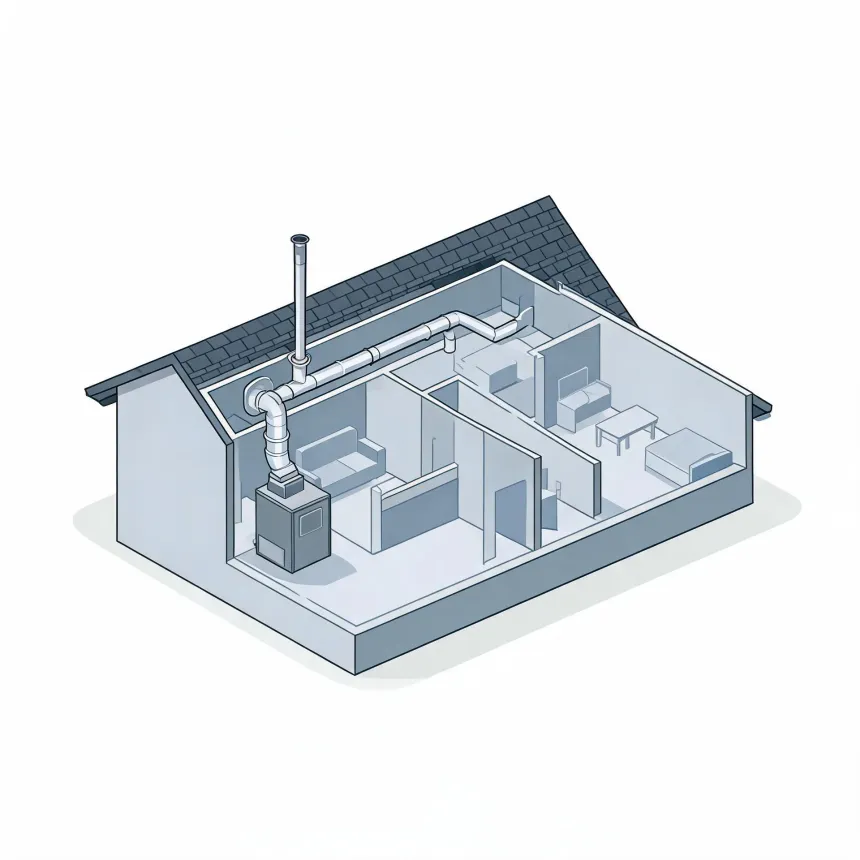
Isometric cutaway illustration of a single-story house showing interior rooms with furniture and a furnace connected to ductwork and a vertical flue pipe extending through the roof.
Your furnace works hardest from December through February.

NOAA nClimDiv, 1991–2020 normals

Furnaces here start working in November.

October is the month to get a weak igniter or a cracked heat exchanger caught before the cold finds it.

Five months of work a year is a light load for a furnace

Heat runs November through March
Winter nights average 40°F
Climate zone 3A
Natchez runs a lot of old furnacesHalf the homes in Adams County were built in 1972 or earlier.

Most furnace calls come down to a handful of usual suspects. The igniter wears out from the simple fact of heating up and cooling down every cycle, and it's one of the first things to fail. A flame sensor coated in a thin layer of residue stops reading the flame and shuts the burner off as a safety measure, even though nothing is actually wrong. Dirty filters choke airflow, and the furnace overheats and trips its limit switch again and again until someone swaps the filter out. Dust and lint build up on the blower wheel over time, throwing it off balance and straining the motor behind it. The one that matters most is a cracked heat exchanger, since that's a safety issue and not just a comfort one, and it's usually caught by a technician running a proper inspection rather than by anything the homeowner notices firsthand.

Find out what you're repairing before you fix it

A furnace installed when one of these houses was built has had decades to wear out. If yours is original to the house, ask a technician how much life is left in it before signing off on the repair.

Find a contractor
A man in a gray t-shirt and brown work pants carries a canvas tool bag up porch steps toward a blue front door of a house with gray siding.
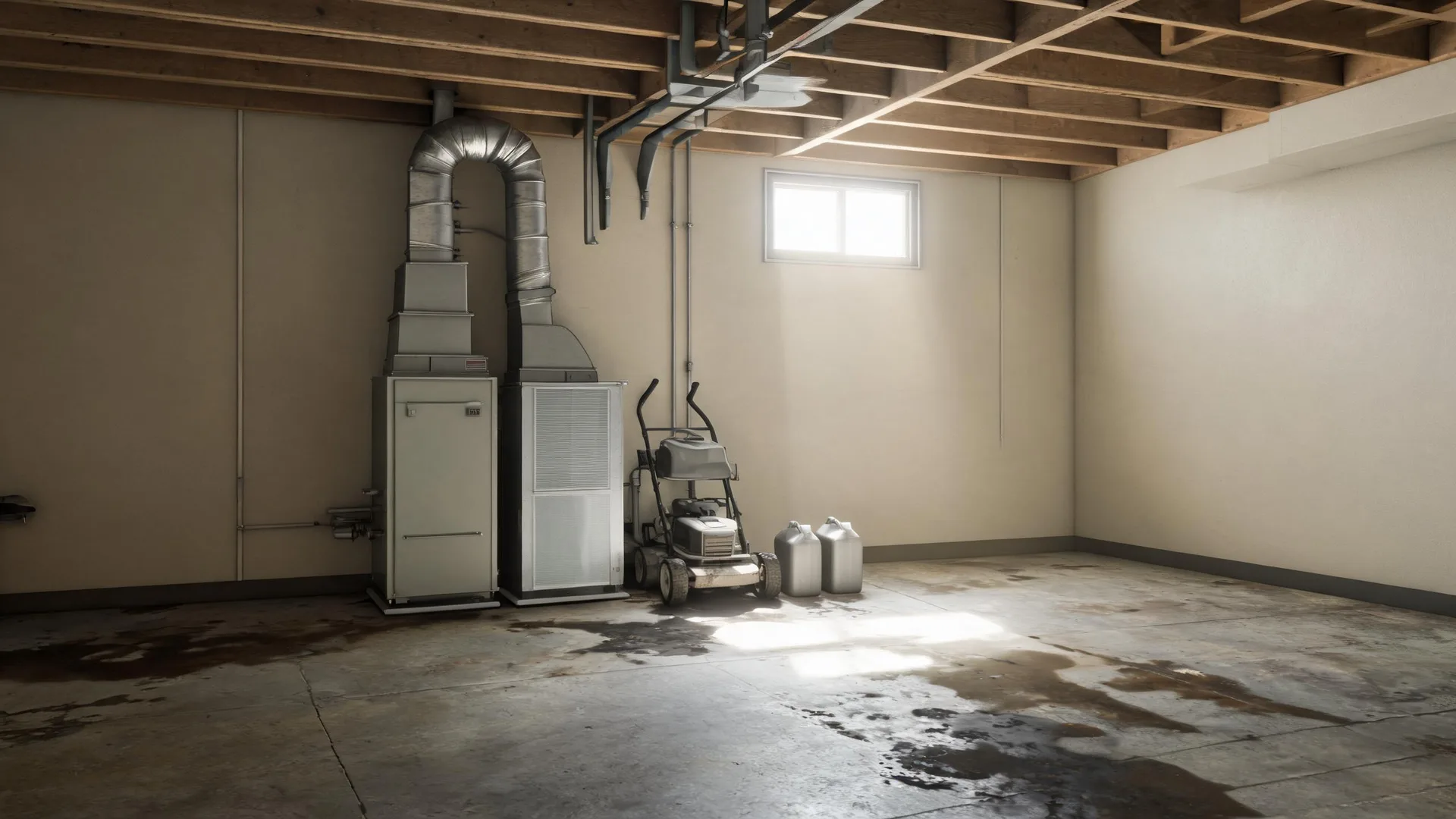
A gray gas furnace with attached ductwork and piping installed in an unfinished concrete basement.

An easy stretch, most nights

That overnight average of 40°F is mild, not brutal cold. A furnace sized for this area isn't fighting to keep up on most nights, so a unit that's been running five months a year here has had a fairly easy stretch of it. That points toward repair over replacement in most cases. If something's failing now, an igniter or a flame sensor or a clogged filter, it's more likely wear catching up with an otherwise sound unit than a system that's been run into the ground.

A cracked heat exchanger spreads the crack

Metal that's already split keeps flexing every time the burner fires and the furnace heats up and cools down. Each cycle works the crack a little wider. What starts as a hairline split a technician can only find with the right tools can open into something that leaks exhaust into the air the blower pushes through the house.
A dirty flame sensor turns into a dead furnace

A sensor coated in residue starts by shutting the burner off just after it lights, since it can't confirm the flame is there. Left alone, the furnace keeps trying to light and keeps shutting off, and that short cycling wears on the igniter and the control board behind it. A quick cleaning job turns into a repair with more parts involved.

A furnace that needs help usually says so before it quits outright. Short cycling is the clearest sign. It fires, runs for a bit, shuts off, then tries again a few minutes later. The thermostat calls for heat and nothing happens, or it takes several tries to light. Air coming out of the vents that feels cooler than it should means the burner isn't staying lit long enough to do its job. A burner flame that's flickering or yellow instead of steady and blue is worth a call on its own. So is a furnace that's suddenly louder than it used to be, a rattle from the blower or a screech when it starts up. Any smell of exhaust inside the house means stop using it and get someone out right away.

A technician starts by asking what the furnace is doing and when it started. That matters before any tool comes out, because a furnace that won't light at all points somewhere different than one that lights and then shuts off. The filter gets checked. The thermostat settings get checked. Then the cabinet comes off and the technician watches the furnace run through a full cycle, from igniter to burner to blower, to see exactly where it breaks down. The flame sensor gets pulled and looked at for residue. The heat exchanger gets inspected with a camera or a mirror, since a crack in it doesn't show from the outside. Amp draw and wiring connections get checked along the way too. By the end the technician can point to the one part causing the trouble instead of guessing at a handful of possibilities.