





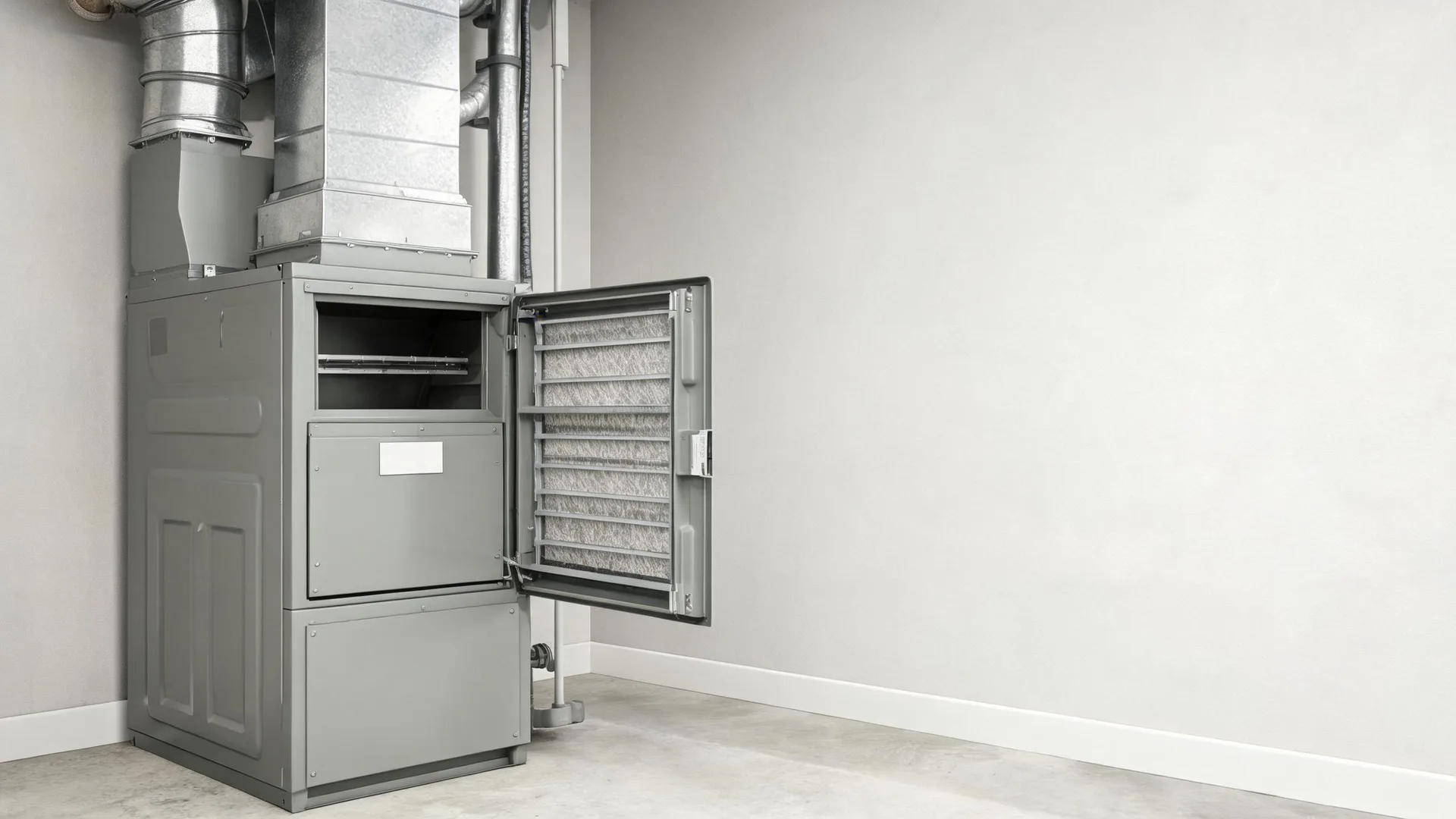
A bare concrete basement containing a gray gas furnace with metal ductwork and a vertical flue pipe, lit by a single hanging bulb.

Furnace Repair in McComb, MS

Tell us about the job

Takes about a minute. No obligation.

RepairFurnace or heatingPike County, MS
Step 1 of 2

What ZIP code is the job in?

A furnace in McComb only has to work about five months a year, November through March. Overnight lows average 40°F in the coldest stretch of winter, nothing close to the kind of cold that runs a furnace hard night after night. That's a short season and a mild one. A furnace here isn't fighting the strain you'd see further north, so when one acts up, it's rarely because the system has been worked past what it can handle. More often something specific has gone wrong, a part that's failed or worn, and that's usually worth fixing rather than replacing.

5 months
November through March, your furnace is on duty
40°F
the average winter night it heats against
1 winter storms
in ten years, the nights a failure hurts most
Isometric line illustration of a cutaway single-story house with a shingled roof, showing an interior furnace connected to ductwork and a tall vertical flue pipe, plus simple furniture in the adjacent room.
Your furnace works hardest from November through February.

NOAA nClimDiv, 1991–2020 normals

A diagnostic starts with the thermostat call and ends at the part that failed.

Once the tech finds that part, you know what you're actually paying to fix.

The weather here isn't what wears out a furnace

51 severe weather events from 2015 to 2024
30% of homes statewide lost power a day or more in 2024
34 damaging wind events from 2015 to 2024

Half the homes in Pike County were built in 1984 or earlier, and half in 1984 or later. A furnace failure doesn't sort itself by the age of the house. An older furnace is more likely to fail just from age and wear, but a newer one fails too, usually from one part that's gone bad rather than the whole system wearing out. About a quarter of the homes in the county are mobile homes, and those often run a different furnace setup than a house with ducted central air. Worth mentioning that to the tech before they come out, so they bring the right parts for it.

A specific repair, not a system past its limit

That failed part is worth fixing now rather than waiting. Nothing about a McComb winter pushes a furnace toward the kind of wear that makes replacement the better call.

Find a contractor
A gray high-efficiency gas furnace installed in an unfinished basement, surrounded by gas lines, a condensate drain, and sheet-metal ductwork.

What actually wears a furnace out

Furnaces don't fail because of one hard cold snap. They fail because a handful of parts reach the end of their life through ordinary use. The igniter cracks or weakens after enough heating cycles. The flame sensor picks up a film from normal combustion until it can't sense the flame anymore, and the burner shuts down as a safety response. Blower motor bearings wear out from spinning, not from the temperature outside. A capacitor that helps start the blower motor degrades over time whether the thermostat calls for heat often or rarely. A furnace that sits idle most of the year can also collect dust around the burners, or a component can stick just from sitting unused. None of that means the system is worn out. It means one part did what parts eventually do, and that part is what needs attention.

What you'll notice first

The furnace runs but blows air that never gets warm, or it clicks and tries to light without catching. It might short cycle, starting and shutting off again and again instead of running a full stretch. Or it runs on and on without the house ever feeling warm. A burning smell on the first run after sitting all year fades within a few minutes. One that lingers, or shows up any other time, means something is wrong.
What it tells the tech

A furnace that won't light points to the igniter or the gas valve. Short cycling often traces back to a dirty flame sensor or a filter so clogged the system can't pull air through it. A blower that keeps running after the house is warm can mean a bad limit switch. Describing exactly what the furnace is doing, and when it happens, gives the tech a head start on finding the part that failed.

A furnace that's struggling to light or stay lit will keep trying unless something shuts it down first. Each attempt puts the igniter through another cycle of heating up and cooling off, and that's the kind of stress that turns a weak igniter into a cracked one. A flame sensor coated in film won't sense the flame right, so the system reads it as a safety problem and cuts the gas valve, over and over, and each misfire is wear the part didn't need to take on. A blower running against a clogged filter pulls harder than it's built to, and that strain lands on the motor bearings. None of these start out as big problems. Left alone, the small failure is what drags another part down with it.

Most furnace repairs come down to one part, and most of those parts are worth replacing on their own. An igniter or a flame sensor costs a fraction of what the whole furnace would run, and swapping it brings the system back to full working order. Replacement only starts to make sense when the parts failing are the expensive ones, like a cracked heat exchanger, or when the furnace is old enough that one repair now just means another repair waiting behind it. A tech can tell you which situation you're in once they've opened the unit up. Until then, a furnace that's run fine for years and suddenly has one thing wrong with it is almost always a repair, not a replacement.