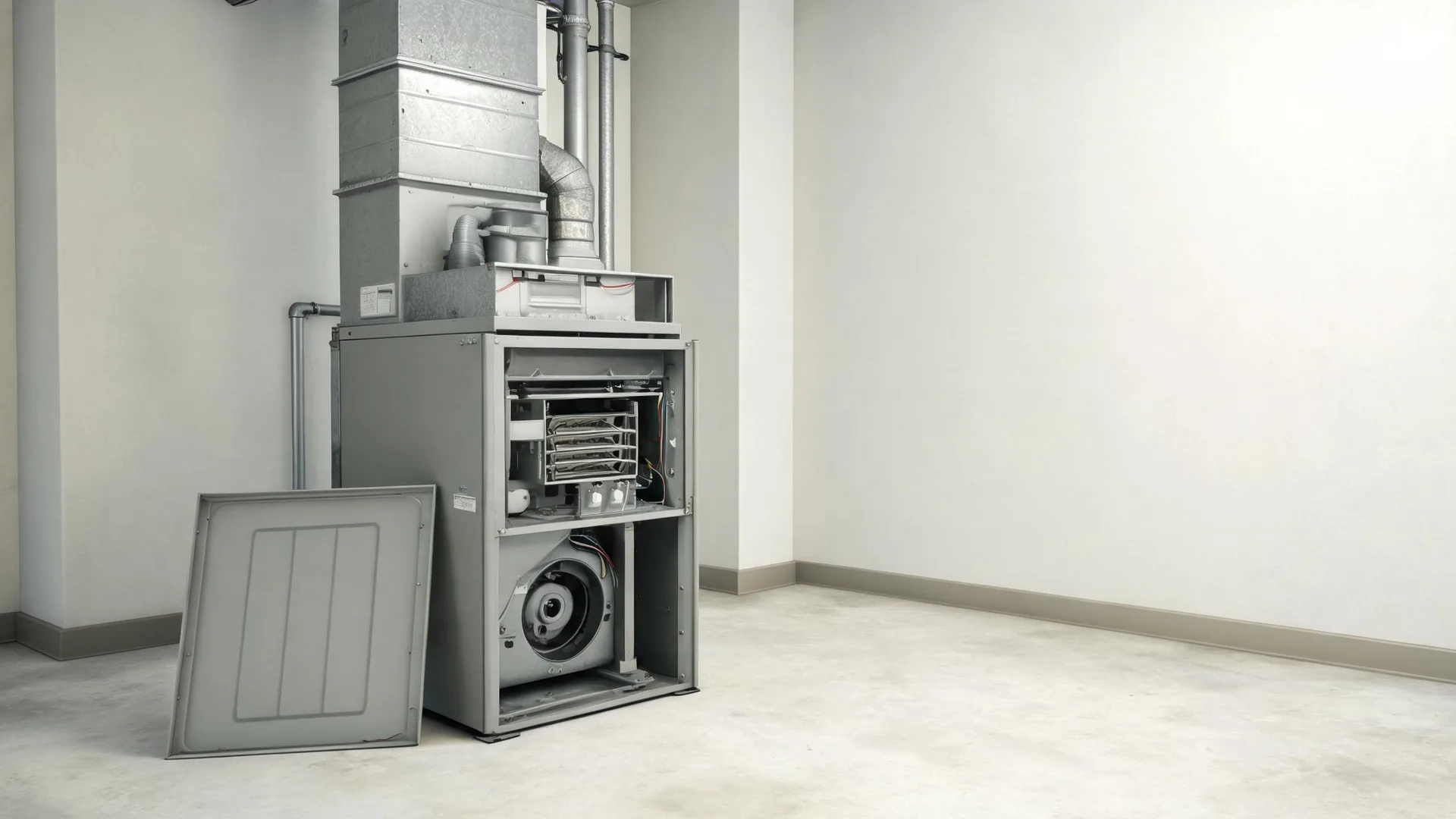
Five months of work a year
Furnaces in Harrison County run from November through March, and overnight lows average 42°F through the coldest months. That's a mild load compared to what furnaces further north deal with.
Takes about a minute. No obligation.
Furnaces in Harrison County run from November through March, and overnight lows average 42°F through the coldest months. That's a mild load compared to what furnaces further north deal with.
A furnace that isn't pushed hard all winter tends to hold up well through the years. If yours is acting up, the cause is more likely age or a part that's worn out than years of heavy use. That's usually a good reason to fix it rather than replace it.
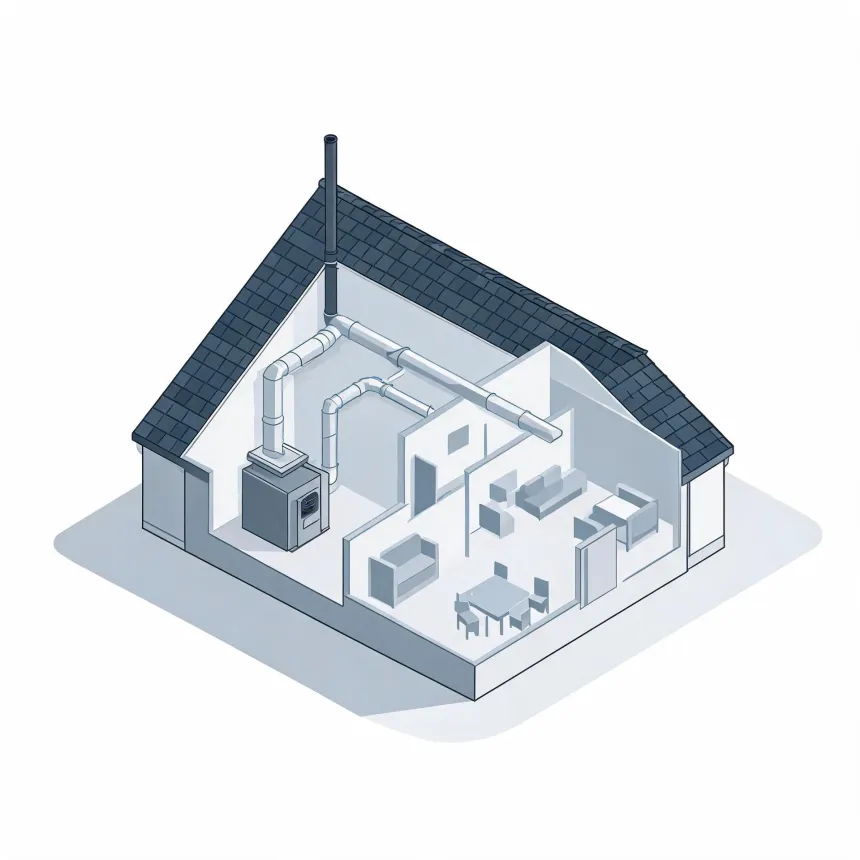
NOAA nClimDiv, 1991–2020 normals
Half the homes in Harrison County were built in 1994 or later.
A furnace that came with a newer house still has years left in it, and that's worth knowing before you replace anything.



After a storm, check the outdoor intake and flue before you assume the furnace is fine. Harrison County has seen 53 damaging wind events and 30 hail events, and either one can dent a vent hood or drive debris into the housing. A furnace can run without complaint for weeks with a partly blocked intake. If you heard the storm hit and haven't looked at the unit since, that's reason enough to have it checked.
Five months of light work a year is easy on a furnace. If something's gone wrong with yours, that points to a part worn out rather than a system beat down, and a worn part is usually a fair fix.
Find a contractorIf your furnace came with the house, get the actual part diagnosed before anyone talks replacement. A cracked heat exchanger is a real reason to walk away. A bad igniter or a failed control board isn't. Ask what's actually wrong and whether that part alone can be swapped out.
The igniter heats up every cycle and cools back down after, and that back and forth eventually cracks it. A furnace that won't light but runs fine once it gets going usually needs a new igniter, not much else.
The flame sensor tells the control board a flame is present, and if it's coated with residue it can't do that job. The furnace shuts itself off to be safe, which can look like a serious fault when it's really just a part that needs cleaning or swapping.
A furnace that's struggling to light or stay lit isn't a problem to wait out. Every failed ignition attempt still opens the gas valve for a few seconds, and a cracked heat exchanger can leak exhaust into the airflow instead of venting it outside. A flame sensor caked with residue will make the furnace shut off again and again, and each short cycle adds wear to the igniter and the blower motor that a clean start wouldn't. Short cycling also means the heat exchanger goes through more heating and cooling swings in a day than it should, and that's what eventually cracks it. A furnace making a new noise or tripping off mid-cycle is telling you something specific. Letting it keep running on its own usually turns a small part into a bigger repair.
A diagnostic visit starts with questions, not tools. What does the furnace do when it fails. Does it try to light and give up, run for a while and shut off, or not respond at all. That narrows things down before a panel ever comes off. From there a tech checks the parts behind most calls, the flame sensor, the igniter, the pressure switch, and the condition of the heat exchanger. Some of that is a visual check. Some needs a meter to read continuity or current draw. If the furnace throws an error code, the control board usually stores it even after the unit is reset, which cuts down on guesswork. The goal isn't just to get it running again. It's to find out why it stopped, because a furnace that gets restarted without that answer tends to fail the same way again.