Heat pump vs furnace in Harrison County, Mississippi

Get My Quote

No cost to ask

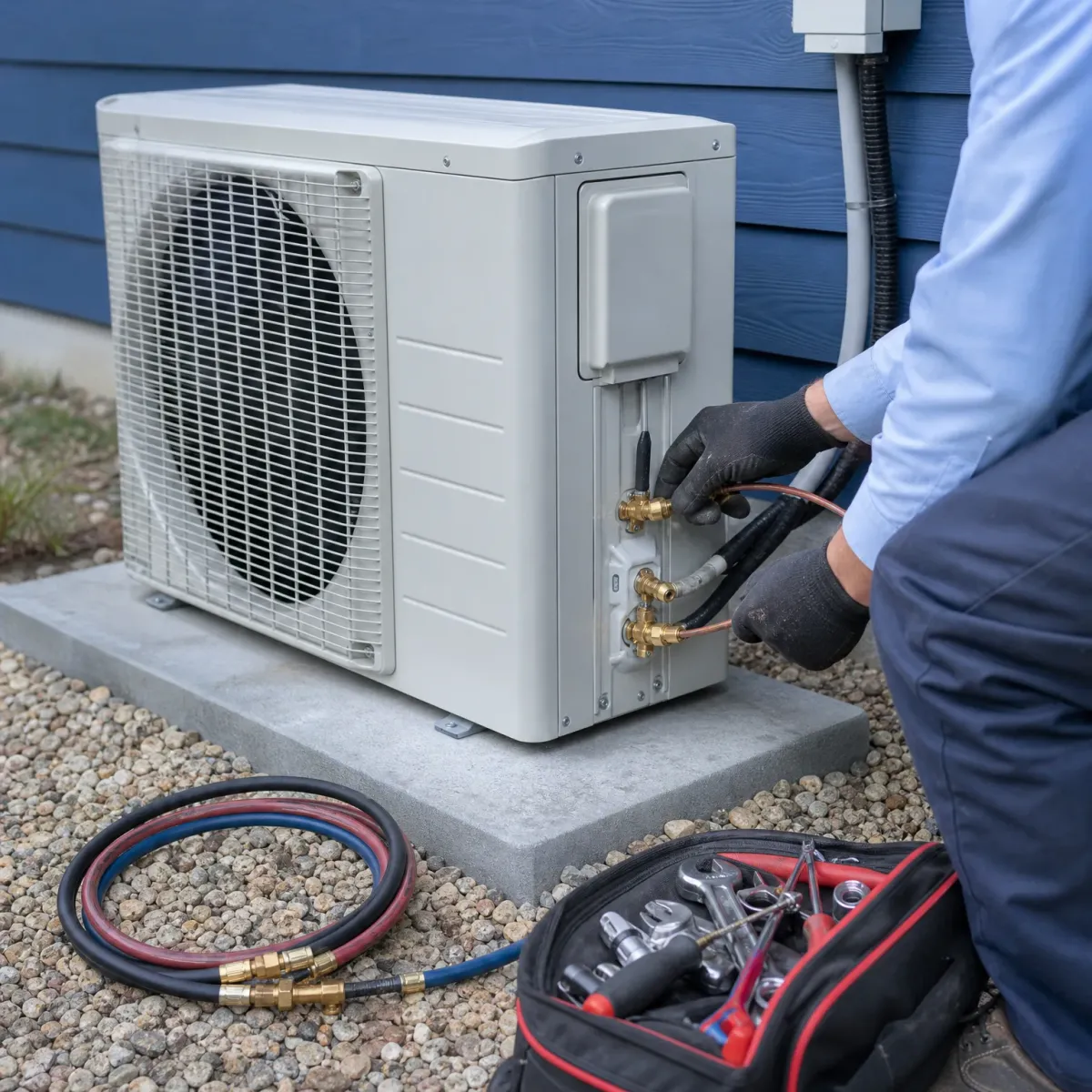
A gloved worker kneels beside a white outdoor heat pump unit on a concrete pad, handling refrigerant line connections, with coiled red and blue hoses and an open tool bag on gravel nearby.

Tell us about the job

Takes about a minute. No obligation.

New system or replacementHarrison County, MS
Step 1 of 3

What kind of equipment?

Which costs less to run in Harrison County?

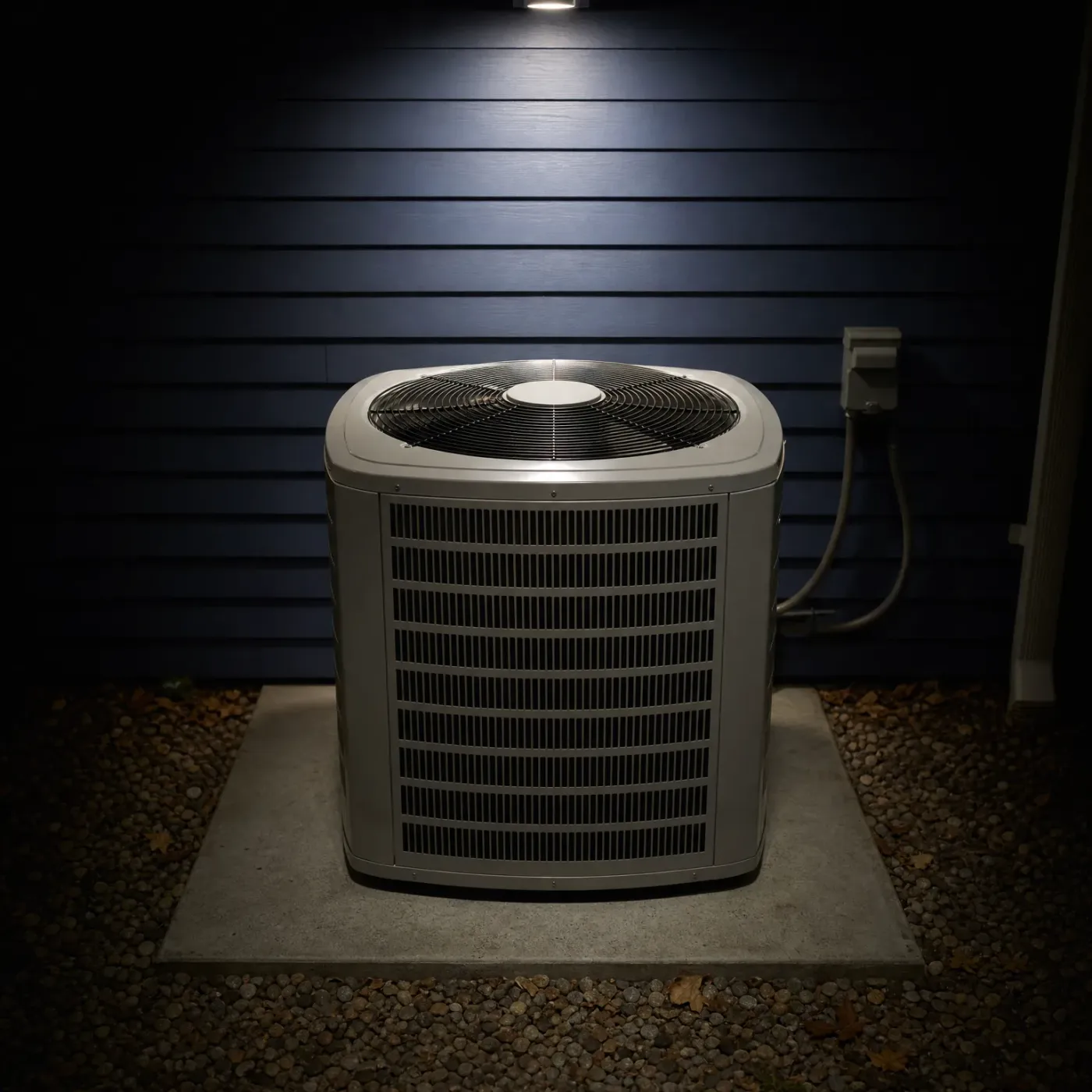
An outdoor air conditioner condenser unit on a concrete pad against a dark horizontal-siding wall at night, lit by an overhead light, with a wall-mounted disconnect box and conduit to the right and gravel with fallen leaves around the pad.

Heat pump

To heat your home here$1.79per 100,000 Btu

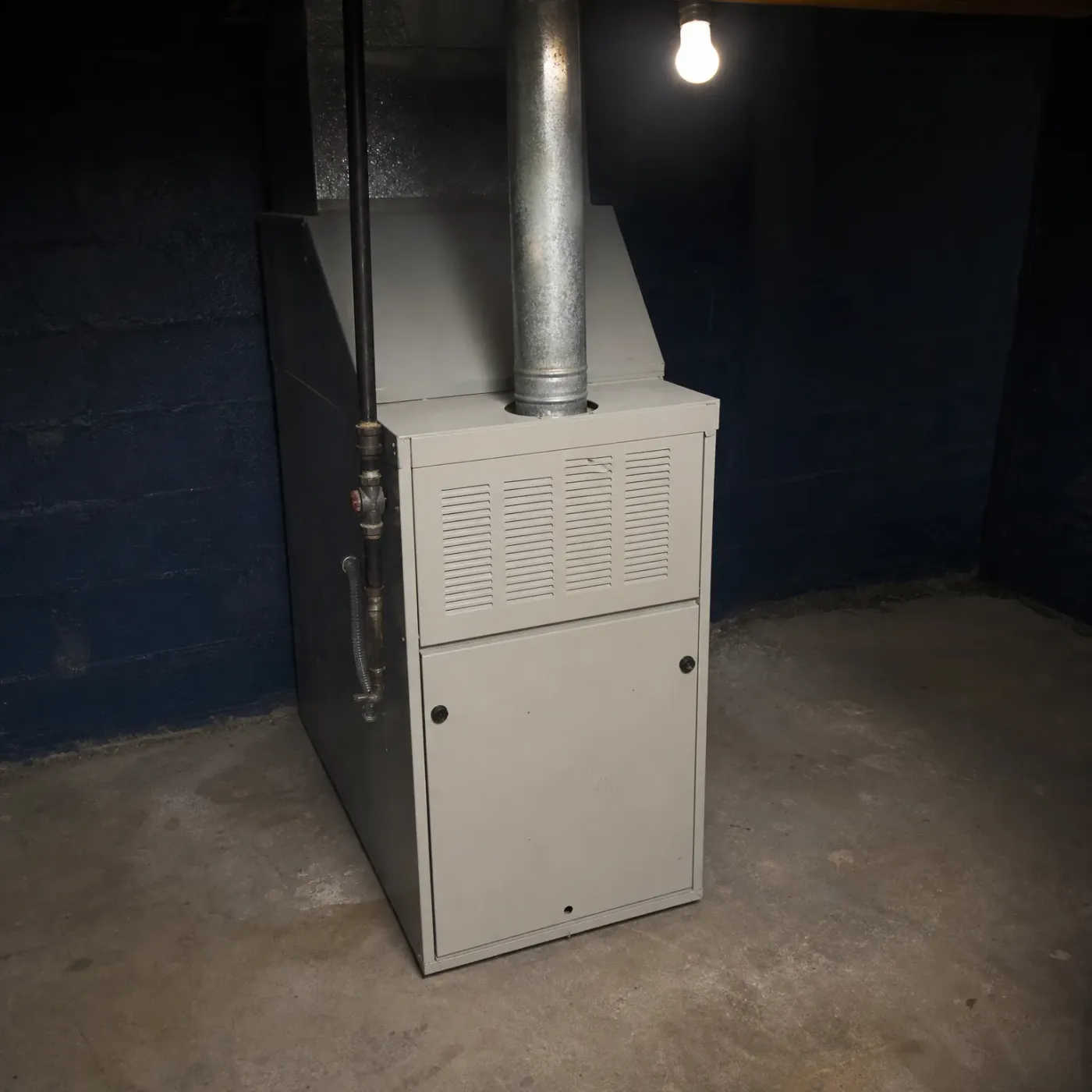
A beige residential furnace with a louvered upper panel stands on a concrete basement floor beside a dark blue painted block wall, with a galvanized metal flue pipe rising from its top and a bare lit bulb overhead.

Furnace

To heat your home here$1.88per 100,000 Btu

At Mississippi's gas and electricity prices, a heat pump and a gas furnace cost about the same to run here.

Btu stands for British thermal unit, the standard measure of heat energy.

Where does a heat pump shine?

  • Made for mild winters

    Winter nights here average 42°F, which is mild enough that a heat pump can keep pulling heat from the outside air all season without much strain. You won't be dealing with the deep freezes that make a heat pump work overtime.

    A navy blue front door with a brass knob on a light blue clapboard house, with a weathered wood porch, jute doormat, leather boots, and a blue glazed pot of evergreen branches and pinecones, beside frost-covered ground.
  • Covers a long cooling season

    Cooling runs May through October here, most of the year. A heat pump handles that load and still heats the house in the cooler months, so it stays useful year round instead of sitting idle part of the time.

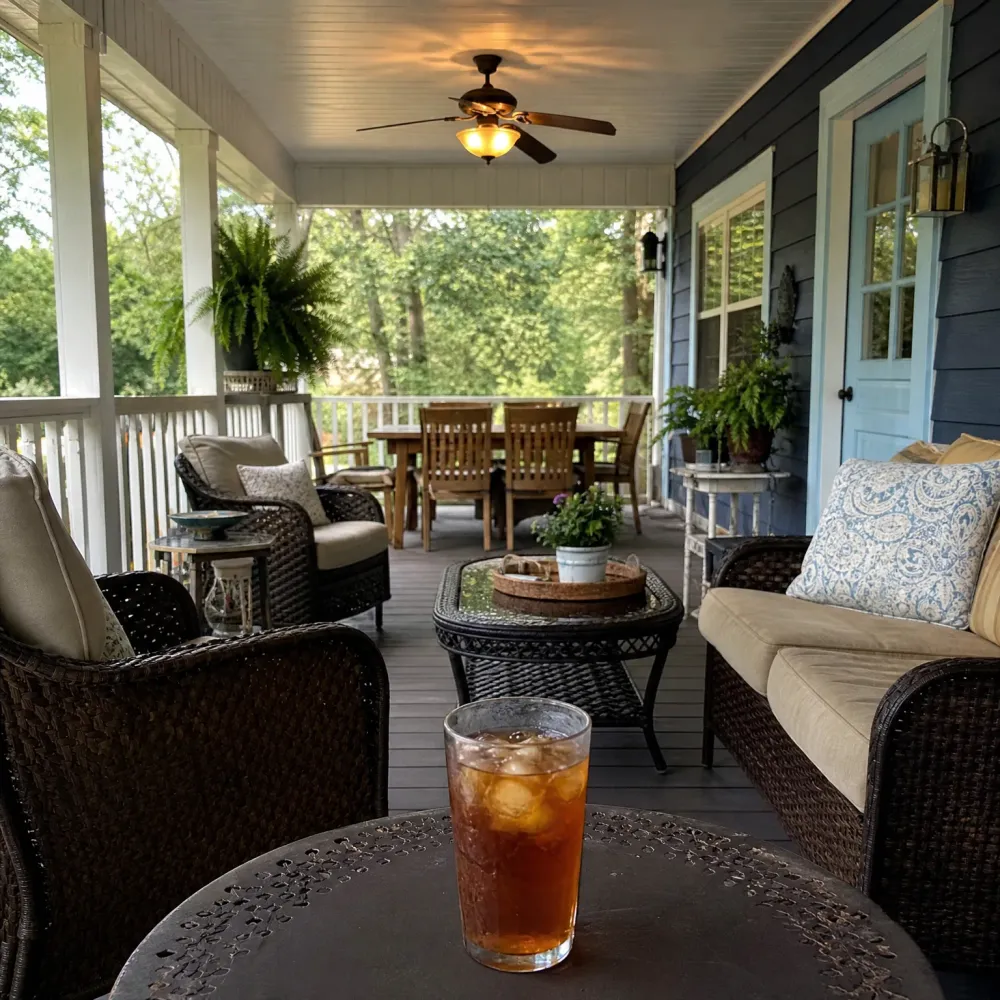
    A covered porch with dark wicker furniture, cream cushions, a ceiling fan with light, a hanging fern, a wooden dining table beyond the railing, and a glass of iced tea on a round table in the foreground.
  • Heats and cools in one system

    Winter and summer are covered by the same outdoor unit. That's one machine to service instead of two.

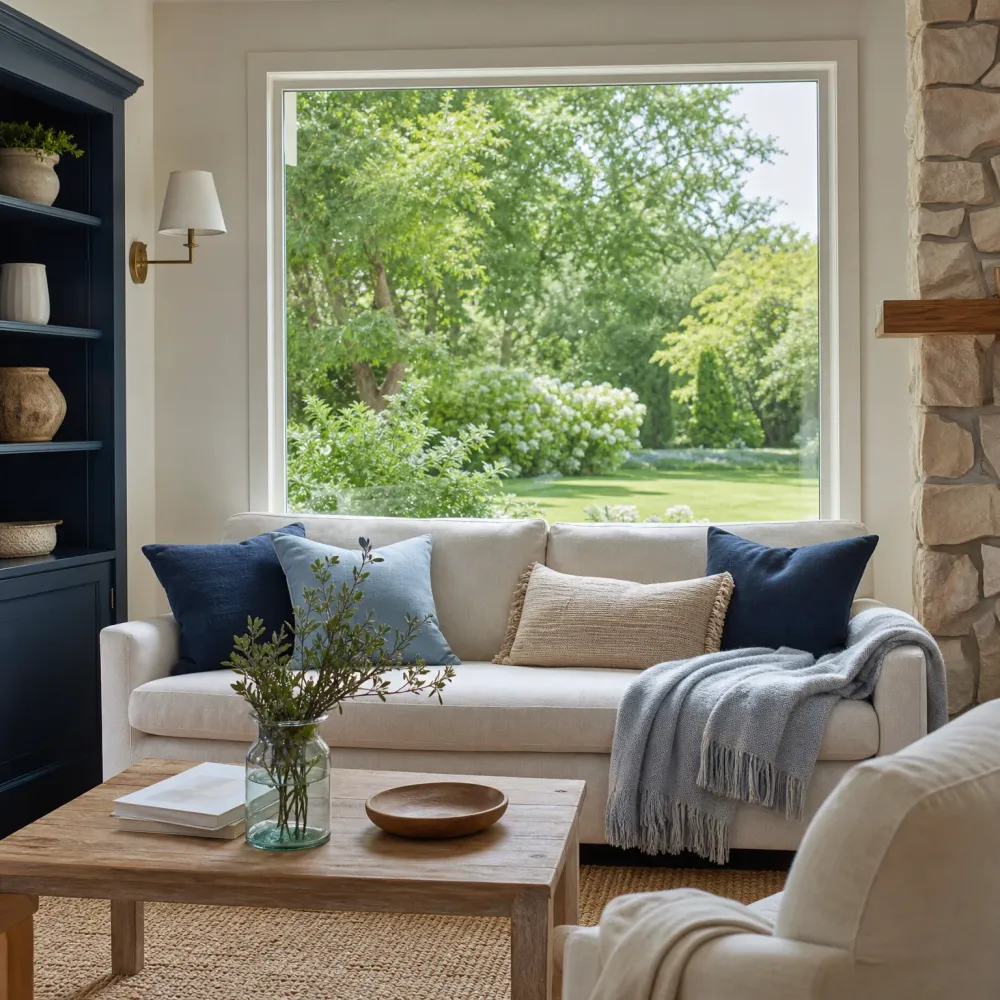
    Living room with a cream sofa holding navy and blue cushions and a grey fringed throw, a wooden coffee table with a glass vase of greenery, a dark blue built-in shelving unit, a stone column, and a large window looking onto a green garden.

Where does a furnace shine?

  • Pairs with any central AC

    Most central air systems are built around a furnace. The two share the blower, the ducts and the thermostat.

    A sheer white curtain hangs beside a sunlit window over a metal floor vent in a wood floor, with a blue chest of drawers, a woven basket, and a blue fringed rug nearby.
  • Proven, simple, easy to get serviced

    Gas furnaces have heated homes for generations. Almost every HVAC tech knows them inside and out.

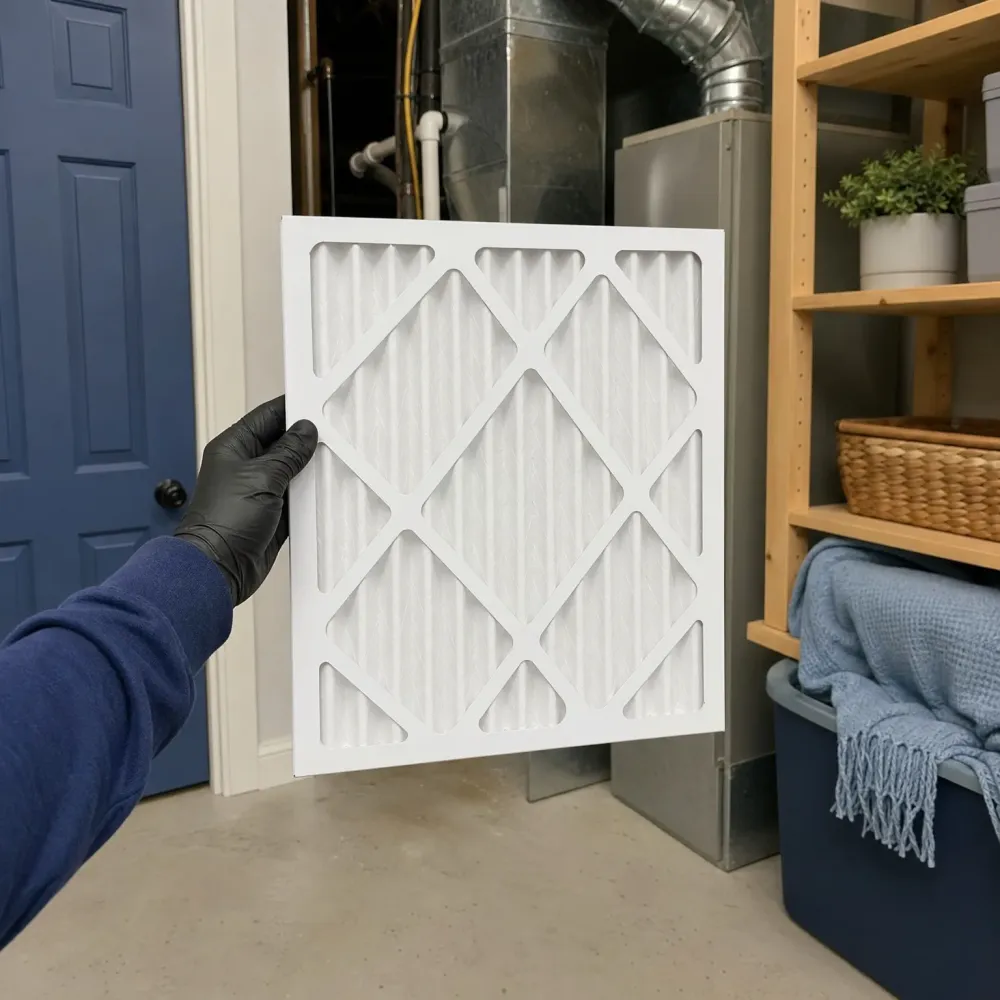
    A gloved hand holds a white pleated air filter in front of a furnace and ductwork in a utility area, with a blue door at left and wooden shelving holding a potted plant and basket at right.
  • Fast, strong heat on demand

    Turn the heat up and the furnace answers right away. There's no long wait for the house to catch up.

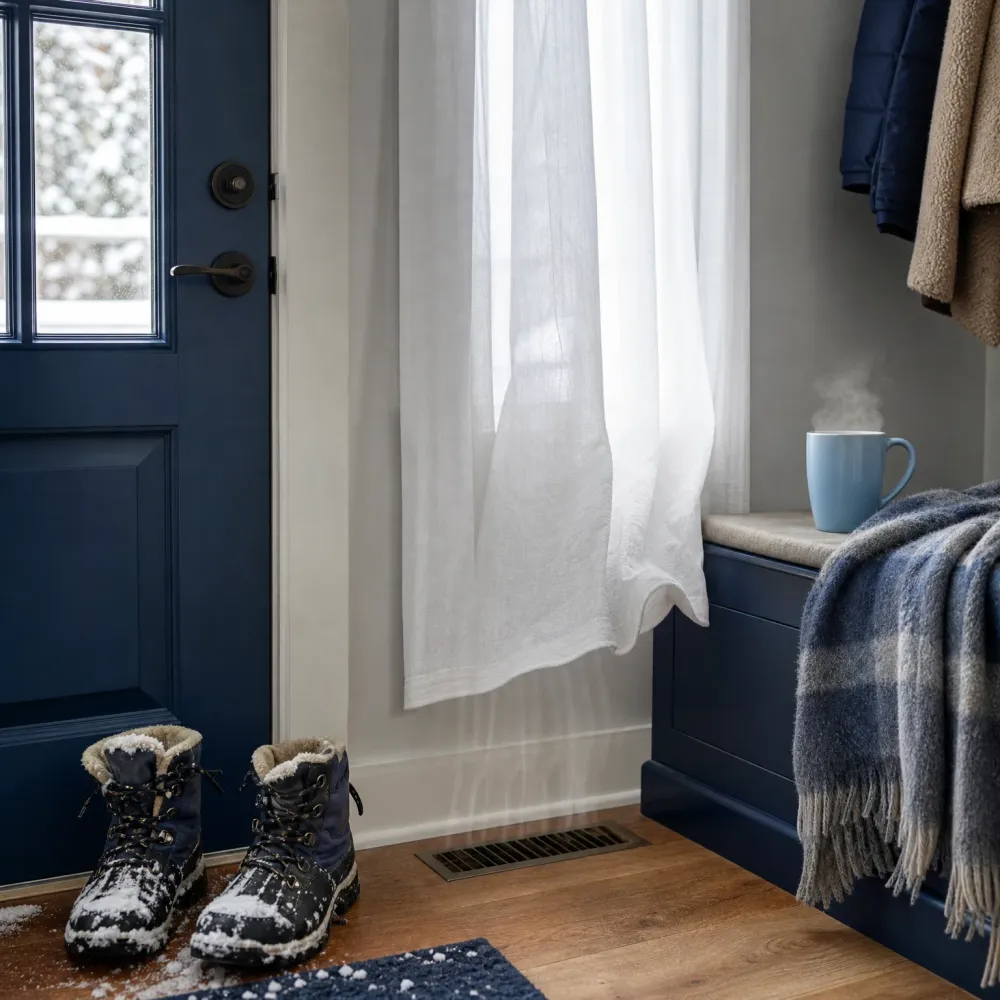
    Entryway with a navy paneled door, snow-dusted winter boots on a wood floor, a floor air vent, a sheer white curtain, a navy built-in bench with a plaid throw and a steaming light blue mug, and coats hanging at upper right.

Winters here don't ask much of a heat pump

Winter in Harrison County is mild, and that's what makes a heat pump work here. The overnight low averages 42°F across December, January and February. A heat pump doesn't strain to close that gap. It only falls to freezing or below about 15 nights a year, out of roughly 150 nights in the five months the heat runs. That's the stretch where a heat pump has to lean on backup heat to keep up. Here, it's a small slice of the season, not most of it.

The running costs back this up. A heat pump costs $1.79 to deliver 100,000 Btu of heat, against $1.88 for a gas furnace, both built to the federal minimum. That heat pump figure doesn't add anything for backup heat on the coldest nights, but there are only 15 of those nights a year here, so it doesn't take much to cover them. At Mississippi's power and gas prices, there isn't a real cost gap between the two machines in this county.

Three out of four homes here already heat with electricity. That's not a trend, it's most of the county already living with the fuel a heat pump runs on.
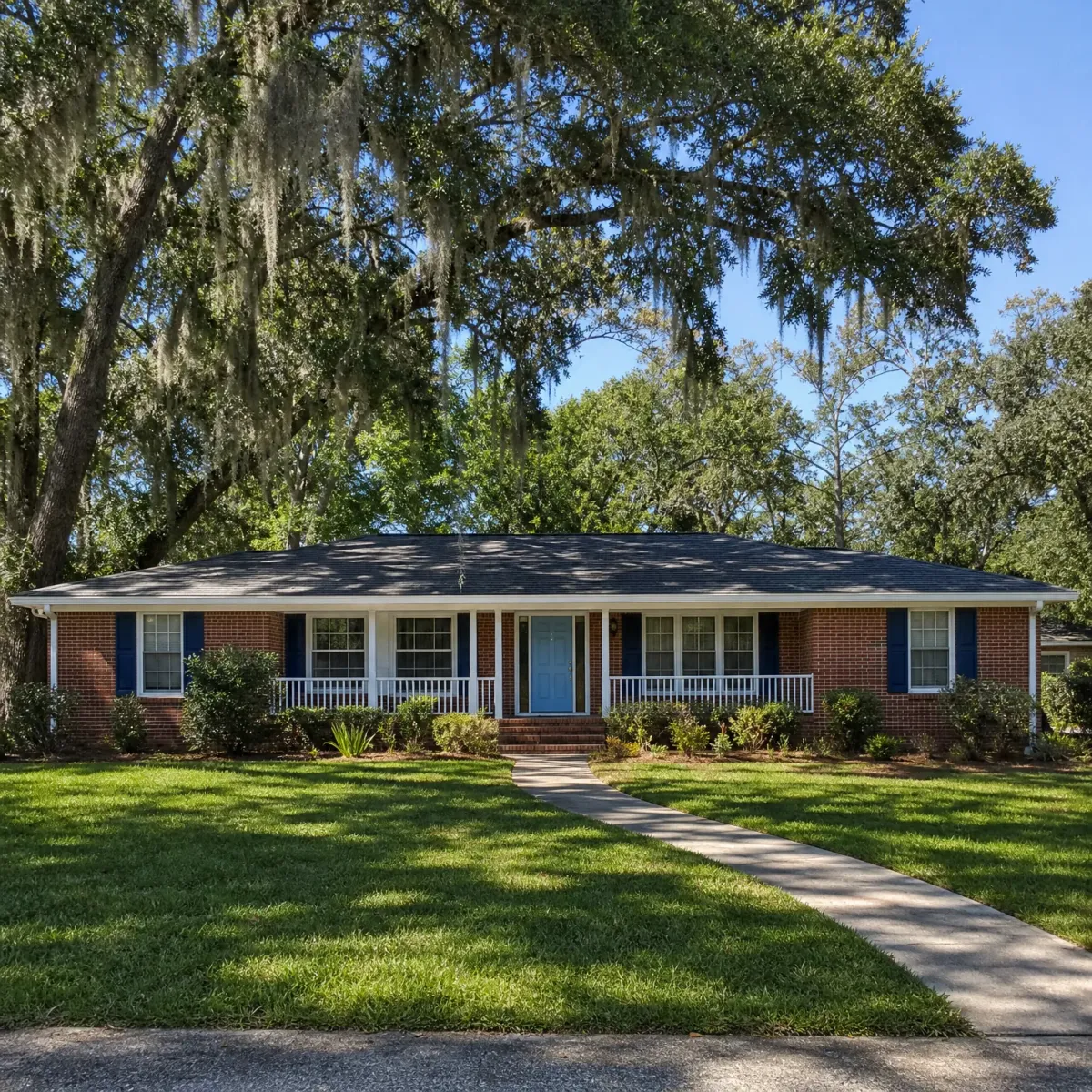
Single-story red brick ranch house with blue shutters, a blue front door, a white-railed covered porch, and a dark shingled roof, set behind a mowed lawn with a concrete walkway and large moss-draped trees overhead.

The longer season is cooling, and that's where a heat pump pulls ahead

Cooling runs six months here, May through October, a month longer than heat. Afternoons hit 90°F or above about 60 days a year. A furnace has no part in any of that. It heats, and for the seven months a year it isn't needed, it sits there while a separate air conditioner does the cooling. A heat pump is both machines. It heats the five months you need heat and cools the six you need cooling, with one system instead of two.

A gas furnace still has real advantages. It pairs with any central air conditioner, it's a simple and proven way to heat a house, and it puts out fast, strong heat on demand. If your home already has gas line and ductwork built around a furnace, that's worth something. But only about one in five homes here heat with gas. For most houses in Harrison County, the furnace is solving a cold snap that rarely visits and skipping a cooling season that lasts half the year.

Sources: NOAA nClimDiv · NOAA 1991–2020 seasonal normals · EIA SEDS 2024 · 10 CFR 430.32 · Census ACS 2020–2024

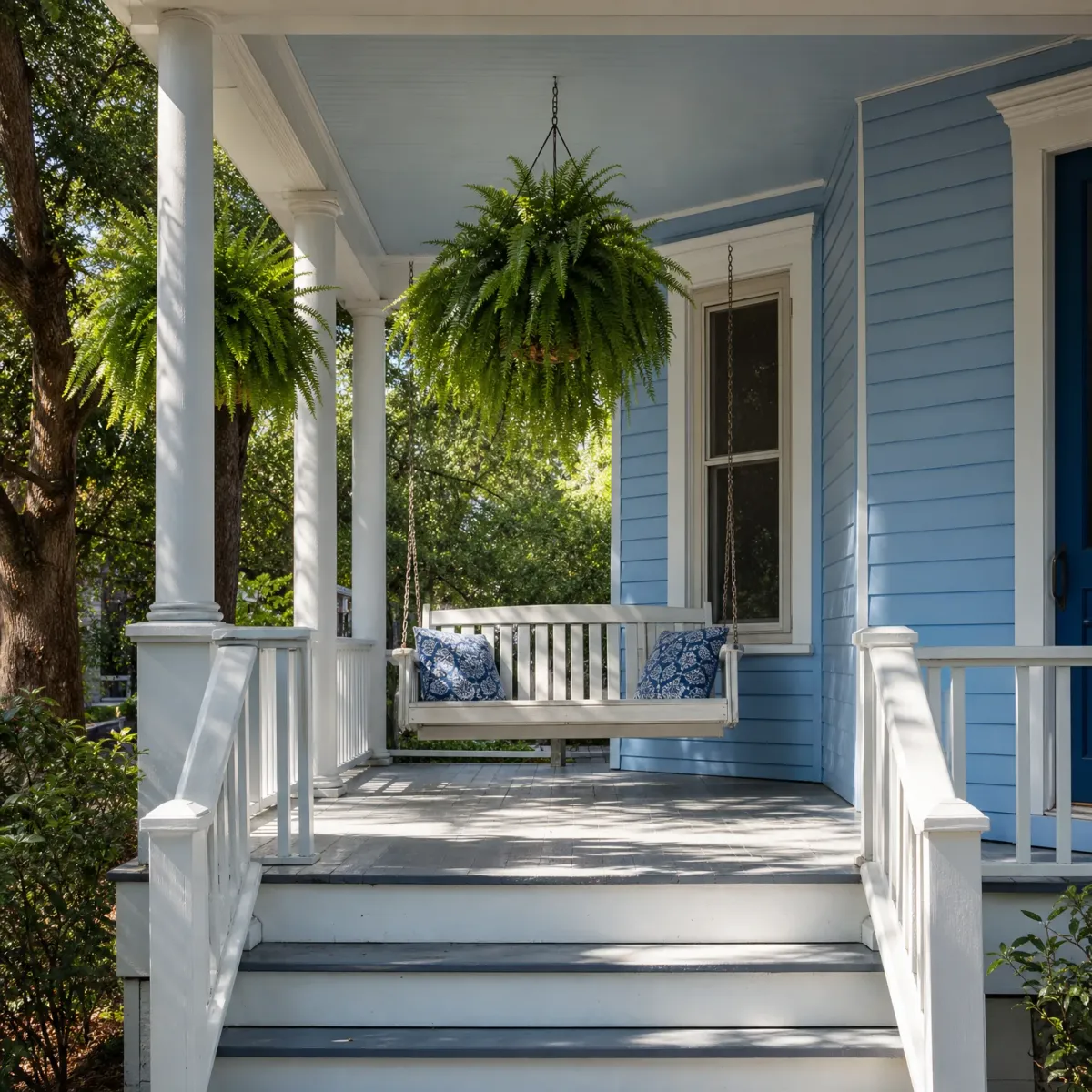
A covered front porch of a light blue clapboard house with white columns and railings, a white hanging porch swing with two blue patterned pillows, hanging ferns, and painted wooden steps leading up to the deck.

Common questions about heat pumps and furnaces

  • Will a heat pump keep my house cool enough here?

    Yes. A heat pump is a central air conditioner in the summer months, the same equipment, running the same cycle in reverse. Afternoons here hit 90°F or above about 60 days a year, and that's a load central air handles everywhere it's installed, heat pump or straight AC.

  • Can I keep my furnace and add a heat pump?

    Yes, that's a dual fuel setup, and it's a common way to add a heat pump without giving up the furnace. The heat pump handles both heating and cooling most of the year, and the furnace kicks in on the coldest nights, the roughly 15 a year here that drop to freezing or below. You'd want a contractor to check that your furnace and ductwork can pair with a heat pump before counting on this.

  • What if my house doesn't have a gas line?

    A heat pump is your best option. It runs on electricity, so it doesn't need a gas line, and it heats and cools your house with one system instead of two. Propane or oil furnaces work too, but you'd be paying to have fuel delivered and stored, where a heat pump just plugs into the power already run to your house.

  • Is a heat pump cheaper to run than a furnace in Harrison County?

    Yes, a little. A heat pump runs $1.79 per 100,000 Btu of heat here against $1.88 for a gas furnace. Winters are short enough in Harrison County, averaging a 42°F overnight low in December, January and February, that the heat pump doesn't have to work hard to stay ahead on cost.