




A illuminated white antebellum-style house with a wraparound porch, white columns, and Spanish-moss-draped oak trees, photographed at dusk.

Heat Pump Repair in Gulfport, MS

Tell us about the job

Takes about a minute. No obligation.

RepairHeat PumpHarrison County, MS
Step 1 of 2

What ZIP code is the job in?

Most heat pump calls come down to a handful of parts. The reversing valve is a big one. It's what lets the system switch between heating and cooling, and when it sticks, you get heat when you want cool air or the system just won't switch over at all. The contactor and capacitor wear out over time too, and when they go, the outdoor unit won't start even though you can hear it trying. A dirty outdoor coil makes the whole system work harder and can trip it into a fault, especially if leaves or grass clippings have packed in around the fins. Low refrigerant almost always means a leak somewhere in the lines, not normal use, so it's worth having someone check rather than just adding more. The defrost sensor and control board matter in colder weather, since a bad one will either skip defrost cycles entirely or run them too often, and either way you end up with ice building up on the outdoor coil.

5 months
November through March, your system heats
6 months
May through October, it cools
42°F
the average winter night it heats against
90°F
the average summer afternoon it cools against
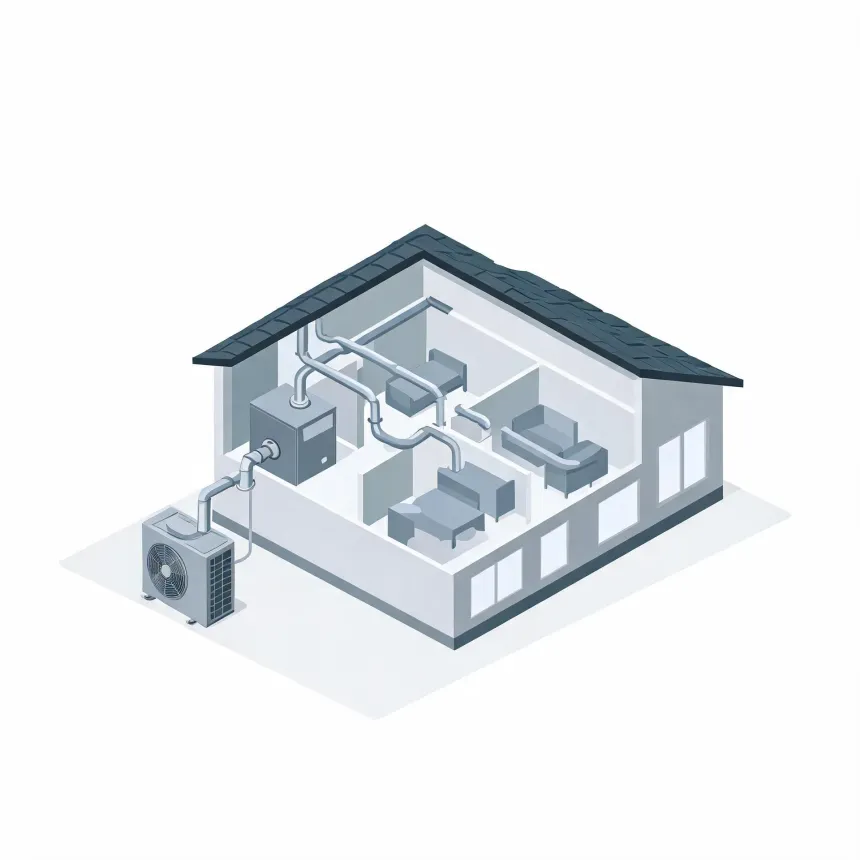
Isometric cutaway illustration of a single-story house showing an indoor air handler, branching ductwork through rooms with furniture, and an outdoor condenser unit connected by a line outside the wall.
Your system heats November through March and cools May through October.

NOAA nClimDiv, 1991–2020 normals

Half the homes in Harrison County were built in 1994 or later.

A heat pump installed with a newer house in Gulfport still has years left to run, so a repair call makes more sense than a replacement.

October and November are when a weak heat pump shows it

Cooling runs May through October
Heat runs November through March
Power costs 13.39 cents a kWh statewide

If your heat pump has been acting up and the house is newer, get the specific part looked at before anyone talks replacement. A sticking reversing valve or a worn contactor is a straightforward fix on a system that still has years ahead of it. That's true whether the unit is the one the house came with or a later swap in. Worth checking the paperwork or asking the contractor for the install date before you decide anything.

Repair it

If your system came with a newer house, it likely has plenty of life left. Repair is usually the right call.

Find a contractor
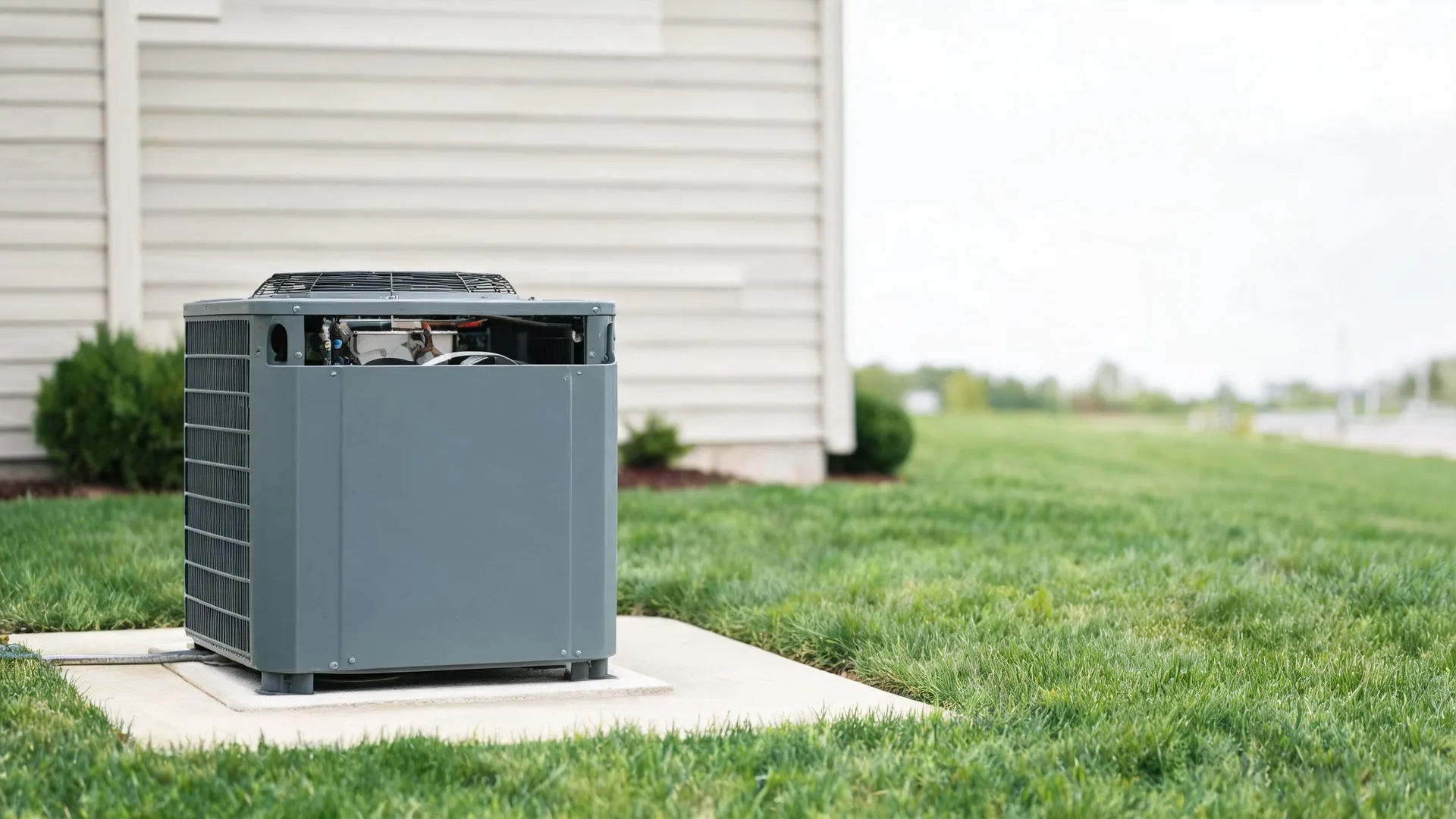
A gray air-source heat pump mounted on a concrete pad next to a house with gray vinyl siding, surrounded by gravel and flanked by green shrubs and white hydrangea flowers.

Running it doesn't buy you time

A heat pump that's struggling doesn't fail all at once. It fails a little more each hour it's asked to run. A reversing valve that's starting to stick will keep sticking, and every cycle it forces through wears the same spot further. A dirty outdoor coil makes the system pull harder to move the same amount of heat, and that extra strain lands on the compressor. Ice on the outdoor coil from a bad defrost cycle shows this clearly. Once ice builds, airflow drops. The system works harder to move less air, pulling more moisture onto a coil that's already icing over. It keeps feeding itself. None of this means shut the system off and wait. It means a problem that's simple to fix now can grow into one that takes the compressor with it if it keeps running unattended.

What you'll actually notice first

The house blows air that doesn't feel like enough, warm air in winter that never quite gets there or cool air in summer that runs and runs without catching up. The outdoor unit might ice over when it shouldn't, or the system short cycles, kicking on and off instead of running a normal stretch. Sometimes it's a smell, musty when the system first kicks on, or burnt when something electrical is working too hard. A hissing or bubbling near the lines usually means refrigerant escaping somewhere it shouldn't.
What's worth a call versus what can wait

A system still blowing air, even if it's not quite warm or cool enough, can usually wait for a scheduled visit. A system making a grinding or screeching sound, tripping a breaker, or iced over in a way that doesn't clear on its own needs a call now. Ice is a sign the system is fighting itself, pulling in less air while working harder, and that strain lands on the compressor if it keeps going.

A few things are worth checking before anyone comes out. Look at the thermostat first. Make sure it's set to the mode you want and the batteries aren't dead, since a thermostat stuck on the wrong setting looks exactly like a broken reversing valve. Check the outdoor unit for anything blocking it, leaves, grass clippings, a fallen branch, anything packed into the fins that's stopping airflow. Check your air filter too. A clogged filter starves the system of air and can cause a lot of the same symptoms as a real mechanical problem. Go to the breaker panel and make sure nothing's tripped. If a breaker keeps tripping once you reset it, stop resetting it and call someone, since that usually means a short or a failing part drawing too much current. None of this will fix a sticking valve or a worn capacitor, but it rules out the easy stuff first.

A diagnostic visit starts outside at the unit itself, checking refrigerant pressures and electrical readings before anything gets taken apart. A gauge set on the lines tells a tech whether the charge is right, low, or overfilled, and that reading points toward or away from a leak right away. From there it's a matter of checking the contactor and capacitor under load, since both can look fine sitting still and still fail the moment the compressor tries to start. The reversing valve gets tested by running the system in each mode and feeling whether it actually switches, not just whether it hums like it's trying. Wiring gets a look too, since a loose connection at the board can mimic a dead part and send someone chasing the wrong fix. By the time a tech has done this, they're not guessing at what's wrong. They're telling you which part it is and why.