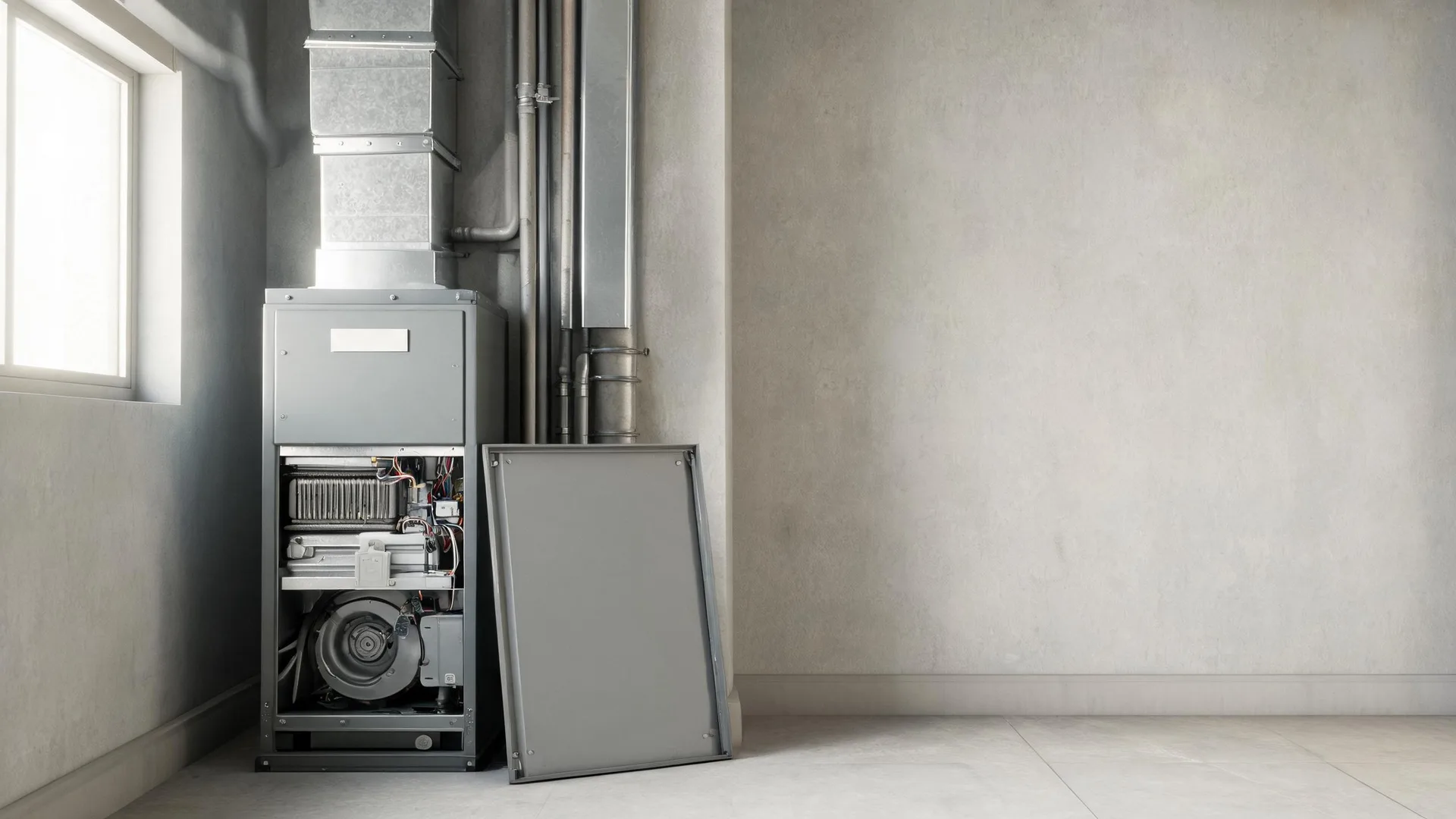
Five months of real work a year
Furnaces in Fulton run from November through March. The rest of the year this furnace sits idle. That's a shorter season than a lot of the country gets, and it adds up to less wear over the life of the machine.
Takes about a minute. No obligation.
Furnaces in Fulton run from November through March. The rest of the year this furnace sits idle. That's a shorter season than a lot of the country gets, and it adds up to less wear over the life of the machine.
A furnace that hasn't been worked hard usually still has good parts in it. When one acts up here, it's rarely because the machine is worn out from overuse. More often it's a part that failed on its own or needed maintenance it didn't get.

NOAA nClimDiv, 1991–2020 normals
Furnaces in Fulton start up again in November.
October is the month to get a weak part found before the cold puts the load on it.



Most furnace problems in Fulton come down to a single failed part, not the weather and not the age of the house. An igniter that's cracked, a flame sensor coated with residue, a blower motor that's seized up. Any of those will stop a furnace cold, and none of them has anything to do with storms or how old your system is. Electricity in Mississippi runs $39.26 per million Btu, so if the fix involves swapping a gas furnace's draft inducer or blower for an electric one, that cost is worth asking about up front. Finding which part actually failed is most of the job. Once that's known, fixing it is usually straightforward.
It has an easier job here than in most places, so your furnace is often in decent shape. Repair is usually worth it.
Find a contractor
Overnight lows here average 34°F across December, January and February. That's cold enough to put real load on a furnace, but only on the nights it runs, and only across five months. A machine that only has to work that hard for that long usually still has good parts in it when something goes wrong. If yours is acting up, that points to a part worth finding and fixing, not a system worn out from the cold.
A furnace rarely quits all at once. It short cycles, running a few minutes and shutting off before the room warms up. It blows air that isn't hot. It clicks and tries to light but won't catch, or it makes a bang when it does. Some run nonstop and still can't keep up. Each of these points to a specific part, not a general problem with the unit.
A furnace that's always run quietly and suddenly rattles, squeals or groans has a part working harder than it should, often a blower motor or a bearing going bad. A burning smell the first time it fires after months off usually clears on its own as dust burns away. A smell that lingers, or any smell like rotten eggs, means stop using it and get it looked at.
Before calling anyone, check the thermostat batteries and make sure it's set to heat, not just on. Look at the air filter next and hold it up to a light. If you can't see through it, swap it, because a clogged filter chokes airflow and can shut the whole system down as a safety measure. Check the breaker and the furnace's own power switch, the one that looks like a light switch on or near the unit itself, since that gets bumped off more than people expect. If you have a standing pilot, see if it's lit. None of this fixes a cracked igniter or a bad blower motor, but it rules out the simple stuff first, and it takes only a few minutes.
Repair makes sense on most furnaces, most of the time. A failed igniter, a bad flame sensor, a blower motor that's seized up, these are normal parts to replace on a furnace that's otherwise sound, and fixing them brings the whole system back to working order. What changes the math is the heat exchanger. That's the part that can crack with age, and once it has, the rest of the furnace doesn't matter much, because that's the part that keeps combustion gases out of the air you breathe. A technician checks it as part of diagnosing a furnace that won't heat right, not as an extra step. If the exchanger is sound, fixing whatever else failed is worth doing. If it's cracked, that's the point where repair stops being the answer regardless of what else is wrong.