





Two illuminated white colonial-style houses with wrap-around porches, flanked by oak trees draped in Spanish moss, photographed at night.

Furnace Repair in Forest, MS

Tell us about the job

Takes about a minute. No obligation.

RepairFurnace or heatingScott County, MS
Step 1 of 2

What ZIP code is the job in?

Scott County gets hit with severe weather often. The county logged 144 severe weather events between 2015 and 2024, including dozens of damaging wind storms and tornadoes. Wind drives branches and debris into an outdoor coil. Hail dents the cabinet and bends the fins. None of that always stops a furnace from running, especially one that only handles heat, but a bent flue or a cracked cabinet seam can go unnoticed for months. If the outdoor equipment took a hit this past storm season, it is worth having someone look even if the furnace still fires up fine.

5 months
November through March, your furnace is on duty
36°F
the average winter night it heats against
5 winter storms
in ten years, the nights a failure hurts most
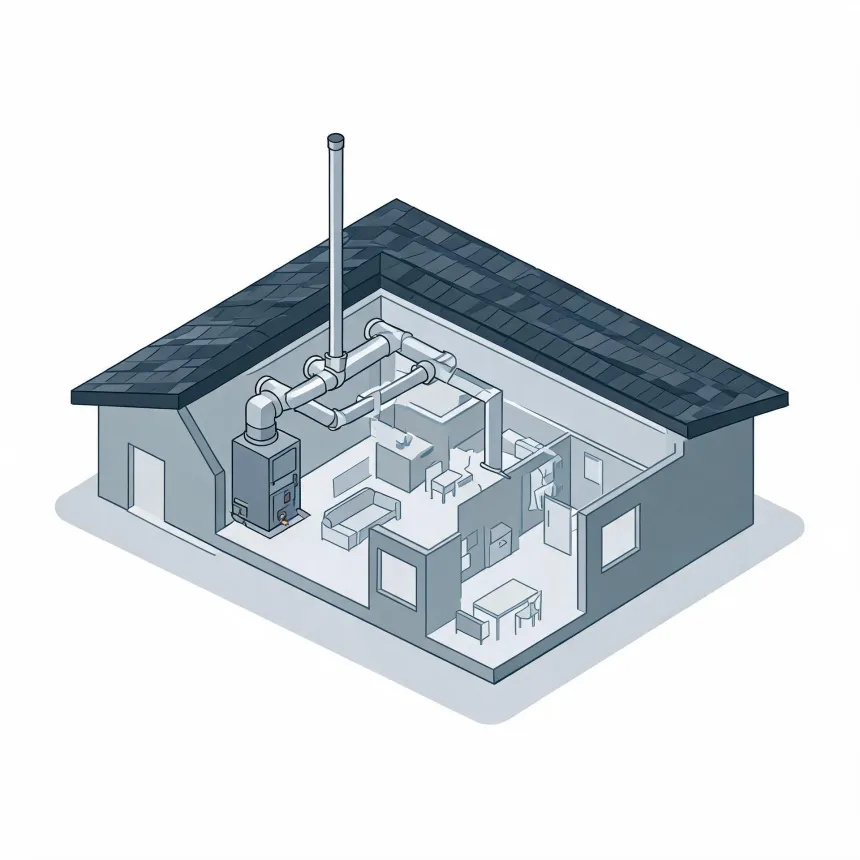
Isometric cutaway illustration of a single-story house showing interior rooms with furniture, a furnace unit with connected ductwork and a tall vertical flue pipe extending above the dark shingled roof.
Your furnace works hardest from November through February.

NOAA nClimDiv, 1991–2020 normals

Your furnace only runs about five months a year here, November through March.

A furnace with that little work behind it is usually still sound, so fixing what's wrong often makes more sense than replacing it.

October is the month to get it looked at, before the cold snap finds the weak part

Heat runs November through March
Winter nights average 36°F
Climate zone 3A
Forest furnaces, same as anywhereHalf the homes here were built in 1989 or earlier, half since

A gas furnace has a flue that runs outside, and that flue can take a hit the same way a coil or a cabinet can. If a branch came down on it or hail bent it last season, a tech should check that it still vents the way it's supposed to. This isn't about the furnace itself acting up. It's about catching the part you can't see from the thermostat before it has to run again.

Worth repairing, not replacing

A furnace that only runs five months a year doesn't wear out so much as it sits. Get the broken part fixed and it should give you the rest of its life.

Find a contractor
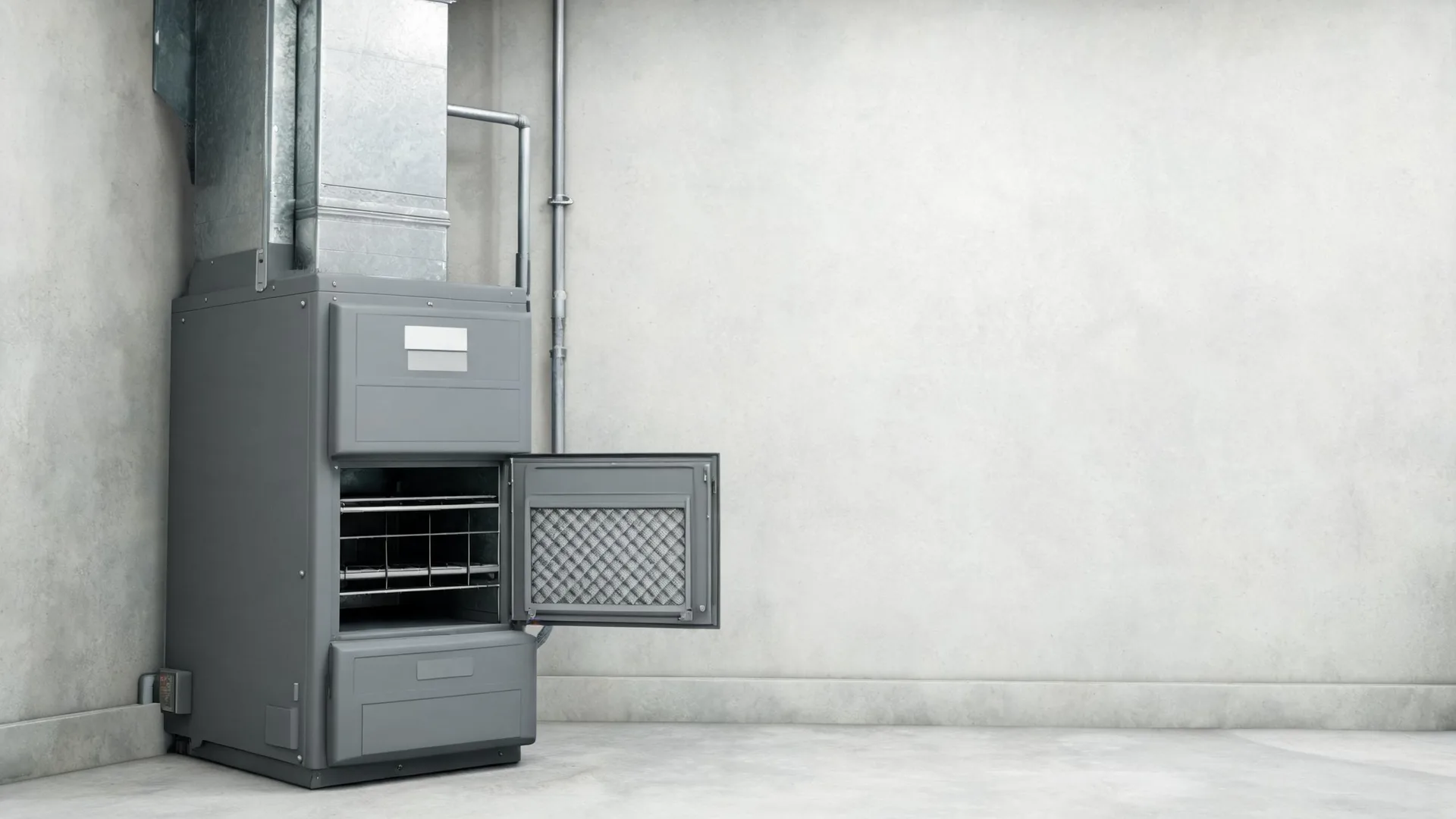
A gray gas furnace with attached ductwork and piping installed in an unfinished concrete basement.

It's the sitting that wears a furnace out, not the running

A furnace fails from sitting as often as it fails from running. A flame sensor that worked fine the last time it fired can refuse to light after a stretch of sitting idle, just from a layer of dust settling on it. Rust works on an unused unit the same as a used one. So does a mouse looking for a warm place to nest near the gas valve or inside the blower housing. The inducer motor has bearings that can seize up from months of not turning. A capacitor weakens whether it's cycling or sitting still. None of this shows up until the day you need heat and flip the thermostat, so the first cold snap of the season is when a lot of these problems introduce themselves.

What you'll actually notice first

A failing furnace rarely just quits. It runs longer before the room feels warm. Air from the vents feels cooler than it should. The burner flame looks yellow and ragged instead of a steady blue. You hear a rattle, a squeal, or a bang when it kicks on. Any one of these means something is wearing out before it leaves you with no heat at all.
Why it's worth a call before it stops

A furnace making a new noise or running long cycles is usually still a small problem. Maybe a loose blower wheel, a dirty flame sensor, a failing igniter. Left alone, that small problem tends to take out something bigger next, like a cracked heat exchanger or a burned-out control board. Catching it while it's still just a noise or a weak flame is a smaller job than catching it after it quits.

A yellow flame means the burner isn't getting the air mix it needs, and that same bad combustion leaves soot behind on the heat exchanger. Run it another month like that and the soot layer gets thicker, the exchanger runs hotter than it should, and the metal that was just stressed starts to crack. A loose blower wheel wobbling on its shaft will wear its mounting a little more every cycle until the wheel shifts far enough to hit the housing. A cracked igniter still lights the furnace some of the time, but each failed attempt is the control board cycling power into a part that's already going, and boards don't recover from that. A furnace left to run through a small problem is usually the one that fails on the coldest night of the year, not the mildest.

Most of the time a furnace fails one part at a time, not all at once. A cracked heat exchanger is the one exception worth knowing about. If a tech finds that, replacement is the right call no matter how old the furnace is, because that part isn't meant to be patched. Everything else, an igniter, a flame sensor, a blower motor, a control board, gets swapped out on its own and the furnace runs like it did before. The question isn't really the part. It's whether this is the first thing to go wrong or the third one this year. A furnace that's needed one repair in its life is a furnace worth repairing again. One that keeps finding new ways to fail is telling you something about everything else in it you haven't had looked at yet.