




Single-story brick and siding houses with covered porches behind a trimmed hedge and lawn, framed by large oak branches draped with hanging moss under an overcast sky.

Furnace Repair in Corinth, MS

Tell us about the job

Takes about a minute. No obligation.

RepairFurnace or heatingAlcorn County, MS
Step 1 of 2

What ZIP code is the job in?

Furnaces around Corinth sit unused most of the summer, then get asked to run every day once October comes. September is a good time to have one looked at before that happens. A weak igniter or a cracked heat exchanger usually shows itself in the first cold snap, not later in the winter, because that's when the part finally gets worked hard enough to fail. If your furnace gave you trouble last winter, whatever caused that is still there waiting for this October. Homes here run heat for about seven months, October through April, so a problem caught now gets fixed before it has to carry that whole stretch.

7 months
October through April, your furnace is on duty
32°F
the average winter night it heats against
9 winter storms
in ten years, the nights a failure hurts most
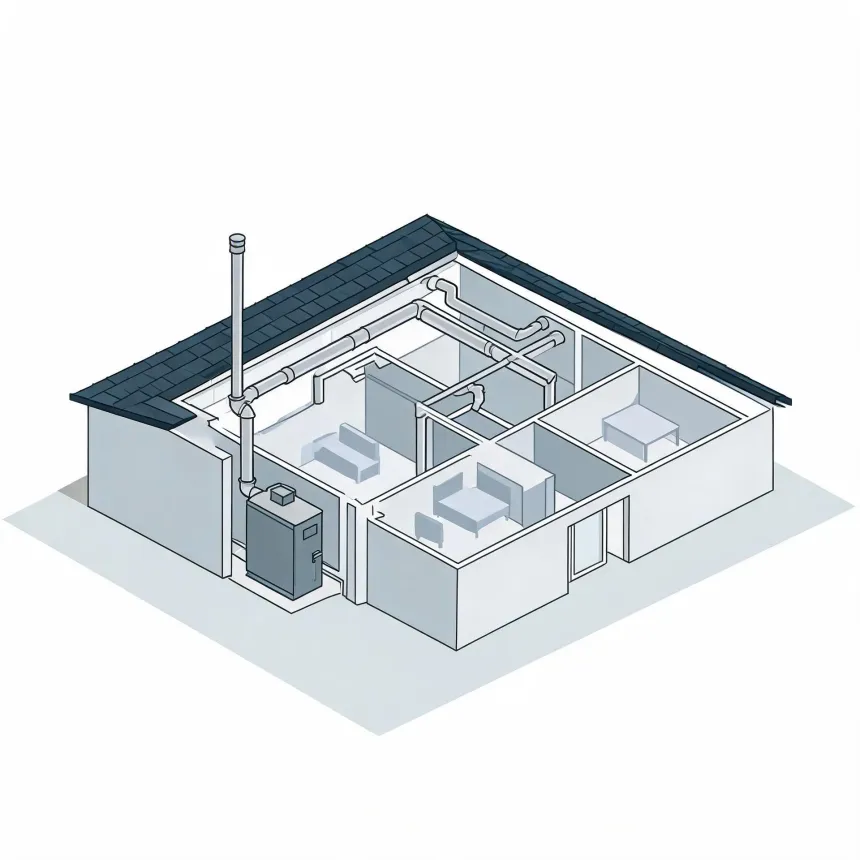
Isometric line illustration of a cutaway single-story house showing interior rooms with furniture, ceiling ductwork, and an exterior furnace unit with a tall flue pipe.
Your furnace works hardest from November through March.

NOAA nClimDiv, 1991–2020 normals

A diagnostic visit starts with questions before any panel comes off.

Telling the tech it only happens on the first cycle, or every single time, points straight at the part worth checking first.

52 severe weather events in ten years is weather Corinth is built for, not a reason for furnace trouble

52 severe weather events from 2015 to 2024
30% of homes statewide lost power a day or more in 2024
29 damaging wind events from 2015 to 2024

Half the homes in Alcorn County were built in 1981 or earlier, half in 1981 or later, so there's no single age of furnace or ductwork that's typical here. Whatever breaks is whatever part has worn out on your particular system, not something tied to how old the neighborhood is. A good share of homes here are mobile homes, and those run a furnace sized and ducted for that kind of space, which a tech accounts for once they're looking at yours. None of that points to anything unusual going on. The fix is whatever a normal inspection turns up, the same as it would be anywhere else.

Your furnace's problem has a name. Have it found.

Electricity in Mississippi ran $39.26 per million Btu last year. That cost doesn't change based on what's wrong with your furnace, and it's not a reason this county is harder on one. Whatever's causing the trouble is a specific part worth naming and checking.

Find a contractor
A man in a gray shirt and brown pants, seen from behind, carries a canvas tool bag up porch steps toward a blue front door beside a potted shrub.
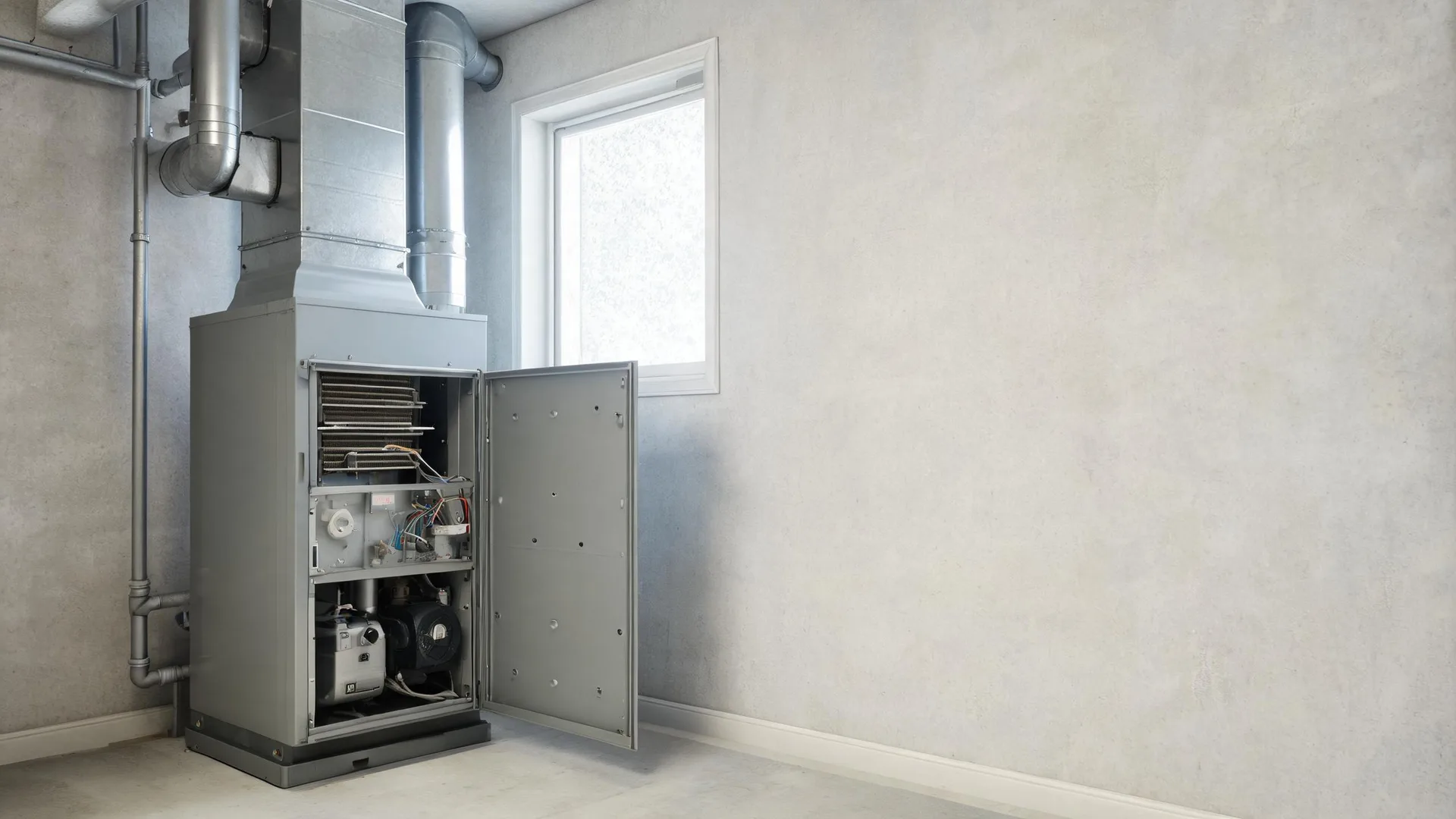
A gray gas furnace with attached ductwork and piping installed in an unfinished concrete basement.

What to check yourself before the diagnostic visit

Before anyone comes out, check the filter. Pull it and hold it up to a light. If you can't see light through it, that's likely cutting off airflow enough to make the furnace overheat and shut itself down early. Next, check the thermostat batteries and make sure it's set to heat, not just on. Look at the switch on the furnace itself, the one that looks like a light switch on the side of the unit, and make sure it hasn't been bumped off. Check the breaker it's on too. If you have a standing pilot, see if it's lit. If you smell gas at any point, stop checking and get everyone out, that's not a wait-and-see situation. None of this fixes a cracked heat exchanger or a bad igniter, but it rules out the simple stuff before a tech has to.

A cracked heat exchanger gets worse every time it fires

The metal cracks when it heats up and shrinks back when it cools. Each cycle flexes that crack a little more. Left alone, a hairline split opens wider until it's letting combustion gas into the air the blower moves through the house.
A failing limit switch can take the blower motor with it

The limit switch is what tells the furnace to shut off if it's running too hot. If it's stuck or going bad, the furnace keeps firing past the point it should have stopped. That heat has to go somewhere, and it can warp the heat exchanger or burn out the blower motor that was never built to run that hot.

Short cycling is the one most people notice first. The furnace fires, runs for a couple minutes, shuts off, then starts again a few minutes later, and the house never quite gets warm. That usually points to a flame sensor that's coated and no longer reading the flame, or a filter so clogged the furnace overheats and trips off early. A burner flame that's yellow or flickering instead of steady blue means it's not burning clean, and that's worth a call on its own. Rooms heating unevenly, a thermostat that seems to be guessing, or a burning smell that doesn't fade after the first few minutes of a cycle are all the furnace telling you something specific, not just getting old.

Some furnace problems are worth fixing no matter what, because the part has a name and a price and that's the end of it. The harder call is a furnace that's older and has more than one thing going wrong at once, where fixing the problem in front of you just means the next part fails a month later. A tech can tell you which one you're looking at. What matters most is the heat exchanger. Everything else on a furnace gets replaced on its own without touching the rest of the system. A cracked heat exchanger means replacing the whole furnace, because that part isn't sold on its own and isn't meant to be. If that's not what's wrong with yours, you're almost always looking at a repair, not a decision.