


Can a heat pump keep up on the coldest nights here
Your winters are mild, but they're long. Heat runs seven months a year in Alcorn County, October through April, longer than the five months you run air conditioning. That makes the heating side of this decision the bigger one, not the smaller one.
The overnight low here averages 32°F in December, January and February, and it drops to freezing or below on about 75 nights a year. Those are the nights that matter, because a standard heat pump's output falls below its rating once it's under 40°F outside, and it often needs backup heat once it's under about 35°F. Every one of those 75 nights falls below both marks. That's not a rare edge case here, it's a big share of a typical winter.
The number that should calm you down is this: fewer than one night a year reaches 0°F. The cold here is the kind a heat pump handles with some loss of output, not the kind that defeats it. Mississippi field testing on cold-climate heat pump prototypes found backup heat covered only a small share of total heat between 0°F and 35°F, and running on backup alone was rare even above 0°F. Alcorn County barely sees 0°F at all, so that backup heat, when a heat pump has it, isn't carrying much of the winter here.
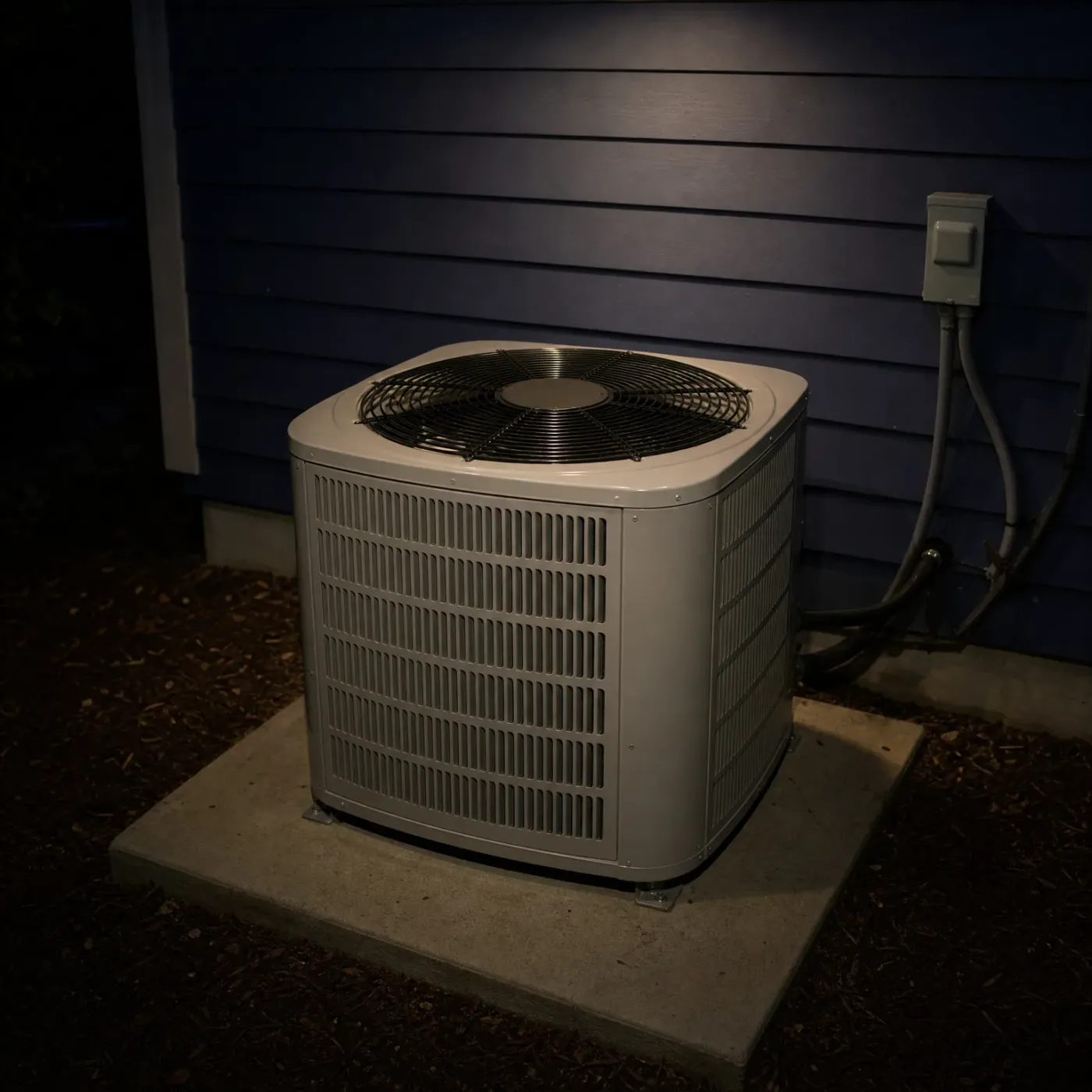
If you're choosing a heat pump, a model that holds its capacity at low temperatures matters more here than one bought on price alone. The ENERGY STAR Cold Climate mark requires a heat pump to keep at least 70 percent of its 47°F heating capacity at 5°F and still produce 1.75 units of heat per unit of electricity at that temperature. You won't see 5°F in Alcorn County. A heat pump built to clear that bar will clear your winter easily.