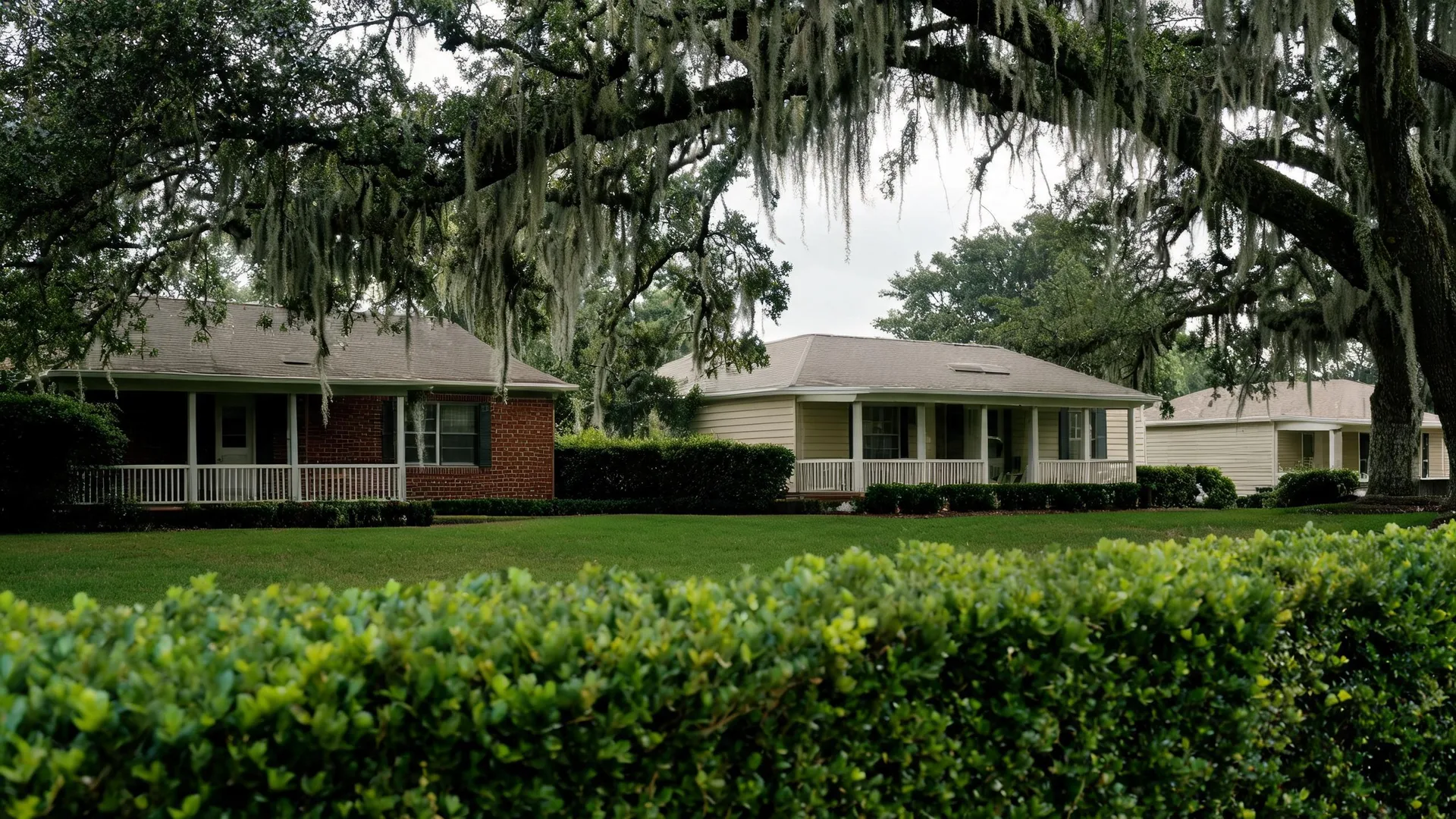







Single-story houses, one brick and one with light siding, both with covered porches, behind a mowed lawn and trimmed hedge, under large moss-draped oak branches.

Furnace Installation in Corinth, MS

Tell us about the job

Takes about a minute. No obligation.

New system or replacementFurnace or heatingAlcorn County, MS
Step 1 of 2

What ZIP code is the job in?

Most homes in Alcorn County heat with electricity, 53.7% of them. Utility gas is next at 35.7%, with bottled or LP gas making up most of the rest. If your house already runs on electric heat, an electric furnace or heat pump matching what's there is the straightforward swap. If gas line runs to your home, a gas furnace stays an option worth asking about. Either way, the installer will size the furnace to your house rather than just matching the old one, since a unit that's too big or too small for the space causes its own problems.

7 months
October through April, your furnace is on duty
32°F
the average winter night it heats against
80% AFUE
the federal minimum any new unit must meet
Isometric cutaway illustration of a small house showing a furnace unit connected to ductwork running through the interior and attic, with a chimney on the shingled roof and simple furniture in the rooms.
Your furnace works hardest from November through March.

NOAA nClimDiv, 1991–2020 normals

The AFUE rating tells you how much of the fuel a gas furnace burns actually turns into heat for the house.

A higher rating means less heat going out the flue, which matters most once the thermostat is running for months at a time.

Winters here are mild enough that a furnace never has to work its hardest

Heat runs October through April
Winter nights average 32°F
9 winter storms from 2015 to 2024
A furnace sized for this house, not the last oneHalf the homes in Alcorn County were built in 1981 or earlier, half later. Either way, sizing comes from the house, not the calendar.

Corinth falls in climate zone 3A, warm with a short mild winter. That doesn't change the efficiency floor a new furnace has to meet. Any non-weatherized gas furnace built from 2015 on has to reach at least 80.0 percent AFUE, and that applies here the same as it does anywhere else in the country. That minimum is set to climb to 95.0 percent for furnaces built a few years from now, so a furnace bought today still only has to clear the lower bar. Ask the installer what AFUE the unit they're quoting actually hits.

Get it in before October, not after

Heat here starts in October and runs through April, about seven months straight. Once it's cold enough to need the furnace, you're using whatever got installed. Doing the swap in September means the new furnace gets set up and checked over before it has to run every day.

Find a contractor
A man in a cap, gray T-shirt and tan work pants climbs porch steps toward a blue front door, carrying a canvas tool bag filled with tools, beside a blue planter with a shrub.
A gray residential gas furnace installed in an unfinished basement, connected to sheet-metal ductwork and PVC pipes.

What wears is the starting and stopping, not the running

A furnace spends most of its life sitting still, waiting on the thermostat to call for heat. The parts that wear are the ones that move every time it cycles on. The igniter has to spark or glow hot each start. The inducer motor has to spin up to clear the flue before the burner can fire. The blower has to push air the whole time it runs. A furnace sized right for the house runs long enough to satisfy the thermostat, then shuts off clean. That steady pattern is easy on all of it. What shortens a furnace's life isn't how many months it runs each year. It's how many times it has to start and stop doing work it wasn't built for, whether that's short cycling from being oversized or straining to keep up from being undersized.

The load calculation, not the square footage

Sizing a furnace right means working out how much heat the house actually loses, through the walls, the windows, the ceiling, the ductwork. That number comes from a room by room load calculation, not a chart that just multiplies square footage. Houses the same size can still need different size furnaces depending on insulation, window count and how the duct runs are laid out.
Oversized causes its own problems

A furnace that's too big heats the house fast, shuts off, then starts again a few minutes later. That short cycling wears the ignition system and the blower motor harder than steady runtime would, and it leaves rooms far from the furnace never quite catching up to temperature. Bigger isn't a safety margin, it's a different set of problems than running one sized too small.

Ask what the installer is actually quoting, not just the price at the bottom. Furnaces with the same AFUE can still be built differently, a single stage burner that runs full blast every time it fires versus a staged or modulating burner that can run low and steady on a mild day. Ask what stage of heat it runs most of the time, since that affects comfort more than the rating on the label. Ask what the blower motor is, a fixed speed motor or a variable speed one, since the variable kind adjusts airflow to match the heat stage instead of just running at one speed. Ask what the warranty actually covers, parts or parts and labor, since a furnace that fails under a parts only warranty still costs a visit to fix. And ask who is doing the install, since a furnace is only as good as the person setting the gas pressure and sealing the duct connections to it.

Install day starts before the old furnace comes out. The gas gets shut off, the power gets locked out, and the old unit gets disconnected from the ducts and the flue. Once it's out, the installer can actually see the ductwork and the gas line it's connecting to, which matters more than the specs on the new furnace. The new unit gets set in place, connected to the supply and return ducts, hooked to the gas line and vent, and wired in. Gas pressure gets set and checked with a manometer, not by ear. The vent gets checked for the right pitch and clearance so exhaust actually leaves the house instead of backing up. Then it gets fired up and run through a full cycle while the installer checks temperature rise, airflow at the registers, and that the flame looks right, steady and blue, not yellow or lifting off the burner. A furnace that passes all of that on day one tends to keep running the same way for years.