Single-story houses with covered porches, one brick and one light-colored siding, behind a trimmed hedge and lawn, beneath large oak trees draped with Spanish moss.

Heat Pump Repair in Corinth, MS

Tell us about the job

Takes about a minute. No obligation.

RepairHeat PumpAlcorn County, MS
Step 1 of 2

What ZIP code is the job in?

October is when weak units show up

Heat pumps here switch over to heat in October, and that first real cold stretch is when a part that was already marginal gives out. A unit that ran fine all summer can still have a problem on the heating side, since the reversing valve and other parts only get used once the switch happens.


September is the time to catch it

Once the cold weeks hit in October, a weak part fails under load and you are left with no heat. Having the system checked in September, before that switch, turns the same problem into a repair instead of an emergency call.

7 months
October through April, your system heats
5 months
May through September, it cools
32°F
the average winter night it heats against
89°F
the average summer afternoon it cools against
Isometric cutaway illustration of a single-story house showing interior rooms, ceiling ductwork, an indoor air handler, and an outdoor condenser unit connected by lines on the ground.
Your system heats October through April and cools May through September.

NOAA nClimDiv, 1991–2020 normals

A reversing valve that sticks is the most common reason a heat pump quits doing its job in one direction.

If a unit blows cold air when it should be heating, that valve is the first thing worth checking.

Half the homes here were built in 1981 or earlierThat's not what wears out a heat pump. The usual parts fail the usual way, no matter the year on the house.

Corinth gets its share of rough weather, 52 severe weather events over the last ten years, counting wind, hail, tornadoes and winter storms. None of that points to anything unusual going on inside your heat pump. Damaging wind and a stuck reversing valve are two different problems, and a storm years ago isn't why your unit is blowing cold air now. What's more likely is a part that wore out the normal way, through ordinary use and the switch from cooling to heating each fall. A tech still needs to look at the unit itself to find out which part and why, but there's no reason to assume the cause is anything local.

Get it looked at early

Problems tend to show up in the first weeks of the season, when the load hits a part that was already weak.

Find a contractor
A white mini-split heat pump outdoor unit mounted on a concrete pad beside a gray-sided house, surrounded by gravel and green shrubs.

What to check yourself first

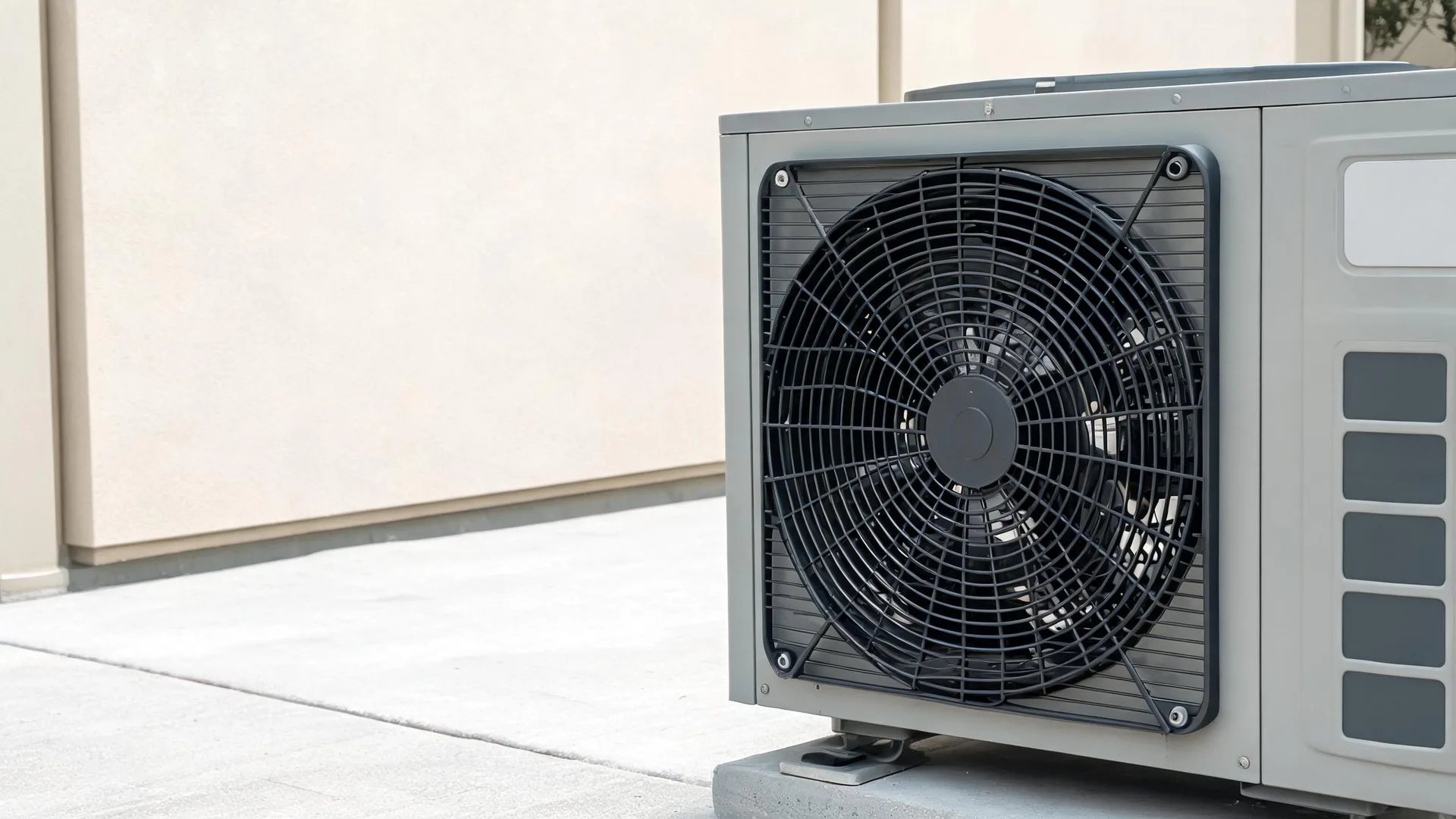
Before you call anyone, there are a few things worth checking yourself. Go outside and look at the outdoor unit. If the coil is packed with leaves, grass clippings or ice, airflow is blocked and the system can't do its job either direction. Clear what you can reach by hand. Next, check the thermostat is actually set to heat and the temperature is set above room temperature, since a setting bumped by accident looks exactly like a broken unit. Inside, check the air filter. A filter clogged with dust chokes airflow across the indoor coil, and that alone can cause weak heat or a unit that runs without warming the house. Check your breaker panel too. A heat pump that won't start at all sometimes just needs a tripped breaker reset, though if it trips again right after, stop and leave it off. If you see ice building up on the outdoor unit and it isn't going through a defrost cycle to clear it, that's worth noting for whoever comes out to look. None of this tells you which part failed inside the system, but it rules out the simple causes before you pay someone to find the real one.

A weak compressor gets worse under load

A compressor that's struggling still gets asked to run every time the thermostat calls for heat. Running it constantly instead of cycling off to rest adds more heat and strain to a part that's already failing. What started as a slow refrigerant leak or a worn valve can end with a compressor that locks up and won't restart at all.

Low refrigerant damages what the leak didn't

Refrigerant carries oil through the system to keep the compressor lubricated. A unit running low on charge pushes that oil through wrong and runs hotter than it should. Left running that way, the strain lands on the compressor itself, so a leak that was simple to fix becomes a compressor that has to be replaced.

A tech can fix almost anything on a heat pump, so the real question is whether it's worth it. Age matters less than which part failed. A new capacitor or a replaced defrost board is cheap next to the cost of the unit and brings it back to full working order. A failing compressor is a different matter, since that's the most expensive part in the system, and a unit that needs one often needs a lot of other things soon after. The other thing worth weighing is how many repairs this same unit has already needed. One bad part is a repair. A unit that's had the capacitor replaced last year and the control board the year before is telling you something about what's coming next.