






A white Southern-style house with a wraparound porch photographed at night, surrounded by Spanish moss-draped oak trees lit by landscape lights.

Furnace Repair in Brookhaven, MS

Tell us about the job

Takes about a minute. No obligation.

RepairFurnace or heatingLincoln County, MS
Step 1 of 2

What ZIP code is the job in?

Before you call anyone, check the thermostat is set to heat and the setting is above room temperature. Go to the furnace and make sure the switch on or near it, the one that looks like a light switch, is flipped on. That switch cuts power to the whole unit and it gets bumped more often than people think. Pull the filter and hold it up to a light. If you can't see light through it, swap it, because a clogged filter can starve the furnace of airflow and trip it off on a safety switch. Check the breaker box too. A furnace that was running fine and then went dead cold sometimes just needs a reset flipped back.

5 months
November through March, your furnace is on duty
39°F
the average winter night it heats against
3 winter storms
in ten years, the nights a failure hurts most
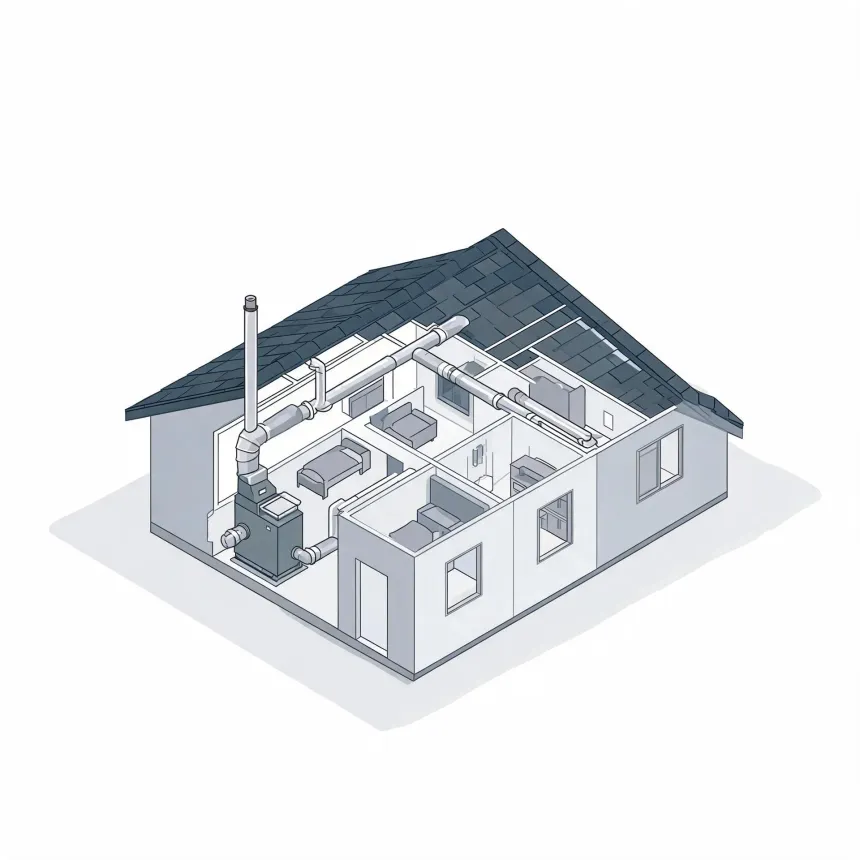
Isometric cutaway illustration of a single-story house showing interior rooms with furniture, ceiling ductwork, a furnace unit with a tall flue pipe, and a dark shingled roof.
Your furnace works hardest from November through February.

NOAA nClimDiv, 1991–2020 normals

Furnaces here start running in November.

Get a furnace checked in October, because a weak part usually fails in the first cold snap, not before.

Five months of heat a year is not much to ask of a furnace

Heat runs November through March
Winter nights average 39°F
Climate zone 3A
A furnace in Lincoln County just needs to work when it's neededHalf the homes here were built in 1984 or earlier, so an older furnace is nothing unusual.

Lincoln County sees serious weather. 131 severe weather events hit the county between 2015 and 2024, counting wind, hail, and tornadoes touching down. None of that is about your furnace directly, but the outdoor parts of a heating and cooling system sit through all of it, and hail or debris can mark up a cabinet or bend a fin without stopping it from running that day. Statewide, close to a third of Mississippi households lost power for a day or more last year. A furnace that loses power and comes back on isn't necessarily fine just because the flame lit again.

Fix it. This furnace hasn't had to work hard.

Five months a year, with most nights staying above freezing, is a light load on a furnace. That usually means less wear on the parts inside, not just a lucky age. A repair is worth putting money into on a machine that hasn't had to work hard.

Find a contractor
A man in a cap, gray T-shirt and tan work pants climbs porch steps toward a blue front door, carrying a canvas tool bag in his right hand, with a potted shrub in a blue planter beside the door.
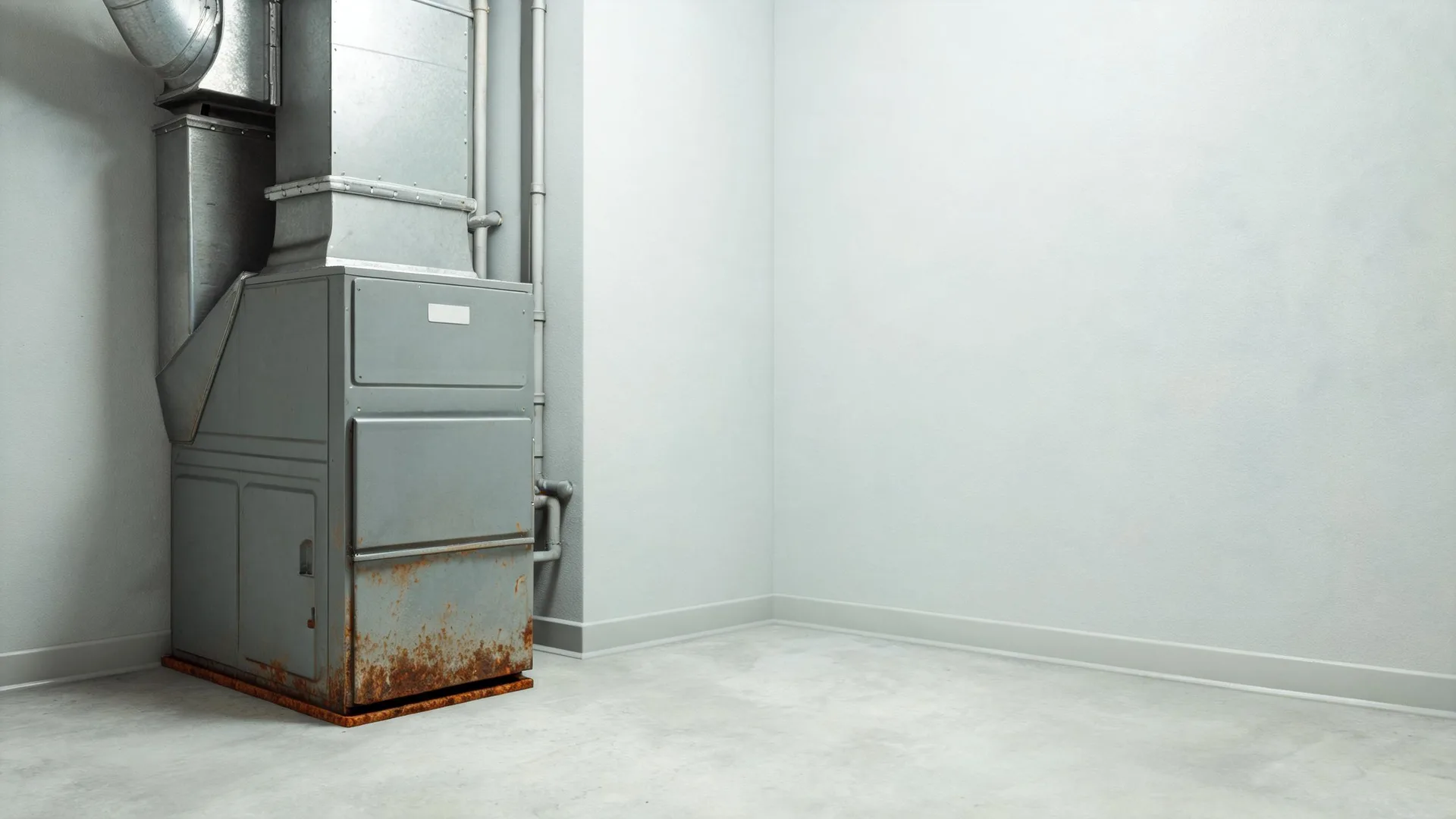
A gray high-efficiency gas furnace installed in an unfinished basement, surrounded by gas lines, a condensate drain, and sheet-metal ductwork.

Running through a problem doesn't fix it

A furnace that's struggling doesn't fix itself by staying on. A cracked heat exchanger gets worse with every cycle, because the metal keeps flexing as it heats and cools. A failing igniter either stops lighting the burners at all or takes more tries each time, until it gives out. A motor running on a worn bearing will grind longer and hotter the more hours you put on it, and heat is what kills a motor. Letting any of these ride because the furnace is still technically working usually means a bigger repair later, or a part that fails for good on the coldest night instead of giving you warning on a mild one.

What you'll notice first

Short cycling is usually the earliest sign, the furnace turns on, runs a few minutes, and shuts off before the house warms up. You might also notice the air coming out of the vents feels cooler than it used to, or that one room never gets warm while others do. A burner that's yellow instead of blue, or a furnace that smells like something burning dry dust past the first few minutes, is also worth paying attention to.
What it means for the repair call

Tell the tech exactly what you noticed and when it started, not just that something seems off. Short cycling points toward airflow or a sensor issue, a yellow flame points toward a combustion problem, and a burning smell that doesn't clear up points toward something inside the cabinet overheating. The more specific you can be about what you saw or heard, the faster the tech can narrow down which part is actually failing.

Furnaces fail in a handful of predictable ways. The igniter wears out from being heated and cooled every cycle, until one day it doesn't glow hot enough to light the gas. A flame sensor coated in a thin layer of residue stops sensing the flame and shuts the burner down even though it lit fine. The draft inducer motor, the small one that pulls exhaust out before the burners fire, can fail from normal wear or seize up, and the furnace won't start at all without it. Flame sensors just need cleaning. Igniters and motors need replacing, since neither can be repaired once they go. A dirty flame sensor can look exactly like a dead igniter from the thermostat, so the symptom alone doesn't tell you which part it is.

Most furnace repairs are worth doing. A new igniter, a cleaned flame sensor, a replaced motor, these keep a furnace that's otherwise sound running the way it should. What changes the math is the heat exchanger. That's the part that separates the flame from the air blowing through your house. Once it's cracked, there's no patching it, because the crack only opens wider as the metal heats and cools. A tech can tell you flat out if that's what's wrong. The pattern of repairs matters too. A furnace that's needed several different repairs over a short stretch of time is telling you something a single repair bill won't fix. One repair on a furnace that's run fine for years is just maintenance. Repeated repairs on the same unit, for different reasons, are a different conversation.