White plantation-style houses with wraparound porches lit at night, surrounded by Spanish moss-draped live oak trees.

Furnace Repair in Booneville, MS

Tell us about the job

Takes about a minute. No obligation.

RepairFurnace or heatingPrentiss County, MS
Step 1 of 2

What ZIP code is the job in?

September is the month to catch problems early

Furnaces in Prentiss County sit unused most of the year and start back up in October. A part that was already weak, a cracked igniter or a failing sensor, tends to show itself the first time the system has to run.

A furnace acting up now is already behind

Once heat season starts here it runs through April, seven months straight. A furnace having trouble in the first weeks of that run is likely to keep having trouble, so it is worth having someone look at it rather than waiting to see if it clears up.

7 months
October through April, your furnace is on duty
33°F
the average winter night it heats against
7 winter storms
in ten years, the nights a failure hurts most
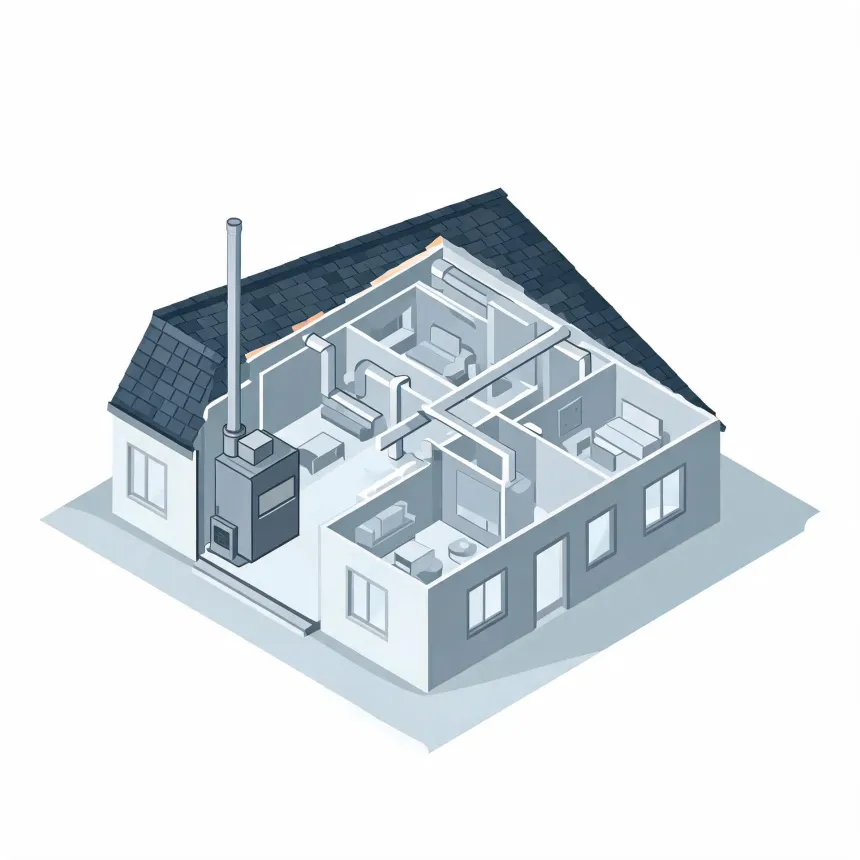
Isometric cutaway illustration of a single-story house showing interior rooms, ductwork, and a dark furnace unit with a tall flue pipe rising past the shingled roof.
Your furnace works hardest from November through March.

NOAA nClimDiv, 1991–2020 normals

A furnace that short cycles, turning on and off every few minutes, isn't finishing a heating cycle before it quits.

Short cycling like that usually points to a dirty flame sensor or a cracked heat exchanger, and either one calls for a closer look before the next cold snap.

Booneville winters are ordinary. Furnace trouble here is usually ordinary too

Heat runs October through April
Winter nights average 33°F
Climate zone 3A

Start with the thermostat. Check that it is set to heat, not cool, and that the set point is actually above room temperature. A battery running low can blank the display or stop it from calling for heat at all, so swap the batteries if it looks dim or unresponsive. Next look at the air filter. One that is clogged chokes off airflow, and a lot of furnaces will shut themselves down rather than run with the heat exchanger overheating behind a blocked filter. If the filter is clean and the thermostat is calling for heat but the furnace still won't fire, check the breaker it runs on and make sure the furnace's own power switch, usually a light switch near the unit, hasn't been bumped off. Those few checks take a couple of minutes and rule out the things that have nothing to do with the furnace itself.

Nothing about your house is working against your furnace

Half the homes in Prentiss County were built in 1981 or earlier, and mobile homes make up a share of the housing here too. Neither one makes a furnace more likely to fail. If yours is acting up, the cause is almost always a part worth repairing, not something about the house it's in.

Find a contractor
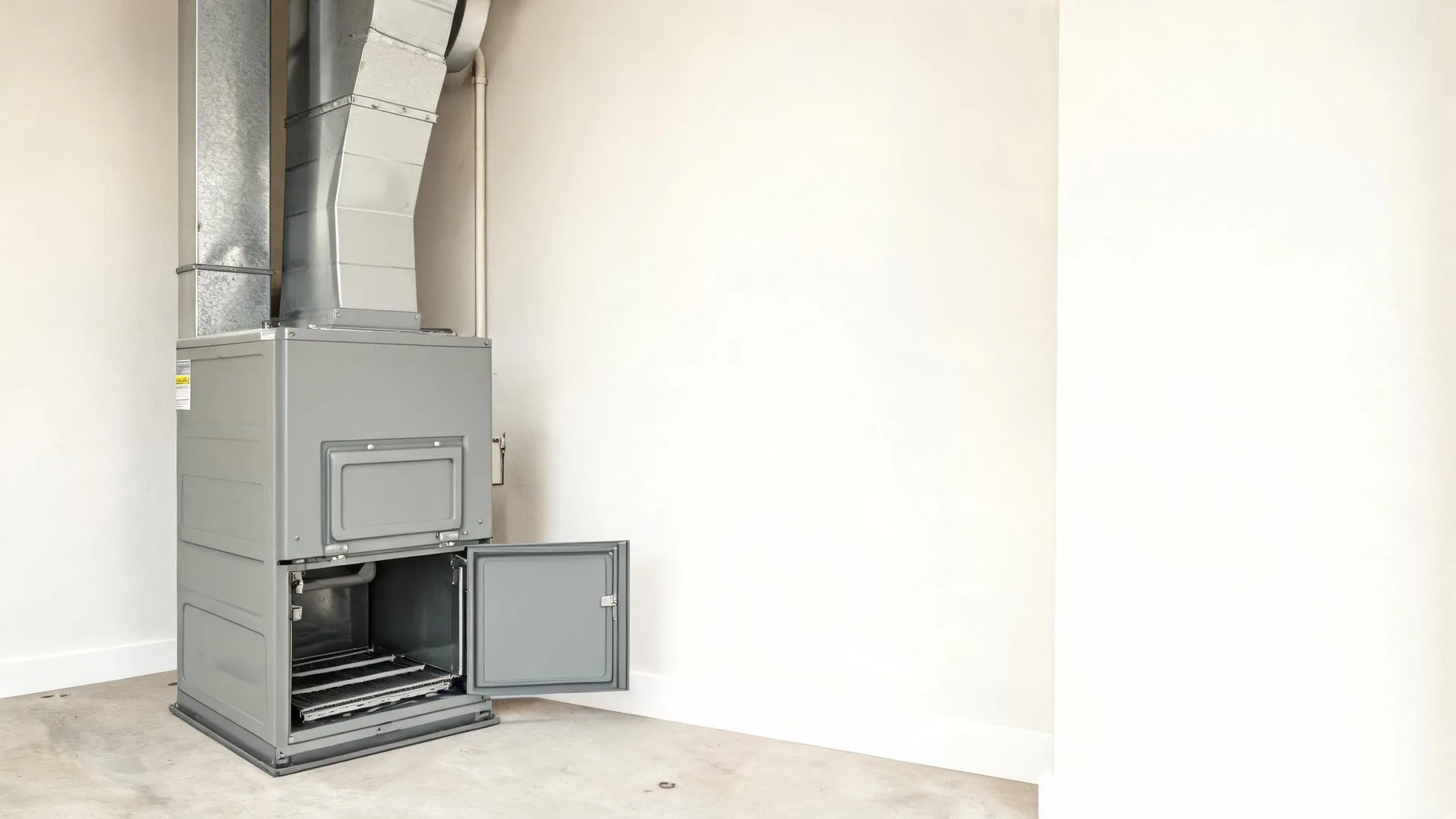
A gas furnace with attached ductwork, gas piping, and condensate lines installed in a concrete-block basement.

A mild climate on a furnace, seven months a year

Seven months of work, October through April, then it shuts down until next fall. That is the whole job. A furnace here isn't fighting single-digit nights for weeks on end, it's holding a house against overnight lows that average 33 in the dead of winter. That is real work but it is not hard work. When a furnace gives you trouble after a life like that, the cause is almost always a specific part wearing out, not the system being worn down by the climate it lives in.

Most failures are one part, not the whole system

An igniter wears out from repeated heating and cooling until it cracks. A flame sensor coats with a film carbon buildup until it can't tell the burner is lit anymore. A blower motor's bearings wear until it runs loud or seizes. Each of these is its own part failing on its own schedule, and fixing the one that failed brings the furnace back.

The symptom usually points at the part

A furnace that won't fire at all is often the igniter or a failed sensor. One that fires then shuts off within a minute is often a flame sensor reading dirty and cutting gas to protect itself. Banging or scraping when it starts is usually the blower wheel or motor mount. Knowing which part is acting up is most of the diagnosis before anyone opens the cabinet.

A furnace that's struggling doesn't fail quietly. A cracked heat exchanger that keeps running pushes exhaust gas into the airflow instead of venting it outside. A flame sensor too coated to read the pilot properly will let the burner fire and die over and over, each cycle adding more carbon to the coating already there. A blower motor running on worn bearings keeps drawing the same load through a harder path, so what starts as noise turns into a seized motor. The furnace won't protect itself from this kind of wear. Some of it, like a failing igniter, it will shut down for. Some of it, it won't, and that's the part worth having someone check instead of waiting out.

Furnaces don't really have a middle ground between repair and replacement, most of the time it's clear once you know what's wrong. A cracked igniter or a dirty flame sensor is a part swap, not a reason to think about the whole unit. What changes the conversation is a cracked heat exchanger, since that's not a part you replace on its own, it's tied to the cabinet around it, and at that point age and condition of the rest of the furnace start to matter. A blower motor or control board failure sits in between. Either can usually be replaced on its own, but if the furnace is old enough that one worn part means others are close behind, that's worth knowing before you spend money on the first one. The honest way to think about it is what failed and what it's connected to, not how the furnace sounds or how long it's been running.