

Can a heat pump keep up here
Your heat runs about seven months a year here, October through April, longer than the five months your AC runs. That is the season that matters most for this choice. Overnight lows average 33°F across December, January and February, and they fall to freezing or below on about 70 nights a year. Almost none of those nights reach 0°F.
A standard heat pump starts losing ground before it gets that cold. Below 40°F it puts out less heat than its rating. Below about 35°F it often needs backup heat to make up the difference. Your average winter low, 33°F, sits below both marks, and so does every one of those 70 freezing nights. That does not mean the house goes cold. It means a standard heat pump is working below its rated output on most of the coldest nights of your winter, and leaning on backup heat to cover the rest.
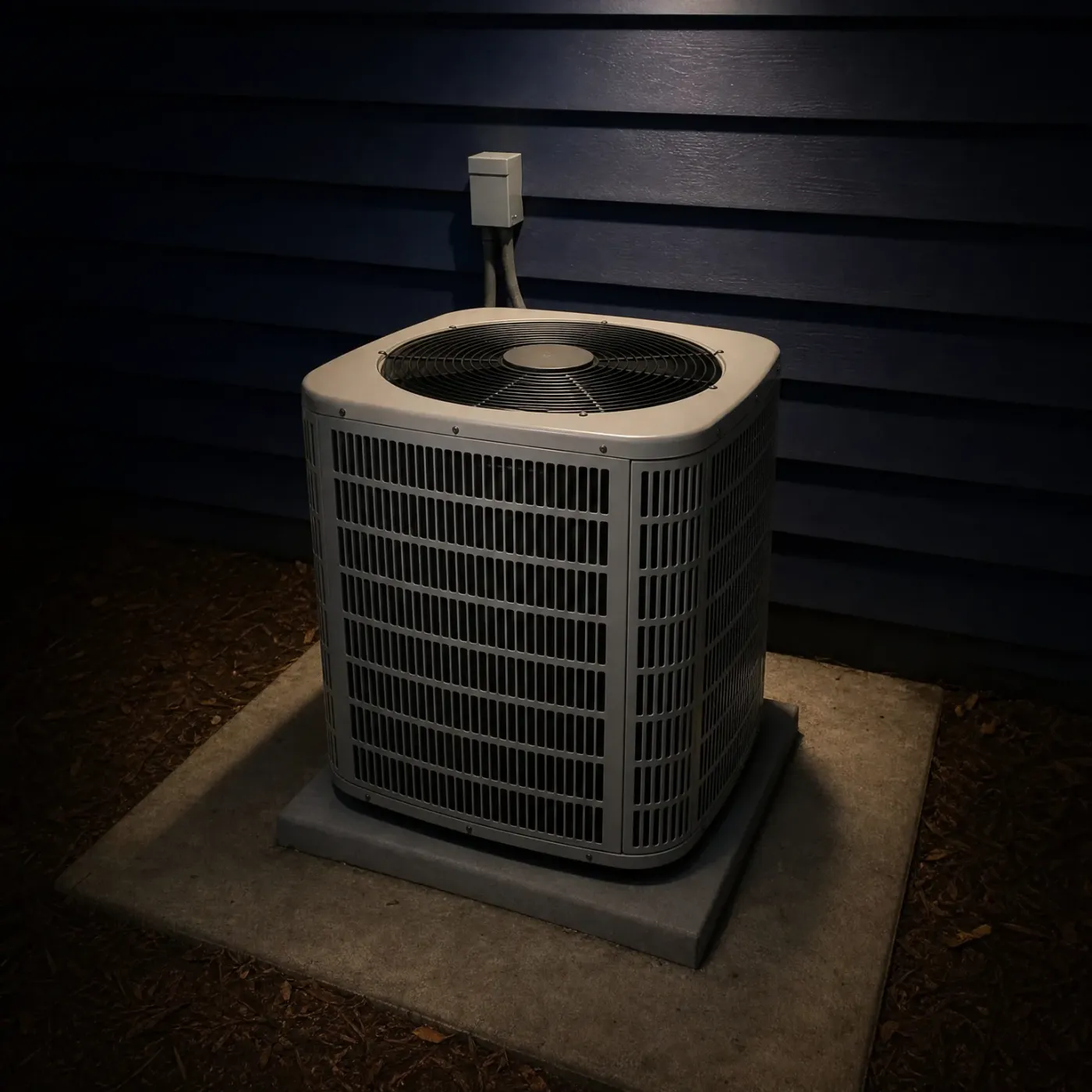
A cold climate heat pump is built for this. To earn that rating a unit has to keep at least 70 percent of its 47°F heating capacity at 5°F, tested by an outside lab. Prentiss County rarely sees anything near 5°F, so a cold climate model has real room to spare on a night here at 33°F. Field tests of these units in occupied homes back that up. Even between 0°F and 35°F, backup heat only covered a small share of the load, and the units running on backup alone was rare above 0°F. If you are buying a heat pump for this county, that is the version built for your coldest nights, not the standard one.