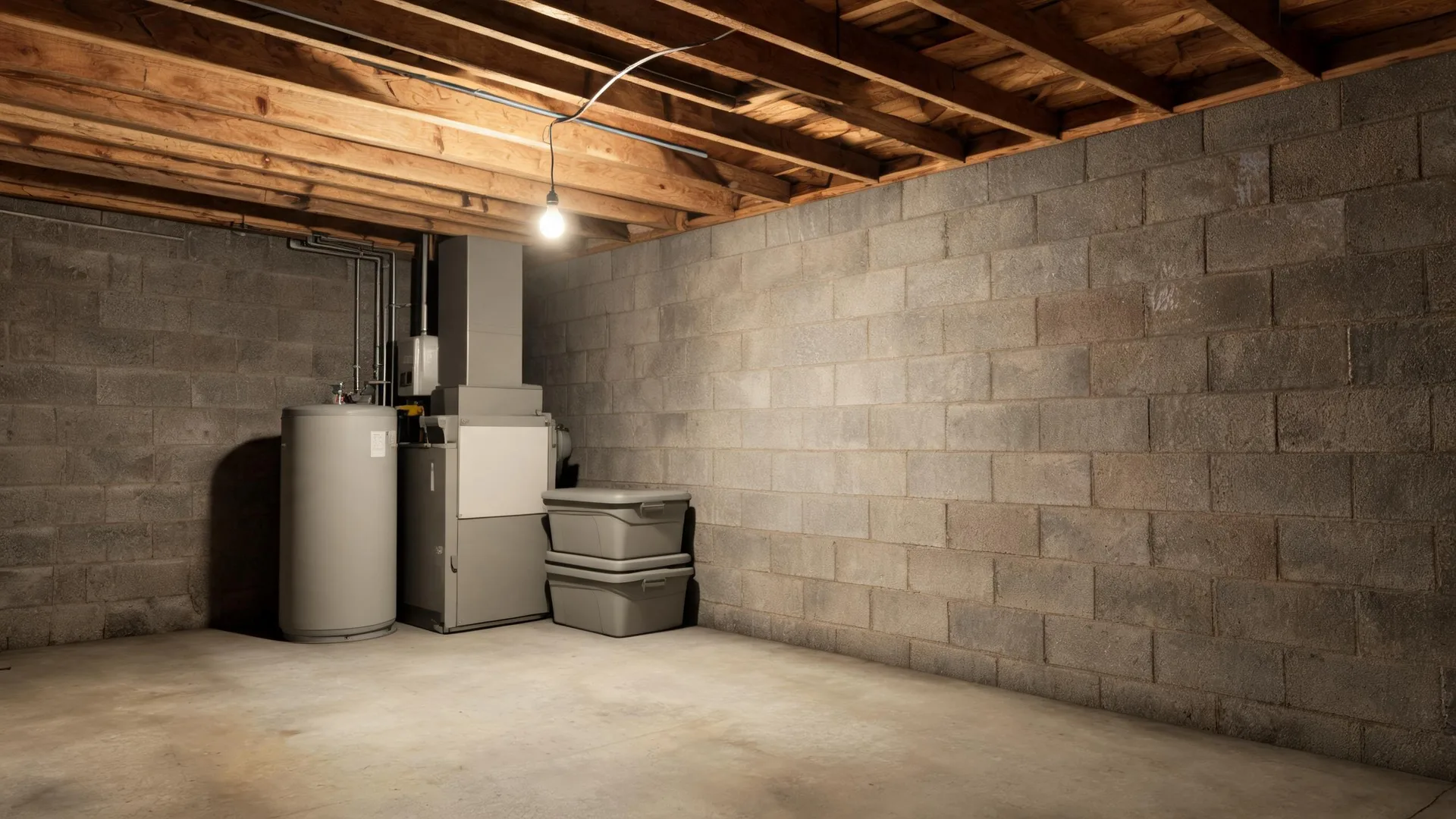
An unfinished basement featuring a grey forced-air furnace with metal ductwork, concrete block walls, exposed wooden joists, and a single hanging bare bulb.

Furnace Installation in Booneville, MS

Tell us about the job

Takes about a minute. No obligation.

New system or replacementFurnace or heatingPrentiss County, MS
Step 1 of 2

What ZIP code is the job in?

Most homes here run on electric heat

Just over half of occupied homes in Prentiss County heat with electricity, more than any other fuel. Gas furnaces come second at 38.7 percent. If your house already has one or the other, that history usually points to the simplest install.

What's already run to your house matters

An electric furnace needs the right circuit and panel capacity. A gas furnace needs a gas line already in place. Switching from one fuel to the other for your install is possible, but it means work beyond swapping the unit itself, so it's worth knowing which one your home was set up for.

7 months
October through April, your furnace is on duty
33°F
the average winter night it heats against
80% AFUE
the federal minimum any new unit must meet
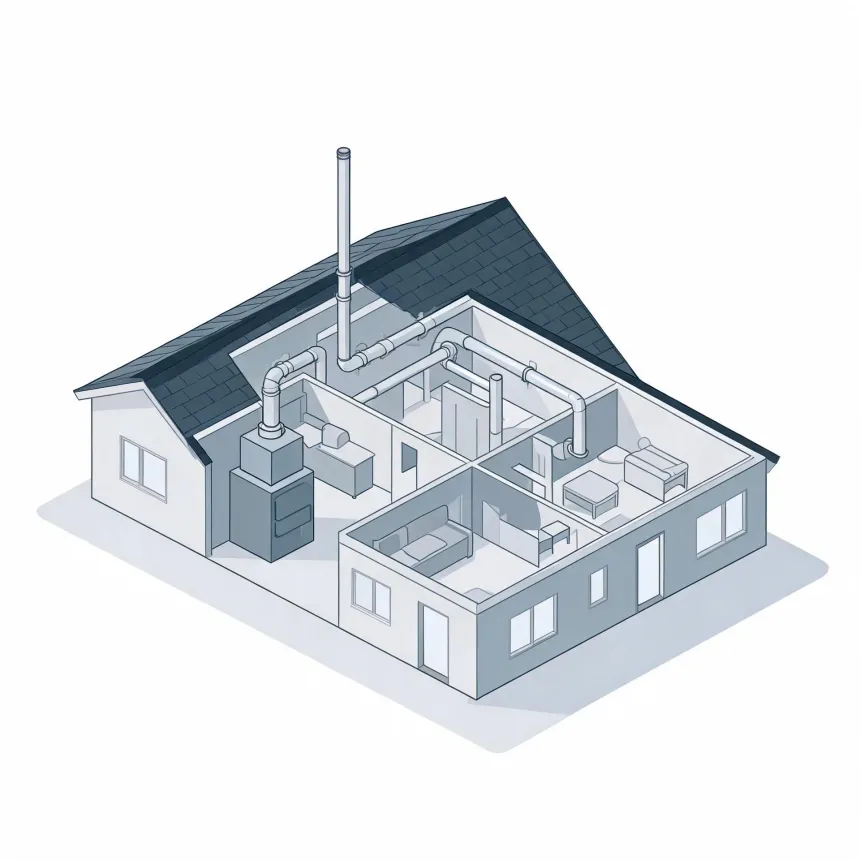
Isometric cutaway illustration of a single-story house showing interior rooms with furniture, a furnace unit connected to ductwork and a tall flue pipe extending through the roof.
Your furnace works hardest from November through March.

NOAA nClimDiv, 1991–2020 normals

Furnaces in Prentiss County start running in October.

Get a new furnace installed in September, and it's ready before the first cold morning instead of during one.

Seven months of mild winters means a furnace here doesn't need to be oversized

Heat runs October through April
Winter nights average 33°F
Climate zone 3A

A standard furnace sized to this house is the right call here. Prentiss County has its share of severe weather, including damaging wind and a handful of tornadoes most years, but none of that changes what a furnace needs to do. Its job is to heat the house through a mild winter, nothing more. Oversizing it doesn't make it hold up better against wind or hail. What matters more is what happens after a storm knocks the power out. A furnace that's wired and installed correctly comes back on by itself once power is restored, no resetting or relighting needed.

Replace it before the season

Replace it before the season starts, so it happens on your schedule, not in a hurry.

Find a contractor
A gray residential gas furnace installed in an unfinished basement, surrounded by ductwork, a metal flue pipe, and a gas supply line.

Seven months of runtime a year

A furnace here runs about seven months a year, October through April. Overnight lows only average 33°F in December, January and February, so it's not working against deep cold on top of that runtime. That's a light load to size a system around. Put the money into a correct install rather than the highest-capacity unit on the lot.

Size is set by a load calculation, not the old unit

A contractor measures the house room by room, the windows, the insulation, the duct layout, before picking a furnace. Matching the new one to whatever was there before skips that step. A furnace sized off a real calculation costs less to run right than one sized off a guess, and it's the install itself that takes the time, not the unit.

The ductwork decides more than the furnace does

If the existing ducts are the wrong size or leak at the joints, a new furnace still pushes air through the same bad path. Sealing or resizing duct runs adds work beyond setting the unit in place, but a furnace can only perform as well as the ducts carrying its air. Skipping that step is how a correctly sized furnace still heats a house unevenly.

The old furnace usually comes out the same visit as the install, not on a separate trip. A contractor shuts off the gas line or electric circuit, disconnects the venting, and pulls the unit before setting the new one in place. If it ran on gas, that line gets capped and checked for leaks before anyone leaves. What's left of the old furnace, the cabinet, the heat exchanger, the blower motor, is mostly scrap metal, so it typically gets hauled off rather than left behind. There's no reason to keep it as a backup. Once it's disconnected and pulled, it isn't something you hook back up later.

Install day starts with pulling the old furnace, so the house is without heat for part of the day no matter how smooth the job goes. Once the new furnace is set in place, a contractor connects the gas line or electric circuit, hooks up the vent, and ties it into the existing ductwork. Then comes testing. That means checking gas pressure or electrical draw, confirming the blower runs at the right speed, and watching the system cycle through a full heating run before calling it done. A contractor also checks for gas leaks at every joint that was touched, not just the new connections. The last step is usually walking the thermostat settings with whoever's home, since a new furnace doesn't always respond to the old settings the same way the previous one did.