





An outdoor heat pump unit mounted on a concrete pad in front of a two-story suburban house with a landscaped lawn.

Heat Pump Repair in Booneville, MS

Tell us about the job

Takes about a minute. No obligation.

RepairHeat PumpPrentiss County, MS
Step 1 of 2

What ZIP code is the job in?

A heat pump works harder right at the start of a season, and that's when a weak part tends to give out. Homes here run heat from October through April, so September is the month before the system switches over and starts pulling heat from the outside air instead of moving it out. That reversal puts load on parts that sat idle all summer. If your heat pump is acting up now, it's worth finding out whether it's something new or something that's been getting worse since last spring's switch to cooling. A problem caught at the changeover is usually smaller than one left to run through a full season of heat.

7 months
October through April, your system heats
5 months
May through September, it cools
33°F
the average winter night it heats against
89°F
the average summer afternoon it cools against
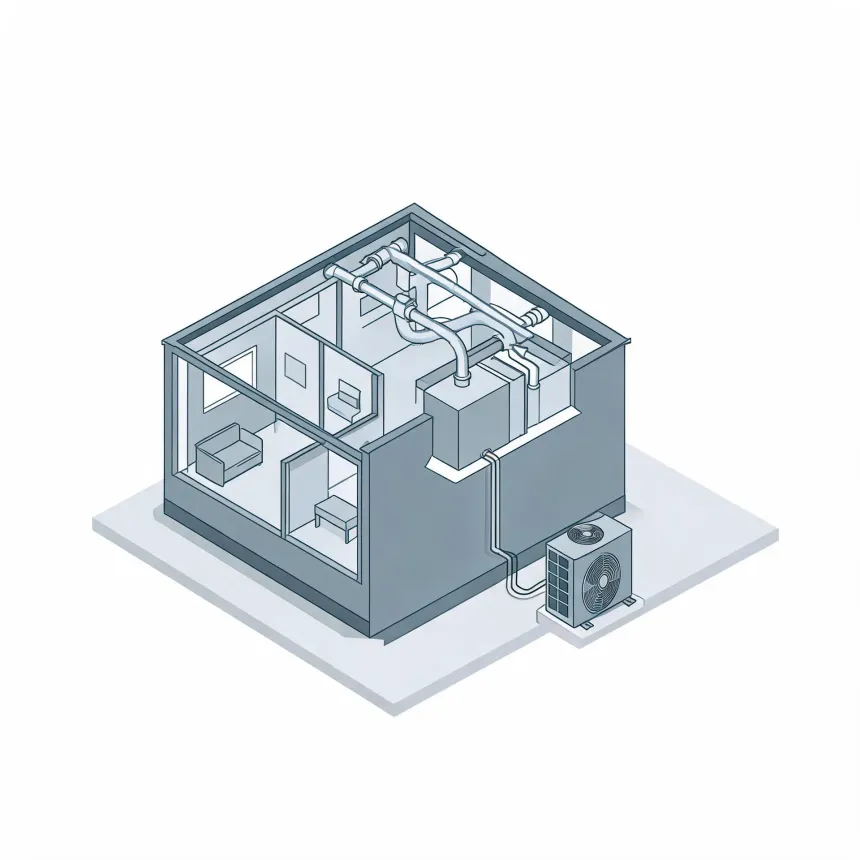
Isometric line illustration of a cutaway house showing interior rooms with furniture, ceiling ductwork connected to an indoor air handler, and refrigerant lines running to an outdoor condenser unit on a pad.
Your system heats October through April and cools May through September.

NOAA nClimDiv, 1991–2020 normals

A refrigerant leak makes the compressor work harder with every cycle it runs.

Left alone, the compressor burns out and turns a leak into a full system replacement.

Booneville sees its share of storms, but that's not why your heat pump is acting up

65 severe weather events from 2015 to 2024
30% of homes statewide lost power a day or more in 2024
35 damaging wind events from 2015 to 2024

Half the homes in Prentiss County were built in 1981 or earlier, half after, and a heat pump doesn't know which kind it's bolted to. What matters is whether the parts inside have been swapped out since, not when the house went up. A defrost board, a contactor, a run capacitor wear out on their own schedule. Mobile homes make up close to a sixth of the housing stock here, and the units serving them fail the same way units on site-built homes do, from a stuck relay or a low charge, not from where the house sits.

Get it looked at early

Problems tend to show up in the first weeks of the season, when the load hits a part that was already weak.

Find a contractor
A man in a cap, dark jacket and tan pants walks up porch steps toward a navy blue front door, carrying a canvas tool bag filled with hand tools, with a potted plant in a blue planter to the right.
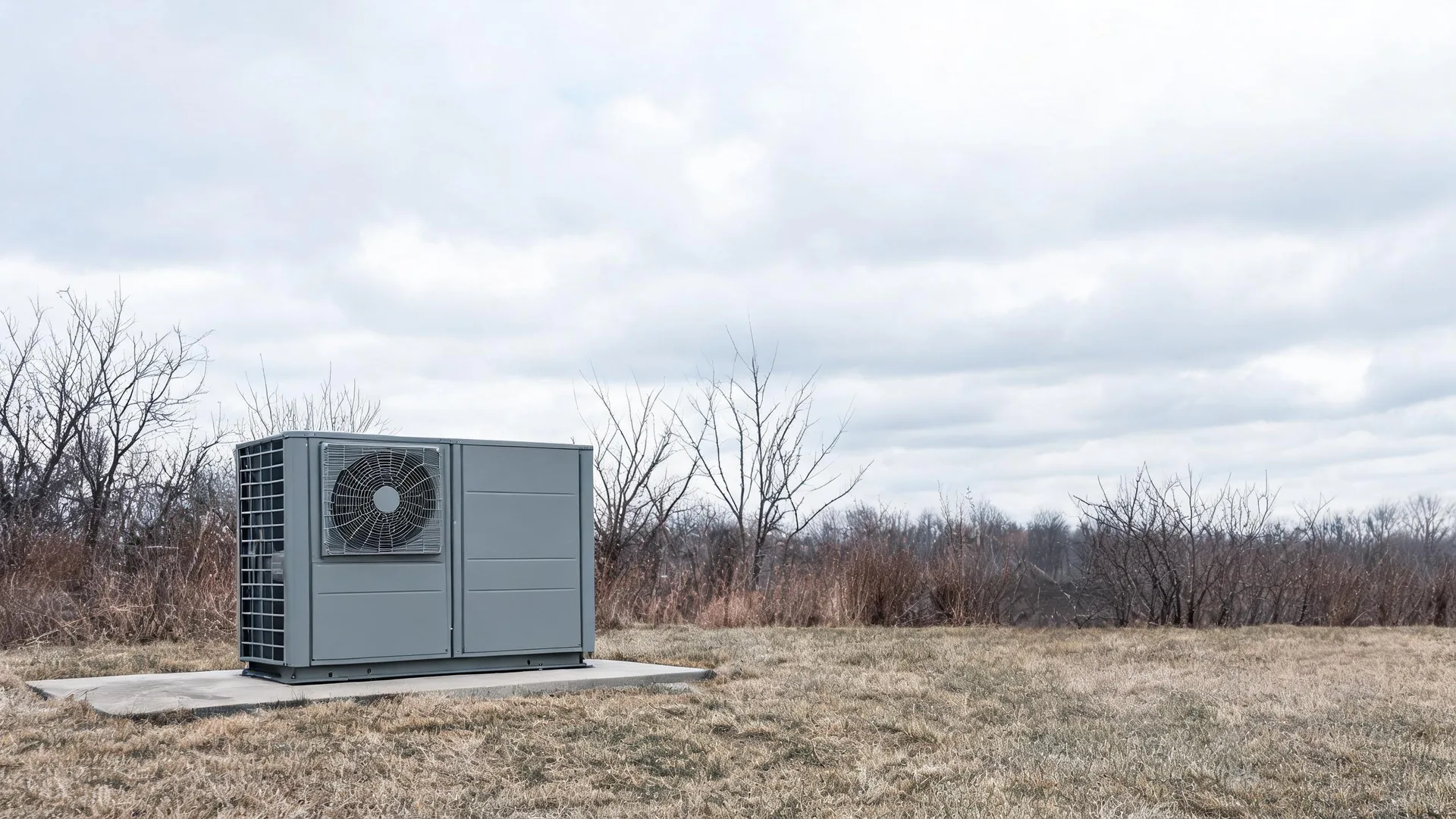
A gray heat pump outdoor unit mounted on a concrete pad next to a residential house with lap siding and stone accents.

What you can check yourself first

Before anyone comes out, walk around the outdoor unit. If it's iced over with more than a light frost, or the fan isn't turning while the system calls for heat, that's worth telling whoever you call. Clear away any leaves or debris stacked against the cabinet so air can move through it. Inside, check the air filter. A filter packed with dust chokes airflow and makes the whole system work harder than it should, and it's the one thing you can fix yourself without tools. Check that no vents are closed or blocked by furniture. If the thermostat screen is blank, check the batteries before you assume the system itself is dead. None of this tells you what's wrong inside the unit, but it clears out the easy explanations first.

Warm air instead of hot

Air still comes out of the vents, but it never gets as warm as it used to, and the system runs long stretches trying to catch up. That points to the reversing valve not shifting all the way, or the charge running low. Either way the heat pump is working to heat the house and losing that fight slowly, not all at once.
Short cycling or running nonstop

A heat pump that shuts off shortly after starting is tripping a safety switch somewhere, often from restricted airflow or a sensor reading wrong. One that never shuts off and still can't hold the temperature has fallen behind on output. Both wear down the compressor faster the longer they're left alone.

Most heat pump failures start small and build from there. A capacitor weakens and the compressor struggles to start, pulling harder on it every time it does. A contactor pits and sticks from years of arcing, so the outdoor unit won't shut off, or won't come on at all. The reversing valve, which is what lets the system pull heat from outside air in winter and push it outside in summer, can stick partway and leave you with warm air instead of hot. Low refrigerant almost always means a leak somewhere in the line, not the system using it up over time. None of these start as a breakdown. They start as a part working a little harder than it should, for longer than it should, until it quits.

A tech weighing repair against replacement is looking at the compressor first, since that's the part that costs the most to replace and the one a failing system usually drags down with it. A bad capacitor or a stuck contactor is a straightforward fix, and the compressor comes through it fine if it's caught in time. A compressor that's already been running low on charge for a season, or straining through failed starts over and over, may be too worn to save even though the fix for the part that started it is cheap. Age by itself doesn't decide this. A heat pump that's had its worn parts replaced along the way can keep going well past when a neglected one gives out. What matters more is whether this is the first thing to fail or the latest in a string of them, because a system that keeps needing attention is telling you something about what's left inside it.