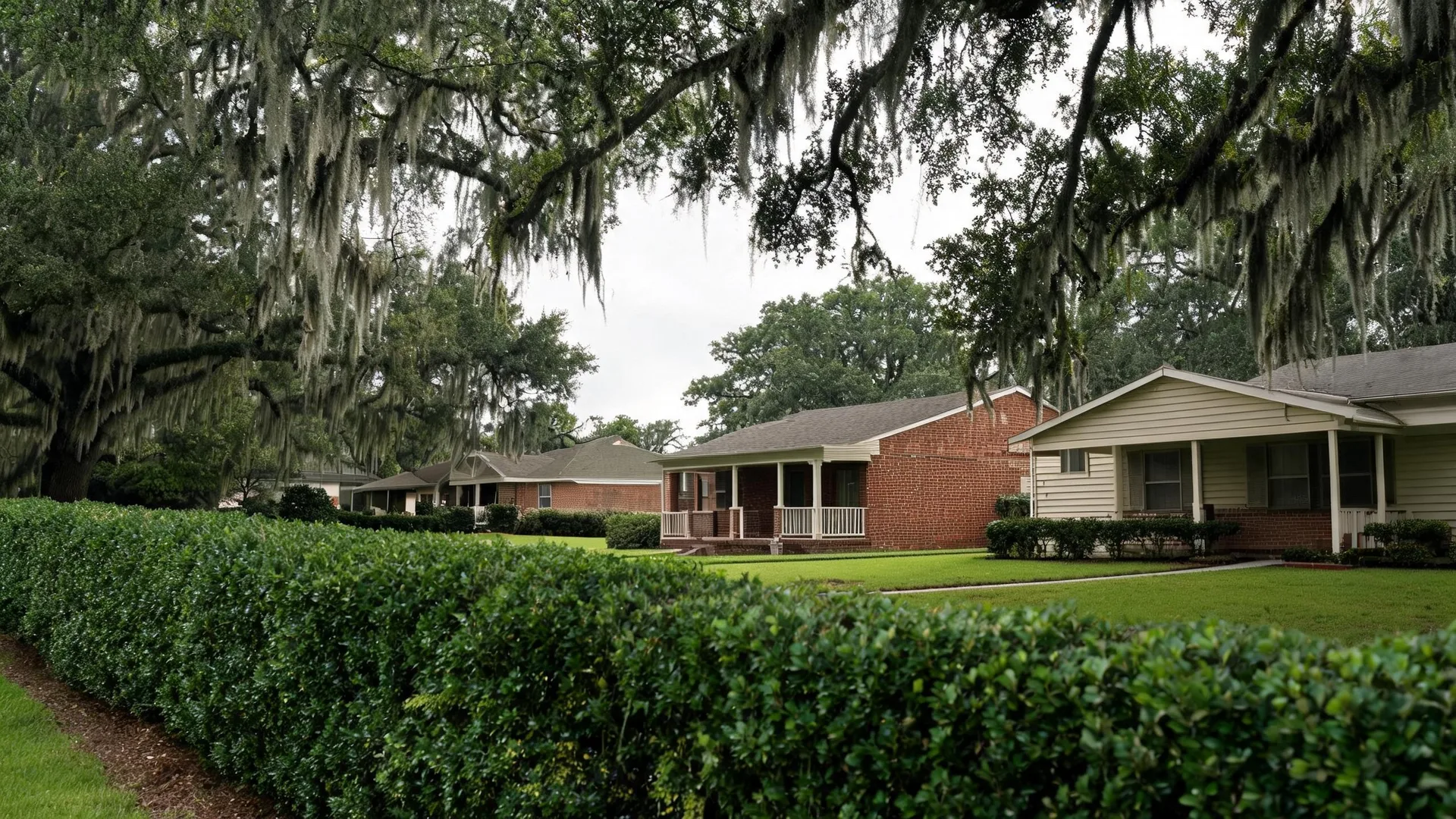
Single-story brick and siding houses with lawns behind a long trimmed hedge, framed by large oak branches draped with Spanish moss under an overcast sky.

Furnace Installation in Brookhaven, MS

Tell us about the job

Takes about a minute. No obligation.

New system or replacementFurnace or heatingLincoln County, MS
Step 1 of 2

What ZIP code is the job in?

The size has to match the house

A furnace that's too big for the house cycles on and off instead of running steady, and that wears out the heat exchanger faster and leaves rooms uneven. A contractor sizes it to the house with a load calculation, not by matching the old unit's number. Getting this right affects the install cost more than almost anything else on the job.


The ductwork decides how much work it is

If the existing ductwork is in good shape and sized right for the new furnace, the install is mostly a swap. If the ducts are undersized, leaky, or routed wrong for this furnace, they need work too before the new unit can heat the house evenly. That's often the difference between a short job and a long one.

5 months
November through March, your furnace is on duty
39°F
the average winter night it heats against
80% AFUE
the federal minimum any new unit must meet
Isometric line illustration of a cutaway building interior showing a furnace unit with a flue pipe and ductwork running along the ceiling, plus adjacent rooms with simplified furniture.
Your furnace works hardest from November through February.

NOAA nClimDiv, 1991–2020 normals

Electricity heats 68.7% of homes in Lincoln County, gas furnaces a smaller share.

A straight electric furnace swap is usually the simplest install here, since most homes already have the hookup for it.

An older house here doesn't need a bigger furnace

Half the homes here were built by 1984
Heat runs November through March
Winter nights average 39°F
Five months of work a yearBrookhaven furnaces run November through March, with overnight lows averaging 39°F in December, January and February.

Electricity here runs $39.26 per million Btu, cheaper than most of the country. That changes how to think about which furnace to put in. A high-efficiency model costs more up front, and the extra you pay back slower when power itself is cheap. That doesn't mean skip it, but it means the decision should rest on what fits the house and what holds up through a outage, not on chasing the lowest running cost. Reliability earns its keep here faster than efficiency does.

Put the new furnace in before November

Furnace season here runs November through March. October is the month before it starts, and that's the window to get a new furnace in, while it's a planned job instead of a cold-morning call.

Find a contractor
A gray high-efficiency gas furnace installed in an unfinished basement, surrounded by gas lines, a condensate drain, and sheet-metal ductwork.

A light workload means the fancy model isn't the point

Five months of real work a year is not much strain on a furnace. Pick one that's built well and sized right, and it will handle this with room to spare. You don't need the highest efficiency rating on the showroom floor. Put the money instead into a unit that starts reliably on a 39°F morning and keeps running if the power's been out and the house has gone cold. That's the job it has to do here.

The rating only counts gas burned into heat

The efficiency number on a furnace label is the share of fuel it turns into heat in the house instead of sending out the flue. It says nothing about how big a flame the furnace can put out. A high rating on an undersized furnace still leaves the house cold.

A short-cycling furnace never hits that number

The rating comes from a furnace running the way the lab tested it, cycling on and holding a steady run. A furnace too big for the house shuts off early and starts again before it settles in, and it never runs long enough to burn at that rate. The number on the label only holds up once the furnace is sized to run the way it was tested.

A load calculation looks at the whole house, not just square footage. It takes in how much wall and window area faces outside, how much insulation is in the attic, and how many rooms sit on each run of duct. Houses the same size can still need different size furnaces, because one has more window glass or a harder to heat layout than the other. The calculation gives a range of output the furnace needs to produce, and the contractor picks a model that falls inside it. Skip that step and size off the old unit instead, and whatever mistake the last contractor made gets built into the new system too.

Install day starts with the old furnace coming out, not the new one going in. The contractor shuts off gas and power, disconnects the flue, and pulls the unit along with whatever duct transitions and venting won't carry over. If the new furnace is a different size or a different efficiency tier, the vent pipe itself may need to change, since a high-efficiency furnace vents through PVC pipe out a sidewall instead of up a metal flue. Setting the new unit, connecting gas, wiring the control board, and sealing the duct connections takes time, but testing it takes just as much care. The contractor checks gas pressure, confirms the flame sensor reads right, runs the blower through a full cycle, and makes sure the thermostat is talking to the furnace the way it should. A furnace that's never fired once before the contractor leaves hasn't been installed, it's just been set in place.