A nighttime street scene featuring a row of lit white colonial-style houses with wrap-around porches, flanked by oak trees draped in Spanish moss.

Heat Pump Maintenance in Vicksburg, MS

Tell us about the job

Takes about a minute. No obligation.

Tune-up, service, or cleaningHeat PumpWarren County, MS
Step 1 of 2

What ZIP code is the job in?

Keep the filter clean

A dirty filter chokes airflow across the indoor coil, and a heat pump depends on steady airflow in both heating and cooling mode. Check it by holding it up to a light. If you can't see light through it, swap it or wash it if it's a reusable type. A clogged filter also forces the system to run longer to reach the same temperature.


Keep the outdoor unit clear

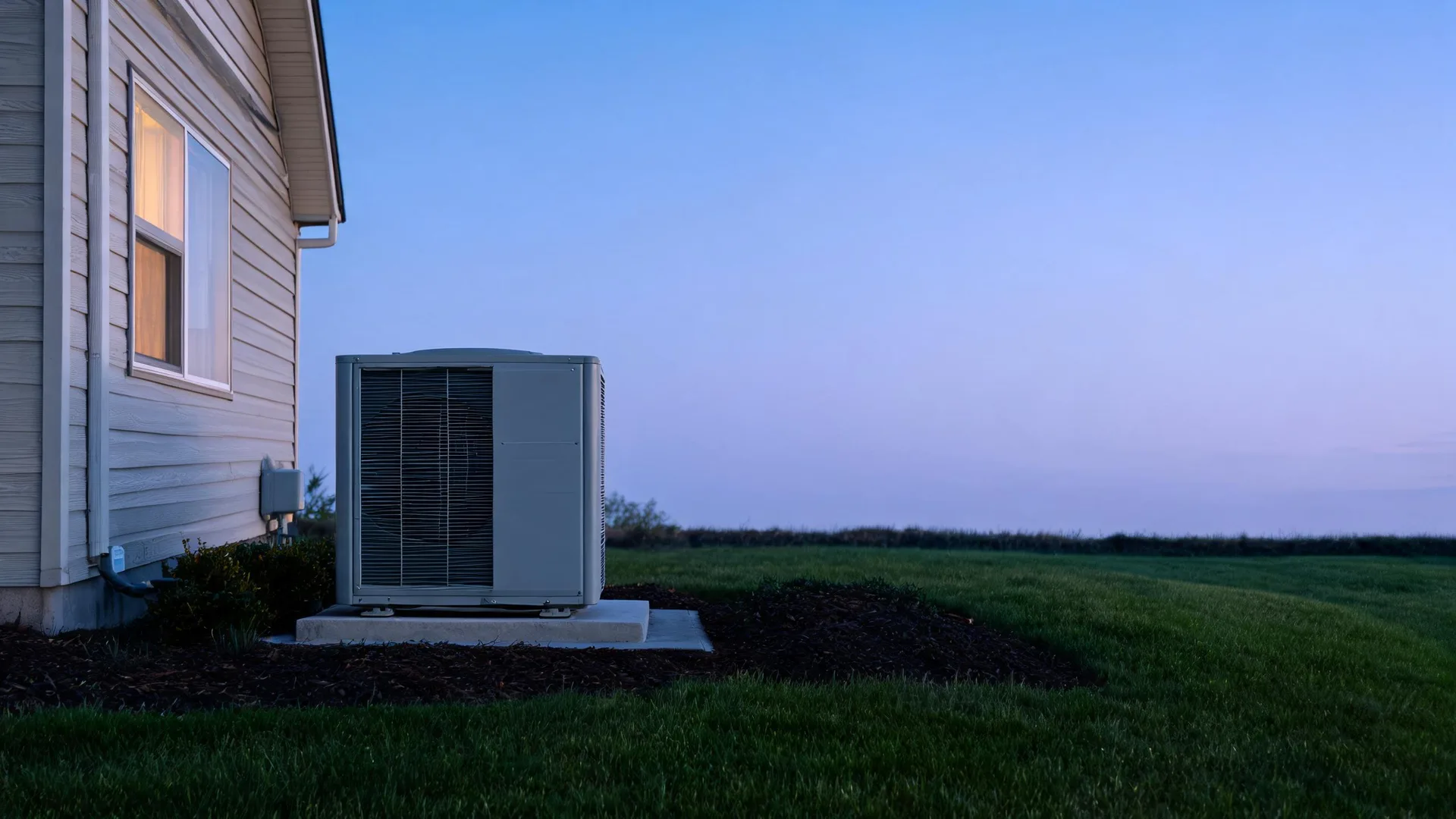
The outdoor unit needs open space on all sides to pull in and release air. Grass clippings, leaves, mulch and dryer lint will build up on the fins over time and block that airflow. Walk around it now and then and clear away anything piled against it. Never stack anything on top of it or let shrubs grow in close.

Warren County took damaging wind 145 times between 2015 and 2024.

A heat pump that runs through storms like that needs a check before the next one builds.

One check a year is enough for a system that outlasts the weather here

Half the homes here were built by 1978
145 damaging wind events from 2015 to 2024
Power costs 13.39 cents a kWh statewide

A tune-up also catches what's wearing down but hasn't failed yet. Capacitors lose their ability to deliver a strong jolt to the motors over time, and a weak one still starts the system most days until the one day it doesn't. Refrigerant lines get checked at the joints, since a brazed connection can seep slowly for a long time before anyone notices the system running longer to keep up. A tech checks the suction line temperature and pressure together, because either one alone can look normal while the other gives away a problem. None of this shows up on a thermostat display or in how the house feels day to day. It shows up as a reading outside the range it should be in, caught by someone who knows what that range is supposed to be.

Check it before the season

It works hard here, so worn parts show up fast once the season starts. Get it checked before then.

Find a contractor
A white mini-split heat pump outdoor unit mounted on a concrete pad beside a gray-sided house, surrounded by gravel and green shrubs.

A system that's starting to struggle still looks fine from inside the house

A heat pump doesn't fail all at once. It gives a few warnings first, and most of them are quiet enough to miss if nobody's looking. Ice on the outdoor unit that doesn't melt off during the defrost cycle means that cycle isn't working right. Short cycling, where the system shuts off a few minutes after starting, usually points to a sensor or a restriction somewhere in the line. A longer run time to reach the same setting on the thermostat is the compressor working harder for less heat or less cooling, which is what a low charge or a dirty coil both look like from inside the house. A clicking reversing valve that doesn't fully switch leaves the house heating when it should be cooling or the other way around. None of these stop the system from running. They just mean it's running worse than it should, and a check now catches the part before it's the reason the house goes without heat or air.

A low refrigerant charge still blows air

A heat pump low on refrigerant does not stop running. It still turns on, still moves air, but it moves less heat for the same effort in both heating and cooling. The compressor works harder to make up the difference, and that extra strain over time is what wears a compressor down early.

The reversing valve only moves when asked

The reversing valve is what switches a heat pump between heating and cooling. For most of the year it sits in one position and never has to move. If it sticks from disuse, nobody finds out until the first cold stretch asks it to switch, and the house ends up with a system that runs but never warms the air.

The indoor coil and the drain under it work together, and both depend on the filter doing its job. A dirty filter lets dust settle on the coil, and once the coil is coated it can't pick up or release heat the way it should. Dirt on that coil also gives the drain pan more to deal with, since grime washes off the coil and into the pan every time the system runs in cooling mode. If the drain line clogs with that buildup, the pan backs up and water finds its way out somewhere it shouldn't. A coil stays clean far longer with a filter that's actually doing its job, and the drain stays clear when there's less washing off the coil to begin with. None of this announces itself early. By the time water shows up where it shouldn't, the filter has usually been ignored for a while.

A tune-up on a heat pump means someone actually opens it up, not just glances at the thermostat. The refrigerant charge gets checked against what the system calls for, since too little or too much both make it work harder than it should. Electrical connections get tightened, because a loose one heats up and fails right at the connector. The condenser fan motor and the blower motor get checked for bearing wear, the kind that turns into a noisy or seized motor later. The reversing valve gets cycled on purpose, so it's not the first cold morning finding out it's stuck. Contacts inside the control board get inspected for pitting, and the refrigerant lines get looked over for an oil residue, which is usually how a slow leak shows itself before the charge drops low enough to matter.