A lit antebellum-style two-story house with white columns and a wraparound porch at night, framed by live oak trees draped in Spanish moss.

Heat Pump Maintenance in Pearl, MS

Tell us about the job

Takes about a minute. No obligation.

Tune-up, service, or cleaningHeat PumpRankin County, MS
Step 1 of 2

What ZIP code is the job in?

Keep the filter clean

A dirty filter chokes airflow across the indoor coil, and a heat pump depends on steady airflow in both heating and cooling mode. Check it by holding it up to light. If light barely gets through, replace it. A clogged filter makes the system work harder and can ice up the coil.


Keep the outdoor unit clear

The outdoor unit needs open space around it to move air. Keep leaves, grass clippings and shrubs away from the cabinet, and brush off any ice or snow that builds up on the coil fins. Never chip at ice with a tool, since the fins bend easily and a bent fin blocks airflow for good.

A heat pump in Rankin County switches to heating in November and runs that way through March.

Have it checked in October, before it has to carry the first cold snap.

Half the homes in Rankin County were built in 1995 or later, so most heat pumps here still have years of work ahead

Half the homes here were built by 1995
213 damaging wind events from 2015 to 2024
64 hail events from 2015 to 2024

Book it before the season

It starts running hard in the first month of the season here. Book the check the month before.

Find a contractor
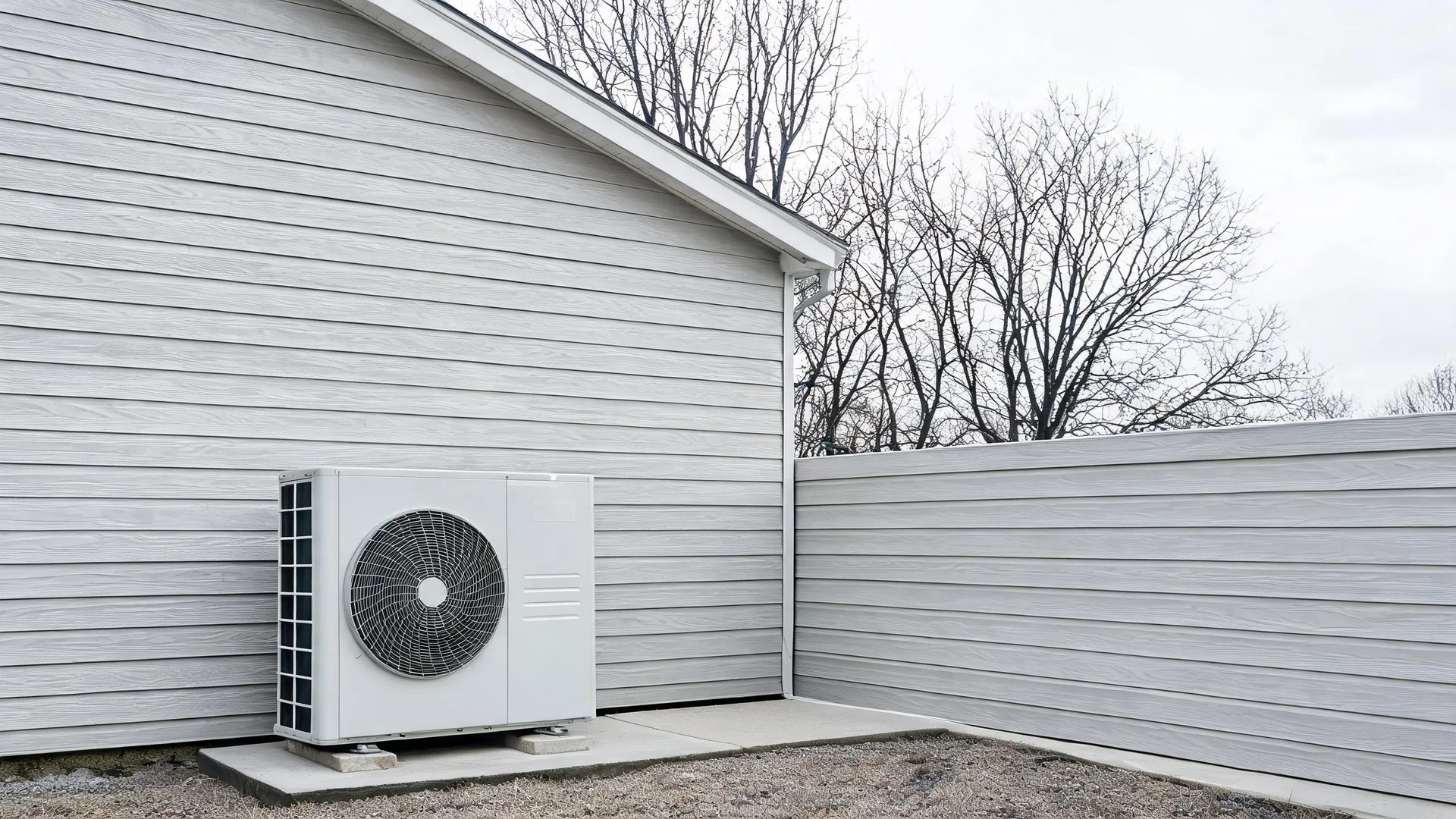
A gray heat pump outdoor unit mounted on a concrete pad next to a residential house with lap siding and stone accents.

Running all year wears parts a filter change won't catch

A heat pump runs every month of the year, switching between heating and cooling instead of sitting idle part of the year like a furnace does. That reversing valve is one of the first things a tech checks, since a valve that sticks can leave the system heating when it should cool or stuck in one mode. A tune-up also checks refrigerant charge, because a system low on charge forces the compressor to work past what it's built for, and that wear does not show up as a problem until the compressor is already damaged. The tech checks capacitors too. A weak capacitor can still start the system on a given day, right up until the day it does not. None of this shows up by looking at the thermostat or feeling the air coming out of the vents. It shows up on a gauge or a meter, which is the reason to have it checked before the system has to carry the season on its own.

Sounds you didn't hear before

A heat pump that's worked fine for years should still sound the way it always has. A new rattle, a hum that wasn't there, or a click when the outdoor fan starts means something has worked loose or a motor bearing is wearing out. Caught early, it's a part swap. Ignored, it's a motor replacement.

Short cycling or long runs

A heat pump that shuts off a few minutes after starting, or one that runs long stretches without ever satisfying the thermostat, is telling you something is off, whether that's a refrigerant issue, a bad sensor, or a compressor losing its ability to keep up. Either pattern is worth having a tech look at before it becomes a no-heat or no-cool call.

The drain line matters as much as the filter, and it gets ignored more. A heat pump pulls moisture off the indoor coil whenever it runs in cooling mode, and that water has to go somewhere. If the drain line clogs with algae or dirt, the pan backs up and overflows, sometimes into the ductwork or the ceiling below it. A dirty coil causes a quieter version of the same trouble. Dust and grime on the coil fins work like a blanket, so heat can't transfer the way it should, and the system runs longer to do the same job. Neither problem announces itself. You find out when the pan is full or the house isn't cooling like it used to.

A tune-up is more than a filter swap, and a good tech works through the system in a set order. Static pressure gets checked across the coil, since that tells you if airflow is where it should be before anything else is judged. Electrical connections get tightened, because a loose connection heats up over time and that heat damages the wire or the terminal it's attached to. The contactor gets inspected for pitting, since a pitted contactor can fail to pull in or fail to let go. Temperature split gets measured between the air going into the system and the air coming out, in both heating and cooling mode, which tells the tech whether the system is actually moving heat the way it's supposed to. None of these checks take long on their own, but skipped often enough, they're how a working system turns into a service call.